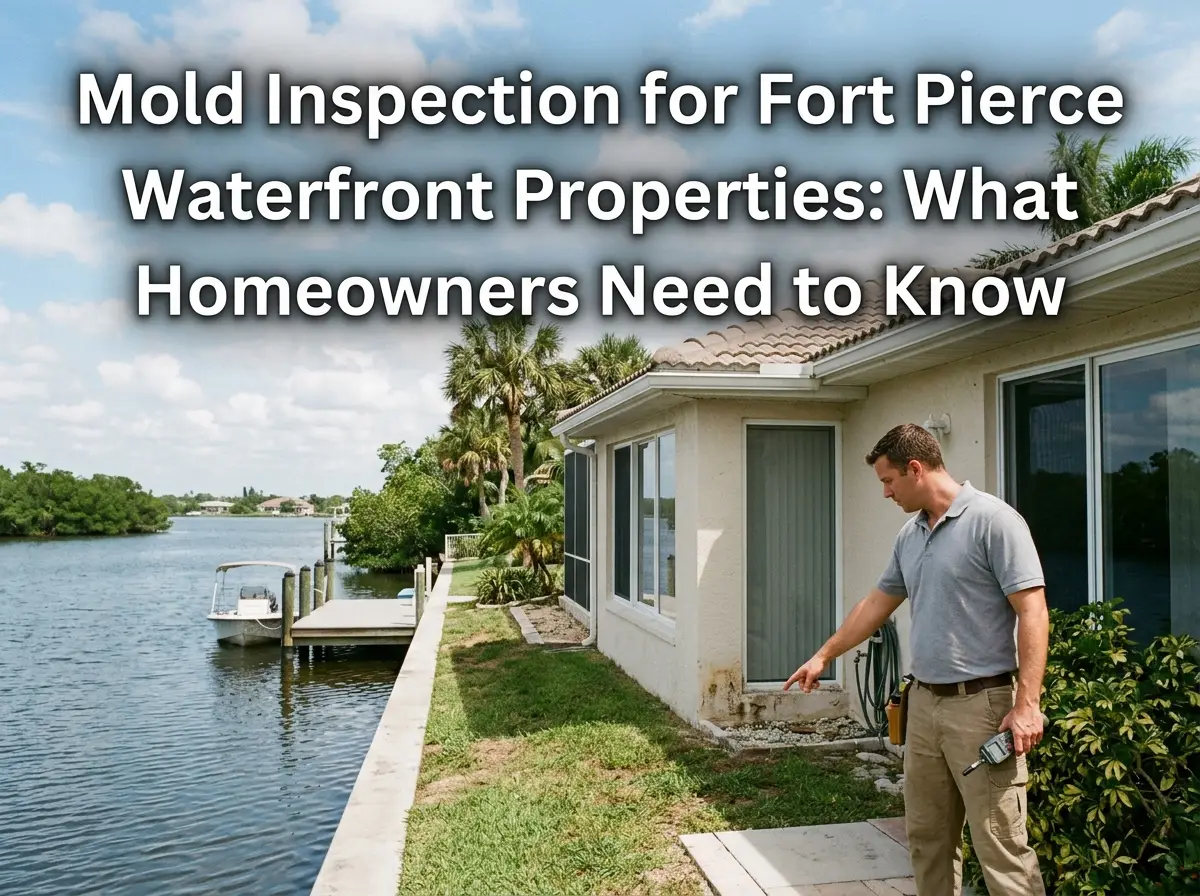
You bought a waterfront home in Fort Pierce for the views. The water access. The lifestyle. What you didn’t bargain for? Constant moisture attacking your walls. Salt air corroding everything. Mold thriving in ways you’ve never seen before.
Mold inspection in Fort pierce waterfront properties isn’t optional. It’s critical. Waterfront homes face completely different challenges than inland properties. The salt, the spray, the humidity, it’s a perfect storm for mold growth. You need to understand these risks now before they destroy your investment.
This guide walks you through everything waterfront homeowners need to know. How to spot problems early. What a professional mold inspection actually involves. How to protect your property long-term. By the end, you’ll know exactly what to expect and how to stay ahead of coastal mold problems.
Why Waterfront Homes in Fort Pierce Need Mold Inspections
Regular homes get mold inspections. Waterfront properties? They need them urgently. The conditions are just too extreme. Your proximity to water isn’t just convenient it’s a constant threat to your home’s structure.
Standard inspection recommendations don’t apply here. Inland homes might be fine with an inspection every few years. Waterfront homes need checking annually. Sometimes twice a year. The salt air and moisture levels are relentless.
Mold spreads faster in waterfront environments. It’s more aggressive. More damaging. And it hits more areas of your home simultaneously. Your foundation. Your walls. Your attic. Your crawl spaces. Everything’s at risk.
A waterfront mold inspection often reveals issues that homeowners cannot see on their own. Moisture trapped behind walls, elevated humidity levels, and hidden water intrusion are common findings. If you would like to learn more about the full inspection process, visit our Mold Inspection and Detection in Fort Pierce guide for a detailed breakdown of testing methods and early detection strategies.
Salt Air & Moisture: The Waterfront Reality
Living on the water means you’re not just dealing with humidity. You’re dealing with salt-laden moisture. It’s completely different. Salt air corrodes materials faster. It accelerates mold growth. It breaks down protective coatings.
The moisture doesn’t just come from the air. Water splashes onto your property during storms. Waves lap at your seawall. Spray coats your entire structure. All that saltwater creates conditions where mold doesn’t just grow it thrives aggressively.
Your humidity levels at a waterfront property run 80-90% consistently. Maybe higher during the wet season. That’s double what inland Fort Pierce experiences. Mold needs 60% to start growing. You’re running at dangerous levels year-round.
Unique Challenges of Riverfront Home Mold Problems
Riverfront home mold has unique issues. Different from the beachfront, but equally serious. River flooding brings water directly to your foundation. Storm surge pushes water into crawl spaces. Seepage becomes a permanent problem.
The water that infiltrates carries sediment. Organic material. That’s mold food. It’s not just moisture it’s nutrient-rich moisture. Mold colonizes faster. Spreads deeper. Causes more damage than typical inland water intrusion.
Your attic gets pounded by moisture. River properties sit lower. Water vapor rises and collects in upper spaces. Your roof leaks get worse because constant moisture weakens seals. Gutters overflow constantly. Soffit vents admit humid air instead of letting moisture escape.
Understanding Mold in Coastal Property Mold Florida Conditions
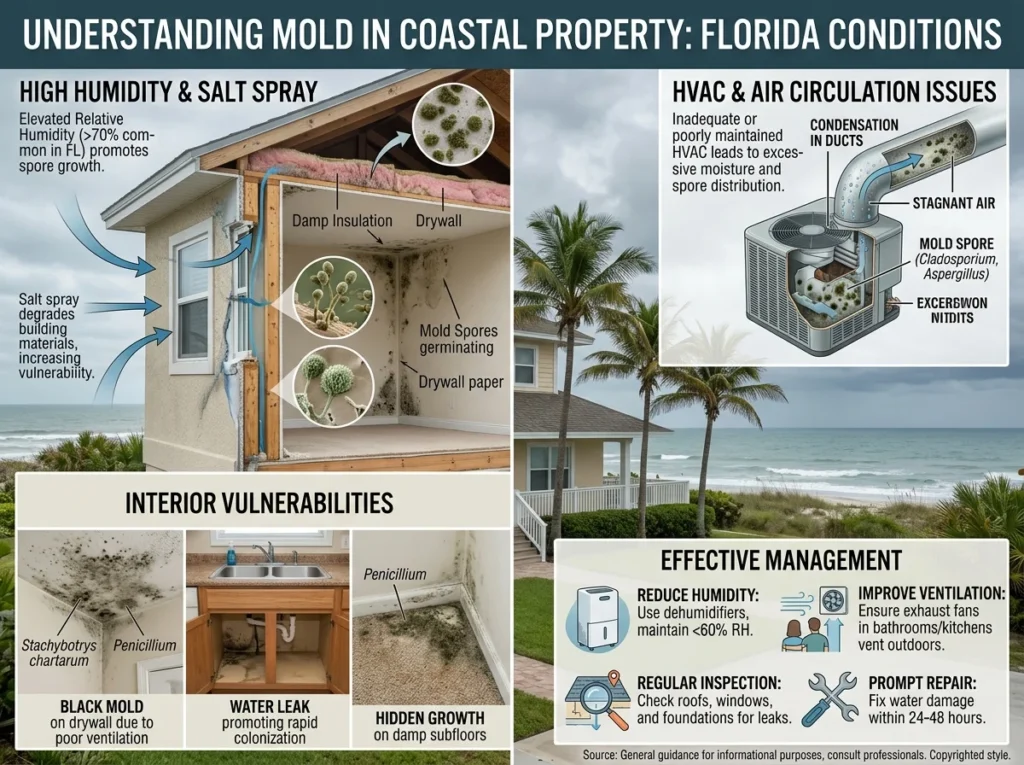
Coastal property mold Florida is different from inland mold. It’s more aggressive. It grows faster. It causes more structural damage. If you’ve dealt with mold inland, waterfront mold is a completely different animal.
Waterfront properties take the worst hurricane damage in Fort Pierce. Storm surge, flooding, and wind-driven saltwater create catastrophic mold conditions. Learn about hurricane mold prevention for waterfront homes and what to do immediately after a storm
Salt air doesn’t just create moisture. It deposits salt crystals everywhere. These crystals pull additional moisture from the air. They create an environment where mold absolutely explodes. You’re not just fighting humidity; you’re
fighting salt-enhanced moisture accumulation.
The mold species in coastal areas tends to be more aggressive. Black mold appears more frequently. Toxic varieties show up more often. The combination of salt, moisture, and heat creates ideal conditions for dangerous mold types.
How Water Damage Leads to Mold Growth in Waterfront Properties
Every water intrusion is a mold event waiting to happen. Your Fort Pierce waterfront property experiences constant water exposure. Seasonal storms deliver massive amounts of water. Even “normal” weather adds moisture constantly.
Water gets into your home through dozens of points. Around the windows. Under doors. Through foundation cracks. At roof seams. Along siding joints. Every single point is a potential mold entry point. If water sits for more than 24 hours, mold starts colonizing.
The problem multiplies because you can’t see most of this water. It’s hidden behind walls. In crawl spaces. Under subflooring. By the time you discover it, mold’s already established itself. It’s spreading. It’s doing damage you won’t notice for months or years.
Signs Your Mold Inspection Fort Pierce Waterfront Property Needs Immediate Attention
You don’t have to wait for a professional inspection to know something’s wrong. Your waterfront home gives off clear warning signs. Paying attention to these means you catch problems early.
The musty smell is your first alert. It’s stronger in waterfront homes than inland properties. Salty, damp odor that seems to come from everywhere. That smell means mold is already colonizing. It’s not starting, it’s established.
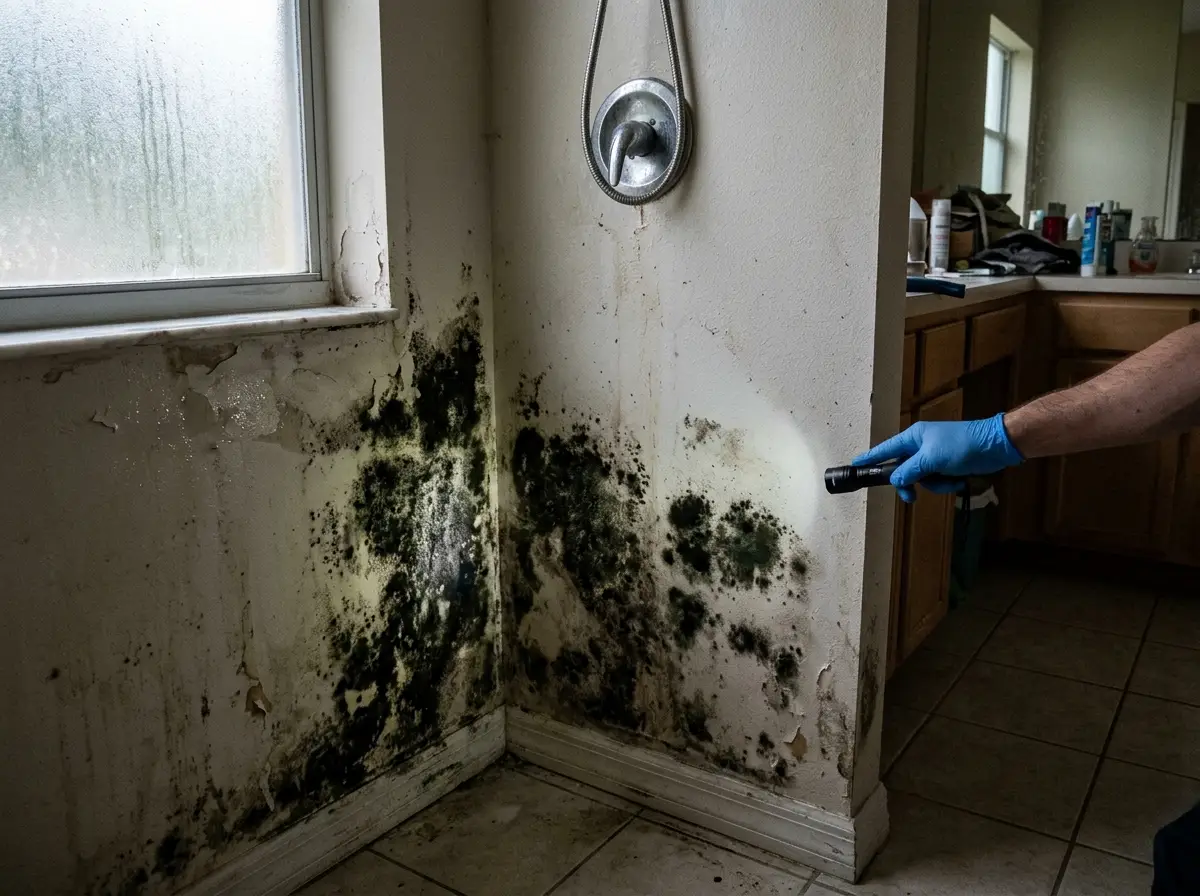
Discoloration appears faster on waterfront properties. You’ll see stains that weren’t there last month. Paint peeling in unexpected places. Wood that looks swollen or soft. These aren’t cosmetic issues. These are mold damage markers.
Water Intrusion Points You Need to Check
Water finds its way in constantly. Your job is preventing it from staying there long enough for mold to grow.
Windows and sliding doors are major problem areas. They take constant salt spray. The seals degrade faster. Water leaks around frames during storms. Check them monthly. Look for moisture inside the frames. Look for condensation that won’t dry.
Your roof gets hammered. Salt air degrades shingles. Wind whips them. Rain drives water under them. Your roof needs inspection before every storm season. Don’t wait until you see stains on your ceiling. That means water’s already inside.
Foundation and basement areas collect water. Waterfront properties have higher water tables. Water pushes against your foundation constantly. After heavy rains, check your basement or crawl space. Any moisture at all means water’s infiltrating.
Exterior walls and siding absorb salt spray. Moisture gets trapped behind siding. Paint peels. Mold grows behind where you can’t see it. This is where hidden mold damage accelerates.
Areas Most Affected by Mold in Waterfront Homes
Certain spots always show mold damage first in waterfront properties. These are your priority checking areas.
Crawl spaces are basically mold incubators. Water seeps through foundation walls. Humidity sits heavy. Air doesn’t circulate. Mold spreads across wooden supports rapidly. Crawl space mold is serious business. It affects your entire home’s structural integrity.
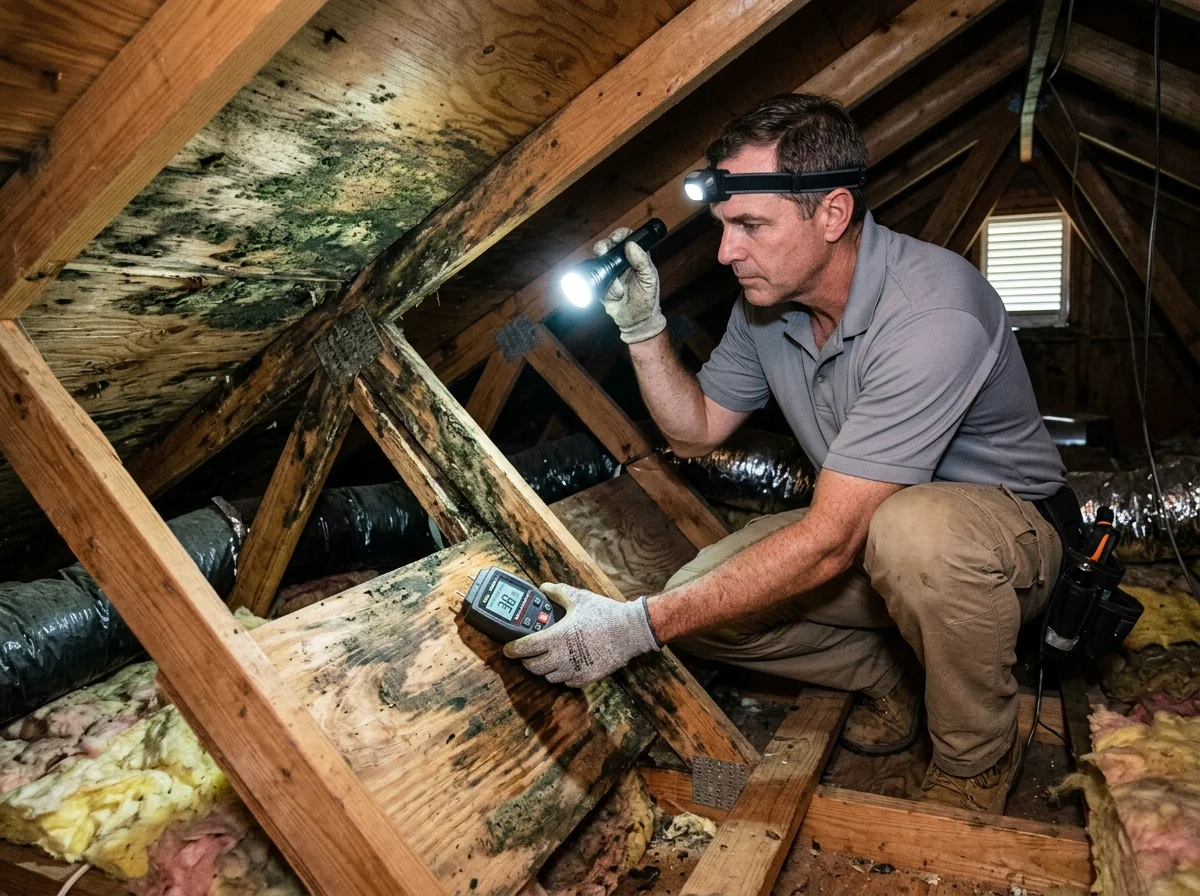
Attics trap moisture. Hot air rises. Humid air rises. Your attic becomes a hot, humid box. Add a roof leak, and mold colonizes rafters and insulation within weeks. Attic mold is often black mold. It’s dangerous.
Bathrooms and kitchens see constant moisture. Windows get wet from humidity. Exhaust fans can’t keep up. Mold grows on tiles, grout, frames, and walls. In waterfront homes, it spreads faster and more aggressively.
HVAC systems pull in salty, humid air. Moisture gets trapped in ducts. Mold colonizes inside where you can’t see it. Then your system spreads mold spores throughout your entire home every time it runs.
What a Mold Inspection Actually Involves
You need to understand what professionals do during a mold inspection. It’s not just visual. It’s thorough. It’s technical. It’s designed to catch problems you’d miss completely.
A proper mold inspection for Fort Pierce waterfront homes takes several hours. Rush jobs miss hidden mold. Your inspector should be checking accessible areas thoroughly. But they’re also looking in hidden spaces. Crawl spaces. Attics. Behind walls when possible.
Professional Testing Methods
Professionals use equipment you don’t have access to. These tools reveal moisture and mold you can’t see with your eyes.
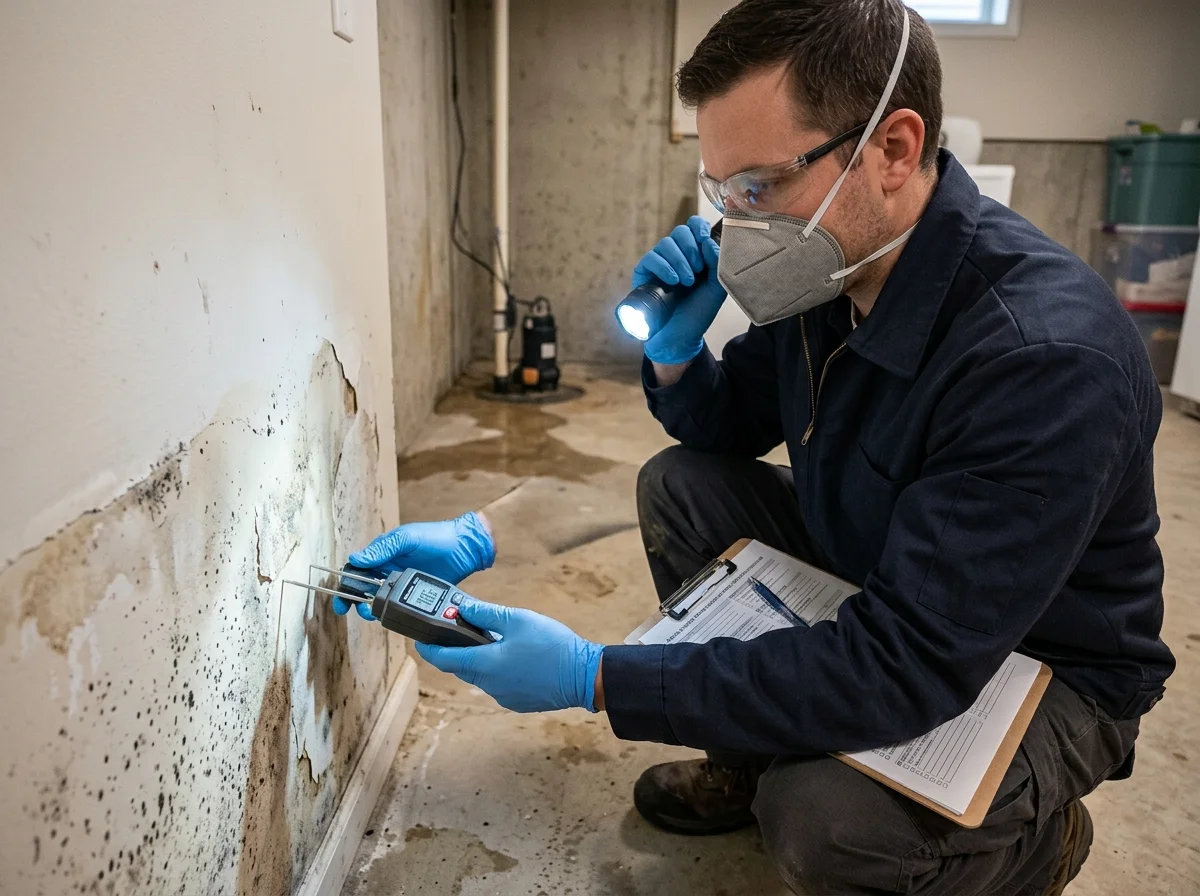
Moisture meters measure moisture content in materials. Wood. Drywall. Concrete. The meter shows exactly how much water’s trapped in these materials. High readings mean mold’s present or starting to grow.
Thermal imaging cameras show temperature differences. Water intrusion creates temperature patterns. The camera reveals where water’s hiding. It shows you entry points. It identifies problem areas before they become visible damage.
Air quality testing collects samples. These get analyzed in labs. Results show what mold species are present. How much mold is actually in your home. Whether it’s at dangerous levels.
Visual inspection is still critical. Your inspector crawls through crawl spaces. Goes into attics. Checks every accessible area. They’re trained to spot water stains, soft wood, discoloration, and other mold indicators you’d miss.
What Inspectors Look For in Waterfront Homes
Waterfront inspections focus on specific problem areas. Standard inland inspections miss these critical points.
Water intrusion patterns are the main focus. How’s the water getting in? Where’s it collecting? How long does it sit before drying? The inspector traces water paths. They identify all entry points.
Salt damage gets special attention. Salt crystals accelerate mold growth. Corrosion weakens structures. The inspector looks for salt staining. For accelerated material breakdown. For the aggressive mold growth salt enables.
Foundation and basement moisture gets scrutinized. Water tables are higher at waterfront properties. Seepage is constant. The inspector checks for water staining, mold growth, and moisture patterns that indicate serious problems.
Fort Pierce Waterfront Mold Prevention Strategies That Actually Work
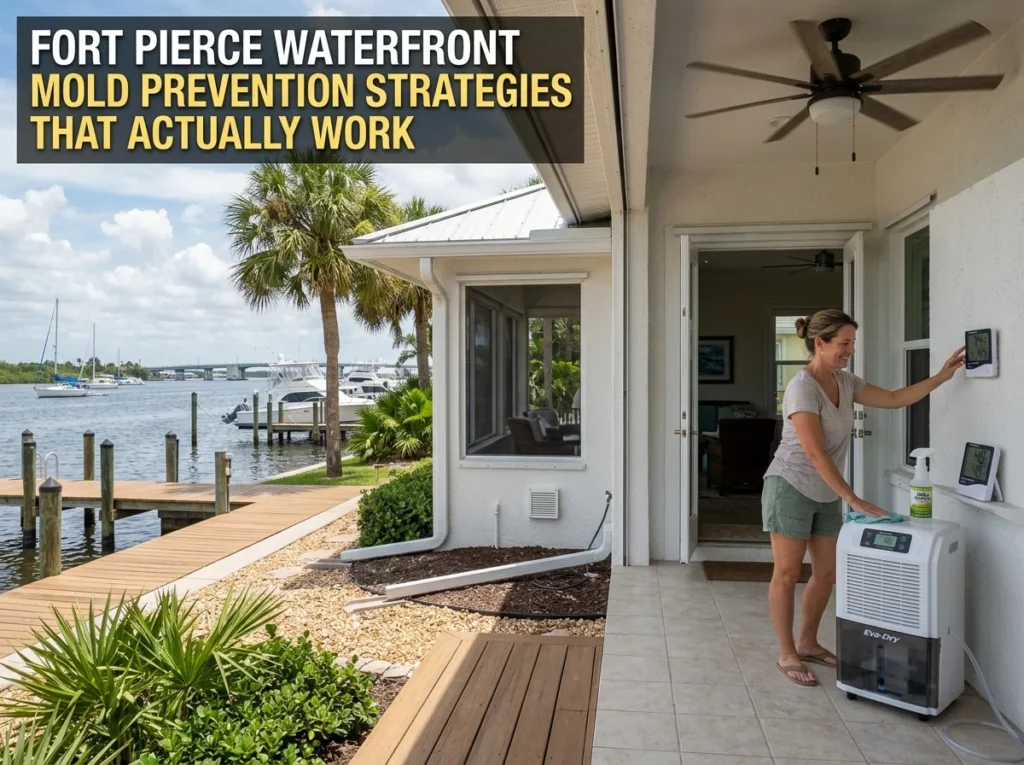
Prevention is your best defense. The good news? You can control most waterfront mold problems. It requires consistent effort. But it’s absolutely worth it.
You can’t stop the salt air. You can’t stop the moisture. But you can manage how long water sits in your home. You can reduce humidity. You can prevent mold from establishing itself. That’s your goal.
Moisture Control Systems for Waterfront Properties
Your standard dehumidifier isn’t going to cut it. Waterfront homes need serious moisture management.
Whole-home dehumidifiers are essential. Portable units help, but they’re not enough. You need a system that pulls moisture from your entire house. From crawl spaces. From attics. From every corner. This should run continuously during warm months. Maybe year-round.
Proper ventilation is critical. Your exhaust fans need to work constantly. Your HVAC system needs maintenance. Ductwork needs sealing. You’re fighting a moisture invasion. Your systems need to be winning that battle.
Sump pumps keep water from accumulating. If your property floods easily, a sump pump system is essential. It removes standing water immediately. It prevents mold colonization in basements and crawl spaces.
Vapor barriers in crawl spaces prevent ground moisture from rising. This is foundational. Without a proper vapor barrier, water vapor rises constantly. Mold thrives. Your whole home suffers.
Regular Maintenance Checklist for Waterfront Homes
These tasks prevent major mold problems. Do them consistently. Don’t skip them.
Monthly checks: Inspect windows and doors for moisture. Check the basement or crawl space for water. Look for any musty smells. Check bathroom and kitchen areas for mold growth.
Quarterly inspections: Climb up and look at your roof. Check gutters for debris. Look for signs of water intrusion. Inspect exterior walls for damage.
Before storm season: Have your roof professionally inspected. Clear gutters completely. Seal any gaps or cracks you find. Make sure sump pumps work. Test your dehumidifier system.
Annually: Get a professional mold inspection for Fort Pierce waterfront property. Don’t skip this. A professional catches problems you’ll miss.
Coastal Property Mold Florida: Long-term Solutions That Protect Your Investment
You’re not just protecting your home. You’re protecting an investment. A place you love. Long-term solutions pay for themselves in avoiding damage and health protection.
Waterproofing Your Waterfront Home
This is the foundation of mold prevention. If water can’t get in, mold can’t grow.
Exterior waterproofing seals your foundation. It prevents water from pushing through from below. Concrete waterproofing coatings. French drains. Proper grading. These keep water away from your structure.
Window and door sealing prevents water from entering during storms. Fresh caulking. New weatherstripping. Proper flashing. These stop water at the entry points.
Roof maintenance is nonnegotiable. Your roof is your first defense. Regular inspections. Prompt repairs. Quality materials. These prevent water from getting inside.
Siding and wall protection comes from maintaining your exterior. Paint protects wood. Caulk seals gaps. Regular inspection catches problems early.
Insurance & Documentation for Waterfront Mold Issues
Your insurance needs to understand your situation. Waterfront properties have unique risks. Documentation helps when you need it.
Keep records of all mold inspections. Document results. Document remediation. When you sell, this history matters. It protects your liability.
Talk to your insurance company about waterfront-specific coverage. Standard homeowner policies may not cover all water damage. Waterfront properties sometimes need additional coverage. Understand what you’re protected against.
Document any mold problems you find. Take photos. Document the date. Document what you did about it. This creates a paper trail. It protects you legally and financially.
FAQ: Mold Inspection Fort Pierce Waterfront Homes
How often should waterfront properties get mold inspections?
Waterfront homes need mold inspection annually. Minimum. Many experts recommend twice yearly before and after hurricane season. The risks are simply too high. Water intrusion happens constantly. Mold growth accelerates in waterfront conditions. Annual mold inspections catch problems early. They prevent expensive damage. They protect your health. If you notice water damage or smell mold, get an inspection immediately. Don’t wait.
What makes mold in coastal properties more aggressive?
Salt air changes everything. Salt crystals pull moisture from the atmosphere. They create an environment where mold thrives more aggressively. The mold species in coastal areas tends to be more dangerous. Black mold appears more frequently. Toxic varieties show up more often. Temperature and humidity are always in the ideal range for mold growth. Water intrusion is constant. All these factors combine. Mold grows faster. Spreads farther. Causes more damage. Your waterfront home isn’t just dealing with mold. It’s dealing with supercharged mold growth. That’s why prevention and mold inspections matter so much.
Can I skip professional mold inspections and just look at myself?
No. You’ll miss things. Mold hides behind walls. It grows in crawl spaces. It colonizes attics. Visual inspection catches obvious problems only. You need moisture meters. Thermal cameras. Air quality testing. These tools reveal hidden mold. They show water intrusion you can’t see. They identify dangerous mold levels before they become catastrophic. Professional inspectors have expertise too. They know where mold hides in waterfront homes. They understand salt air damage. They know what to look for. Your DIY inspection complements professional testing. It doesn’t replace it. Get annual professional mold inspections. Check things yourself monthly. Do both.
How much does a mold inspection cost for a waterfront property?
Waterfront inspections cost more than inland homes. Complexity is higher. More areas to check. Specialized testing required. Basic mold inspections run $500-$800. Comprehensive testing with lab analysis costs $1,000-$2,500. If you need thermal imaging or air quality testing, add $300-$600. It seems expensive until you compare it to mold remediation costs. Fixing significant mold problems costs thousands. Sometimes tens of thousands. Structural damage from undetected mold costs even more. An mold inspection is cheap insurance. Get it done annually.
What’s the difference between mold inspection and mold remediation?
Mold inspection finds mold. Mold remediation removes it. You need inspection first. It identifies what you’re dealing with. How much mold. Where it is. What type it is. Then mold remediation addresses the problem. Remediation includes removing moldy materials. Treating affected areas. Fixing the moisture source. Preventing mold from returning. Mold inspection is diagnostic. Mold remediation is treatment. You need both. Inspection alone doesn’t solve anything. But starting remediation without mold inspection is wasteful. Get the inspection. Understand the problem. Then remediate properly.
Should I be concerned about black mold in my waterfront home?
Yes. Black mold appears more frequently in coastal properties. It produces mycotoxins. These are serious health hazards. Respiratory problems. Immune system damage. Neurological issues. Black mold exposure is dangerous. If you suspect black mold, don’t touch it. Don’t attempt DIY removal. Contact a professional immediately. Get air quality testing done. Professional remediation is essential. Black mold in your waterfront home is a serious situation. Address it promptly. Don’t delay.