So your house smells weird. You cannot place it exactly but it is there every time you walk in the door. That smell? Probably mold. And if you are in Fort Pierce, that is honestly not surprising.
I have talked to a lot of homeowners here who had no idea mold was even an issue until it was a big issue. One guy found out his crawl space had been growing mold for almost a year. A year. He had no clue until his kid started having breathing problems that would not go away.
This is everything you need on mold problems in Fort Pierce, how mold inspection and detection in Fort Pierce actually works, what a real mold repair solution in Fort Pierce looks like, and honestly just how to not end up like that guy with the crawl space.
Why Fort Pierce Is Basically Mold Paradise
Humidity sits at 70, sometimes 80 percent for most of the year here. That is just normal. Most cities get a break in winter when things dry out a bit. Not really here. Mold barely slows down even when it gets cooler.
Hurricane season makes Fort Pierce’s mold problems even worse. Storm damage, flooding, and wind-driven rain create perfect conditions for rapid mold growth. Our fort pierce hurricane season mold prevention guide covers what to do in the critical 48-72 hours after a storm hits.
Throw in 60-plus inches of rain a year, and you start to see why Fort Pierce humidity mold issues are so common. It is not bad luck. It is just the weather doing what the weather does in a coastal Florida town.
Salt air makes it worse too honestly. People do not think about this part. Salt pulls moisture out of the air and dumps it on your windows, your siding, basically everything outside your house. And that same salt eats away at caulk and paint way faster than it would somewhere inland. Every cracked seal becomes a new way for water to sneak in.
What Mold Inspection and Detection in Fort Pierce Actually Involves
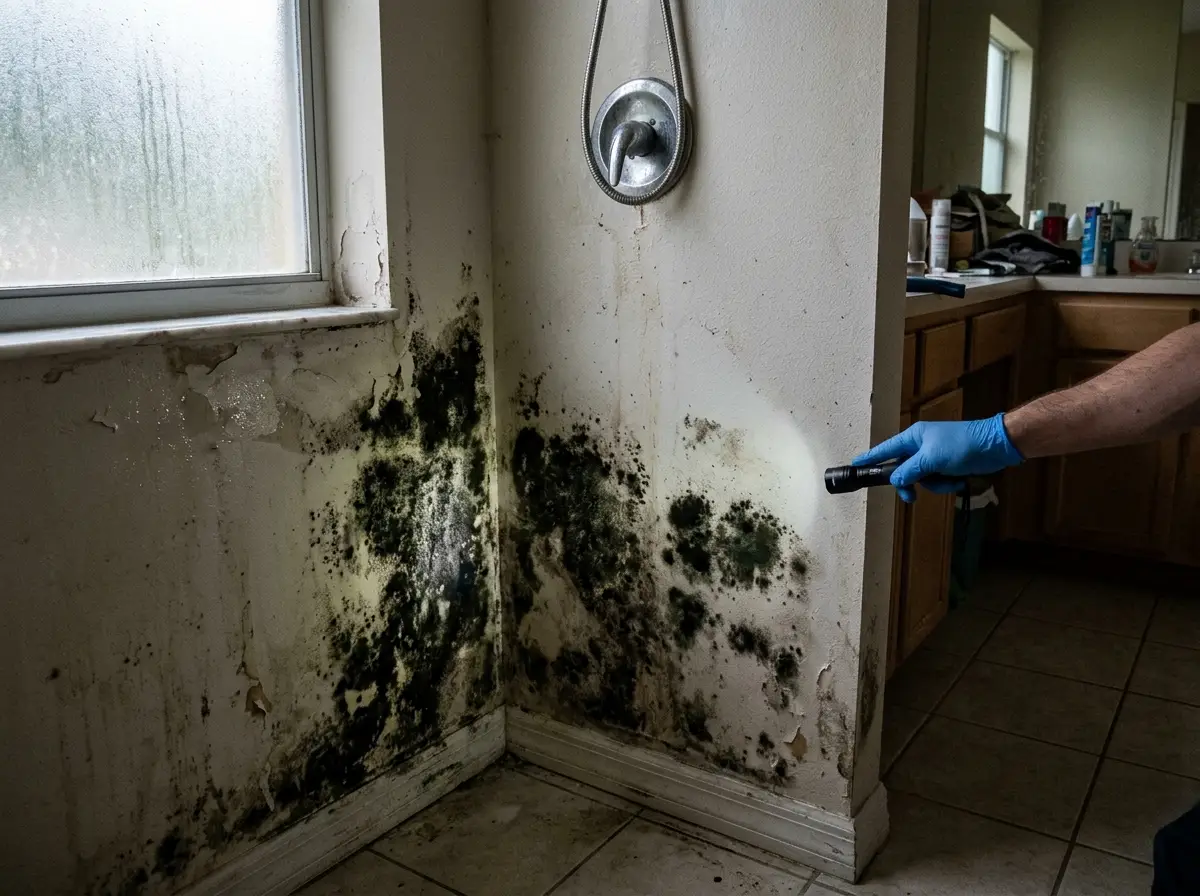
Here is something most people get wrong. They think if mold was really in their house, they would see it. Nope. What you see on the ceiling is usually just the tip of something way bigger hiding behind the drywall.
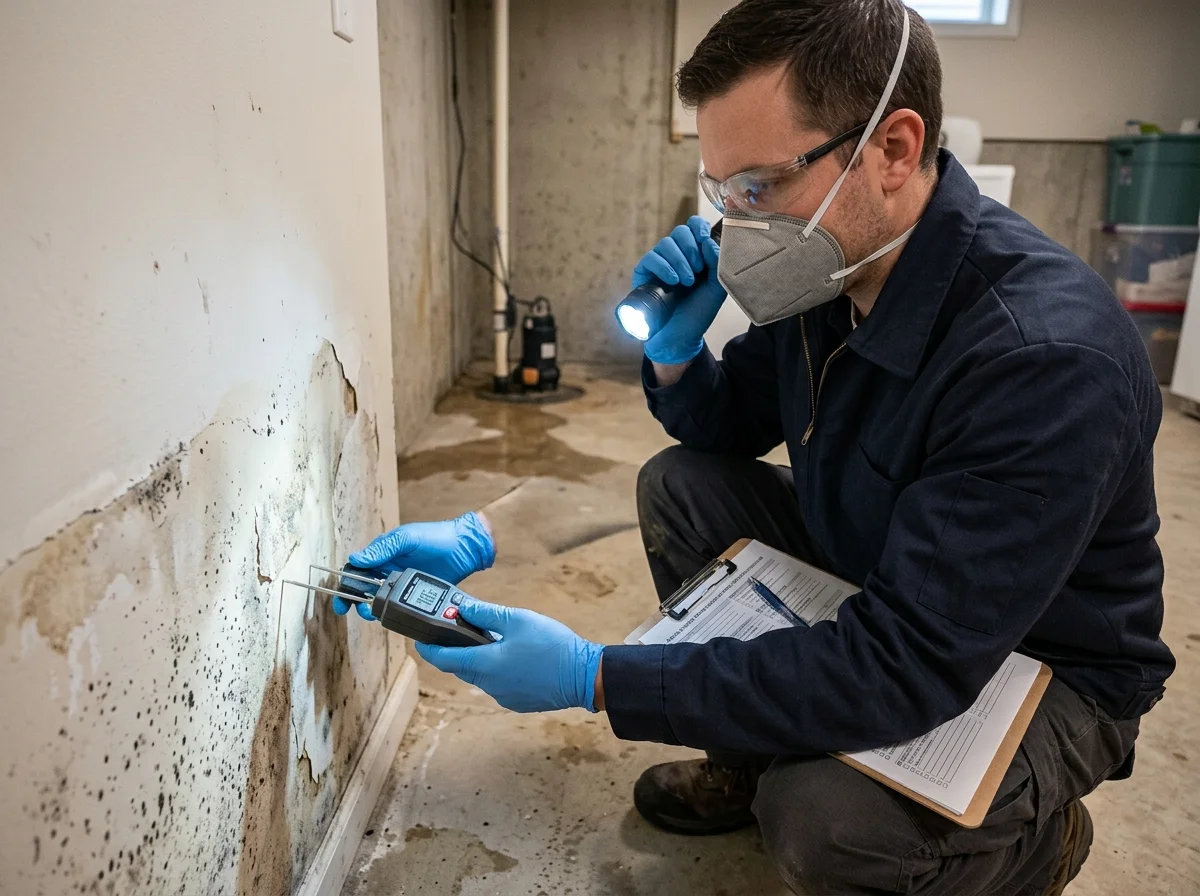
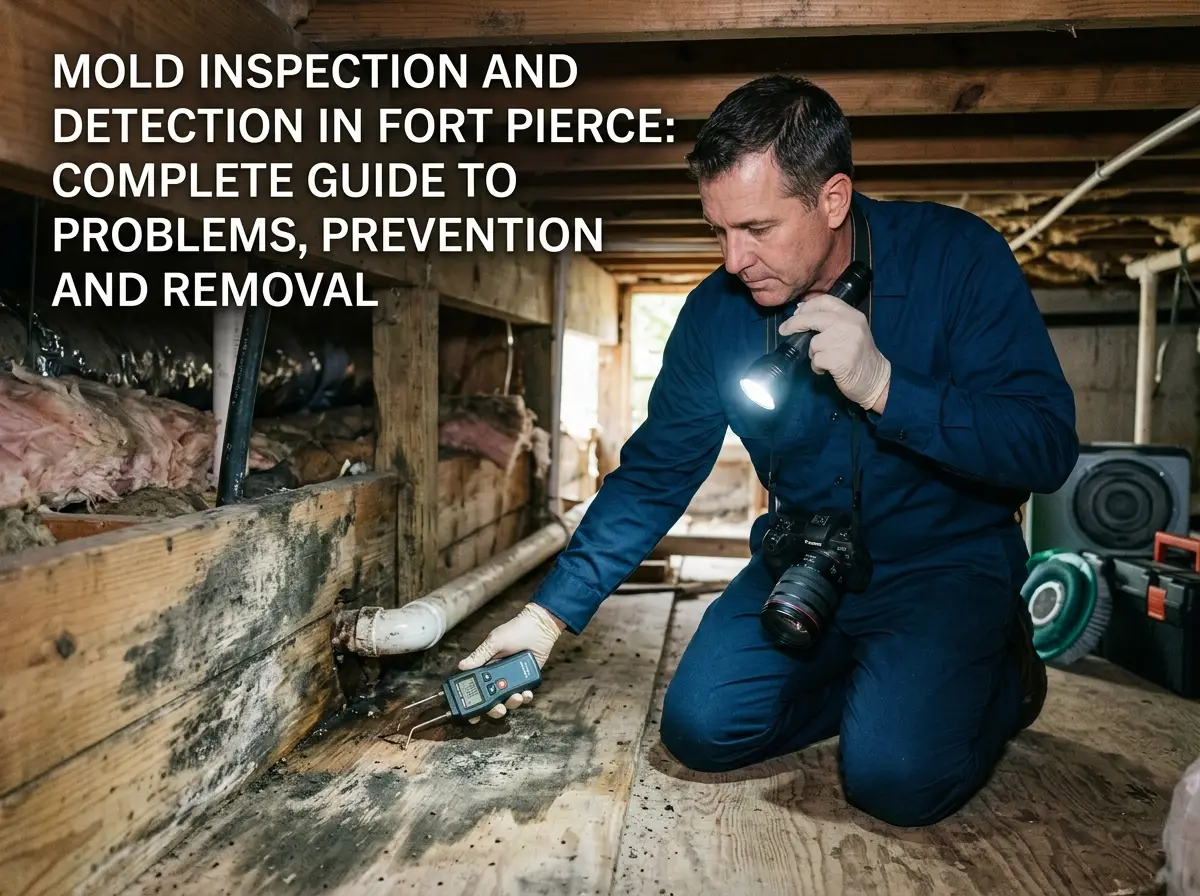
A real mold inspection in Fort Pierce does not stop at looking around the bathroom for five minutes. Good inspectors bring moisture meters. Some use thermal cameras that can literally see wet spots behind walls your eyes would never catch. They take air samples too, send them to a lab, and find out exactly what kind of mold you are dealing with and how bad it is.
Signs Something Is Wrong
That musty smell again. I keep coming back to it because it matters that much. If your house smells damp even right after cleaning, something is growing somewhere you cannot see.
Dark spots are showing up that were not there a month ago. Paint that is bubbling for no reason. Wood near a window that feels soft when you press on it. A windowsill that stays wet no matter how many times you dry it off.
One of these by itself, maybe keep an eye on it. A few of these together, just call someone already.
Where It Actually Hides
Crawl spaces are the worst. Moisture rises up from the ground constantly here and there is barely any airflow down there to dry things out. Mold in Fort Pierce homes very often starts in a crawl space, completely invisible, for months before anyone smells anything upstairs.
Older Fort Pierce homes built before 1980 have unique mold challenges. Plaster walls, wood framing, and poor ventilation make mold problems worse. If your home has decades of history, see our guide on mold testing in Fort Pierce’s older homes for construction-specific considerations.
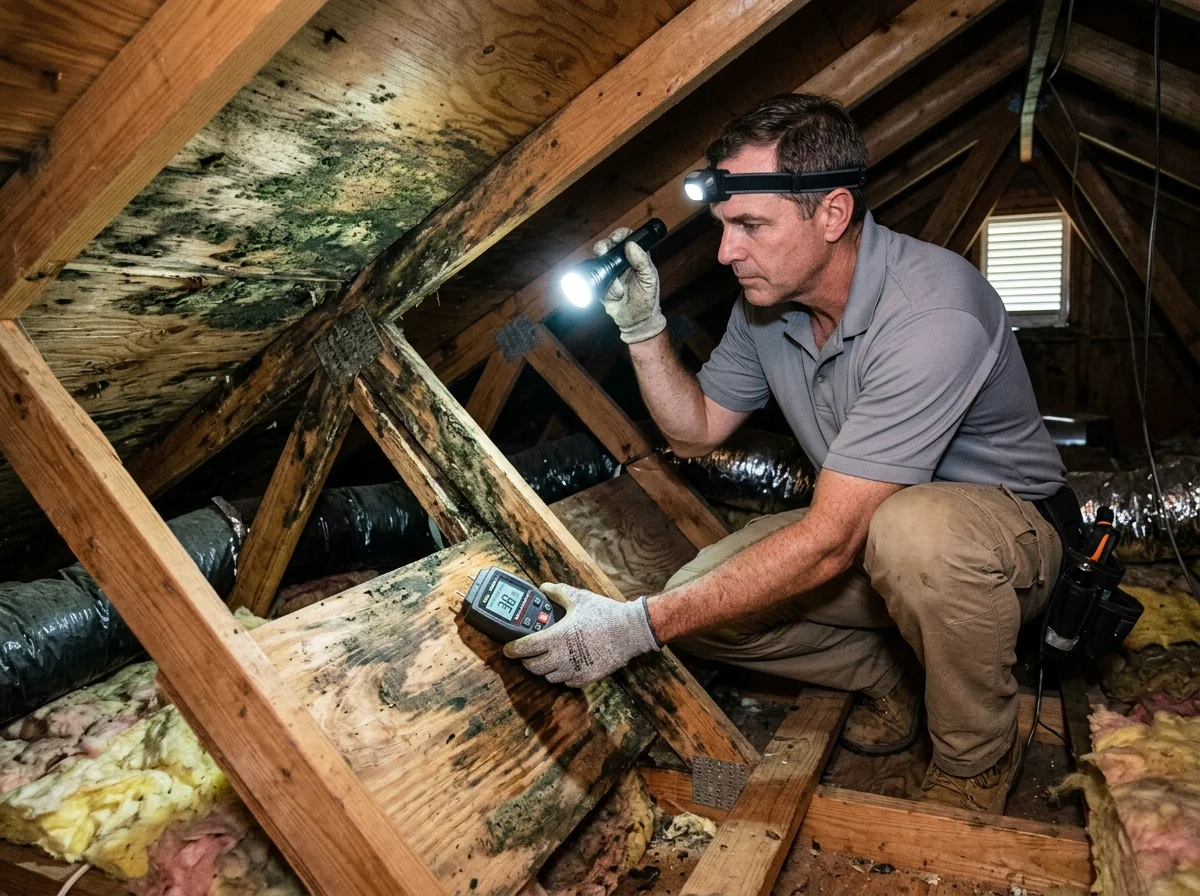
Attics come next. Heat rises, humidity follows it up, and one small roof leak can turn into a full mold colony across your rafters faster than people expect.
Bathrooms without a working exhaust fan stay damp way longer than they should. And your HVAC system, if it gets moisture inside the ductwork, will literally blow mold spores through your entire house every single time it kicks on.
Mold Repair Solution in Fort Pierce: DIY vs Calling a Pro
Not every mold spot needs someone in a full hazmat suit showing up. But some absolutely do, and knowing which is which actually matters here.
Stuff You Can Handle Yourself
A small patch, under ten square feet, on something like tile or glass, you can probably clean this one. Mask, gloves, eye protection, do not skip these. Mix one part bleach with ten parts water, spray it on, let it sit ten minutes, scrub, then dry it completely with a fan running.
If it shows back up in a few weeks though, that tells you the actual moisture problem never got fixed. Cleaning mold without fixing whatever is causing the dampness just buys you a little time before round two.
When You Need an Actual Professional Mold Repair Solution in Fort Pierce
Anything over ten square feet. Anything inside your walls, insulation, or HVAC ducts. Anything dark and spreading fast. That is your sign to stop and call professionals instead of grabbing a spray bottle from under the sink.
A real mold repair solution in fort pierce means sealing the area off first so spores do not just spread everywhere while they work. They pull out and properly dispose of anything contaminated. Treat what is left. Then test the air again afterward to make sure it actually worked, not just hope it did.
Florida actually requires separate licenses for inspecting mold versus remediating it. Which is good for you, honestly. It means the company that found the problem is not the same one trying to upsell you a ten-thousand-dollar fix. Always check that you are working with two different licensed companies here, not one doing both jobs.
Stopping Fort Pierce Humidity Mold From Coming Back
Getting rid of mold once is honestly the easy part. Keeping it gone in this climate is where the real work happens.
You want indoor humidity under 50 percent. Below that number mold really struggles to get going again. Above it, especially here, you are kind of just inviting it back in.
Your AC Does More Than You Realize
A properly sized AC unit pulls a serious amount of moisture out of your home just from running like normal. Get one that is too small and it will cool the air fine but barely touch the humidity, which somehow leaves you cold and damp at the same time. Sounds impossible until you actually live through it.
Whole home dehumidifiers hooked into your HVAC are worth looking into here. Those little portable units help one room but they cannot keep up with an entire house against Fort Pierce humidity.
Small Stuff That Actually Helps
Run the bathroom fan during every shower and leave it on another twenty minutes after. Glance under your sinks once a month, just a quick check. Clean gutters before hurricane season so water is not backing up against your siding. Reseal windows and doors every year because caulk just does not last as long down here.
None of this takes more than a few minutes. All of it adds up more than people think.
Picking the Right Mold Company in Fort Pierce
Florida requires separate licenses for assessment work and remediation work. Look this up through the Florida Department of Business and Professional Regulation before you hire anyone.
“Finding licensed, experienced mold inspectors in Fort Pierce protects your investment and health. Our professional mold inspection and testing services include thermal imaging, air quality testing, and detailed reports for insurance claims
Get a written scope of work before any remediation starts. It should say exactly what is being removed, how they are containing the area during the job, and what testing happens once they finish. If a company will not put that in writing, walk away.
Ask if they have actually worked on Fort Pierce homes specifically. Crawl space foundations, coastal construction, older materials, all of this changes how an inspection or repair should be done here versus somewhere inland.
FAQ: Mold Inspection and Detection in Fort Pierce
How much does a mold inspection cost in Fort Pierce?
Usually $200 to $400 for a basic visual inspection on an average sized home. Add lab tested air samples and you are looking at $400 to $700. Full inspections with thermal imaging run $600 to $900 or sometimes more depending on the home. Feels like a lot until you think about what fixing missed mold damage actually costs later. If you are buying a Fort Pierce home, this is nothing compared to what undiscovered mold could end up costing after closing.
Can I just grab a mold test kit instead of paying for an inspection?
You can, but honestly it will not tell you much. Those kits basically confirm mold exists somewhere, which in this climate is kind of a given anyway. What they cannot tell you is the species, how bad it is, or where it is actually coming from. A real mold inspection in fort pierce answers all three and that is the info you actually need before deciding anything.
How long does the repair part usually take?
A small surface job, a day or two tops. Mid level work with some drywall removal, three to five days typically. Bigger jobs covering multiple rooms or a crawl space can run two to three weeks once retesting is included. Rushing through this is exactly how mold comes back within a few months and you end up paying for the same job all over again.
Does insurance actually cover this stuff?
Sometimes, depends on the cause. Mold from something sudden like a burst pipe or storm damage usually falls under your water damage coverage. Mold from a slow leak nobody noticed or just general humidity is usually not covered. Read your actual policy and just call your agent and ask directly. If a storm caused it, document everything fast and file quickly because waiting can mess things up.
What stops mold from just coming right back after it is gone?
Fix whatever actually caused the moisture. Could be a roof problem, a plumbing leak, bad ventilation, or you just need a real dehumidifier. Keep humidity under 50 percent consistently which here usually means a properly sized AC or a dedicated dehumidifier running. Get a quick follow up check around six months out just to be sure everything stayed dry like it should.
What symptoms actually point to mold exposure?
Coughing or wheezing that gets worse at home and eases off somewhere else. Headaches and tiredness with no real explanation. Allergies acting up more than usual or asthma flaring more often. Kids and older folks often notice it first since their bodies react differently. If you keep noticing the pattern lines up with being home, get mold inspection services in Fort Pierce before assuming it is something else entirely.