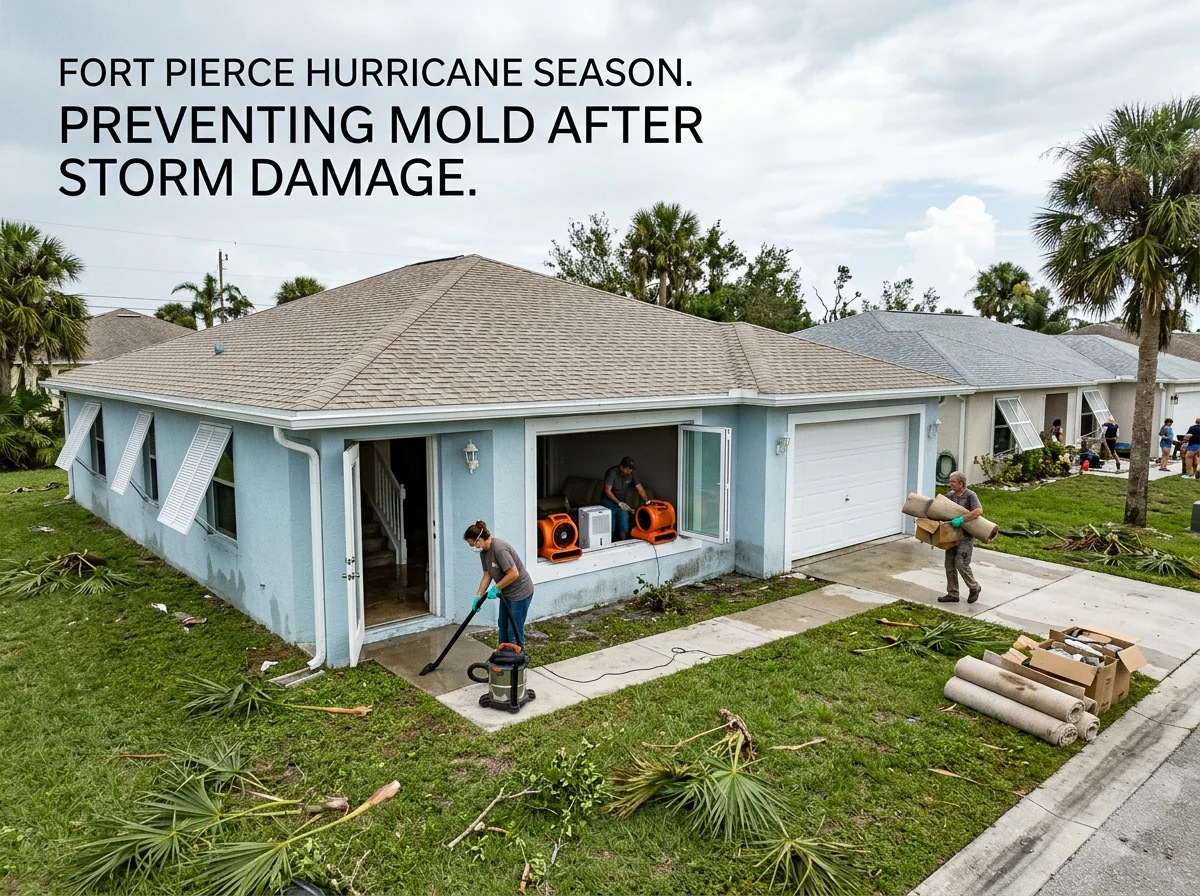
Hurricane season hits Fort Pierce hard. Every year, June through November, you’re watching the weather. That’s why mold inspection services in Fort Pierce are so important our local climate creates perfect conditions for mold growth after storms.”
Here’s what most Fort Pierce homeowners don’t realize: the hurricane damage isn’t the biggest problem. It’s what happens after. Mold. Mold grows fast in Florida’s heat and humidity. You’ve got water in your home. You’ve got 48-72 hours before serious mold colonization begins. That’s your window. Miss it and you’re dealing with expensive storm damage mold problems in Fort Pierce problems. Health problems. Hidden damage in walls.
This guide walks you through fort pierce hurricane mold prevention, what to do after a storm, how to spot mold, costs, and when to call professionals. To understand the broader context of how mold grows in our climate, check out our complete guide to mold inspection and detection in Fort Pierce, which covers why humidity makes mold so common here
Why Fort Pierce Creates Perfect Mold Conditions
Fort Pierce isn’t randomly chosen for mold issues. Geography and climate create the perfect environment.
Fort Pierce is on the Atlantic coast. Hurricanes hit here regularly. Storm surge pushes ocean water inland. This is why Fort Pierce residents depend on professional mold detection services that understand coastal humidity and saltwater damage unique to our area.
Second, Florida’s humidity is extreme. Average humidity in Fort Pierce is 75-80% year-round. Mold thrives in this. Add hurricane water and you’ve got a mold factory. Most Fort Pierce homes have wood framing, drywall, insulation all moisture-sensitive materials. Water soaks in and stays there. Mold grows inside walls where you can’t see it initially.
Third, hurricane season means high heat. Temperatures spike into the 90s. Heat accelerates mold growth dramatically. A wet wall in Fort Pierce summer can develop visible mold in 24-48 hours. That’s why speed matters.
Understanding Mold Growth: The Critical Window
Timing is everything with mold. The first 48-72 hours determine everything.
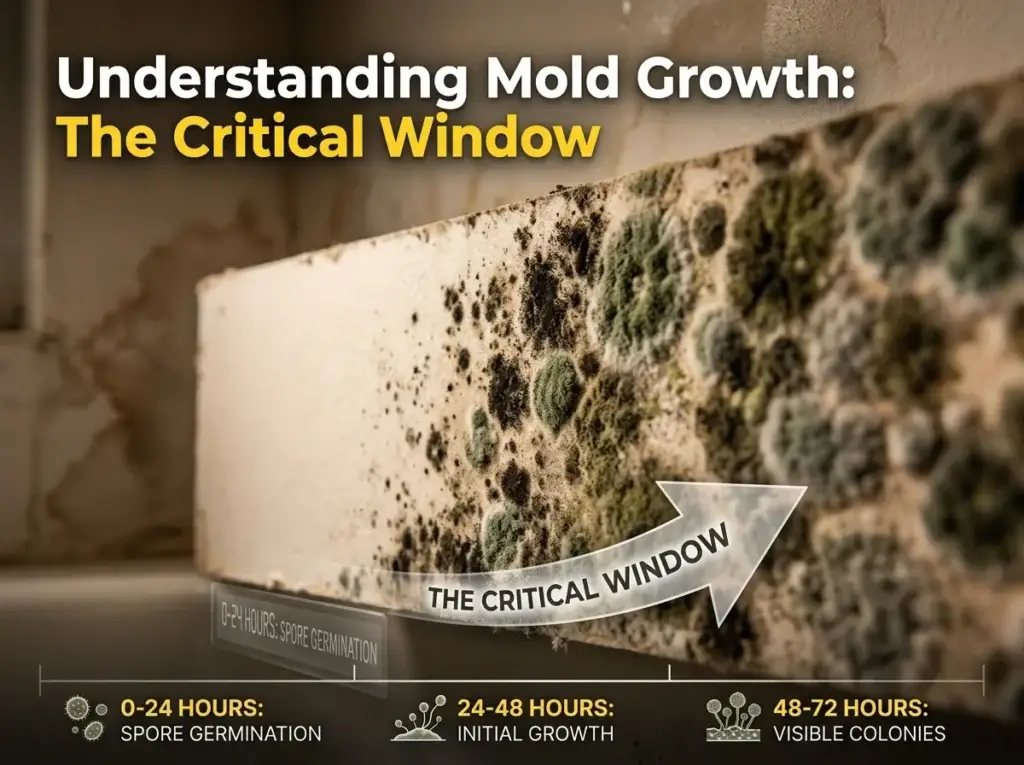
0-24 hours: Water’s in your home. Mold spores are dormant. You have a real chance to prevent disaster. Start using fans immediately. Open windows (if safe). Get air moving. Use portable dehumidifiers.
24-48 hours: Mold starts germinating. Spores are finding moisture pockets. Starting to grow. Not visible yet. But it’s happening fast. This is your critical intervention window.
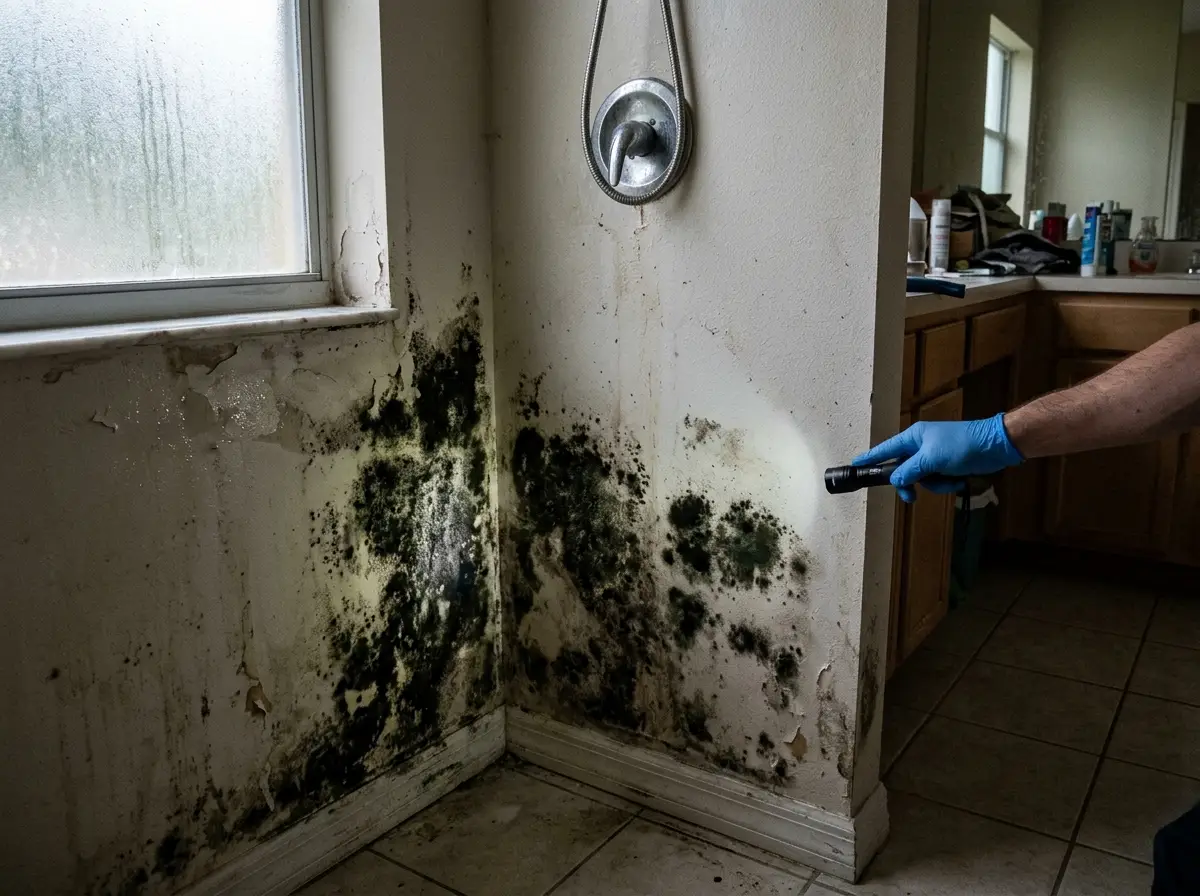
48-72+ hours: Visible mold appears. Black spots on walls. Green fuzz on baseboards. Musty smell develops. Now it’s serious. Professional help is likely needed.
In Fort Pierce’s heat and humidity, this timeline accelerates compared to other regions. You might have 24 hours, not 72. Speed is essential.
What Causes Post-Hurricane Mold
Understanding the sources helps you prevent problems.
Flooding. Hurricane surge pushes saltwater into homes. Overwhelmed storm drains cause freshwater flooding. Water enters through doors, windows, and foundation cracks. Sits there. Creates mold.
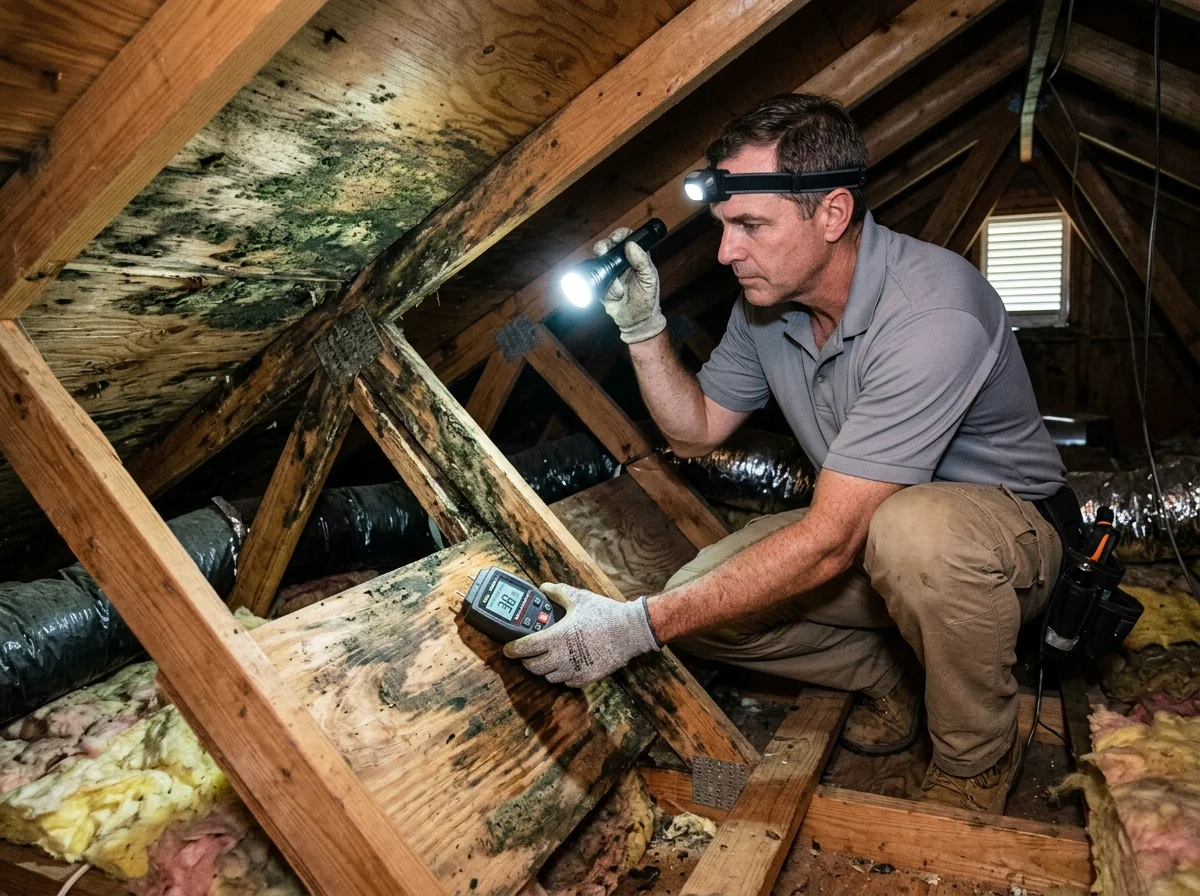
Broken roofs. Hurricanes rip roofs off or create holes. Water pours in. Insulation gets soaked. The attic becomes waterlogged. Mold grows in hidden spaces you won’t see for months.
Broken windows and doors. Wind-driven rain enters through breaks. Walls get soaked. The carpet becomes waterlogged. Baseboards absorb moisture for weeks.
Burst pipes. Water pressure changes during storms. Pipes burst. Fresh water floods inside homes. Creates different but equally problematic mold growth.
Poor drainage. Water pools around your foundation. Seeps through cracks. Basement and crawlspace flood. Becomes a mold paradise.
Immediate Actions: First 24-48 Hours
The critical window requires aggressive action.
Dry everything immediately. Open windows (if safe). Run every fan you have. Box fans. Ceiling fans. Portable fans. Get air moving through the house violently. Water that dries fast doesn’t grow mold. This is your primary defense.
Remove wet materials immediately. Dehumidify continuously. Ventilate aggressively. Work within the first 24-48 hours. Some mold is preventable with speed and effort. Extensive flooding requires professional mold inspection and testing services to assess damage and guide remediation
Get dehumidifiers immediately. This is non-negotiable. Industrial dehumidifiers are essential. Rent from:
- Home Depot (75-pint dehumidifiers, $40-$60/day)
- Sunbelt Rentals (heavy-duty units available same-day in Fort Pierce)
- Local Fort Pierce tool rental shops
- Some restoration companies rent with service packages
These pull moisture from air aggressively. Prevent mold growth. Rent them the day of the storm if possible. Multiple dehumidifiers work better than one.
Pump out standing water immediately. Basement flooding? Crawlspace water? Pump it out. Rent a submersible pump ($20-$40/day from Home Depot or Sunbelt). Every hour counts. Standing water grows mold exponentially.
Ventilate constantly. Don’t seal your home thinking you’re protecting it. That traps moisture. Crack windows wide. Let air flow constantly. Yes, you’ll be hot and humid. You’ll be uncomfortable. But you’ll prevent mold colonization.
Disinfect hard surfaces. Spray bleach solution (1 part bleach to 10 parts water) on anything exposed to floodwater. Kills spores before they germinate. Focus on baseboards, hard floors, furniture bottoms.
Document everything. Take photos and videos of all water damage. For insurance. For your records. Timestamp photos if possible. Evidence matters when filing claims.
Mold Types You Might Find in Fort Pierce Homes
Not all mold is equal. Different types pose different risks.
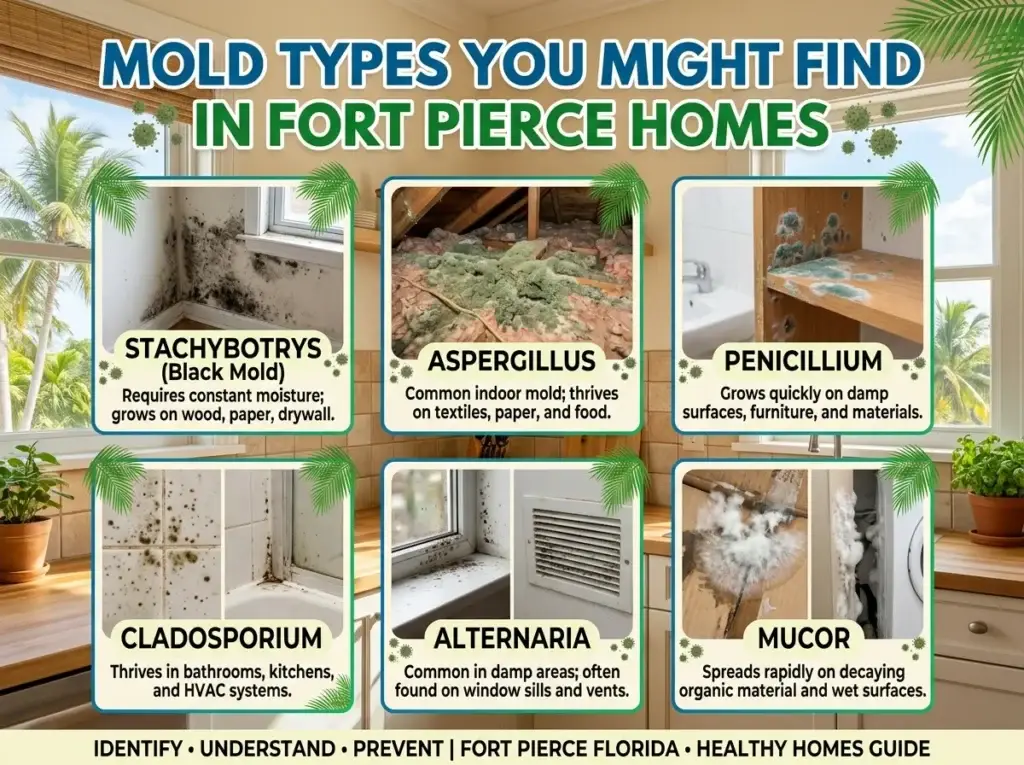
Black mold (Stachybotrys). Darkly pigmented. Usually found in chronically wet areas. Produces mycotoxins. Most dangerous type. Can cause serious respiratory issues. If you see black mold, call professionals immediately. Don’t attempt removal yourself.
Green mold (Aspergillus). Common in homes. Less dangerous than black mold but still problematic. Causes allergic reactions and respiratory issues in sensitive people. Found on drywall, insulation.
White mold (Sclerotinia). Looks like frost or powdery substance. Actually indicates very active moisture. Early-stage growth. Easier to treat than established mold.
Penicillium. Blue-green color. Common in homes. Less aggressive than black mold. But still causes allergies and respiratory issues.
Pink mold (Serratia marcescens). Actually bacteria, not mold. Less dangerous but indicates moisture problems.
Black and green molds are your concern. If you see either after a hurricane, professional removal is wise. Don’t DIY with these types.
Post-Hurricane Mold Inspection: What to Look For
Visual signs: Black or green spots on walls. Fuzzy growth on basement walls. Discoloration on baseboards. Visible mold is obvious. Address it immediately.
Smell: Musty smell is mold’s signature. If your home smells like an old basement after a storm, mold’s growing. Trust your nose.
Water stains: Brown or yellow stains indicate moisture. Even without visible mold, stains signal problems. Mold might be growing beneath the surface inside walls.
Peeling paint or warped walls: Water damage causes this. Mold often follows. Peeling isn’t cosmetic. It signals active moisture.
Soft spots in walls or floors: Press your finger on drywall. If it’s soft or spongy, water’s in there. Mold’s probably there too.
Health symptoms: Allergies. Coughing. Wheezing. Respiratory issues after a hurricane. Could be mold exposure from hidden colonies in walls or HVAC.
Professional Mold Testing and Lab Analysis
DIY inspection only catches visible mold. Hidden mold requires professionals. For a comprehensive overview of the complete mold inspection process, including detection methods used by certified inspectors, see our detailed guide
Air quality testing. Professionals collect air samples. Send to the lab. The lab counts mold spores. Identifies mold types. Compares indoor to outdoor levels. If the indoor temperature is higher, you have a problem. Cost: $300-$500.
Surface sampling. Swabs of suspicious areas. Sent to the lab. Identifies specific mold types. Confirm which mold you’re dealing with. Cost: $200-$400 per sample (usually 3-5 samples recommended).
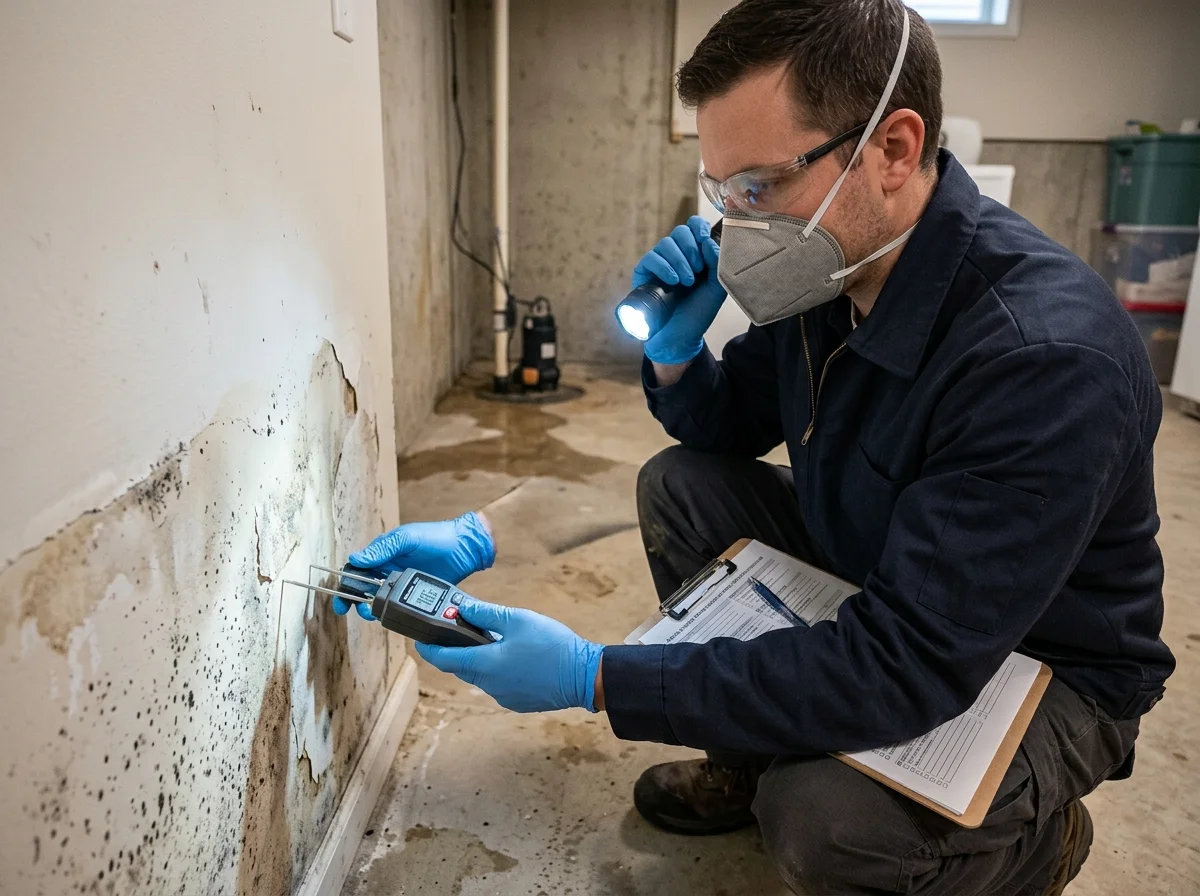
Moisture mapping. Professionals use moisture meters to find hidden water inside walls. Identifies exactly where problems are. Cost: $200-$600.
Professional mold inspection: Full visual inspection plus testing. Comprehensive report. Cost: $600-$1,500 total. Insurance often covers this if storm-related.
This testing matters. It proves what you’re dealing with. It supports insurance claims. It guides remediation decisions.
Professional Mold Remediation Costs
Sometimes DIY isn’t enough. Professional remediation is necessary. After a hurricane, professional mold inspection is the critical first step. Our certified inspectors identify exactly where mold is growing (visible and hidden), what type it is, and how severe the problem is.
Small mold areas (under 100 sq ft): $2,000-$4,000. Includes removal, disinfection, drying, monitoring.
Medium mold areas (100-500 sq ft): $4,000-$8,000.
Extensive mold (over 500 sq ft or multiple rooms): $8,000-$15,000+.
These costs include:
- Professional removal of affected materials
- HEPA vacuuming
- Antimicrobial treatment
- Industrial dehumidification (multiple days)
- Air scrubbing with HEPA filters
- Monitoring and follow-up testing
Find Fort Pierce companies:
- ServiceMaster Restoration (Fort Pierce, IICRC certified)
- SERVPRO of Fort Pierce (24/7 emergency response)
- Local mold removal companies (check Google, Yelp for reviews)
Always verify IICRC certification. Check Florida DBPR license. Get references.
Long-Term Prevention: Beyond the Storm
After the immediate crisis passes, focus on preventing future problems.
Install proper ventilation. Bathrooms need exhaust fans venting outside (not into the attic). Kitchens need range hoods. Remove moisture at the source.
Control humidity. Keep indoor humidity below 50%. Use AC in summer. Monitor with a cheap humidity meter ($15-$30 from any hardware store).
Maintain gutters and drainage. Clean gutters quarterly. Make sure water flows away from the foundation. Clogged gutters cause foundation seepage.
Seal foundation cracks. Water finds tiny cracks. Seal them with hydraulic cement. Prevents seepage.
Trim trees. Overhanging branches break in storms. Trim them back 10-15 feet from your roof. Prevents roof damage.
Install a sump pump. If you’re in a flood-prone area, a sump pump is essential. Costs $500-$1,500 installed. Pumps water away from the foundation. Saves tens of thousands in water damage.
Insurance and Mold Claims
Understanding insurance helps you get paid properly.
File claims immediately. Don’t wait. Insurance companies value quick action. Immediate claims demonstrate you tried to prevent damage. Waiting suggests negligence.
Document everything. Photos. Videos. Receipts for mitigation efforts. Timeline of events. Professional assessments. Documentation supports your claim.
Read your policy carefully. Some policies have mold exclusions. Some have mold caps (limit coverage to $10,000). Know what you’re covered for. Ask your agent specifically about mold coverage.
Get a professional assessment before filing. Hire a mold inspector. Get official documentation. Insurance companies respect professional assessments over homeowner claims.
Work with your adjuster. Be transparent. Show them damage. Answer questions. Provide documentation. Cooperation leads to fair settlements.
Hurricane-related mold is usually covered. If you can prove mold resulted from hurricane damage (not pre-existing poor maintenance), coverage is standard. File properly and you’ll likely get paid.
FAQ About Hurricane Mold Prevention
How quickly does mold grow after hurricane flooding in Fort Pierce?
Mold can start growing within 24 hours in Fort Pierce’s heat and humidity. Visible mold might appear by 48-72 hours. That’s why immediate action matters. Dry aggressively. Remove wet materials. Use dehumidifiers. The first 24-48 hours are critical. Wait beyond that and you’ve got serious problems requiring professional remediation.
What’s the cost of professional mold inspection in Fort Pierce?
Professional mold inspection runs $600-$1,500 for comprehensive assessment including air quality testing and surface sampling. Basic visual inspection is $300-$800. Lab analysis adds $200-$500. Worth every penny after a hurricane. Pros find hidden mold and document everything for insurance claims.
Can I prevent mold if my home flooded during a hurricane?
Depends on how much water and how fast you act. Little water and quick drying? Yes, aggressive action works. Lots of standing water? You’ll need professional help. Remove wet materials immediately. Dehumidify continuously. Ventilate aggressively. Work within the first 24-48 hours. Some mold is preventable with speed and effort. Extensive flooding requires professional mitigation.
Should I use bleach to kill mold after a hurricane?
Bleach kills spores on hard surfaces. Useful for immediate disinfection of baseboards, hard floors. But bleach doesn’t penetrate porous materials (drywall, insulation). For those, removal is better than bleach. Professional antimicrobial treatments are more effective than bleach. Combine bleach spray with removal and dehumidification. Don’t rely solely on bleach.
What’s the difference between mold types found after hurricanes?
Black mold (Stachybotrys) produces mycotoxins and is most dangerous. Green mold (Aspergillus) is common and moderately dangerous. White mold (Sclerotinia) indicates active moisture. Pink “mold” is actually bacteria. Black and green require professional removal. White might be DIY-manageable if caught early. Lab testing identifies which type you have, guiding removal decisions.
Do I need mold testing or can I just remove visible mold?
Professional testing is wise after major flooding. It identifies hidden mold in walls and HVAC systems. Proves mold exists for insurance claims. Guides remediation priorities. Air quality testing and surface sampling cost $500-$1,000 but protect your health and support insurance claims. Visible mold removal alone misses hidden colonies growing inside walls.