Your Fort Pierce home was built in 1962. Maybe 1950. Maybe even earlier. It’s solid. It’s got character. But lately you’ve noticed something. A musty smell. Some discoloration on walls. You’re wondering: does this older home have a mold problem? And if it does, is it different from newer homes?
Here’s the thing: older homes have different mold challenges than newer ones. They were built with different materials. Different construction methods. Different ventilation approaches. Mold testing fort pierce older homes isn’t the same as testing a 2010 construction home. Historic homes have unique vulnerabilities. Understanding these vulnerabilities helps you catch problems early.
If you’re new to understanding how mold behaves in Fort Pierce’s climate, check out our complete guide to mold inspection and detection in Fort Pierce. It covers the basics of humidity, mold growth timelines, and what makes this area particularly challenging for all homes.
This guide walks you through mold testing specifically for older Fort Pierce properties. What makes historic home mold different. Why vintage property mold inspection requires special knowledge. Common problems in old houses. Prevention strategies that actually work. Cost considerations. Finding specialists who understand historic construction.
Why Older Homes Are Mold Magnets
Fort Pierce has plenty of older homes. Many built in the 1950s-1980s. Some even earlier. These homes are wonderful. But they have moisture issues newer homes don’t.
Old construction used different materials. Wood framing was common. Plaster instead of drywall. These materials absorb moisture readily. When moisture gets in, it stays. Mold loves that. Newer homes use materials designed to resist moisture. Vinyl barriers. Engineered wood. Different approach entirely.
If you’re new to understanding how mold behaves in Fort Pierce’s climate, check out our complete guide to mold inspection and detection in Fort Pierce. It covers the basics of humidity, mold growth timelines, and what makes this area particularly challenging for all homes.
Ventilation was different back then. Homes weren’t sealed tight. Air moved through walls freely. That sounds good for drying. But it also meant water could infiltrate everywhere. Modern homes are sealed. Moisture can’t travel as freely. But when it does get in, at least it’s trapped where you can find it.
Florida’s humidity is brutal on old homes. Coastal air in Fort Pierce means salt spray. Moisture from the Atlantic. High humidity year-round. That constant moisture exposure breaks down old materials faster. Older homes show wear that newer ones resist better.
The real issue: old house mold problems compound over decades. Small leaks that were ignored. Years of humidity without proper ventilation. Foundation issues from settling. All these create perfect mold conditions. By the time you notice, mold might be extensive.
What Makes Historic Home Mold Different
Mold testing fort pierce older homes requires understanding how these homes are constructed. Historic homes have specific vulnerabilities.
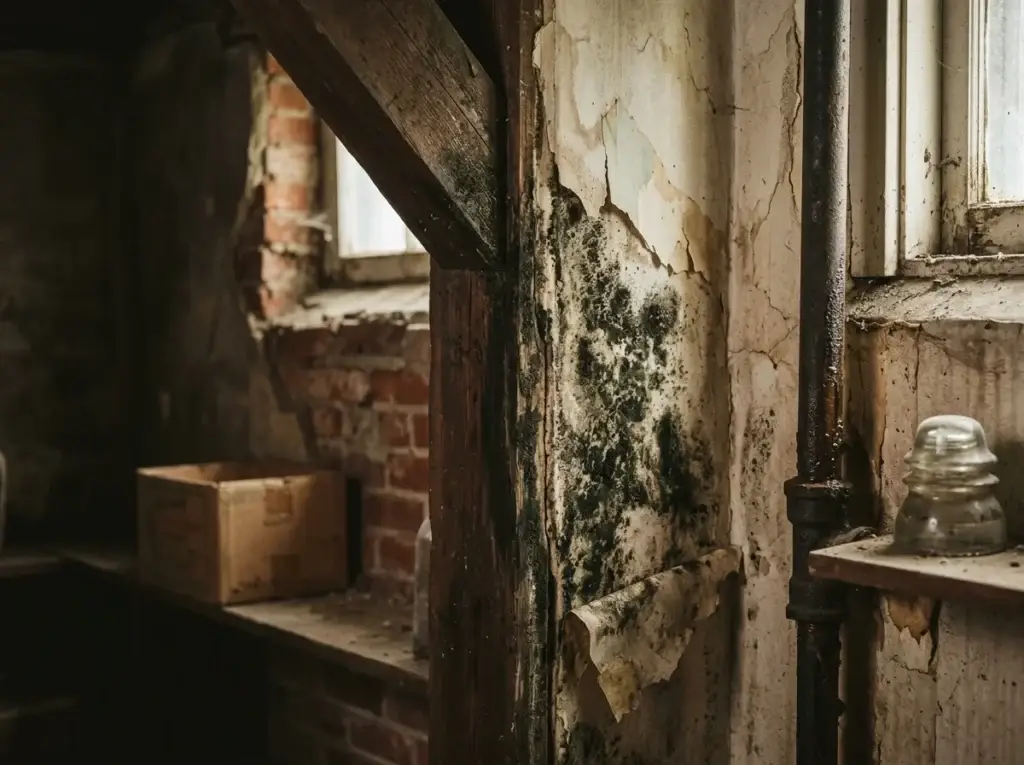
Plaster walls are porous. They absorb moisture like sponges. Mold grows inside plaster, not just on surface. You can’t see it. Testing is the only way to know. Drywall in newer homes is also porous but designed differently. Different mold behavior.
Wood framing absorbs moisture. Older homes used solid wood beams. Beautiful but vulnerable. Water damage in wood leads to rot and mold. Once mold colonizes wood framing, structural integrity is at risk. This is serious. Not cosmetic.
Foundations in older homes often lack moisture barriers. Built directly on soil sometimes. Water wicks up into walls. Basements and crawlspaces flood regularly. Ground moisture creates constant dampness. Perfect mold environment.
Many of Fort Pierce’s waterfront homes were built decades ago when construction standards were minimal. Combining vintage materials with salt air and coastal moisture creates extreme mold vulnerability. Learn about older waterfront homes in Fort Pierce and their unique inspection needs
Roofing materials degrade differently. Older asphalt shingles fail in ways modern shingles don’t. When roofs leak, water travels through vintage construction materials differently. Spreads farther. Takes longer to dry. Mold colonizes faster.
Ventilation systems are minimal or non-existent. No exhaust fans in bathrooms originally. No mechanical ventilation. Moisture accumulated. Condensation on windows yearly. These conditions breed mold silently.
Common Mold Problems in Vintage Property Construction
Vintage property mold inspection consistently finds similar issues. Understanding these helps you know what to look for.
Crawlspace mold is nearly universal in older Fort Pierce homes. These spaces are damp. Poor ventilation. Water intrusion from heavy rains. Mold grows aggressively in crawlspaces. It spreads upward into the home. Affects air quality above. Crawlspace mold is harder to detect but critical to address.
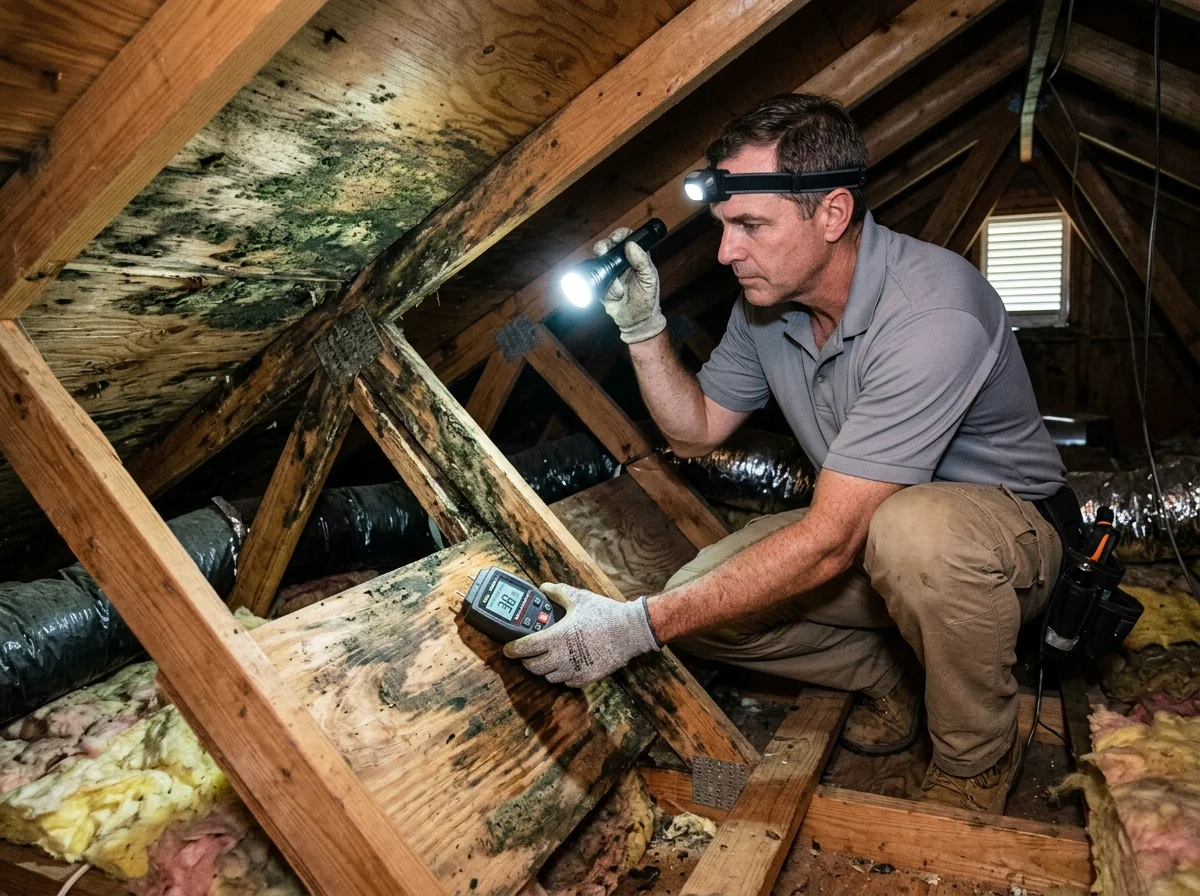
Attic mold happens when roofs leak. Water soaks insulation. Travels to rafters. Mold colonizes wood framing. You don’t see it unless you look inside the attic. By the time it’s visible, damage is done. Roof leaks in old homes go unnoticed for years sometimes.
Older Fort Pierce homes weren’t built to withstand modern hurricane standards. When storms hit, vintage roofs fail, plaster cracks, and outdated construction lets water pour in. See our older homes and hurricane mold damage guide for storm preparation specific to historic properties
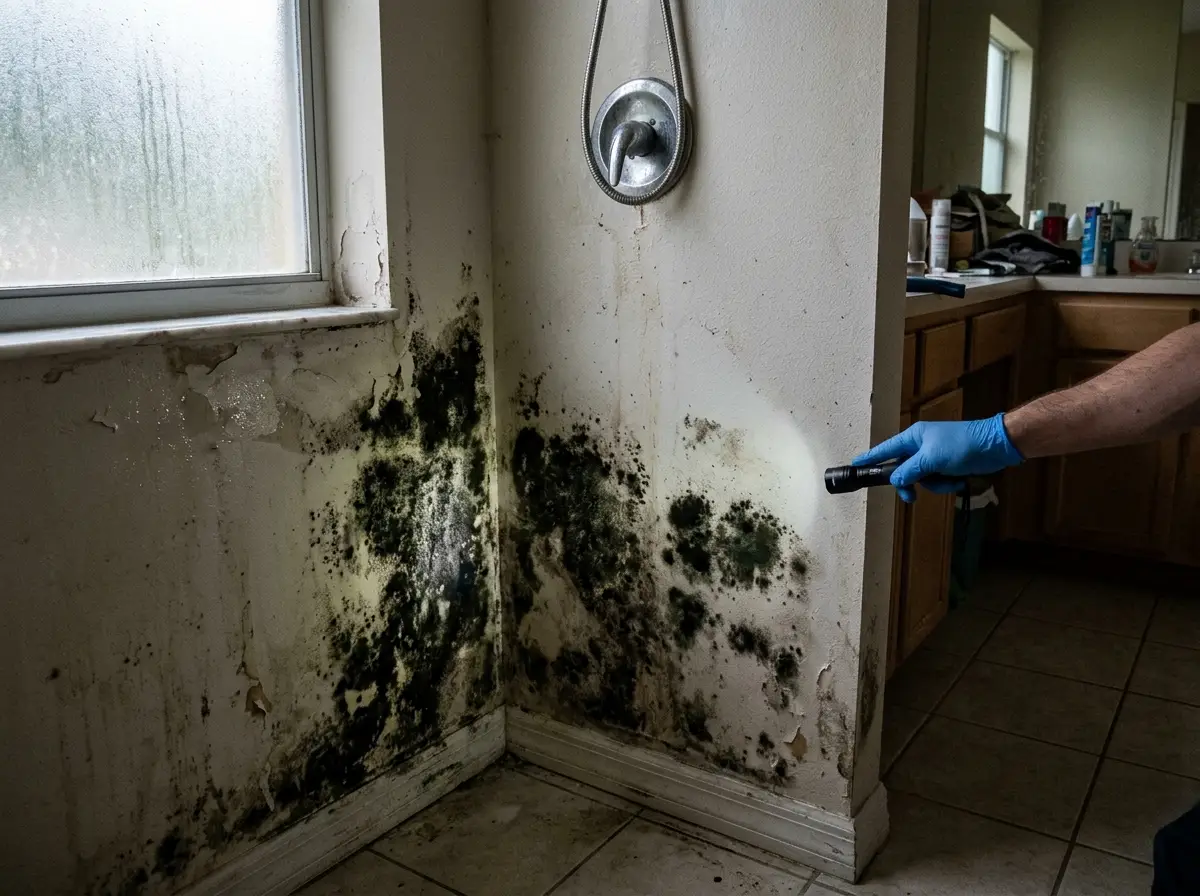
Bathroom mold is common. Old bathrooms lack exhaust fans. Moisture builds during showers. Has nowhere to go. Walls absorb moisture. Mold grows behind tiles. Inside walls. Visible mold is only the surface problem.
Kitchen mold often stems from old plumbing. Pipes leak gradually. Water damage goes unnoticed. Mold colonizes walls around pipes. Cabinetry absorbs moisture. Mold hides inside cabinets for years.
Basement mold is predictable in older homes. Basements built without waterproofing. Water intrusion is guaranteed eventually. Standing water breeds mold in days. Even damp basements without standing water grow mold slowly over years.
Why Mold Testing Is Essential in Older Homes
You can see obvious mold. Black spots on tiles. Fuzzy growth on walls. But most mold is hidden. Inside walls. Behind plaster. Inside wood framing.
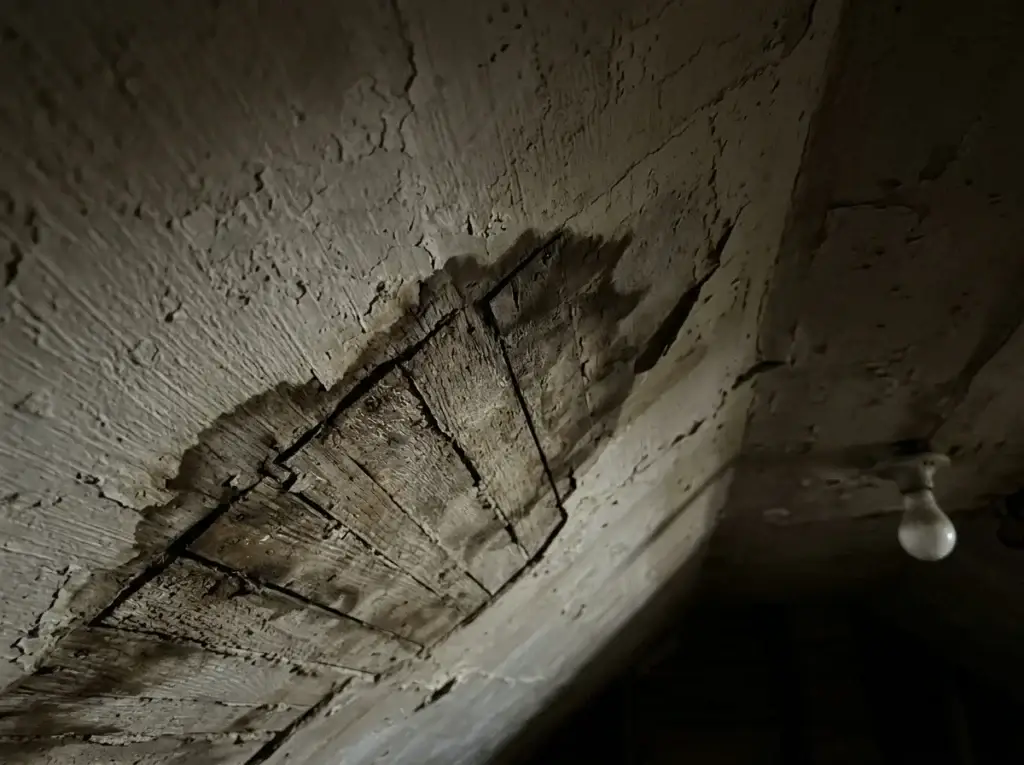
Mold testing fort pierce older homes finds hidden mold before it becomes catastrophic. Professional testing includes air quality testing. Surface sampling. Moisture mapping. It identifies mold species. Determines severity. Guides remediation decisions.
Without testing, you’re guessing. You might think a musty smell is normal “old house smell.” But it could be extensive hidden mold. You might miss damage developing in walls. By the time it becomes obvious, remediation costs are astronomical.
Testing protects your health too. Some mold species are toxic. Historic home mold in older Fort Pierce homes often includes species that cause respiratory issues. Testing identifies which species you have. Helps you understand health risks.
Testing also helps with insurance claims. If water damage happens (pipe burst, roof leak), insurance wants documentation. Professional mold testing provides evidence of damage. Helps claims get approved.
Understanding Moisture Sources in Older Homes
You can’t fix mold without fixing moisture. Understanding where moisture comes from in old house mold situations is critical.
Foundation moisture is the biggest source. Older homes lack proper moisture barriers under foundations. Water wicks up from soil. This is ongoing. Never stops. Only constant dehumidification and drainage solutions help.
Roof leaks cause cascading problems. Old roofs fail gradually. Shingles deteriorate. Flashing rusts. Water enters. Travels through attic. Down walls. Into different areas. By the time obvious water damage appears, extensive hidden damage exists.
Window and door leaks happen as seals fail. Older weatherstripping deteriorates. Caulk fails. Rain-driven moisture enters around frames. This seems minor. But daily exposure over decades causes serious mold.
Plumbing leaks are insidious. Gradual water damage. You might not notice until mold is advanced. Old copper pipes corrode. Old galvanized pipes fail. Leaks continue for months undetected.
Humidity from climate is relentless in Fort Pierce. 75-80% humidity year-round is normal. Older homes can’t manage this. Air conditioning helps. But it’s only partial solution.
Condensation forms when warm humid air meets cold surfaces. Older homes have poor insulation. Cold walls in winter. Condensation forms. Mold follows.
How Older Construction Materials React to Mold
Different materials in older homes support mold differently.
Plaster walls are extremely porous. Mold penetrates deep. Surface cleaning doesn’t solve it. Interior plaster might need removal. This is expensive. Plaster in bathrooms is particularly problematic.
Wood framing absorbs moisture readily. Once mold colonizes wood, it’s serious. Wood rots. Structure weakens. Complete remediation might require replacing affected framing. Structural restoration is expensive.
Original insulation (if present) was often paper-based. Cellulose maybe. These materials are food sources for mold. Mold colonizes insulation aggressively. Once compromised, insulation must be replaced.
Hardwood floors in older homes absorb moisture. Subfloors get damp. Mold grows underneath. Hardwood finishes fail. Floors might need complete replacement.
Ceiling plaster absorbs moisture and sags when wet. Wet plaster becomes heavy. Ceilings can collapse. This is dangerous. Requires professional assessment and repair.
Understanding these material vulnerabilities helps you understand why mold testing fort pierce older homes requires specialists familiar with historic construction.
Mold Testing Process for Older Homes
Mold testing in older properties follows similar steps but requires more investigation.
Initial assessment starts with visual inspection. Professional looks for visible mold. Water stains. Moisture damage. Asks about history. When was roof replaced? Any pipe leaks? Basement flooding? This history guides testing.
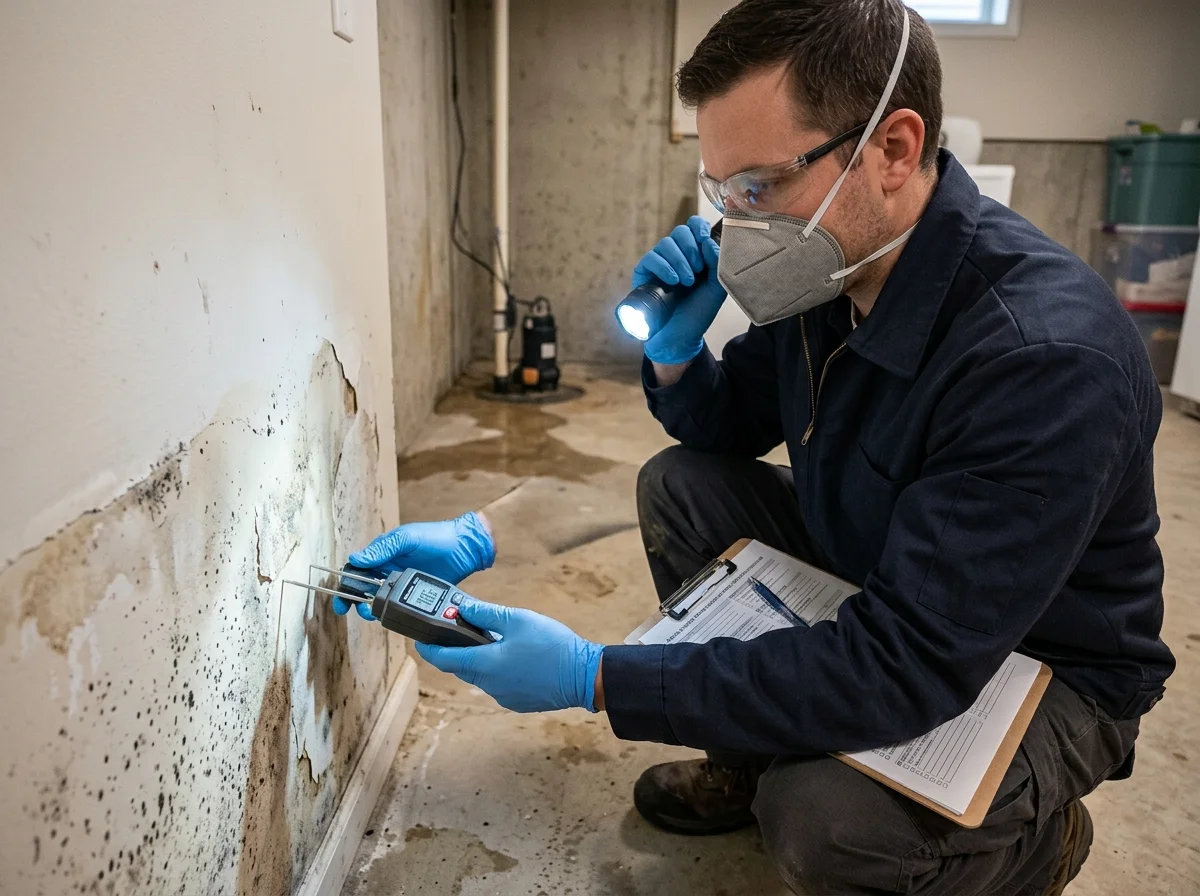
Moisture mapping uses meters to find damp areas. Especially important in older homes. Water might be hidden inside walls. Moisture mapping finds it. Helps guide sampling locations.
Air quality testing collects spores from indoor air. Sends to lab. Identifies mold species. Compares indoor to outdoor levels. High indoor levels indicate active mold growth somewhere.
Surface sampling swabs suspicious areas. Sends to lab. Identifies what’s growing. Confirms location and severity. Critical for understanding scope.
Crawlspace inspection is essential in older homes. Many haven’t been properly inspected in decades. Crawlspaces often have major mold growth. Requires photos and documentation.
Attic inspection checks roof condition from inside. Looks for leaks. Water stains. Mold on wood. Checks insulation condition.
Lab analysis provides definitive answers. Which mold species. Concentration levels. What’s a health concern. What’s cosmetic. Guides remediation planning.
Testing older homes requires understanding vintage construction, plaster absorption, and historic materials. Our historic home mold inspection specialists have experience with Fort Pierce’s older properties and preservation considerations
Preventing Mold in Older Fort Pierce Homes
Prevention is always cheaper than remediation. Some strategies work specifically well for older homes.
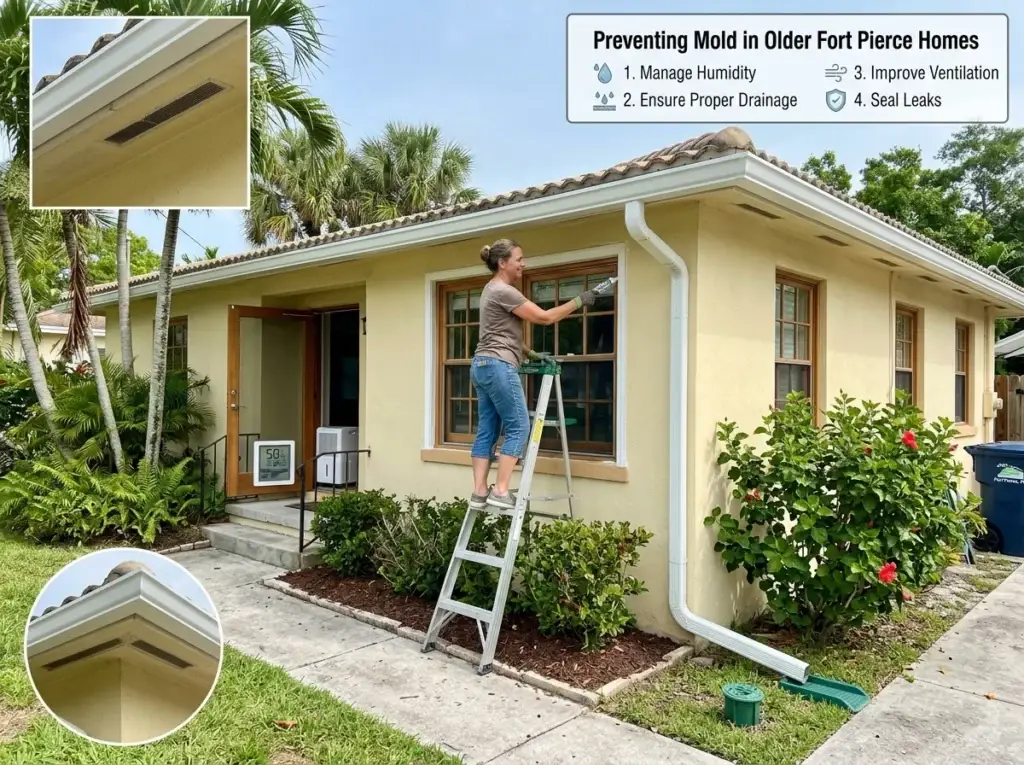
Dehumidification is essential. Fort Pierce humidity is relentless. Portable dehumidifiers help single rooms. Whole-home dehumidifiers are better. Keep humidity below 50%. Mold struggles when it’s dry.
Ventilation improvement helps enormously. Install exhaust fans in bathrooms. Kitchen ventilation. Crawlspace ventilation. Get air moving. Removes moisture before mold grows.
Maintain gutters religiously. Clogged gutters cause water damage. Clean quarterly. Make sure water flows away from foundation. Simple maintenance prevents major problems.
Seal cracks in foundation. Caulk window gaps. Weatherstrip doors. Slow moisture intrusion. Won’t stop it completely. But helps.
Fix leaks immediately. Pipe leaks. Roof leaks. Don’t ignore them. Even slow leaks cause major mold over months. Address immediately.
Monitor crawlspaces. Check regularly for moisture. Install vapor barriers if absent. Ensure drainage is working. Crawlspace conditions determine home conditions.
Insulate properly. Good insulation prevents condensation. Reduces temperature differences. Helps humidity control.
Remediation: What’s Different in Older Homes
Mold testing identifies the problem. Remediation fixes it. But older homes require different approaches.
Plaster removal might be necessary. Infected plaster can’t be saved. Must be removed. Then walls rebuilt. This is expensive. Takes time. But necessary for proper remediation.
Wood replacement might be required. Infected wood framing can’t stay. Structural integrity is at risk. Requires skilled carpenters. Expensive. But structural failure is worse.
Crawlspace remediation is complex. Might require new vapor barriers. Improved drainage. Dehumidification systems. Takes time. Not always a quick fix.
Professional moisture management is essential. Can’t just remove mold. Must fix why it grew. Otherwise it returns.
Historic preservation considerations matter. Some older homes are registered historic. Remediation must follow preservation guidelines. Limits what changes are allowed. Complicates remediation. Requires specialists familiar with historic requirements.
Finding Specialists for Older Homes
Not all mold companies understand older construction. You need specialists.
Experience with historic homes is critical. Ask directly. How many older homes have they tested? Can they explain how older construction differs? Do they know about plaster? Original materials? This expertise matters.
Licensed and certified professionals only. Verify credentials. Ask about certifications. IICRC (Inspection, Cleaning, and Restoration Certification) is the standard. Check it.
References from older home owners. Ask for examples of work on homes built before 1980. Call those references. Ask specifically about older home challenges. How did they handle unique issues?
Understanding of Florida climate and construction. Not all contractors understand Fort Pierce-specific challenges. Salt air. Humidity. Construction practices from decades ago. These require local knowledge.
Written assessment before remediation. Get a detailed report. Identify every problem. Explain scope of work. Provide a remediation plan. Don’t accept vague estimates.
Warranty in writing. If mold returns within a specific timeframe, they fix it free. Commitment to doing work right.
FAQ About Mold Testing in Older Fort Pierce Homes
Why does my older Fort Pierce home smell musty?
Musty smell indicates mold somewhere. Older homes trap moisture more readily than newer ones. Mold grows in hidden spaces (walls, crawlspaces, attics). Smell reaches you but the source is hidden. Professional mold testing identifies where it’s growing. Don’t ignore the musty smell. It means moisture and mold are present.
Should I test my older home even if I don’t see visible mold?
Yes, absolutely. Most mold in older homes is hidden. Inside walls. Behind the plaster. In crawlspaces. Professional mold testing fort pierce older homes finds mold before visible damage appears. Better to find it early. Remediation is cheaper and less invasive early.
What’s the cost of mold testing in an older Fort Pierce home?
Professional mold testing ranges $600-$1,500 for comprehensive assessment including air quality testing and surface sampling. Lab analysis adds $200-$500. Older homes might need extra testing (crawlspace, attic evaluation). Worth the investment. Prevents costly damage.
Can old plaster walls be saved if they have mold?
Sometimes. If surface mold only (not deep penetration), professional cleaning might work. But if mold penetrated interior plaster, replacement is usually necessary. Plaster is porous. Deep mold infection can’t be reliably removed. Better to replace affected sections.
How often should I test an older Fort Pierce home for mold?
If mold testing shows no active mold, annual inspection is wise. If mold is found and remediated, follow-up testing 30 days post-remediation confirms success. Then annually after. After any water event (pipe burst, roof leak, flooding), immediate testing is necessary.
What’s the difference between testing older versus newer homes?
Older homes have unique vulnerabilities: plaster absorption, poor ventilation, aged materials, foundation issues. Historic home mold inspection requires understanding these specifics. Testing must include crawlspaces and attics (more critical in older homes). Specialists familiar with older construction are necessary. Newer homes are more straightforward to test.