
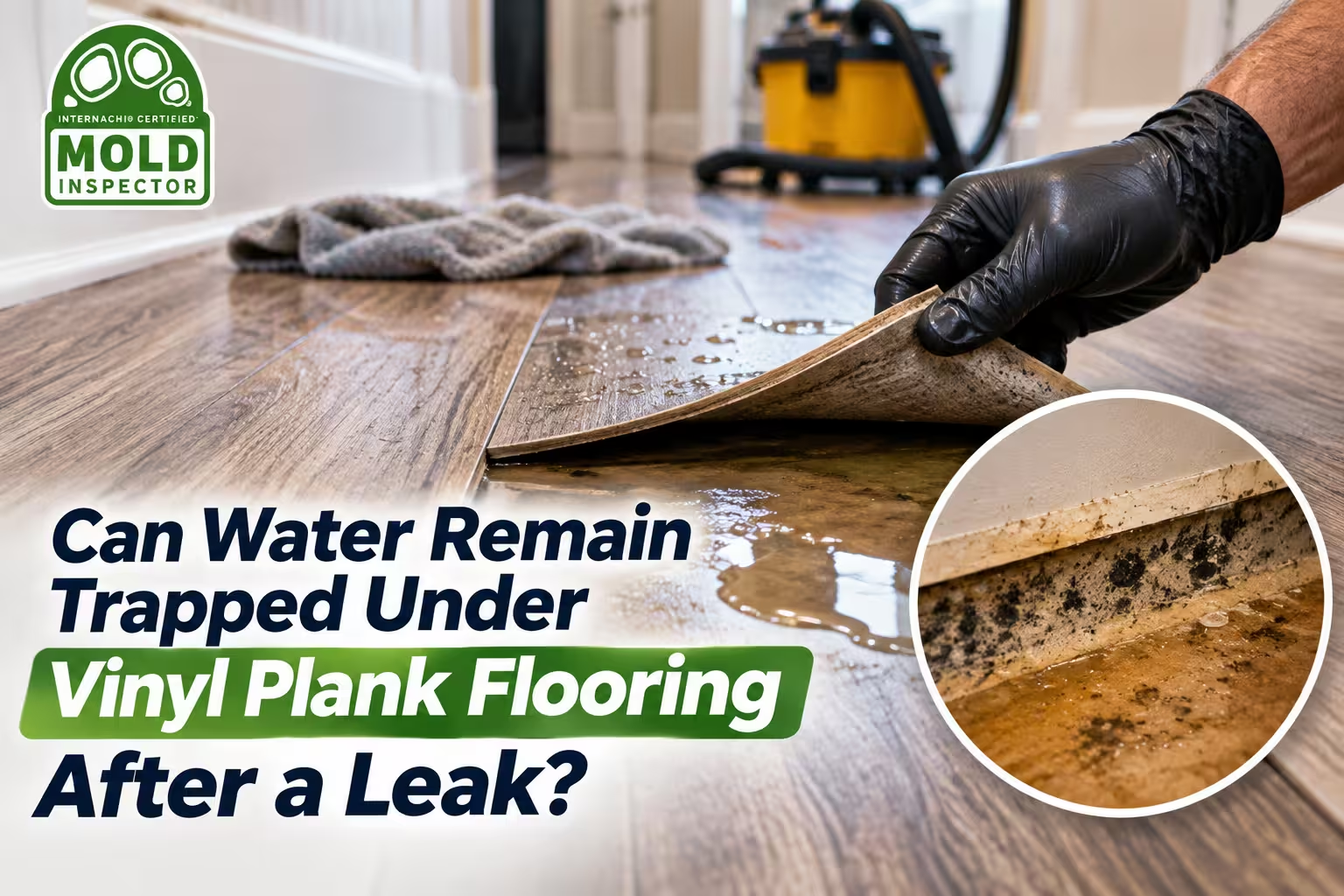
Luxury vinyl plank flooring is often advertised as waterproof, which can make homeowners assume that a plumbing leak or accidental spill will not cause lasting damage. However, the flooring may look completely normal while moisture remains trapped underneath it. Water under vinyl plank flooring can remain hidden between the planks, underlayment, and subfloor after a leak. Although many luxury vinyl plank products resist water absorption, their joints and perimeter edges do not necessarily prevent water from reaching the materials below.
The consequences depend on how much water entered, how long it remained, and whether the flooring was installed over concrete or wood. A small leak may require limited corrective work, while widespread trapped moisture can affect the subfloor and create conditions favorable to mold growth. Understanding where water collects, what warning signs to watch for, and how moisture is evaluated can help homeowners make informed decisions before replacing or reinstalling flooring.
Can Waterproof Vinyl Plank Flooring Trap Water Underneath?
Yes. The term waterproof generally describes the flooring material’s resistance to water damage, not the ability of the entire installed floor to prevent water from passing through. Luxury vinyl plank (LVP) flooring often uses a rigid or flexible vinyl-based construction that resists moisture absorption. However, most residential installations include individual planks joined together over a subfloor.
Water may enter through plank connections, perimeter expansion gaps, transitions, or openings around fixtures. Once beneath the flooring, moisture may spread across the subfloor or become trapped between layers.
Why Water May Not Dry Naturally
Vinyl plank flooring can slow evaporation from the surface underneath it.
If water reaches the subfloor, the flooring above may restrict the moisture’s ability to escape into the room.
Floating installations can also contain attached padding or separate underlayment, creating additional interfaces where moisture may collect.
The flooring manufacturer Mannington specifically warns that excessive subfloor moisture can contribute to mold and other problems even when the vinyl planks themselves resist water damage.
This distinction explains why a floor may look undamaged while the supporting materials remain wet.
How Does Water Get Beneath Luxury Vinyl Plank Flooring?
Several types of leaks can introduce moisture beneath vinyl flooring.
Plumbing Leaks and Appliance Failures
A leaking refrigerator supply line, dishwasher connection, washing machine hose, or nearby plumbing fixture can release water that spreads across the floor. Water may travel beneath kitchen cabinets or appliances before entering the flooring through exposed edges or joints. If the leak continues slowly, moisture can accumulate without leaving obvious puddles.
Water Entering Through Flooring Edges
Vinyl plank installations usually require expansion space around walls and certain fixed objects. These gaps allow normal flooring movement, but they can also provide routes for water intrusion. Water from a nearby leak may reach the perimeter and travel beneath the flooring without becoming visible along the entire affected section.
Moisture Moving Through Concrete
Not all moisture under vinyl plank flooring originates from a recent plumbing leak. Concrete slabs naturally contain and transmit some moisture vapor. Without appropriate moisture-control measures, excessive vapor transmission can affect flooring assemblies. This is different from liquid water that enters during a plumbing incident. Identifying whether the problem involves a recent leak or continuing slab moisture is important because the corrective methods may differ.
What Happens When Water Reaches the Subfloor?
The type of subfloor strongly influences how trapped water affects a flooring installation.
Concrete Slab Moisture
Concrete is porous and can retain moisture within its structure. When a leak occurs, water may remain at the interface between the concrete and vinyl flooring or enter the slab’s pores. Although concrete itself does not provide the organic nutrients mold typically needs, dust, adhesives, flooring backing, and other materials associated with the assembly may support microbial growth when damp. Excessive moisture may also interfere with flooring adhesives or contribute to deterioration of certain underlayment materials. For Florida homes constructed on concrete slabs, determining whether moisture is associated with a specific leak or ongoing vapor transmission is an important part of the investigation.
Plywood and OSB Subfloors
Wood-based subfloors respond differently to water exposure. Plywood and oriented strand board (OSB) can absorb moisture, causing swelling, dimensional changes, or deterioration. Repeated or prolonged saturation may weaken the material or affect fasteners and joints.
If the wood remains wet beneath a relatively moisture-resistant floor covering, drying may take longer than expected. A damaged wooden subfloor must be evaluated for its condition before new flooring is installed.
What Are the Warning Signs of Hidden Water Beneath Vinyl Flooring?
Trapped moisture does not always produce immediate visible damage. Some homeowners discover the problem because the floor begins behaving differently after a leak.
Common signs include:
- Musty odors: Persistent damp smells near flooring edges, baseboards, or affected rooms.
- Lifting or uneven planks: Sections that no longer sit flat against the supporting surface.
- New gaps between planks: Changes in joint alignment that appear after water exposure.
- Soft or unstable areas: Movement underfoot that may indicate damaged underlayment or wood-based subflooring.
- Discoloration near transitions: Stains appearing around flooring edges, adjoining trim, or nearby materials.
- Persistent dampness: Moisture repeatedly appearing near the same section despite surface cleaning.
These symptoms are not definitive evidence of trapped water.
For example, gaps between vinyl planks may also result from installation problems or temperature-related movement. Moisture-related symptoms should be evaluated alongside the history of the leak.
Some hidden water damage signs in Florida homes can also help identify moisture problems affecting surrounding building materials.
What Should You Do After Water Leaks Onto Vinyl Plank Flooring?
The first priority is stopping additional water from entering the flooring assembly. For an active plumbing leak, turn off the appropriate water supply if it is safe to do so and arrange the necessary plumbing repair.
Once the source is controlled, take the following steps.
- Remove standing water: Use appropriate towels or water-extraction equipment to remove visible water from accessible surfaces.
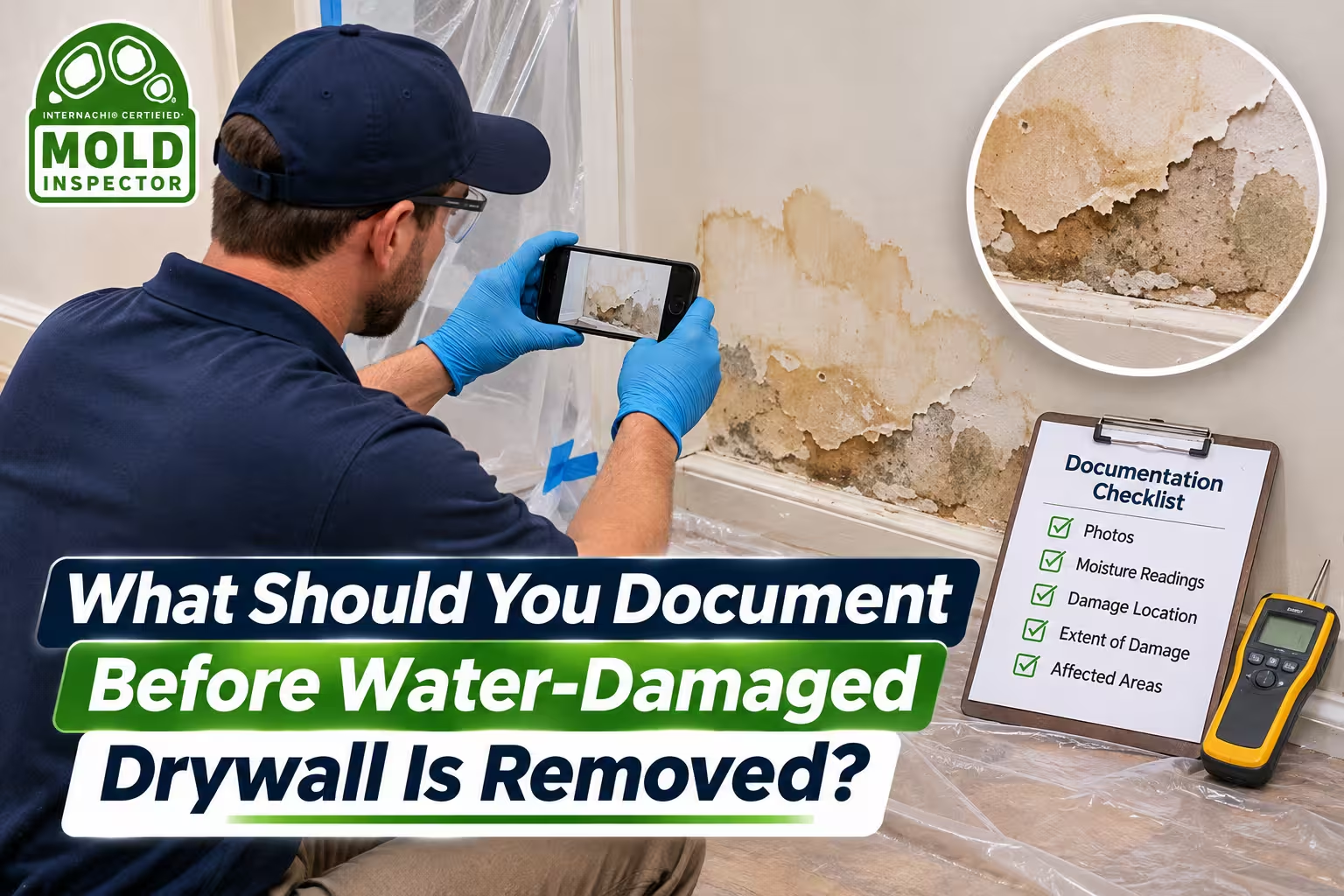
- Document the affected area: Photograph the flooring, nearby baseboards, and any visible water damage. Record when the leak was discovered.
- Check surrounding materials: Look for moisture near cabinets, door thresholds, wall edges, and adjacent flooring.
- Avoid covering the floor: Do not place rugs, mats, or additional coverings over areas suspected of remaining wet.
- Arrange moisture assessment when needed: If water may have passed beneath the planks, have the affected assembly evaluated.
The Environmental Protection Agency recommends drying water-damaged materials within 24 to 48 hours whenever possible to reduce the risk of mold growth. However, drying the visible flooring surface does not establish that the subfloor is dry.
If the leak involved sewage or potentially contaminated floodwater, professional water-damage assistance is particularly important.
How Do Professionals Detect Moisture Under Vinyl Plank Flooring?
A professional moisture investigation combines information about the leak with observations and appropriate measuring equipment.
Moisture Meter Evaluation
Moisture meters can help locate areas where readings differ from unaffected portions of the floor. Noninvasive meters are useful for preliminary comparisons, but their readings can be influenced by flooring construction, underlayment, metals, and other materials. They do not necessarily measure the exact moisture content beneath the vinyl. A qualified inspector interprets the readings alongside other evidence rather than relying on a single measurement.
Thermal Imaging
Thermal imaging cameras identify temperature differences across surfaces. Moisture can sometimes produce temperature patterns that help guide further investigation, particularly when evaporation or temperature differences are present. However, thermal imaging does not directly detect water or confirm mold growth. A suspected moisture pattern should be checked using suitable additional methods.
Concrete Slab Moisture Testing
When evaluating concrete subfloors, flooring professionals may use recognized testing procedures. ASTM F2170 measures relative humidity within a concrete slab using in-situ probes. ASTM F1869 measures the rate of moisture vapor emission from a prepared concrete surface.
These tests help determine moisture conditions relevant to flooring installation requirements. They are not direct tests for standing water beneath vinyl planks and should not be treated as substitutes for locating an active plumbing leak. The appropriate testing method depends on the flooring manufacturer’s specifications and the condition being investigated. Mold Detectives provides professional leak detection services using moisture meters and thermal imaging to investigate concealed moisture beneath flooring and in other building materials.
Can Water Under Vinyl Flooring Dry Without Removing the Planks?
Sometimes limited moisture may dry without extensive flooring removal, but homeowners should not assume this will happen. The drying outcome depends on the amount of water, how far it spread, the subfloor material, the underlayment, and the flooring assembly’s ability to release moisture.
When a substantial amount of water becomes trapped beneath a relatively impermeable floor covering, ordinary room ventilation may not be sufficient. Professional water-damage contractors may need to lift selected sections of flooring or use specialized drying methods to access affected materials. The manufacturer’s installation system also matters.
Some floating planks can potentially be removed and reinstalled if they remain undamaged and their locking mechanisms are intact. Other products may require replacement after removal. Glue-down flooring presents different challenges because moisture may affect the adhesive bond. The decision should be based on actual material conditions rather than the appearance of the finished floor.
Can Trapped Water Cause Mold Beneath Luxury Vinyl Plank Flooring?
Yes. Moisture trapped beneath vinyl flooring can create conditions favorable to mold growth when suitable organic materials are present.
Potentially affected materials include wood subfloors, paper-faced underlayment products, dust, and other moisture-sensitive components.
However, water beneath luxury vinyl plank does not automatically mean mold is growing. The outcome depends on moisture exposure, available nutrients, temperature, and drying conditions. A persistent musty odor after a leak may justify further investigation, but smell alone cannot confirm mold contamination. For property owners in Fort Pierce, FL, warm and humid conditions can make effective moisture management especially important.
When suspected contamination extends beneath the flooring or surrounding building materials, professional mold inspection services can help evaluate visible conditions, moisture readings, and whether additional investigation is necessary. The moisture source must be corrected before affected materials are restored.
How Can You Prevent Moisture Problems After Vinyl Flooring Is Reinstalled?
Preventing another trapped-water problem begins with confirming that the underlying materials are suitable for flooring installation. Before reinstalling vinyl planks, the contractor should verify that the subfloor is dry, sound, and within the flooring manufacturer’s moisture limits.
Other important considerations include:
- Inspecting nearby plumbing and appliance connections for leaks.
- Following manufacturer requirements for underlayment and moisture barriers.
- Checking concrete slab moisture where applicable.
- Repairing damaged wood-based subfloor materials.
- Maintaining suitable indoor humidity.
- Addressing water accumulation promptly after future leaks.
A moisture barrier can help manage specified moisture conditions, but it does not make a floor immune to plumbing leaks or flooding. The flooring system must be selected and installed according to the actual conditions of the building.
Frequently Asked Questions
Can Water Stay Under Vinyl Plank Flooring for Weeks?
Yes. Water may remain beneath vinyl flooring when evaporation is restricted, particularly if moisture has reached absorbent underlayment or wood-based subfloor materials. The duration depends on the amount of water and the drying conditions.
Does Waterproof Vinyl Plank Flooring Protect the Subfloor From Leaks?
Not necessarily. Waterproof planks resist water damage to the flooring material, but liquid can still enter through joints, perimeter gaps, and transitions unless the entire installation is specifically designed to prevent it.
Will a Dehumidifier Remove Water Trapped Beneath Vinyl Flooring?
A dehumidifier can help control indoor humidity during drying, but it may not adequately remove liquid water or moisture trapped beneath an impermeable flooring layer. Professional drying assessment may be necessary.
Does Vinyl Flooring Have to Be Replaced After a Plumbing Leak?
Not always. Some products may be reusable if they remain undamaged and can be removed without breaking their locking mechanisms. However, contaminated, distorted, or damaged flooring may require replacement.
Can Moisture Under Vinyl Flooring Be Detected Without Removing the Floor?
Noninvasive moisture meters and thermal imaging can help identify suspicious areas, but they have limitations. Confirming the condition of concealed layers may require additional testing or controlled access beneath selected flooring sections.
Find Hidden Flooring Moisture Before More Damage Develops
Water-resistant vinyl planks can remain visually intact even when the subfloor underneath is damp. After a plumbing leak, moisture may collect beneath the flooring, affect underlayment or wood-based materials, and create conditions that support mold growth. The most reliable approach is to correct the original leak, evaluate the affected subfloor, and confirm appropriate drying before completing flooring repairs. Mold Detectives provides professional moisture investigations, leak detection, and mold inspection services for Florida properties. If you suspect water remains trapped beneath your vinyl plank flooring, contact Mold Detectives or call (772) 242-4024 to discuss a professional assessment.