
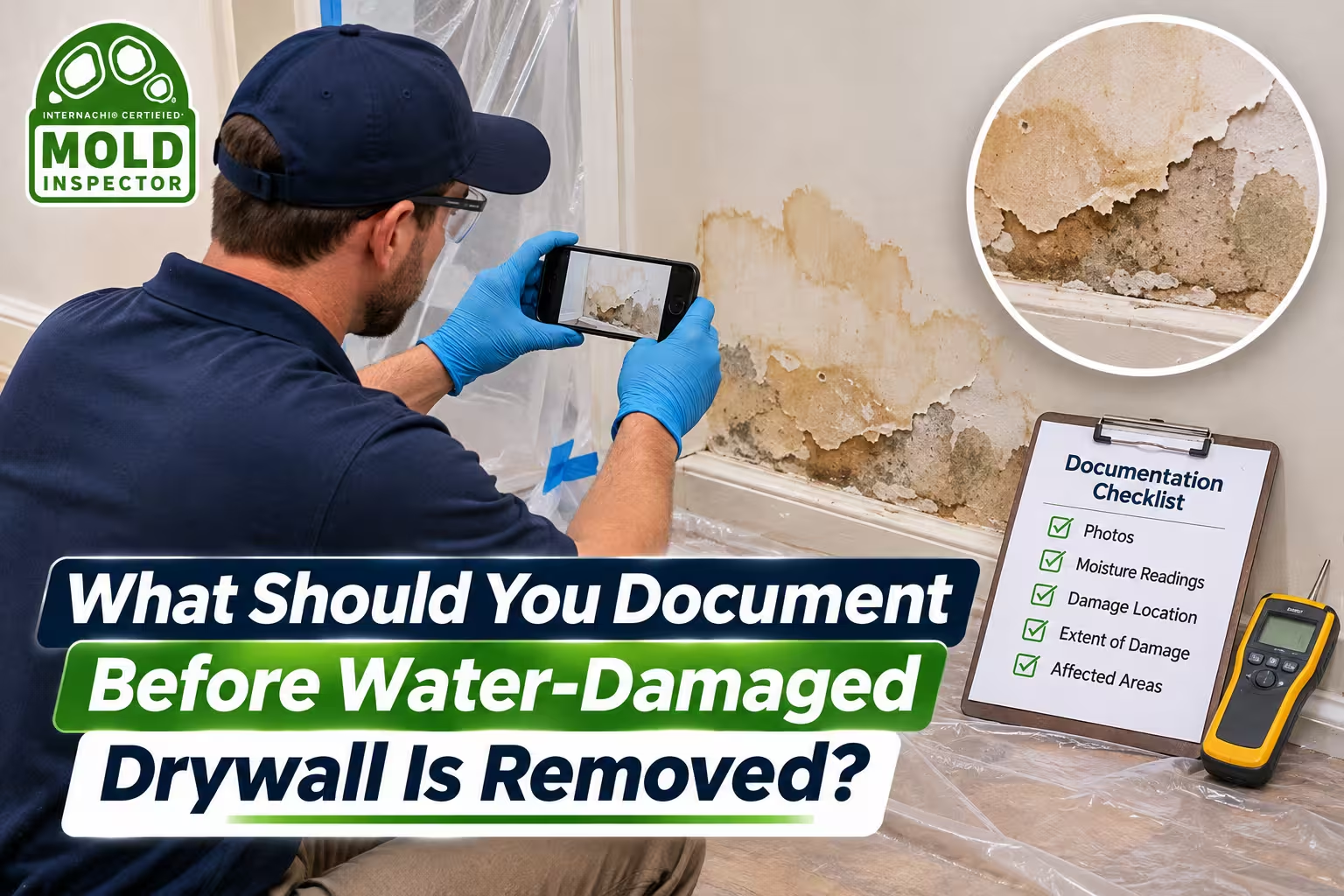
A water-damaged drywall wall can change quickly once a contractor begins cutting out damaged sections. Stains disappear with the panel, insulation is taken away, and the original water line may no longer be visible. Those changes can complicate a claim by erasing the original damage pattern. For example, a water line along the baseboard may vanish once the bottom portion is cut away.
Documenting water damage before repairs means collecting clear photographs, a timeline, moisture findings, and records of what was removed. It never means waiting for an adjuster while materials remain unsafe. Record initial conditions promptly, then continue documenting cleanup. A room-by-room record also helps explain why contractors selected particular sections for removal.
Why Does Pre-Removal Documentation Matter?
Drywall removal changes the evidence of a water incident. A contractor may discover soaked insulation, damaged studs, or moisture extending beyond the stain visible on the painted surface. Without a record of the original condition, it can be difficult to distinguish what was present before demolition from what was uncovered during it. These records give everyone a shared reference.
What Must Happen Before You Start Taking Pictures?
Safety and stopping the water source come first. If water is near outlets, ceiling fixtures, or electrical panels, avoid the affected area until a qualified professional determines it is safe. Stay clear of bulging ceilings, unstable drywall, and sewage-contaminated materials. Shut off the water if safe, or call emergency assistance.
Once conditions are safe, take a few pictures before moving belongings or opening the wall, but do not let photography delay extraction, drying, or necessary removal. The EPA recommends drying wet building materials within roughly 24 to 48 hours when possible to reduce mold risk. Florida’s insurance guidance likewise emphasizes preventing further damage and keeping records of emergency repairs. Documentation and mitigation should proceed together.
Which Photographs Should You Take Before Drywall Removal?
Begin with wide images showing the entire room, then move closer to the damaged wall. Include the floor, ceiling, baseboards, adjacent doorways, and any visible water line or staining. Photograph multiple angles so someone unfamiliar with the property can locate the affected section. Close-ups alone miss that essential context. Include adjoining closets or the opposite side of a shared wall if damage is visible there.
Next, capture details that may disappear during removal: swollen drywall edges, damp trim, damaged outlets that are safe to observe from a distance, staining near plumbing penetrations, and affected flooring. Use a measuring tape or another clear scale when practical, without disturbing the material. Keep original image files and record room names separately. A photo timestamp records capture time, not necessarily when the leak began.
How Should You Record the Water Intrusion Timeline?
Write down when the leak or water damage was first noticed, where water appeared, and what happened next. Distinguish observations from assumptions: “water found below upstairs bathroom at 8 a.m.” is more useful than stating that a particular pipe failed before a plumber has confirmed it. Record any prior stains, recent storms, unusual plumbing use, and steps taken to stop the water. Clearly label any approximate times.
Keep an activity log from discovery through the first days of mitigation. Note when the water was shut off, which contractor arrived, when drying equipment began operating, and when wall materials were removed. Record the names of people who inspected the property and any findings they communicated. Match the log with photographs and later invoices.
What Should a Moisture Map or Inspection Record Include?
A moisture map identifies which parts of the wall, floor, or adjoining materials showed elevated readings at a particular time. Professionals may mark a simple room diagram with measurement locations and note the material tested, device type, settings, and readings. Comparing an affected area with a similar apparently dry area can help explain the pattern. Unlabeled readings are much less useful.
Moisture meters are investigation tools, not proof of mold or a precise diagnosis of why a wall is wet. Readings can vary with material composition, salts, metal, and meter configuration. Thermal images may help locate temperature differences worth investigating, but they do not directly show water. Save follow-up readings and the inspector’s interpretation.
Should You Document the Leak Source Separately From the Wall Damage?
Yes. The source of the water and the materials it affected are different questions. Photograph accessible signs of the suspected source, such as a damaged supply-line connection, roof staining, or a wet area beneath an appliance, without attempting unsafe repairs. Keep the plumber’s or roofer’s written findings, including what was inspected and which repair was performed. Do not guess at an unverified cause.
When the entry point is uncertain, a professional leak detection assessment may provide observations, moisture readings, and a report that can be kept with the property records. Mold Detectives lists moisture meters and thermal imaging among its investigative methods. That report supports the damage record but cannot determine coverage. Ask for the report date, inspected locations, methods used, and any stated limitations.
What Needs Recording During Drywall Removal?
Before each section is removed, ask the mitigation contractor to photograph the cut area and identify its location on the room diagram. During removal, record conditions revealed behind the panel, such as wet insulation, staining on framing, or water reaching an adjacent cavity. Images should show the newly exposed surfaces before they are cleaned or covered. This shows what removal actually revealed.
Keep the contractor’s scope of work, including which panels and insulation were removed, approximate measurements, and the stated reason for removal. Record waste disposal and drying work where relevant, and ask for copies of job logs and readings. If safe and requested by the insurer, retain a small sample; never keep hazardous debris indoors.
Which Insurance and Contractor Documents Should You Keep?
Create one organized folder containing the claim number, policy information, date of loss, photographs, inspection reports, and contractor communications. Add plumbing invoices, emergency mitigation charges, equipment rental receipts, repair estimates, and proof of payment. Florida’s Department of Financial Services recommends keeping a log of communications with the insurance company and photographs before and after emergency repairs. Back up the documents yourself.
Separate the initial mitigation estimate from the later reconstruction estimate. Removing wet drywall, drying framing, replacing insulation, installing new drywall, and repainting are different activities, and their documentation may come from different contractors. When an estimate changes because hidden damage is discovered, retain both versions and a written explanation. Records help review but cannot guarantee coverage or payment.
What If Emergency Drywall Removal Cannot Wait for an Adjuster?
Proceed with necessary safety and mitigation work rather than keeping saturated materials in place for an appointment. Take quick photographs first if it is safe, and ask the mitigation crew to photograph each opening as work proceeds. Notify the insurer promptly and ask how to provide records of materials that must be discarded. Never delay emergency work to meet a documentation request.
Flood-related losses may have different documentation and coverage requirements from a typical household plumbing leak. The National Flood Insurance Program recommends photographs before cleanup and retaining representative samples when safe, while allowing prompt disposal of hazardous materials. Confirm requirements with the relevant insurer. Never preserve wet drywall in a living space merely because an adjuster has not yet seen it, especially when contamination is suspected.
When Is an Independent Moisture or Mold Assessment Useful?
An independent assessment can be helpful when the extent of wet material is unclear, concealed cavities are suspected, or several contractors disagree about the affected area. The resulting report should distinguish observations, moisture measurements, suspected sources, and matters requiring further investigation. If visible mold or a specific unanswered contamination question is involved, insurance-related mold testing may supply additional findings, but sampling is not automatically necessary for every wet wall.
Frequently Asked Questions
Should You Wait for an Insurance Adjuster Before Removing Wet Drywall?
No, not when waiting would create a safety problem or allow damage to worsen. Photograph the condition first if safe, notify the insurer, and keep the contractor’s removal and drying records. Ask whether the insurer wants particular samples or measurements, but do not delay urgent mitigation to preserve damaged material. The exact claim procedure depends on your policy and the type of water event.
Are Photos Enough to Support a Water Damage Claim?
Photographs are valuable, but they rarely tell the entire story. A useful record can also include when the water appeared, the suspected or confirmed source, moisture measurements, contractor findings, and itemized invoices. Insurers may request additional evidence or an inspection. Complete documentation helps explain the damage and response, but having more photographs does not automatically establish coverage or guarantee that a claim will be approved.
Do Moisture Meter Readings Prove That Drywall Must Be Removed?
No. Readings show information about moisture conditions at measured locations and need to be interpreted in context. The material’s condition, water category, duration of exposure, and ability to dry may affect a contractor’s decision to remove it. Ask for an explanation connecting the readings with the recommended work. A meter does not independently establish mold growth, structural failure, or the amount an insurer should pay.
What If Hidden Damage Is Found After the First Drywall Section Is Removed?
Document the new finding before the exposed area is cleaned or covered. Photograph its location, identify the affected materials, and request updated measurements and a revised work description when necessary. Inform the insurer or adjuster promptly under the claim’s reporting process. Keep both the initial and revised estimates so the additional work can be distinguished from the original scope rather than appearing as an unexplained charge.
Preserve the Evidence Without Delaying the Cleanup
The strongest pre-removal record connects what was visible, where moisture was measured, what caused the damage if known, and what the contractor found as drywall came out. Start with safe photographs and a simple timeline, then collect professional findings and receipts throughout mitigation. For questions about concealed moisture or whether a mold assessment is appropriate, contact Mold Detectives or call (772) 242-4024 to discuss an inspection.