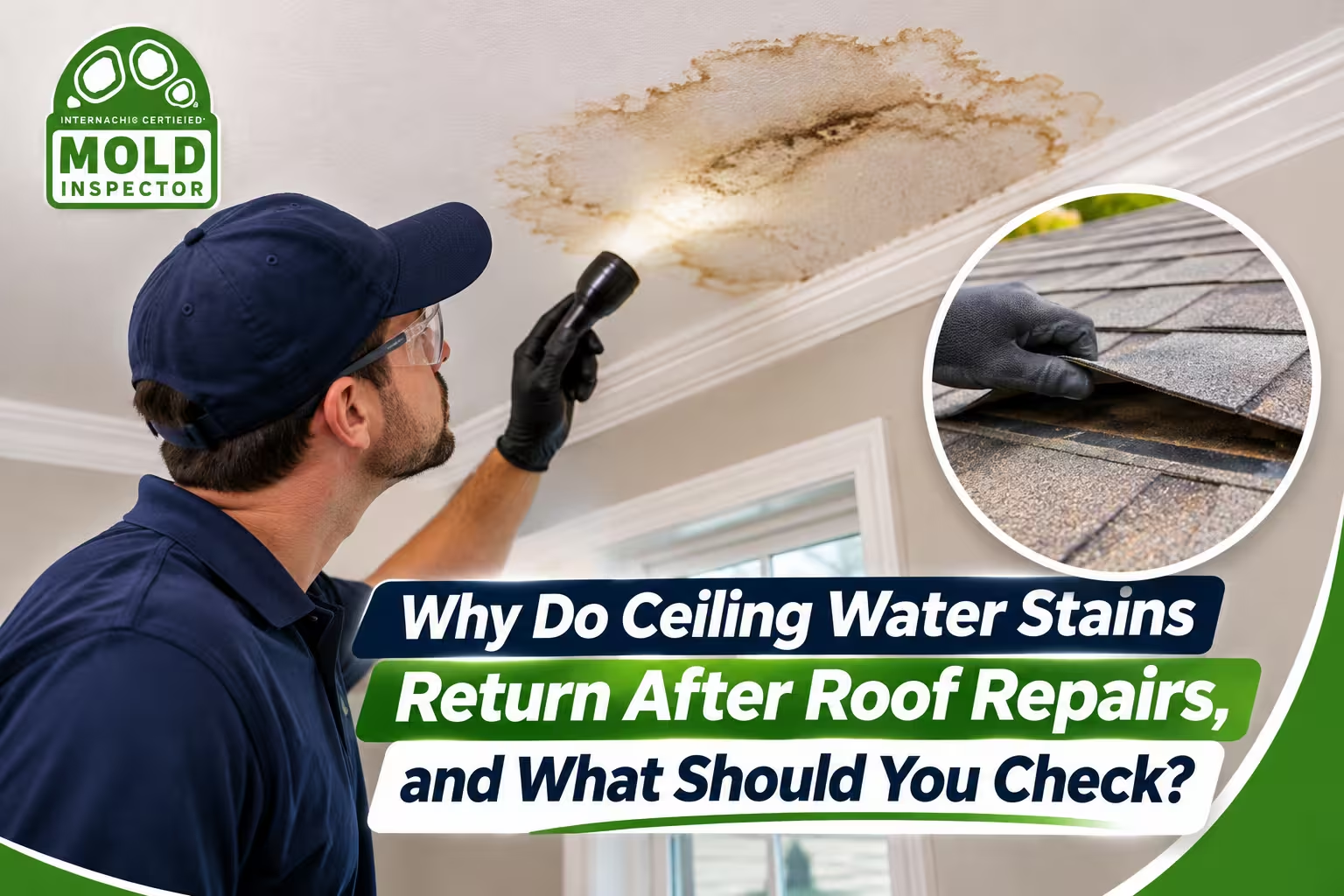
A roof repair is supposed to stop water from entering the home, so seeing the same brown or yellow ceiling stain return can be frustrating. Homeowners may assume the roofing contractor missed something, but recurring discoloration does not always mean another leak has developed. Water may still be trapped above the ceiling, an entirely different source may be responsible, or an old stain may be bleeding through the new paint.
Ceiling water stains after roof repair need to be evaluated based on changes in the affected area, moisture conditions, and the history of the original problem. A stain that becomes darker after rainfall deserves a different investigation from a dry mark that reappears after repainting. Understanding these differences helps homeowners avoid unnecessary repairs and determine whether the ceiling needs additional attention.
Why Do Ceiling Water Stains Return After Roof Repairs?
A roof repair addresses a particular point of water entry, but it does not automatically resolve every moisture condition inside the roof assembly. Water may have already reached the roof deck, insulation, framing, or ceiling drywall before the repair was completed. If those materials were not properly evaluated and dried, the original damage can remain visible or continue affecting the ceiling even after the exterior repair.
Another possibility is that the initial repair corrected one problem while a nearby defect remained. Roof systems contain multiple connections, flashing details, penetrations, and drainage components. A leak around a plumbing vent, skylight, chimney, or roof-to-wall transition may continue allowing water inside even when the original damaged shingles have been replaced.
The Original Roof Leak Was Not Completely Resolved
Some roof repairs address visible damage without identifying the exact path water follows through the roof assembly. Replacing a few shingles may correct a damaged covering, but it will not necessarily resolve defective flashing, an improperly sealed penetration, or a problem with the underlayment. If the actual entry point remains open, rainfall can continue reaching the same ceiling cavity and produce another stain.
The National Roof Certification and Inspection Association explains that water can travel along roof decking, rafters, plywood seams, and insulation before reaching the interior. This is why the location of a ceiling stain does not necessarily identify the location of the roof defect. A proper investigation needs to trace the moisture path rather than concentrate only on the visible discoloration.
Roof Flashing and Penetrations May Still Allow Water Inside
Flashing protects vulnerable connections where roofing materials meet chimneys, walls, skylights, vents, and other structures. These transitions experience different movement and weather exposure than the surrounding roof surface. If flashing is improperly installed, separated, damaged, or inadequately integrated with the roofing materials, water may enter during certain rainfall conditions even when the main roof covering appears intact.
Roof penetrations deserve particular attention because plumbing vent boots, exhaust outlets, and skylight connections create openings through the roof assembly. A repair focused on shingles may leave one of these details untouched. If staining becomes noticeable after wind-driven rain or storms from a particular direction, the surrounding flashing and penetrations should be evaluated by a qualified roofing contractor.
Could the Returning Ceiling Stain Come From Another Water Source?
Not every ceiling stain appearing after roof work originates from the roof. Plumbing lines, air-conditioning components, and condensation can create similar discoloration, especially when pipes or equipment are located above finished ceilings. A leak from an upstairs bathroom may travel through framing before becoming visible downstairs, while an HVAC drain problem can introduce moisture near ceiling ducts or air-handling equipment.
The timing of the discoloration can help narrow down the possibilities. If the stain becomes darker after using an upstairs shower, running the air conditioner, or operating nearby plumbing, those patterns are worth documenting. A recurring mark that does not correspond with rainfall should not automatically trigger another roof repair without checking other possible sources.
Can an Old Water Stain Reappear Even When the Leak Is Fixed?
Yes. Water leaves behind dissolved minerals and other residues as it moves through roofing materials, insulation, and ceiling surfaces. These substances can remain in drywall and become visible again when ordinary paint is applied over the affected area. The result may look like a fresh leak even though no additional water is entering the ceiling.
This distinction is particularly important when the ceiling feels dry, the stain has not expanded, and the original repair has been completed. A previous water mark can remain visible through new paint if the surface was not properly prepared. Before arranging another roofing repair, homeowners should establish whether the discoloration is changing because of moisture or simply reappearing through the finish.
Why Ordinary Paint Does Not Always Cover Water Stains
Standard interior paint is not designed to block every type of water-related discoloration. Water-soluble residues can migrate through a new coating, allowing yellow or brown marks to become visible again. Applying additional coats of ordinary ceiling paint may produce the same result because the underlying staining has not been sealed with a suitable stain-blocking primer.
Sherwin-Williams recommends correcting the moisture source and completing necessary repairs before applying a stain-blocking primer to a previously water-stained ceiling. The surface should also be completely dry and suitable for painting. This approach addresses cosmetic discoloration, but it should never be used to conceal an active leak or moisture-damaged drywall.
How Can You Tell Whether a Ceiling Stain Indicates Active Moisture?
The appearance of a stain can provide useful clues, but color alone cannot establish whether water is still entering the ceiling. A stable brown ring may represent an older leak, while an expanding mark, fresh dampness, or bubbling paint can indicate continuing moisture. The surrounding drywall and the space above it also need to be considered before deciding whether the problem is cosmetic.
Pay attention to changes rather than relying on a single observation. Photograph the affected area under similar lighting and compare the stain’s boundaries over several days, particularly after rainfall. If the discoloration expands, the ceiling becomes soft, or water droplets appear, stop cosmetic repairs and arrange an appropriate inspection. Other hidden water damage signs in Florida homes can also help explain why concealed moisture sometimes remains unnoticed.
What Should You Check Above the Ceiling After a Roof Repair?
The attic can provide important evidence about whether the original moisture problem has been resolved. Where safe access is available, an inspection can reveal damp insulation, discoloration on the underside of the roof deck, water trails along rafters, or staining around roof penetrations. These observations help connect the visible ceiling damage with conditions inside the roof assembly rather than treating the interior stain as an isolated paint problem.
A qualified inspector or roofing professional may examine several locations, including:
- Roof decking: Look for dark water tracks, discoloration, deterioration, or signs of continuing moisture.
- Attic insulation: Check for damp, compressed, or matted material that may have absorbed water.
- Roof flashing: Evaluate connections around chimneys, vents, skylights, and roof-to-wall transitions.
- Roof penetrations: Inspect plumbing vent boots and other openings where water may enter.
- Roof drainage: Check whether gutters, valleys, and drainage paths are allowing water to move away properly.
Do not walk on exposed ceiling drywall or attempt to inspect steep or unsafe roof surfaces yourself. Attic access can also involve electrical hazards, unstable framing, and inadequate walking surfaces. If the inspection reveals damp insulation or suspected mold growth, a professional attic mold inspection may help evaluate the affected materials and moisture conditions.
How Can Moisture Testing Help Identify the Real Problem?
A moisture meter can help determine whether the stained ceiling or nearby building materials contain elevated moisture. An inspector may compare readings from the affected section with readings from an apparently unaffected portion of the same ceiling. These comparisons are more informative than judging dryness by appearance alone, although the readings must be interpreted according to the material and equipment being used.
Thermal imaging can also help identify temperature differences that may indicate areas requiring additional investigation. However, a thermal camera does not directly detect water or confirm mold growth. Temperature differences can have several explanations, so suspicious patterns should be evaluated alongside moisture readings, visual evidence, and the history of the leak.
What Should You Do When Ceiling Water Stains Keep Coming Back?
The next step depends on whether the stain is associated with active moisture, residual water damage, or an old cosmetic mark. Avoid repainting or covering the affected area until the underlying condition has been evaluated. If the ceiling remains damp, additional water may continue damaging drywall, insulation, and surrounding structural materials even when the visible stain appears relatively small.
A practical approach includes:
- Document the stain: Photograph its appearance, record when it changes, and note whether changes follow rainfall or plumbing use.
- Review the previous roof repair: Identify which components were repaired and whether flashing, penetrations, and nearby roof transitions were included.
- Check for other moisture sources: Consider plumbing leaks, HVAC condensation, and water entering through nearby walls or roof connections.
- Evaluate affected materials: Have moisture readings taken where necessary to determine whether the ceiling and surrounding materials are dry.
- Arrange the appropriate repair: A roofer, plumber, HVAC professional, or moisture specialist should address the source identified during the investigation.
The Environmental Protection Agency recommends drying wet or damp materials within 24 to 48 hours after a leak or spill whenever possible because prolonged moisture can support mold growth. If materials have remained wet for an extended period, simply waiting for the ceiling to dry may not be sufficient. The affected drywall or insulation may require additional evaluation to determine whether it can be retained.
When Should You Consider Professional Leak Detection or Ceiling Mold Inspection?
Professional evaluation becomes useful when the original roof repair has been completed but the source of recurring moisture remains uncertain. This is especially important when the stain continues expanding, the ceiling develops soft areas, insulation remains damp, or a musty smell appears near the affected room. These conditions may indicate that moisture has reached concealed building materials beyond the visible ceiling surface.
Mold Detectives provides leak detection services that include visual assessment, moisture meter readings, thermal imaging, and evaluation of plumbing and roofing systems. This type of investigation can help identify hidden water intrusion and document affected areas. A roofing contractor should still handle roofing repairs, while moisture assessment can help establish whether water has spread into the ceiling or attic materials.
Can Ceiling Mold Develop After a Roof Leak Has Been Repaired?
Yes. Repairing the roof stops additional water from entering through the corrected opening, but it does not automatically remove moisture already absorbed by insulation, drywall, or wooden framing. If these materials remain damp, conditions may support mold growth even though the roof is no longer leaking. This is why confirming that the affected materials have dried is an important part of completing the original water-damage response.
Visible spotting, persistent musty odors, and deteriorating ceiling materials may justify further investigation. Mold cannot be identified by color alone, and a brown water stain is not automatically evidence of contamination. When the affected ceiling shows signs of possible growth or concealed moisture, a professional ceiling mold inspection can help evaluate visible conditions and identify areas that may need additional attention.
When Is It Safe to Repaint a Previously Water-Stained Ceiling?
Repainting should wait until the original moisture source has been corrected and the affected materials are confirmed dry and structurally sound. If drywall has become soft, swollen, sagging, or crumbly, cosmetic preparation alone may not be enough. Damaged material may require repair or replacement before a new finish is applied. Painting over unresolved moisture can hide warning signs and allow the underlying problem to continue.
For a dry ceiling with only residual discoloration, the appropriate preparation generally includes removing loose paint, addressing surface damage, and applying a compatible stain-blocking primer before the finish coat. Follow the coating manufacturer’s instructions for the selected product and substrate. If the stain returns after proper preparation, reassess the moisture conditions rather than repeatedly applying additional paint.
Frequently Asked Questions
Does a Ceiling Water Stain Always Mean the Roof Is Still Leaking?
No. A ceiling stain can remain visible after a leak has been repaired because water-related residues may bleed through ordinary paint. However, an expanding stain, fresh dampness, or deterioration of the ceiling suggests that moisture may still be present. Comparing the stain over time and checking the affected materials with appropriate equipment can help distinguish an old cosmetic mark from continuing water intrusion.
Why Does My Ceiling Stain Get Darker After Heavy Rain?
A stain that becomes darker after rainfall may indicate that water is still entering through a roof connection, flashing detail, or another exterior opening. Water may travel along the roof deck or framing before reaching the ceiling, so the entry point may not be directly above the discoloration. A roofing professional should investigate the suspected pathway rather than simply patching the visible ceiling.
Can a Ceiling Water Stain Return Without Any New Water Damage?
Yes. Previous water damage can leave mineral deposits and other residues inside the ceiling finish. If the surface is repainted without suitable stain-blocking primer, those residues may become visible through the new coating. This is different from a stain that grows because of continuing moisture. Confirming that the ceiling is dry before repainting helps prevent unnecessary repeat work.
Should I Replace Ceiling Drywall After a Roof Leak?
Not every stained ceiling needs drywall replacement. If the material remains firm, dry, and structurally sound, surface preparation and stain-blocking primer may be sufficient. However, drywall that has become soft, sagging, swollen, or deteriorated needs a closer assessment. The decision should account for moisture exposure, material condition, and whether any concealed insulation or framing has also been affected.
Find Out Why the Ceiling Stain Keeps Returning
A recurring ceiling stain after roof repairs can indicate an incomplete repair, a separate water source, residual moisture, or discoloration bleeding through the paint. These possibilities require different solutions, so identifying the actual cause is more useful than repeatedly repainting the same section or arranging another roof patch without further investigation.
Mold Detectives helps Florida property owners investigate hidden moisture, roof-related water intrusion, and possible mold growth in ceilings and attic spaces. If your ceiling stain keeps returning and you are unsure whether moisture remains above the drywall, contact Mold Detectives or call (772) 242-4024 to discuss a professional assessment.