
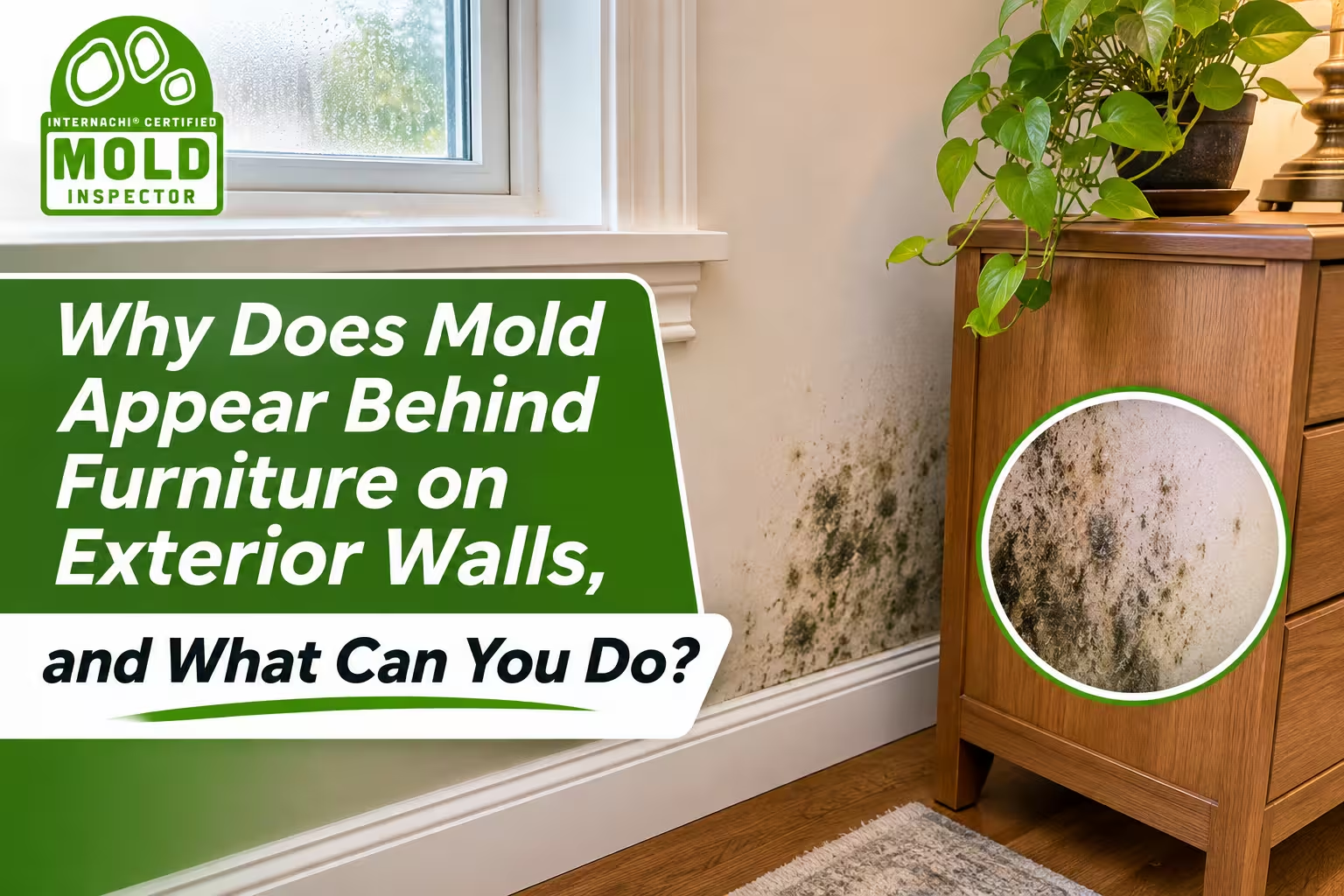
Moving a dresser, wardrobe, or bed away from an exterior wall can reveal an unpleasant surprise: dark patches, discoloration, or a musty smell that wasn’t noticeable before. The rest of the room may look clean, making it difficult to understand why mold developed in that particular spot.
Mold behind furniture usually develops when moisture accumulates on a wall surface that receives little air circulation. High indoor humidity, condensation, temperature differences, and hidden water intrusion can all create suitable conditions for mold growth. Furniture positioned tightly against an exterior wall may prevent moisture from drying as effectively as it does on exposed wall surfaces.
The solution depends on where the moisture comes from. Moving furniture and controlling humidity may help with condensation-related problems, but recurring growth or damp drywall may indicate a leak or another building-envelope defect.
Why Does Mold Grow Behind Furniture Against Exterior Walls?
Mold needs moisture and a suitable material to grow. Drywall paper, wood, dust, and certain furniture materials can provide nutrients when damp conditions persist.
Exterior walls are particularly vulnerable because their temperature and moisture conditions can differ from those of interior partitions.
Restricted Air Circulation Behind Furniture
Large furniture pieces can limit airflow across the wall surface. A wardrobe positioned directly against a wall creates a narrow enclosed space where air moves slowly. Moisture that collects in this space may evaporate less efficiently than moisture on an unobstructed wall.
When the surface remains damp for extended periods, mold growth can develop behind furniture even though the surrounding room appears dry. Beds with large upholstered headboards, tall cabinets, and heavy dressers can create similar conditions. The Environmental Protection Agency identifies areas behind furniture, particularly near exterior walls and corners, as possible locations for hidden mold associated with condensation.
Condensation and Wall Surface Temperature
Condensation occurs when moist air contacts a surface cold enough for water vapor to become liquid. An exterior wall may contain localized temperature differences caused by insulation gaps, framing components, or thermal bridging.
Thermal bridging occurs when heat moves more readily through certain parts of a building assembly, creating temperature differences between adjacent surfaces. If a wall surface becomes sufficiently cool relative to the moisture content of the surrounding air, condensation may develop. Furniture that restricts airflow can allow these conditions to persist unnoticed. However, not every damp exterior wall is experiencing surface condensation. Moisture can also originate from within the wall assembly.
How Can Florida’s Climate Contribute to Mold Behind Furniture?
Florida’s warm, humid conditions can create moisture challenges that differ from those in colder climates. Air-conditioned homes often have cooler interior surfaces while outdoor air contains substantial moisture. When humid outdoor air enters poorly sealed wall cavities, it may contact cooler building materials and release moisture.
Research from the Florida Solar Energy Center explains that humid outdoor air entering air-conditioned wall assemblies can contribute to condensation on the back of drywall. This means mold on exterior walls can sometimes develop because moisture is entering from outside rather than because indoor air is excessively humid.
For homeowners in Fort Pierce, FL, maintaining suitable indoor humidity and identifying unwanted air leakage are important considerations. The correct response depends on whether the moisture is collecting on the room-facing surface or entering through the building envelope. Simply increasing air circulation behind furniture will not correct a water intrusion problem inside the wall.
Where Is Hidden Mold Behind Furniture Most Likely to Appear?
The location of the growth can provide useful clues about the surrounding conditions.
Behind Beds and Upholstered Headboards
Large headboards can restrict airflow along the wall, especially when positioned close to exterior corners. Upholstered materials may also retain moisture and dust. When mold behind a bed headboard is discovered, check both the wall surface and the furniture backing. If the furniture itself has absorbed moisture, addressing only the wall may leave contaminated material nearby.
Behind Wardrobes and Dressers
Tall wardrobes and heavy dressers often remain in the same position for years. Their broad back panels can limit airflow across substantial sections of a wall. Some furniture backing materials, including thin fiberboard, can be particularly vulnerable to moisture-related deterioration. A musty smell inside the wardrobe or discoloration on the back panel may indicate that the problem affects more than the painted wall.
Behind Built-In Cabinets
Built-in furniture presents a different challenge because its position cannot be easily adjusted. Cabinets installed against exterior walls may conceal moisture around their backs, lower corners, or wall connections. If the cabinet backing is swollen, stained, or deteriorating, the surrounding materials should be assessed before attempting repairs.
Is the Moisture Coming From Condensation or a Hidden Leak?
This is one of the most important questions to answer before addressing the visible mold. Condensation and water intrusion can produce similar discoloration, but they require different corrective measures.
| Observation | Possible Explanation |
| Light surface growth concentrated behind a large dresser | Restricted airflow and surface moisture |
| Dampness near an exterior wall corner | Condensation or a localized insulation issue |
| Stains becoming worse after heavy rainfall | Possible exterior water intrusion |
| Soft drywall or bubbling paint | Moisture affecting the wall material |
| Repeated growth despite improved humidity control | An unresolved moisture source |
| Water marks near a window or exterior opening | Possible flashing or sealing defects |
These patterns are indicators rather than definite diagnoses. A wall may also experience more than one moisture problem simultaneously. For example, high indoor humidity can contribute to surface dampness while an exterior leak affects the drywall from behind. If the affected wall shows staining, peeling paint, or soft materials, the guide on hidden water damage signs in Florida homes explains additional warning signs that may require investigation.
What Should You Do When You Discover Mold Behind Furniture?
Finding unexpected mold can make homeowners want to clean or cover the area immediately. However, it is better to assess the situation before disturbing potentially contaminated materials.
1. Examine the Area Without Disturbing the Growth
If the affected furniture can be moved safely, create enough space to observe the wall without scraping or brushing against visible mold. Avoid aggressively pulling away wallpaper, damaged drywall, or deteriorating furniture backing. Disturbing contaminated materials can release particles into the surrounding air.
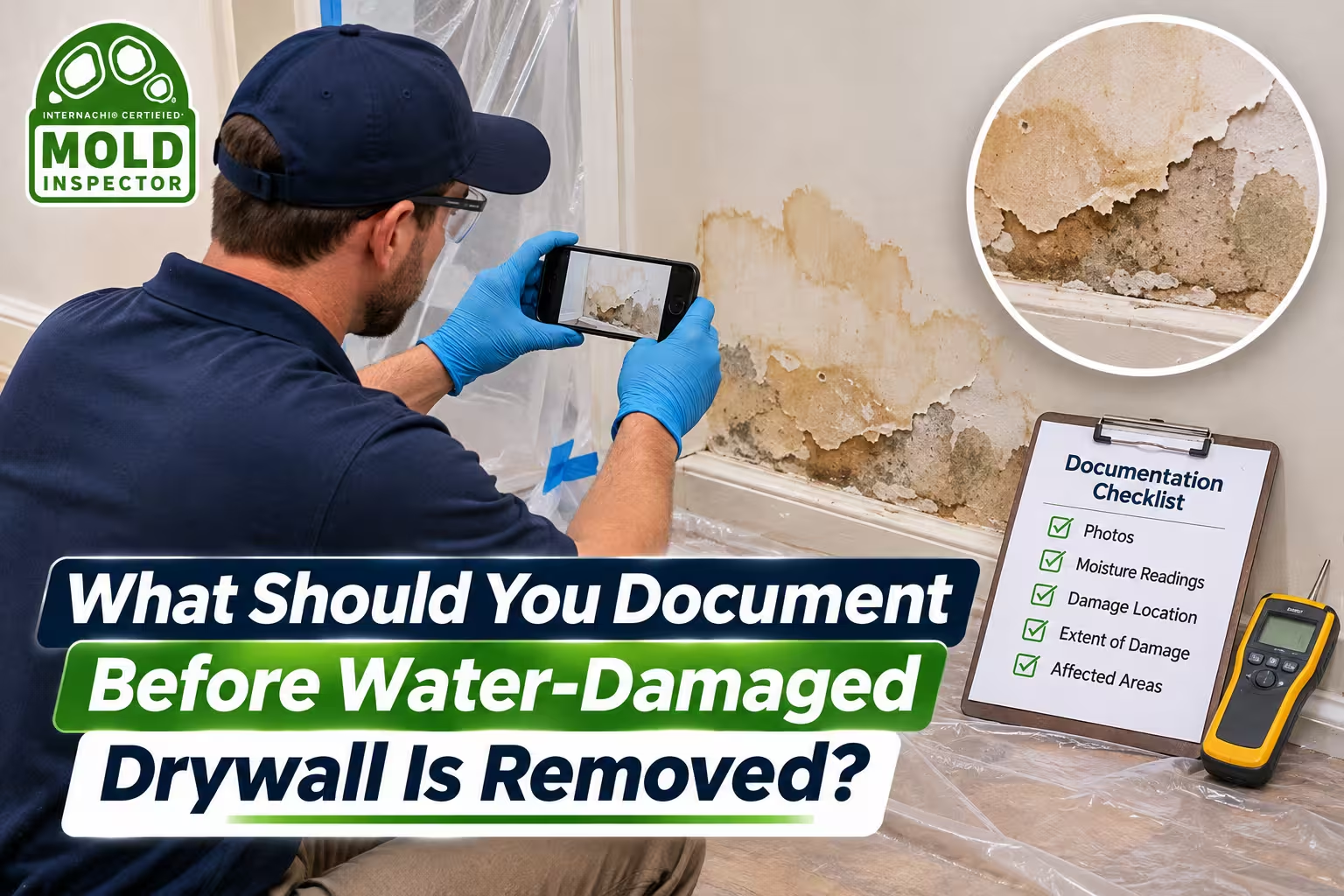
2. Document the Visible Condition
Photograph the affected area and note where the discoloration appears. Look for patterns around corners, baseboards, window openings, and furniture contact points. Also check whether the furniture backing shows damage. These observations may help a professional determine the likely moisture source.
3. Measure Indoor Humidity
A basic hygrometer can provide information about the room’s relative humidity. The Florida Department of Health recommends keeping indoor humidity below 60%, with levels below 50% generally preferable for controlling mold growth. A normal room humidity reading does not rule out localized condensation or hidden moisture inside a wall.
4. Check for Signs of Water Intrusion
Inspect accessible areas around the affected wall for water stains, deteriorating seals, or other moisture-related damage. Avoid opening wall cavities yourself when substantial hidden mold is suspected. If the evidence suggests concealed water entry, professional leak detection services can help investigate moisture that is not obvious from the room surface.
Can You Clean Mold Behind Furniture Yourself?
Small, isolated mold problems may sometimes be suitable for homeowner cleanup. The EPA generally indicates that areas smaller than approximately 10 square feet can often be handled by homeowners, provided there is no extensive water damage or other complicating condition. However, the affected material matters as much as the size.
Cleaning Sound, Nonporous Surfaces
Small amounts of mold on suitable hard surfaces may be cleaned using detergent and water, followed by thorough drying. Appropriate protective equipment, including gloves, eye protection, and suitable respiratory protection, should be considered. People with asthma, significant allergies, respiratory conditions, or weakened immune systems should avoid handling mold cleanup themselves.
When Drywall or Furniture Materials Are Damaged
Porous materials present a different challenge. Mold can penetrate drywall paper, fiberboard, and other absorbent materials, making complete cleaning difficult. Water-damaged or extensively contaminated materials may require professional removal and replacement. Painting over the affected wall does not eliminate mold or resolve the moisture condition. The EPA also does not recommend routinely relying on bleach or other biocides as the primary solution. If the affected area is extensive, mold is suspected behind the drywall, or the material is deteriorating, professional assessment is the safer approach.
How Can You Prevent Mold From Returning Behind Furniture?
Prevention should address the conditions that originally allowed moisture to accumulate.
Improve Furniture Placement
Avoid positioning large furniture pieces tightly against exterior walls when practical. Leaving a small clearance behind dressers, wardrobes, and headboards allows air to circulate more freely. There is no universal clearance that guarantees mold prevention because furniture dimensions, ventilation, and wall conditions vary. For rooms with recurring condensation, relocating large furniture to an interior wall may be helpful.
Control Indoor Moisture
Maintain indoor humidity within a suitable range using air conditioning, dehumidification, and appropriate ventilation. Bathroom exhaust fans should discharge outdoors, and moisture from cooking or showering should not be allowed to accumulate unnecessarily. In humid Florida weather, leaving windows open for extended periods may introduce more moisture rather than reduce it.
Correct Building-Envelope Problems
If the wall has inadequate insulation, unwanted air leakage, or exterior water intrusion, furniture placement alone may not solve the problem. A qualified building professional may need to evaluate the affected assembly and recommend appropriate repairs. Avoid installing additional vapor barriers or impermeable wall coverings without understanding the wall design. Incorrect moisture-control materials can interfere with drying and create further problems.
When Is Professional Wall Mold Inspection Necessary?
Professional evaluation becomes particularly useful when the visible growth is only part of a potentially larger moisture problem.
Consider an inspection when:
- Mold repeatedly returns to the same wall.
- Drywall feels soft, swollen, or persistently damp.
- The affected area extends beyond a small localized patch.
- Furniture backing and wall materials both show deterioration.
- A musty odor remains after the visible area has been addressed.
- The moisture source cannot be identified confidently.
A professional assessment may involve visual observations, moisture meter readings, and thermal imaging when appropriate. Moisture meters can help identify areas requiring further investigation, but they do not detect or identify mold directly. Similarly, thermal imaging shows temperature differences rather than proving that mold exists inside a wall.
Mold Detectives provides wall mold inspection services to investigate visible and concealed moisture-related concerns. The EPA notes that mold sampling is often unnecessary when growth is already visible. Testing should be selected to answer a specific unresolved question rather than performed automatically.
Frequently Asked Questions
Can Mold Grow Behind Furniture Even When the Room Feels Dry?
Yes. The moisture conditions behind large furniture can differ from those in the open room. Restricted airflow, localized condensation, or hidden water intrusion may create damp conditions that are not noticeable elsewhere.
Does Black Mold Behind Furniture Always Mean Toxic Mold?
No. Mold color does not reliably identify the species or determine its health risks. Visible growth should be addressed regardless of color, with attention given to the underlying moisture source.
Should You Throw Away Furniture That Has Mold on the Back?
Not always. The decision depends on the material, extent of contamination, and whether it can be effectively cleaned and dried. Moldy, deteriorated fiberboard or upholstered components may be difficult to restore.
Can Better Ventilation Prevent Mold Behind a Wardrobe?
Improved circulation can reduce localized moisture accumulation, particularly when restricted airflow contributes to condensation. However, it cannot correct an active leak or moisture entering through the wall assembly.
Address Hidden Wall Moisture Before Mold Returns
Mold behind furniture often develops because moisture collects where air circulation is restricted. Exterior wall temperatures, indoor humidity, and hidden leaks can make those locations more vulnerable. Moving furniture and improving humidity control may help prevent condensation-related growth, but recurring mold requires identifying the source of moisture. Mold Detectives provides mold inspection and moisture assessment services for Florida homeowners, including properties in Fort Pierce. If you discover mold behind a dresser, wardrobe, or bed, contact Mold Detectives or call (772) 242-4024 to discuss a professional inspection.