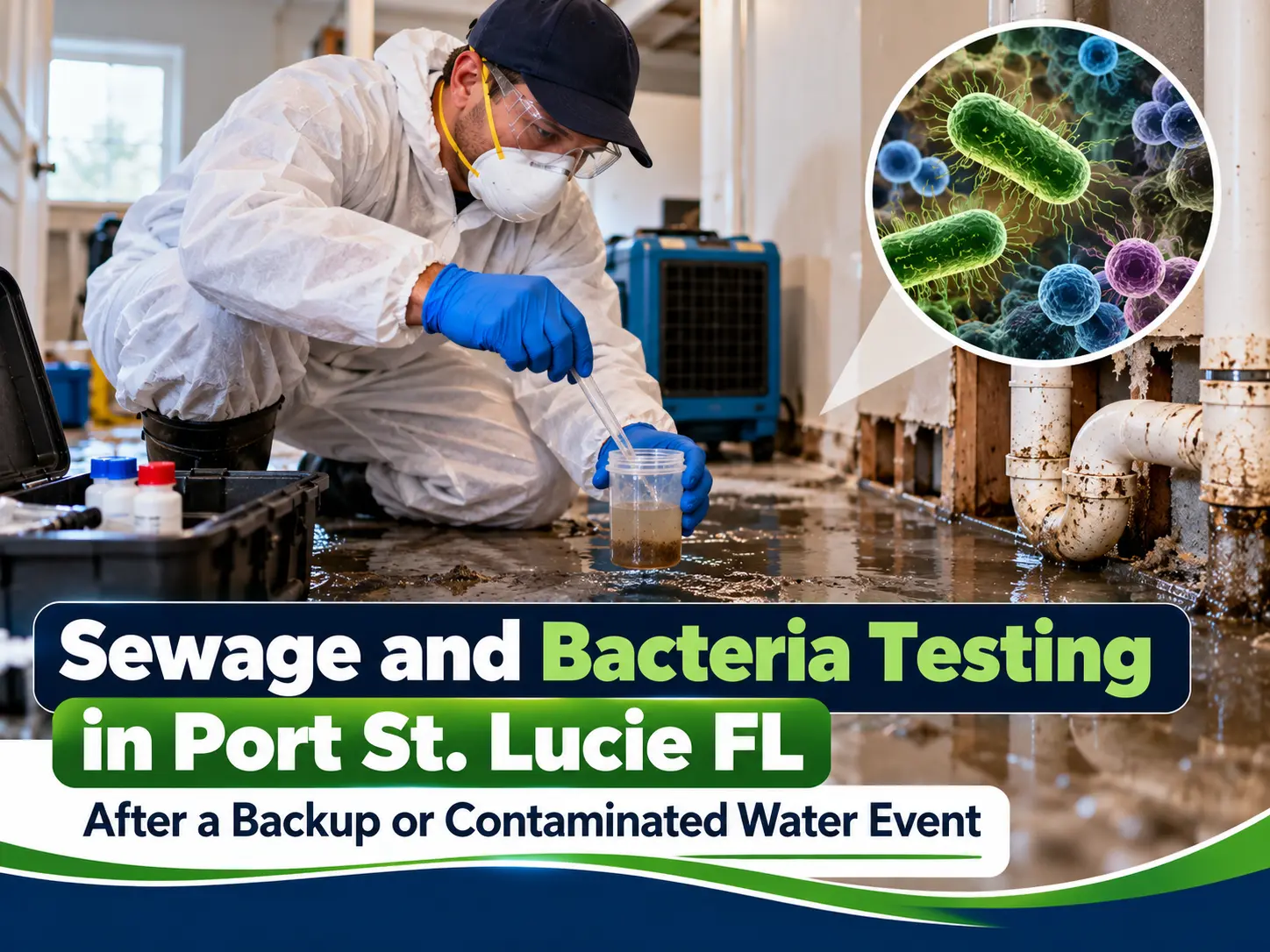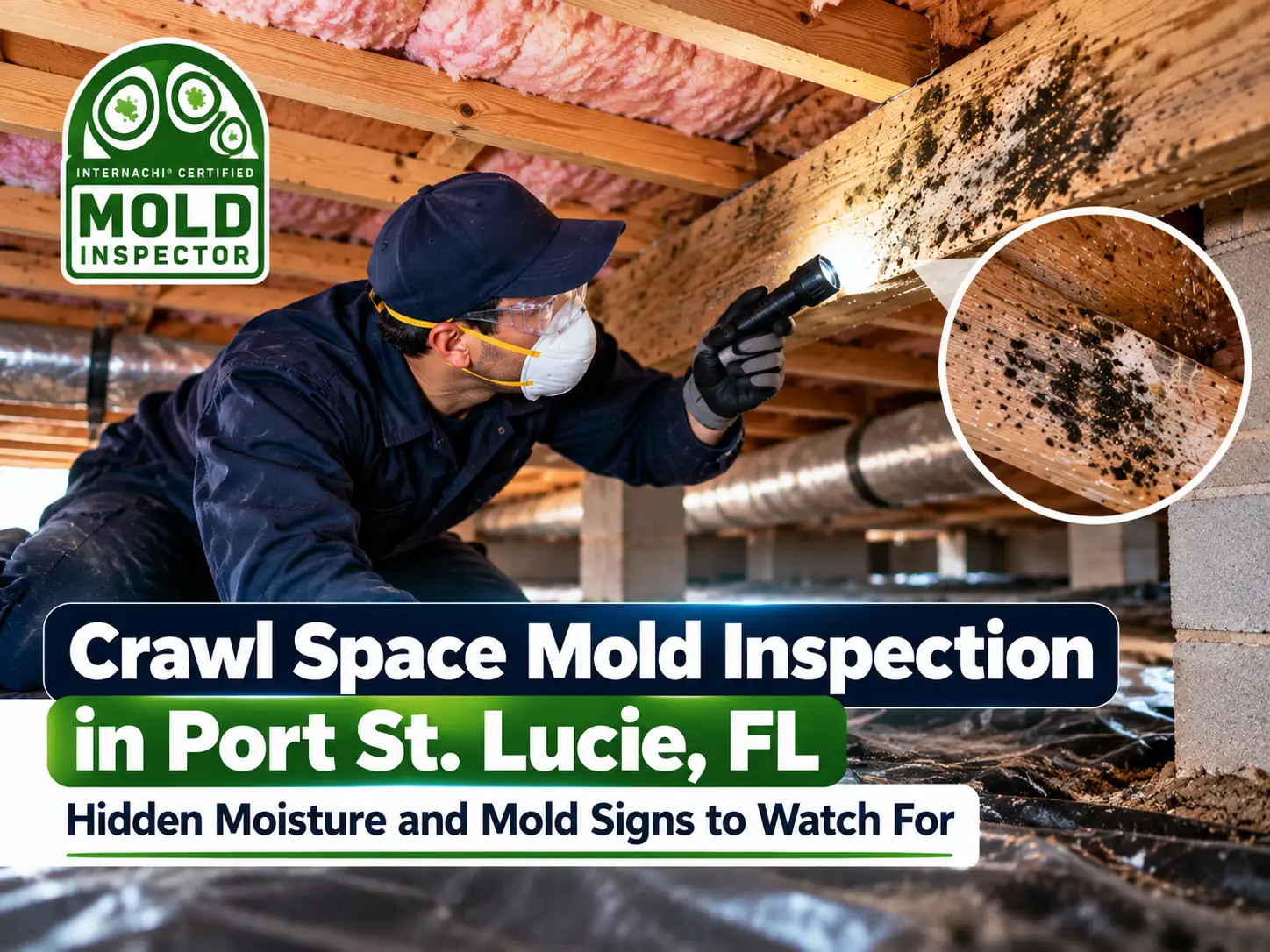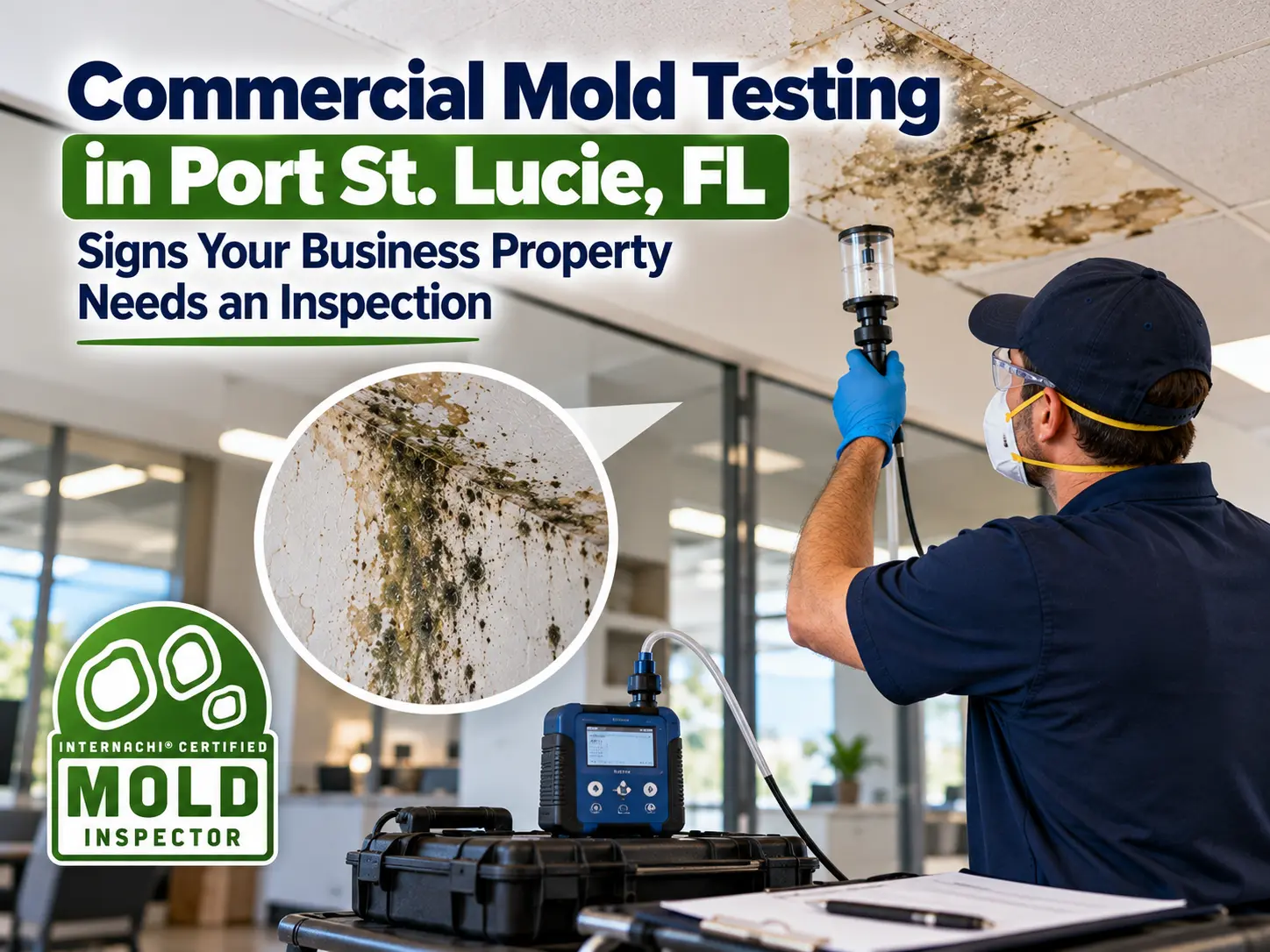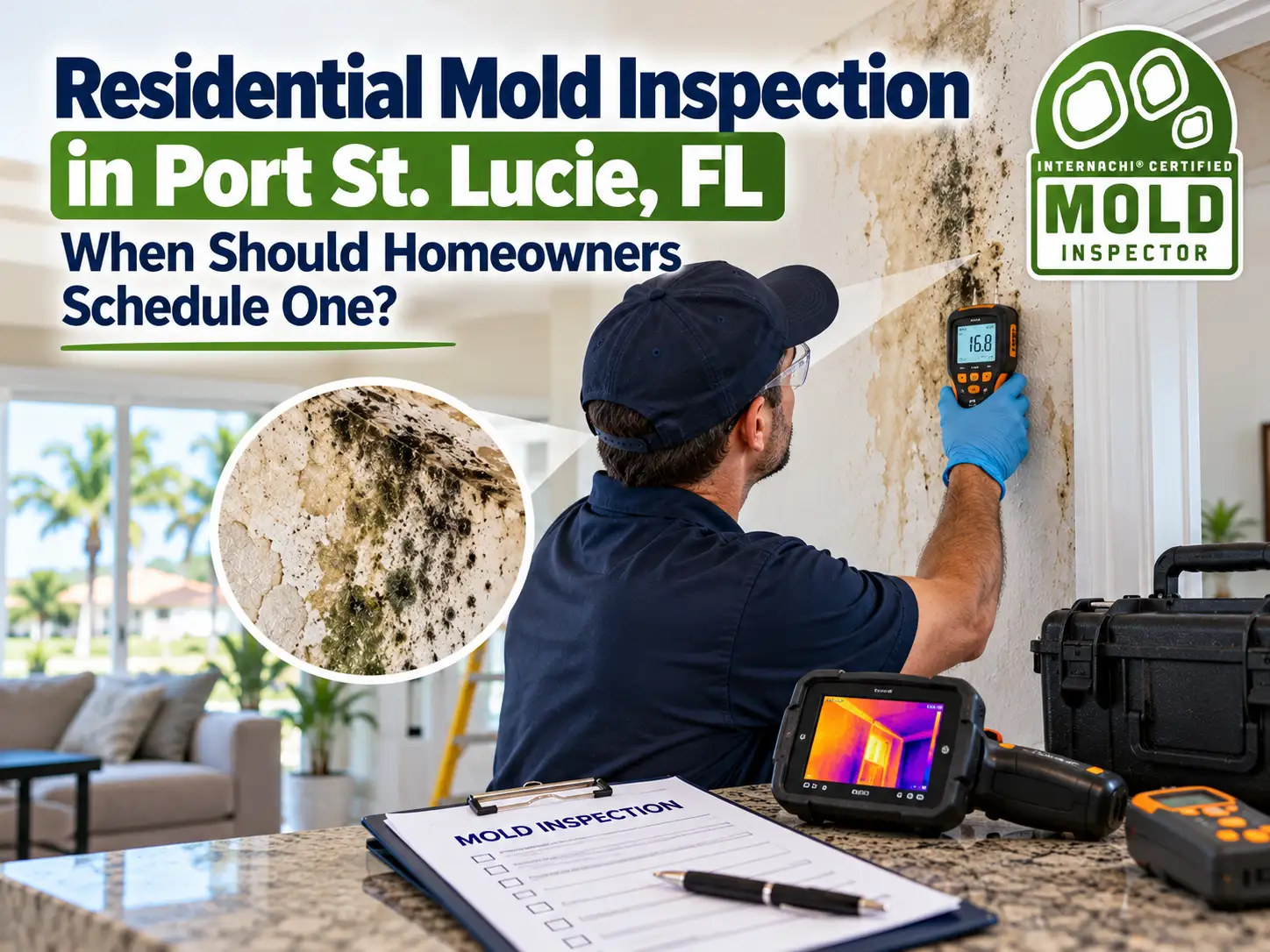
Indoor air quality testing in Fort Pierce, FL measures what’s floating in the air inside your home, most often airborne mold spores, by collecting samples and comparing them with the air outside. It’s most useful when something feels off but nothing is visible: a musty smell, stubborn humidity, a history of water damage, or symptoms that seem to ease when you leave the house. It’s less useful as a first step when mold is already visible, and it’s always a snapshot, not a verdict.
This guide explains what an air test actually measures, why the outdoor comparison matters, which conditions in Fort Pierce homes tend to cause problems, when to test and when to inspect first, how the process works, and what to do with the results.
What Indoor Air Quality Testing Actually Measures
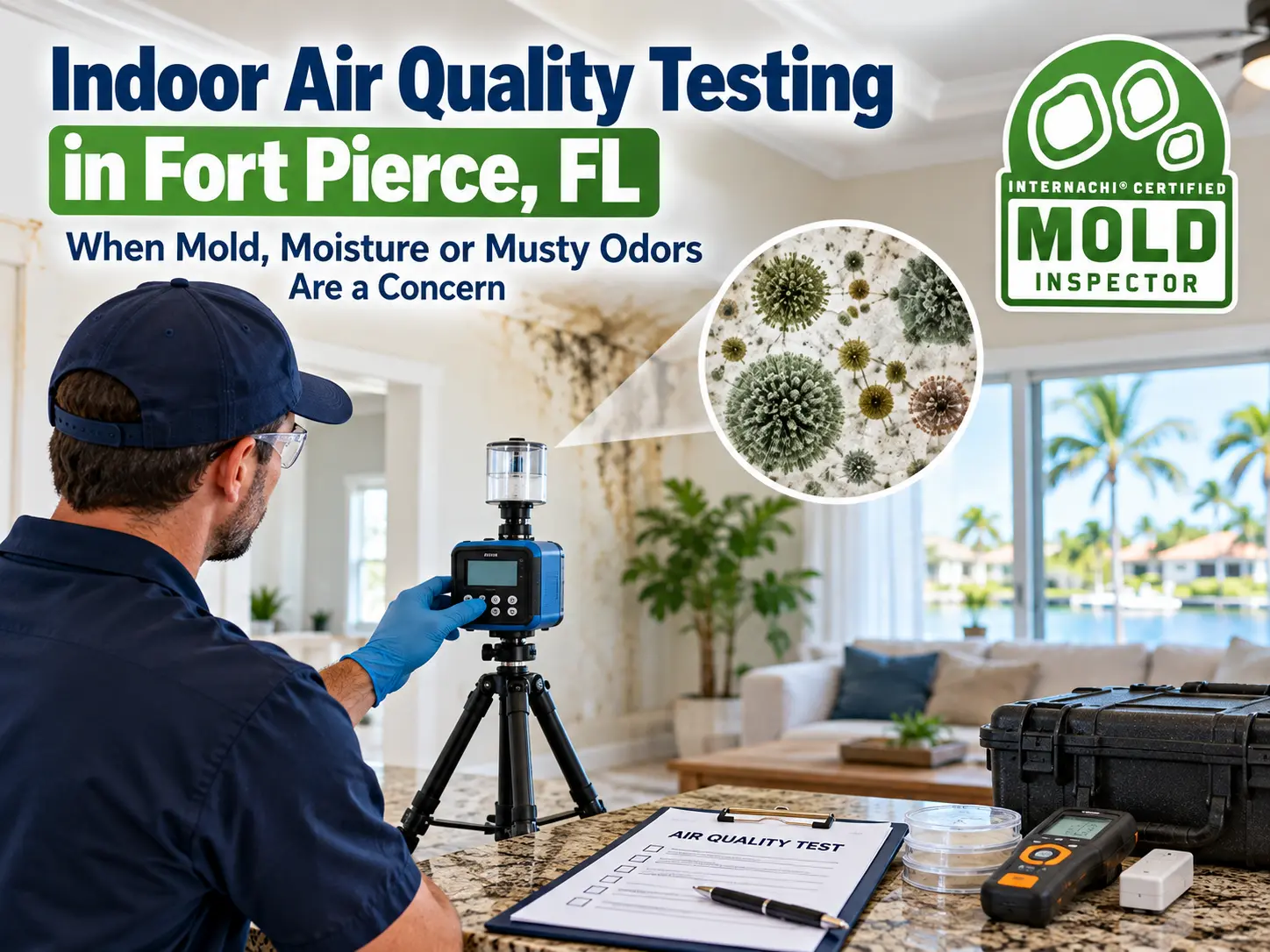
Most residential mold air testing uses a spore trap: a small cassette connected to a calibrated pump that draws a measured volume of air across a sticky slide. A laboratory then counts the spores and identifies them by type, reporting the result in spores per cubic meter.
Depending on the provider, an indoor air quality assessment may also look at dust, allergens, and volatile organic compounds (VOCs), along with comfort conditions like temperature and relative humidity. Mold Detectives’ indoor air quality testing lists air sampling for mold spores, dust, allergens, and VOCs, surface sampling when needed, and analysis at a certified laboratory, followed by a written report with recommendations.
One thing to know up front: there are no federal limits for mold or spores in indoor air. A number on its own doesn’t mean “safe” or “unsafe,” which is why interpretation depends on comparison.
Why Indoor and Outdoor Samples Are Compared
Mold spores are always present outdoors, often in the hundreds or thousands per cubic meter, and some of that air drifts inside. So a professional test collects an outdoor control sample at the same time as the indoor samples, and the results are read side by side.
The comparison tells you what a raw count can’t:
- Indoor levels lower than or similar to outdoors, with a similar mix of mold types, are generally reassuring.
- Indoor levels substantially higher, or types that are scarce outdoors, suggest something indoors is amplifying growth.
For the comparison to be fair, testing is done with consistent conditions, such as the HVAC system in the same state for every sample in a visit. Results are also affected by weather, activity in the house, and how recently doors and windows were opened, which brings up the main limitation, covered below.
Signs That Point to an Air Quality Problem
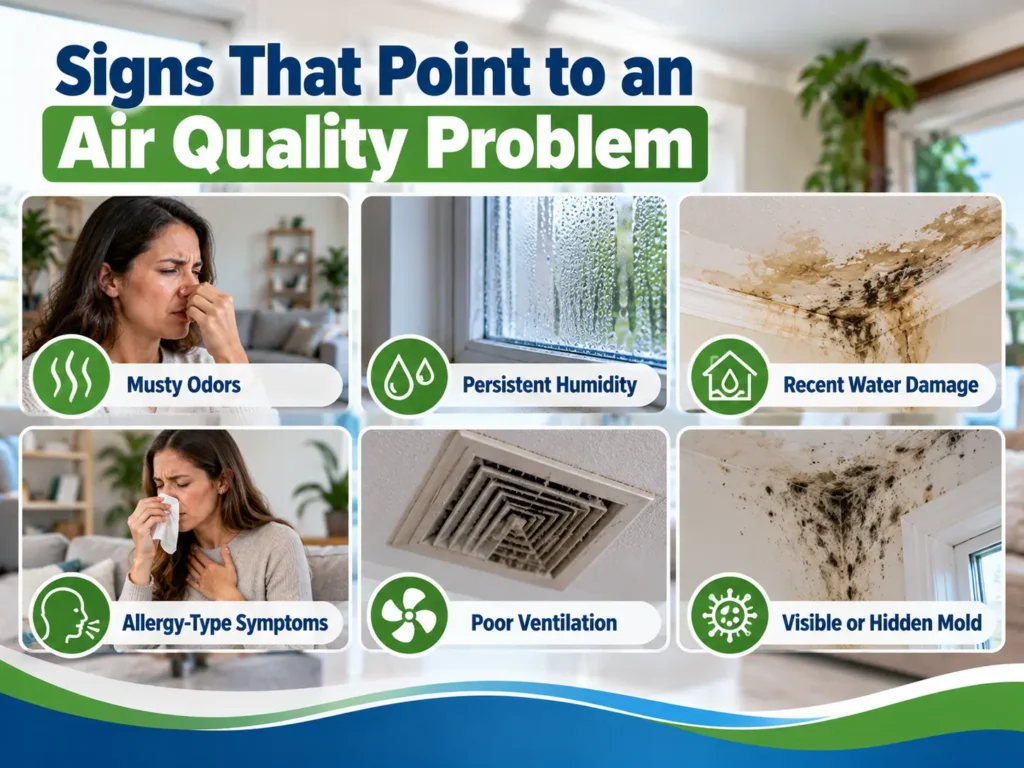
The conditions that usually prompt air testing are:
- Musty odors that linger in a room, closet, or near vents
- Persistent humidity or condensation on windows, walls, or ductwork
- Recent water damage, leaks, or a flood, especially if materials stayed wet
- Allergy-type symptoms indoors that ease away from the property. The CDC lists nasal stuffiness, eye irritation, and wheezing as commonly reported effects, though symptoms alone don’t prove the cause, and anyone with concerns should see a doctor
- Stale air or poor ventilation, or an air conditioner that seems to blow a damp smell
- Visible mold, or suspected hidden mold behind walls or in the attic
Fort Pierce Conditions That Drive Indoor Air Problems
Humidity is the thread running through nearly every indoor air problem on the Treasure Coast. The EPA recommends keeping indoor relative humidity below 60 percent, ideally between 30 and 50 percent. In a climate this warm and humid, that takes active control.
A few Florida-specific conditions deserve attention:
- Air conditioning. AC systems do most of the dehumidifying, so a system that cycles poorly, leaks, or has damp ductwork can raise humidity and carry odors through the house. Condensation around the air handler, drip pans, and ducts in the attic is a common source of moisture.
- Slow drying. After storms or leaks, materials that stay damp give mold a head start. The EPA advises drying within 24 to 48 hours, and our Fort Pierce climate and mold growth guide explains how local conditions speed things up.
- Homes left closed up. A house that sits shut for weeks with the AC off or set high can build humidity quickly.
- Water intrusion. Roof leaks, plumbing leaks, and wind-driven rain can wet wall cavities and ceilings out of sight.
When Air Testing Makes Sense, and When Inspection Comes First
The EPA’s position is that when mold is visible, sampling is usually unnecessary. You already have your answer, and the next steps are to fix the moisture and clean up regardless of the spore count. A musty smell with no visible source is different, but even then, a visual inspection and moisture assessment usually come first, because they can locate the source directly.
Air sampling earns its place in specific situations:
- An unexplained odor or health concern with no visible cause
- A suspected HVAC contribution, such as musty air only when the system runs
- Hidden growth you want evidence for, with the caveat below
- Before and after remediation, to confirm results
It has limits you should know about. Because it’s a snapshot, a single sample can miss intermittent spore release. It can also miss mold growing inside a sealed wall cavity, since that growth may not release spores into room air during the sampling window. And “reassurance” testing in a home with no odor, symptoms, or moisture rarely tells you anything, since normal air contains some mold. For a deeper look at the difference, see our comparison of mold inspection versus mold testing in Fort Pierce.
How an Air Quality Test Works
The process is straightforward:
- Initial assessment. A walkthrough looks for potential sources of contamination, moisture problems, and ventilation concerns.
- Air sampling. Indoor samples are collected in the areas of concern, along with an outdoor control sample.
- Surface sampling, when needed. If growth is suspected on walls, ceilings, or HVAC components, surface samples can help identify the source.
- Laboratory analysis. Samples go to a laboratory for analysis, with results often back within a few business days.
- Report and recommendations. You receive the findings and practical guidance.
On site, a test typically takes a few hours depending on the size and complexity of the property. Your inspector will explain how to prepare, which often means keeping windows and doors closed beforehand and letting the HVAC system run normally.
Understanding Your Results and Next Steps
A good report shows indoor counts next to the outdoor reference, breaks down the mold types, and explains what the comparison suggests, along with any moisture or humidity readings. From there:
- If indoor levels are elevated, the priority is finding and fixing the moisture source, then having remediation done by a licensed remediator, and verifying the result afterward.
- If results look normal but the odor or humidity persists, the problem may be moisture or ventilation, not airborne mold, and worth addressing anyway through humidity control, ventilation improvements, or HVAC cleaning.
- If results are unclear, a visual inspection and moisture mapping can fill in what a snapshot can’t.
Florida regulates mold work. Under Chapter 468, Part XVI of the Florida Statutes, mold assessment and remediation must be done by licensed professionals, and the two roles are licensed separately. Ask any company for its license number and verify it with the Department of Business and Professional Regulation.
Frequently Asked Questions
Does a normal result mean there’s no problem?
Not necessarily. A single air sample is a snapshot and can miss hidden growth. If the odor or moisture continues, a visual inspection and moisture assessment can find what the sample didn’t.
How often should I test?
There’s no fixed schedule that works for every home. Test when there’s a reason, such as an odor, water damage, or symptoms, and focus on moisture and humidity control as the real prevention.
Can air testing find mold inside walls?
Sometimes, but not reliably. Growth inside a sealed cavity may not release spores into the room air, so moisture readings and inspection are often better tools for hidden problems.
How do I choose a company?
Ask about methods, whether an outdoor control sample is included, which laboratory analyzes the samples, and the company’s Florida license. Mold Detectives is based in Fort Pierce and serves homes and businesses across the Treasure Coast, and these are fair questions for any provider.
Concerned About the Air in Your Home?
If you’ve noticed a musty smell, lingering humidity, or air that just doesn’t feel right after a leak or storm, testing can help show whether something is going on. Contact Mold Detectives or call (772) 242-4024 to describe what you’re noticing and schedule an assessment.