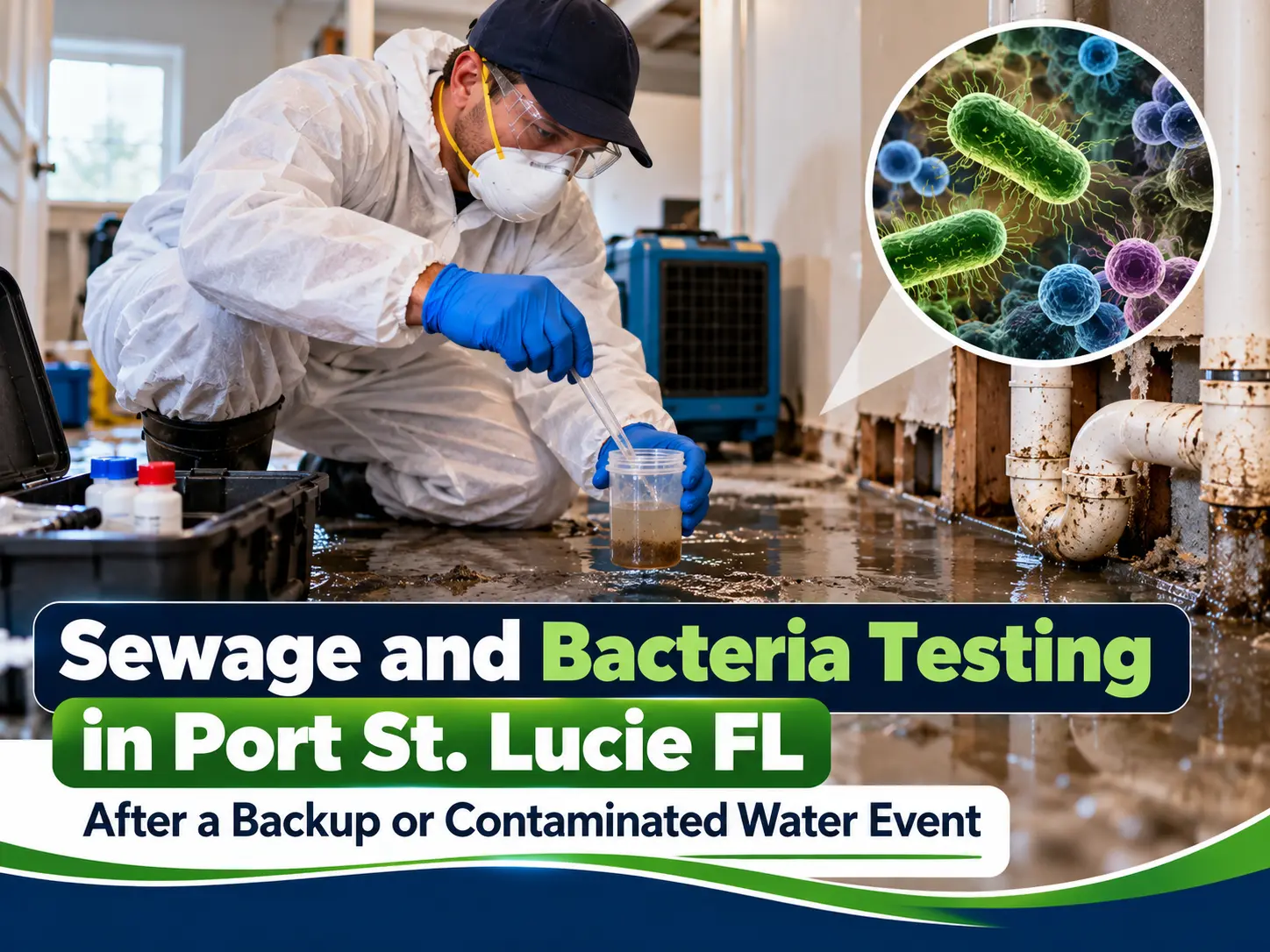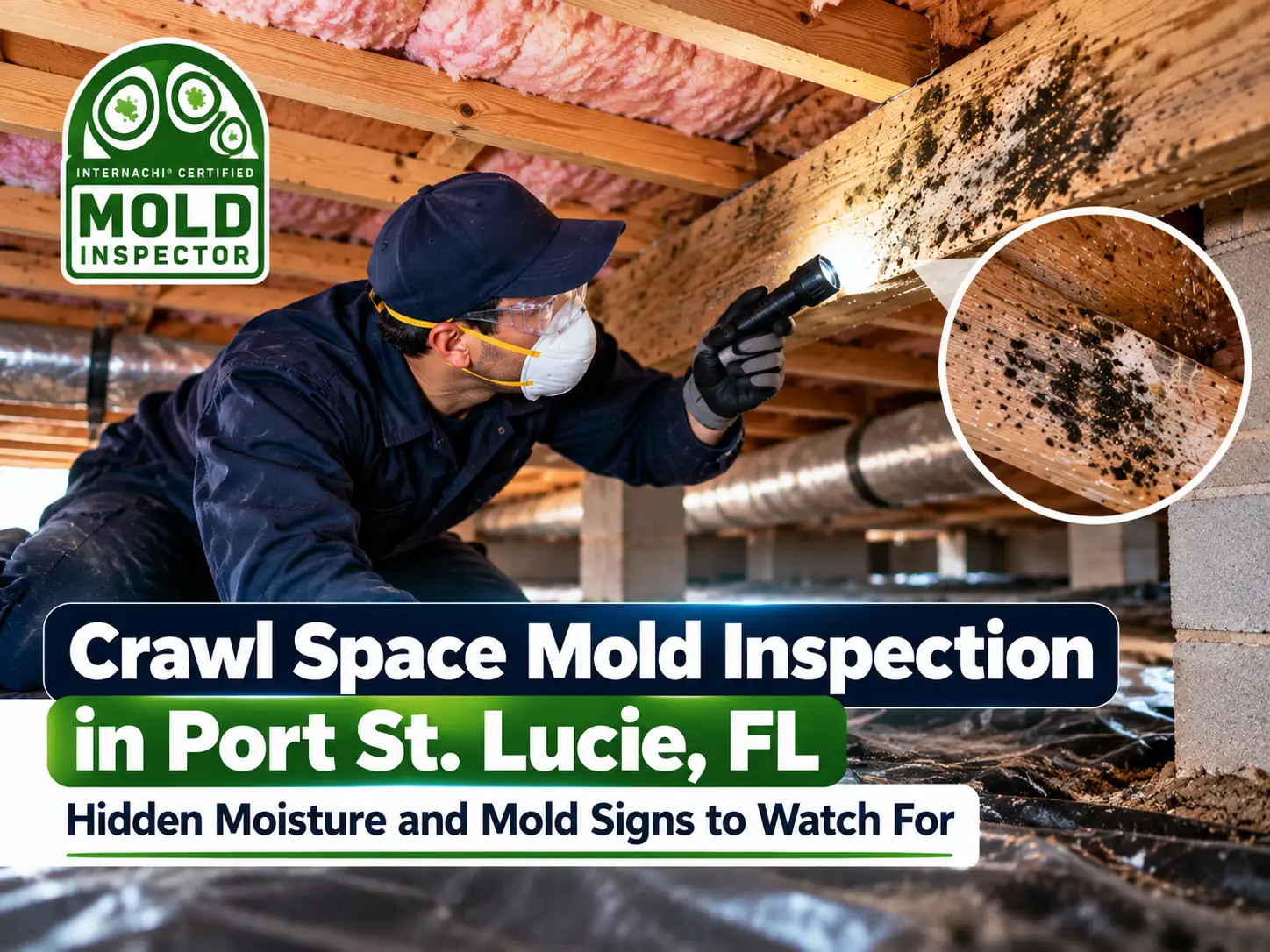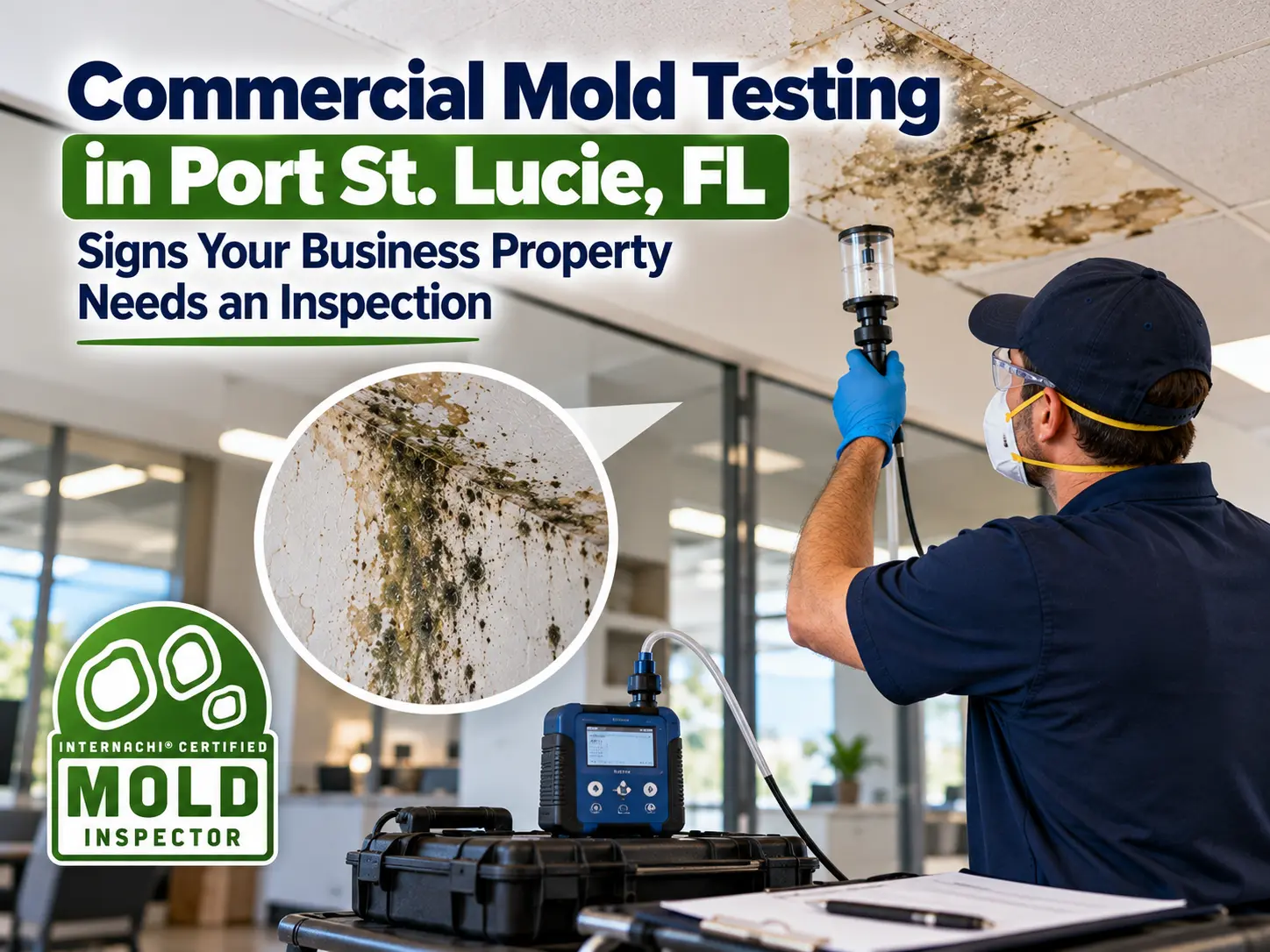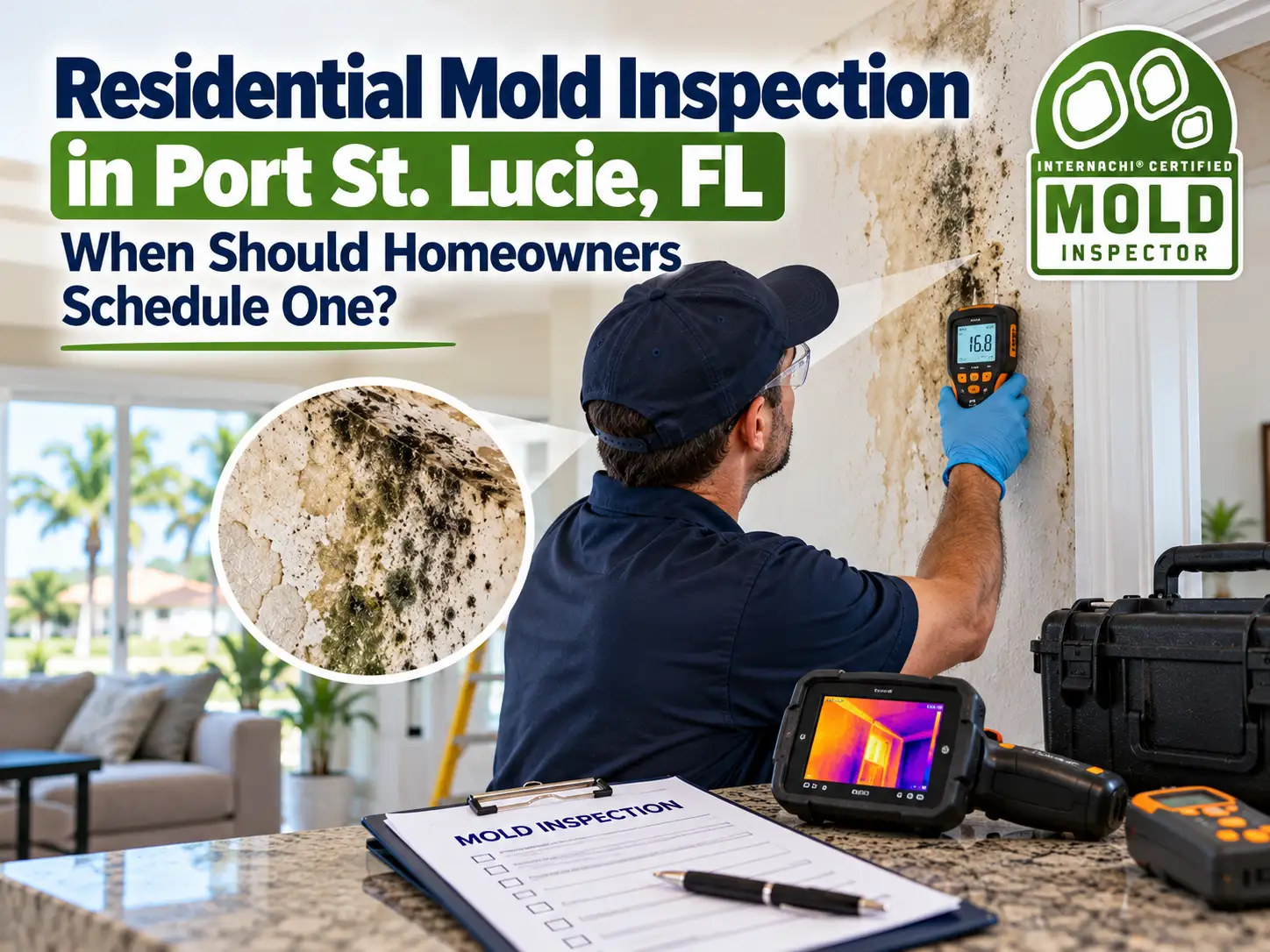
If mold showed up after a leak, a storm, or a flood, documenting it properly can matter as much as cleaning it. Insurance claim mold testing in Fort Pierce, FL gives you and your insurer an objective record: where the moisture came from, what’s affected, and what the lab results show. It doesn’t decide whether your policy covers the damage, since that depends on the policy and the cause of the loss, but it can make the claim easier to support and harder to dispute.
This guide covers what Florida mold coverage typically looks like, what to do first, what testing adds to a claim, how the process works, why Florida’s licensing rules matter, and the mistakes that weaken claims. It’s general information, not legal or insurance advice, so confirm your coverage with your insurer, and consider an attorney or public adjuster if a claim is disputed.
Does Your Policy Cover Mold?
Mold coverage in Florida is rarely straightforward. A few patterns come up often:
- The cause matters. Coverage usually depends on whether the mold grew from a covered event, like a sudden pipe burst or storm-related roof leak, not from long-term humidity or neglect.
- Sublimits are common. Many policies cap mold-related payouts at a specific amount. A figure of around $10,000 is often cited, though some policies go lower or higher, and endorsements can raise the cap.
- Seepage exclusions. Some policies exclude damage from constant or repeated leaking over time, and some define that by a number of days.
- Notice requirements. Policies typically require prompt notice, and Florida law limits how long you have to report. An initial claim generally has to be filed within one year of the date of loss.
- Flood is separate. Standard homeowners policies generally don’t cover flood water, which usually requires its own flood policy.
Read your declarations page and mold endorsement, and ask your insurer what applies to your situation. The answers shape how much documentation you’ll want.
What to Do First After Water Damage or Mold Discovery
Early steps protect both the property and the claim:
- Stop the water source, or have it located. A leak detection visit can pinpoint hidden sources.
- Document before you change anything. Take dated photos and video of damage, stains, visible mold, and wet areas.
- Start drying. Insurers generally expect reasonable steps to limit further damage, and the EPA advises drying within 24 to 48 hours. In Florida, mold can grow quickly after water damage, so waiting hurts both the home and the claim.
- Notify your insurer in writing, and keep a record of every date and conversation.
- Keep receipts for mitigation, repairs, and temporary housing.
- Preserve evidence. Don’t discard or heavily alter affected materials before they’re documented.
What Mold Testing Adds to a Claim
The most useful claim file is an organized, professional record. A thorough mold assessment typically produces:
- Inspection findings describing affected areas, moisture sources, and visible damage
- Moisture readings showing how far dampness has spread
- Air and surface samples collected to identify mold types and concentrations
- Laboratory results from the analysis of those samples
- Photographs tied to specific locations
- A written report with the findings and recommendations for remediation
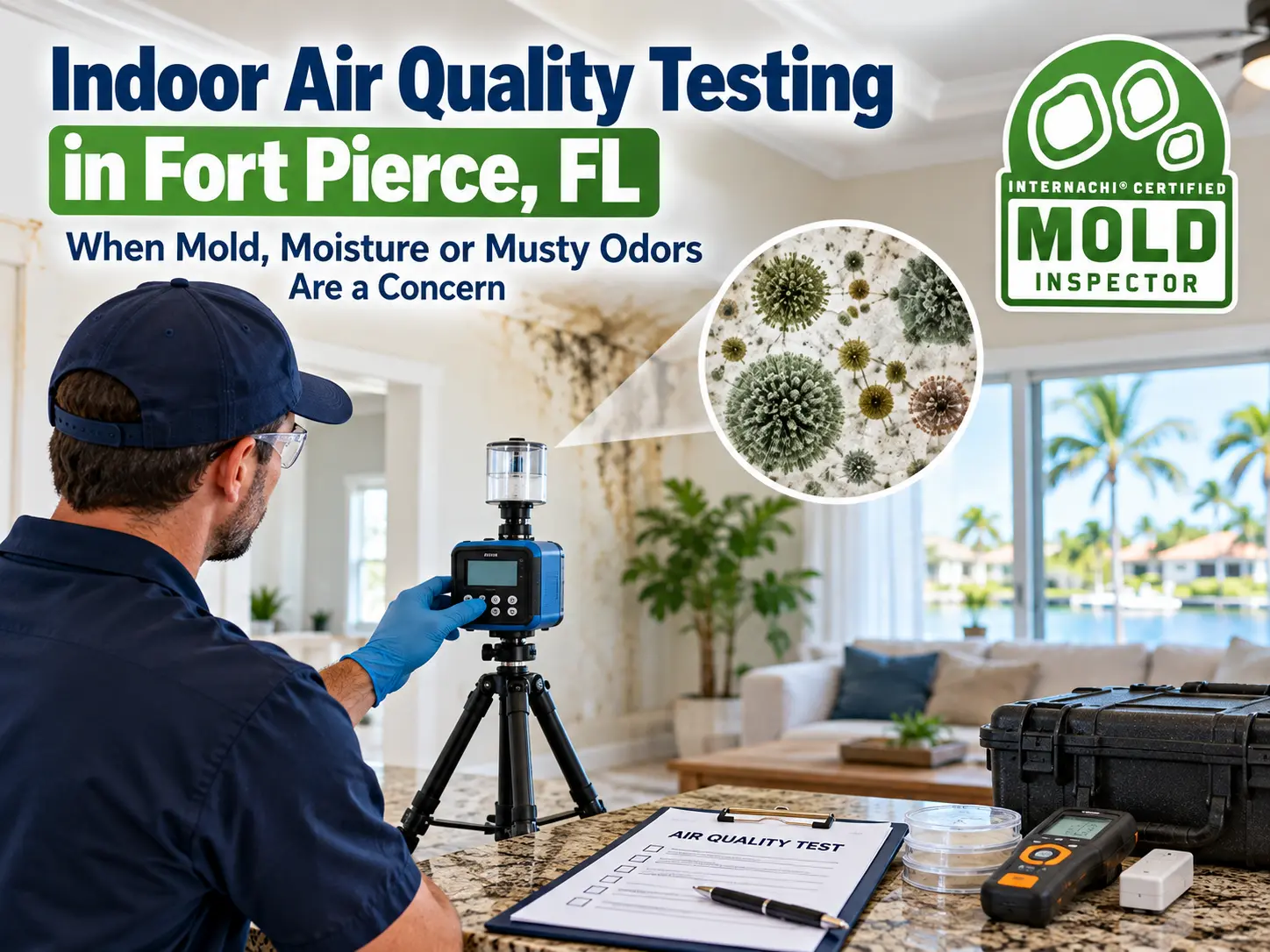
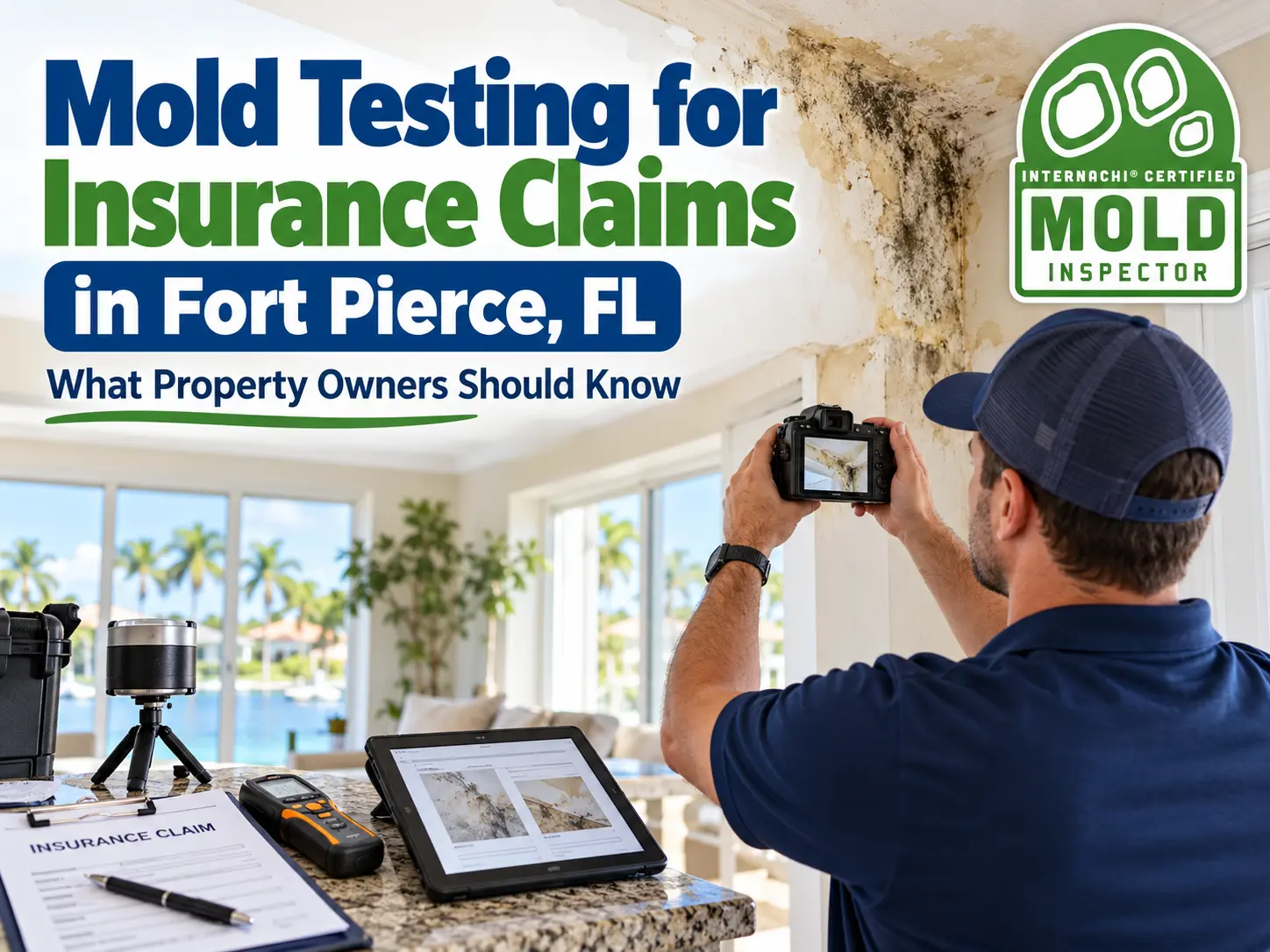
Adjusters review exactly this kind of material: reports, lab results, and estimates. Together they help establish the cause, the extent, and the scope of work, and they can reduce back-and-forth over what’s actually there. Insurance claim mold testing from Mold Detectives follows that approach, with an initial assessment, air and surface sampling, laboratory analysis, and a report with recommendations.
There are limits worth understanding. Sampling is a snapshot, and results can’t prove coverage on their own. The EPA also notes that when mold is visible, sampling is usually unnecessary for deciding how to clean it up. A claim is a different purpose, though: insurers may want documentation of the type and extent of mold that a visual look doesn’t provide. Ask your adjuster whether they require a specific format or assessor.
How the Testing Process Works
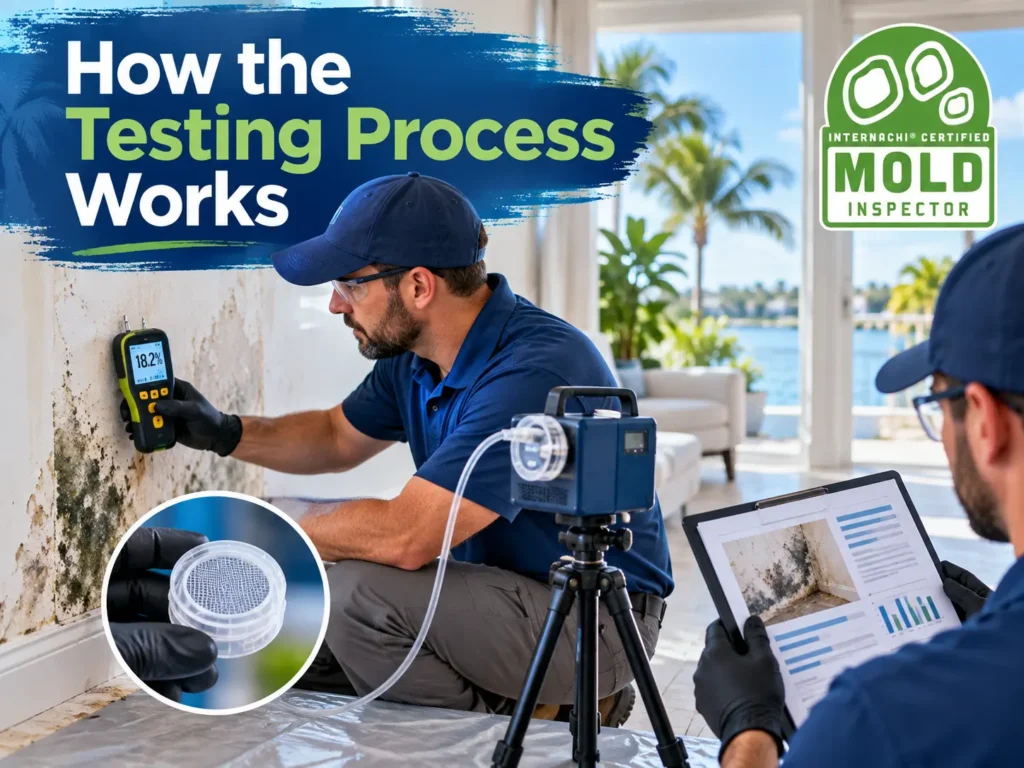
A claim-focused assessment generally follows this sequence:
- Initial assessment. The inspector looks at the affected areas, identifies moisture sources, and documents damage and the loss history you describe.
- Moisture readings. Readings show where materials are still wet, which helps tie the mold to the water event.
- Air and surface sampling. Samples identify mold types and concentrations, often compared with an outdoor reference sample.
- Laboratory analysis. The samples go to a laboratory for analysis.
- Report and recommendations. You receive a written report with findings and guidance on remediation and preventing recurrence.
Turnaround depends on the property and the number of samples, but testing and lab results are typically completed within a few days. You can then submit the report to your insurer or share it with your adjuster.
Florida Licensing and Independence: Why It Matters for a Claim
Florida regulates mold work more tightly than most states. Under Chapter 468, Part XVI of the Florida Statutes, mold assessors and mold remediators must be licensed by the Department of Business and Professional Regulation (DBPR), and the two roles are licensed separately. State rules call for the assessor to prepare a written assessment report, including a remediation protocol that sets out the scope of work and how success will be verified, before remediation begins.
The separation is deliberate. A licensed assessor can’t perform remediation on a structure they assessed within the previous 12 months, and a remediator can’t assess one they remediated. That independence protects you, and it tends to make the assessment more credible to an insurer. When hiring anyone for mold assessment, ask for their license number and check it with DBPR.
After Remediation: Verification and Closing Out the Claim
Once a licensed remediator completes the work, many property owners and insurers want proof that it worked. Under the remediation protocol, verification criteria are set in advance, and an independent follow-up check confirms the results. Post-remediation verification provides that confirmation, and a written clearance report is useful both for your claim file and later if you sell or rent the property.
Keep everything together: the assessment report, the remediation protocol, invoices, photos, and the verification report. A complete file makes it easier to close the claim and answer questions that come up afterward.
Common Mistakes That Weaken a Claim
- Assuming testing guarantees coverage. Testing documents the problem. The policy and the cause of loss decide coverage.
- Using an unlicensed assessor. Reports from unlicensed providers risk rejection, and Florida restricts who can hold themselves out as a mold assessor.
- Using one company to assess and remediate the same job. Florida law restricts it, and it can undermine credibility.
- Relying only on a DIY kit. Kits can show spores are present, which is true of nearly every home, but they don’t document the extent or source.
- Skipping written communication. Phone calls are easy to dispute. Follow up in writing.
Frequently Asked Questions
Do I need testing if the mold is visible?
For cleanup decisions, often not. For an insurance claim, documentation of the mold type, extent, and moisture source can still help, so ask your adjuster what they want to see.
How long do testing and results take?
Typically a few days, depending on property size and the number of samples.
Will testing guarantee my claim is approved?
No. Your policy, the cause of the loss, and your insurer’s review determine the outcome. Testing provides evidence to support your claim.
Who pays for the testing?
Usually the property owner, though some policies have provisions or limits for mold testing and assessment. Check your policy or ask your insurer.
Need Documentation for a Mold Claim?
If mold followed a leak, storm, or flood and you’re preparing a claim, an assessment is easiest to do before cleanup begins. Contact Mold Detectives or call (772) 242-4024 to describe the damage and schedule testing.