The right time to schedule a residential mold inspection in Port St. Lucie, FL is when there’s a reason to look: visible growth, a musty smell, a leak or storm that left things wet, stubborn humidity, or a home purchase or sale on the horizon. There’s no need to inspect on a calendar schedule, but in a climate this humid, waiting too long after a water event costs you, because mold can start growing within a day or two of materials getting wet.
This guide covers the signs that call for an inspection, the situations where one makes sense even without obvious symptoms, why Port St. Lucie homes have their own moisture patterns, what an inspection involves, whether you need sampling, and what to do afterward.
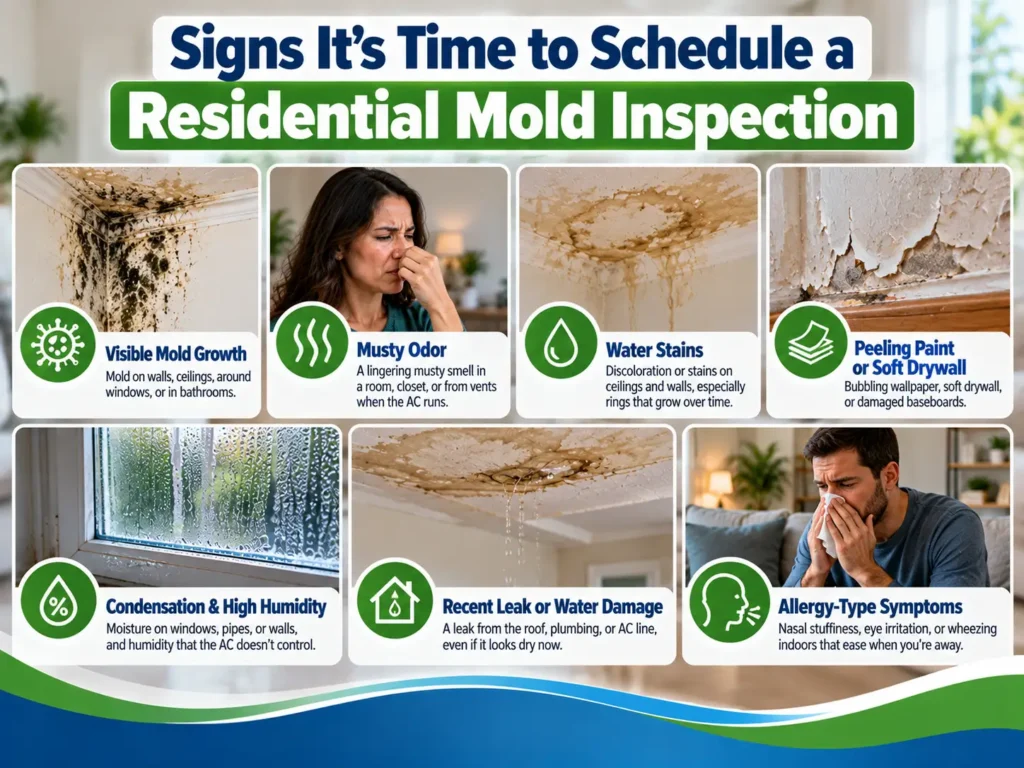
Signs It’s Time to Schedule a Residential Mold Inspection
Mold doesn’t always announce itself, but it usually leaves clues:
- Visible mold growth on walls, ceilings, around windows, or in bathrooms
- A musty odor that lingers in a room or closet, or comes from the vents when the AC runs
- Water stains or discoloration on ceilings and walls, especially rings that grow over time
- Peeling paint, bubbling wallpaper, or soft drywall and baseboards
- Condensation on windows, pipes, or walls, and humidity that the air conditioning doesn’t control
- A recent leak from the roof, plumbing, or an AC line, even if it looks dry now
- Allergy-type symptoms indoors that ease when you’re away. The CDC lists nasal stuffiness, eye irritation, and wheezing as commonly reported effects, though symptoms alone don’t prove mold is the cause, so anyone with concerns should also see a doctor
One sign alone isn’t a diagnosis, but a few together are a good reason to look. Our guide to hidden water damage signs in Florida homes covers how moisture shows up before mold does.
Situations That Call for an Inspection Even Without Obvious Signs
Some moments justify an inspection on their own:
- After a leak, storm, or flood. If wet materials weren’t dried within 24 to 48 hours, which is the EPA’s guideline, mold may have started in places you can’t see.
- Before buying a home. Moisture problems can hide behind fresh paint, and your inspection period is the time to find them. See our guide on getting a mold inspection before buying a home.
- Before selling. A documented inspection can give buyers transparency and help avoid surprises during a transaction.
- After moving into a vacant or long-closed home. Houses that sit shut with the AC off or set high can build humidity quickly.
- After renovations or roof and window work. Disturbed materials and new openings can introduce moisture.
- When the HVAC system seems to be the source. Musty air that appears only when the system runs points in that direction.
Why Port St. Lucie Homes Have Their Own Moisture Patterns
Port St. Lucie’s housing mix shapes where problems appear. Most homes are detached single-family houses, and the median home was built around the early 2000s, so many are newer than in older Florida cities. Newer doesn’t mean immune. Construction moisture, small window leaks, and building settling can all let water in, and mold can grow in a brand-new home just as it can in an older one.
A few local conditions are worth knowing:
- Heavy rainfall. The area averages roughly 53 inches of rain a year, and storms test roof seals, window flashing, and stucco.
- Concrete block and slab construction. Common across the area, it can hold moisture in wall cavities and behind baseboards before anything shows on the surface.
- Tight, efficient homes. Modern, well-sealed houses with high-efficiency HVAC systems can trap humidity if the system isn’t balanced, so indoor moisture lingers.
- Humidity. The EPA recommends indoor humidity below 60 percent, ideally 30 to 50 percent, and in a humid subtropical climate that takes steady control.
What Happens During a Residential Mold Inspection
A thorough inspection usually follows this sequence, which matches the process Mold Detectives describes for its residential mold inspection service:
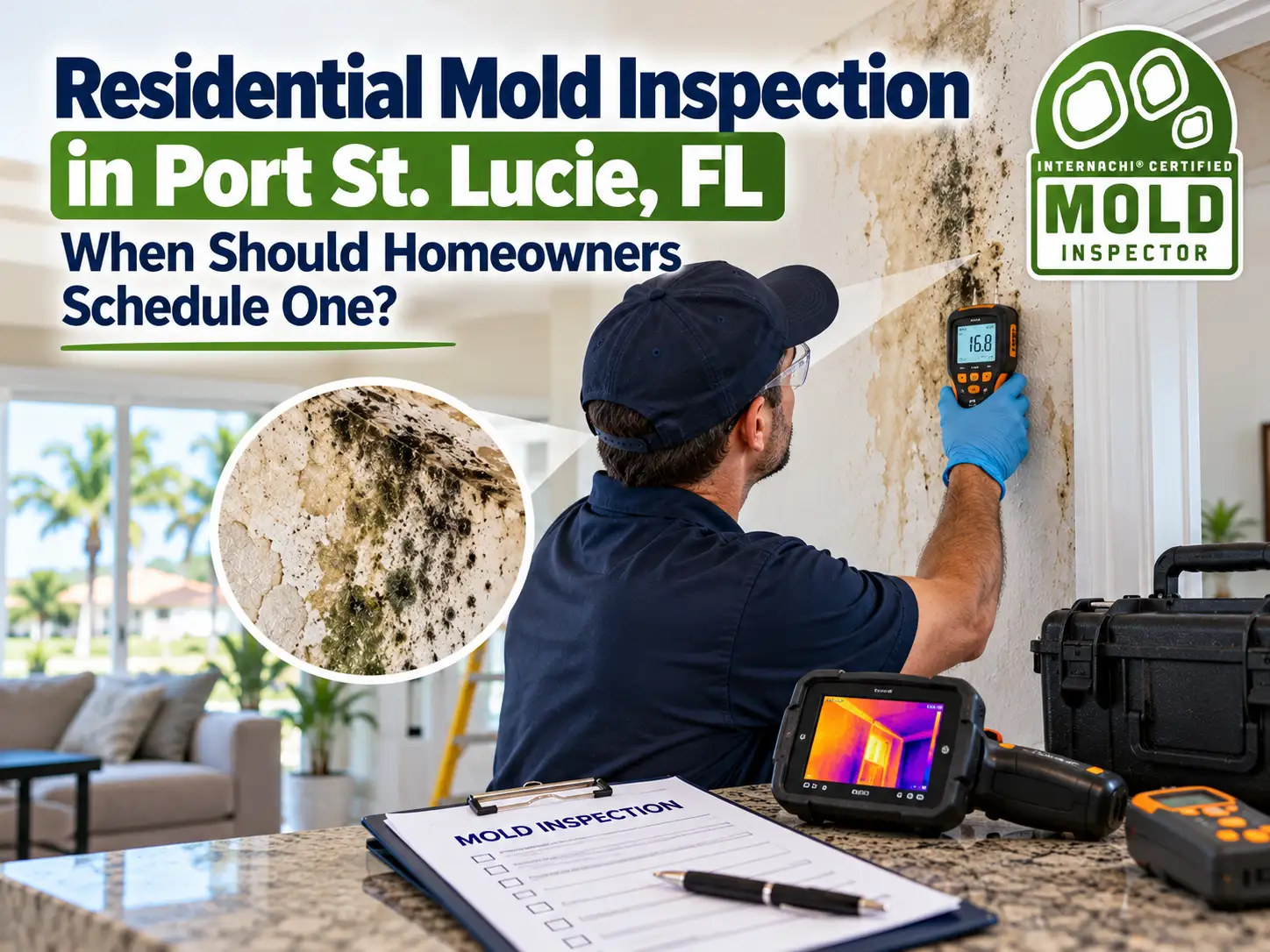
- Visual assessment. The inspector looks for visible mold, water damage, and moisture-prone areas in rooms, bathrooms, the attic, and around the HVAC system.
- Moisture and humidity readings. Moisture meters and thermal imaging help detect damp areas where mold may be growing unseen, including behind walls and ceilings.
- Air and surface sampling, when necessary. Samples are collected to determine mold type and spore concentration if they’ll add useful information.
- Laboratory analysis. Samples go to a laboratory for analysis.
- Report and recommendations. You receive a written report, which can include photos, moisture mapping, and lab results, along with guidance on next steps.
The visit typically takes two to three hours, depending on the size of the home and the number of samples.
Inspection vs. Testing: Do You Need Samples?
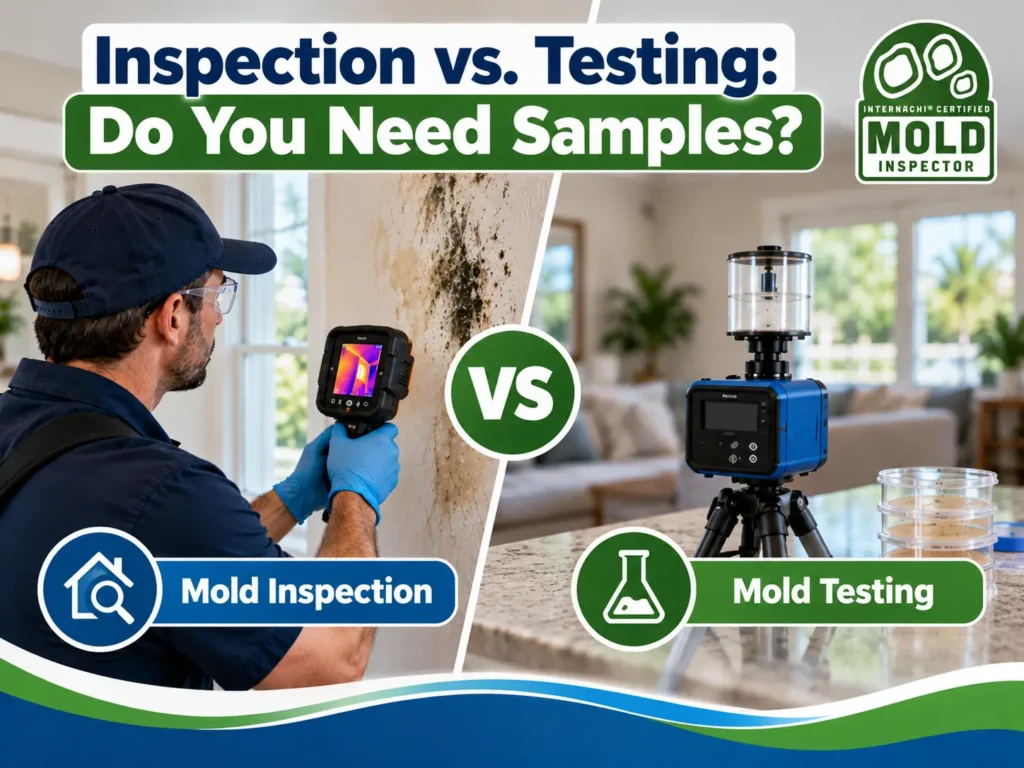
Not always. The EPA’s position is that when mold is visible, sampling is usually unnecessary. You already know it’s there, and the next steps are the same either way: fix the moisture and clean up. For a musty smell with no visible source, the visual inspection and moisture readings come first, because they can locate the source directly.
Sampling helps when you suspect hidden growth, need documentation, or want to confirm results after remediation. It has limits, though: air samples are a snapshot, and growth sealed inside a wall may not release spores into room air during the test. A good inspector will tell you whether sampling is likely to add anything for your situation.
What to Do After the Inspection
What happens next depends on the findings:
- No mold and no moisture problems. You have peace of mind, and a baseline for the future.
- Moisture without mold. Fix the source now, such as a leak, a drainage problem, or an AC issue, before mold has a chance to start.
- Mold found. The priority is the moisture source, followed by remediation and verification.
Florida regulates mold work. Under Chapter 468, Part XVI of the Florida Statutes, mold assessors and remediators must be licensed by the Department of Business and Professional Regulation, and they hold separate licenses. A licensed assessor can’t remediate a property they assessed within the previous 12 months, which keeps the assessment independent. Ask any company for its license number and verify it with DBPR.
Preparing for Your Inspection and Choosing a Company
A few simple steps make the visit more useful: note where you’ve seen stains, smelled odors, or had leaks, make sure the attic and AC air handler are accessible, and keep records of past repairs or storm damage. When comparing companies, ask:
- What methods will you use for moisture readings and sampling?
- Which laboratory analyzes the samples, and what will the report include?
- Are you licensed under Florida law, and what is the license number?
- If mold is found, do you also perform remediation?
Mold Detectives is based in Fort Pierce and serves homeowners across the Treasure Coast, including Port St. Lucie, and these questions are fair to put to any provider.
Frequently Asked Questions
How long does an inspection take?
Typically two to three hours, depending on square footage and the number of samples collected.
Can a new home have mold?
Yes. Construction moisture and minor window or roof leaks can trigger growth in homes of any age.
Do I need an inspection if I can already see mold?
For cleanup decisions, often not. An inspection can still find the moisture source and show whether the problem extends beyond what’s visible.
How often should I schedule one?
There’s no fixed schedule that suits every home. Schedule one when there’s a reason, such as an odor, water damage, or a real estate transaction, and focus on humidity and moisture control in between.
Think It’s Time for an Inspection?
If you’ve noticed a musty smell, stains, or a recent leak, an inspection can show whether moisture or mold is behind it before it spreads. Contact Mold Detectives or call (772) 242-4024 to describe what you’re seeing and arrange a visit.