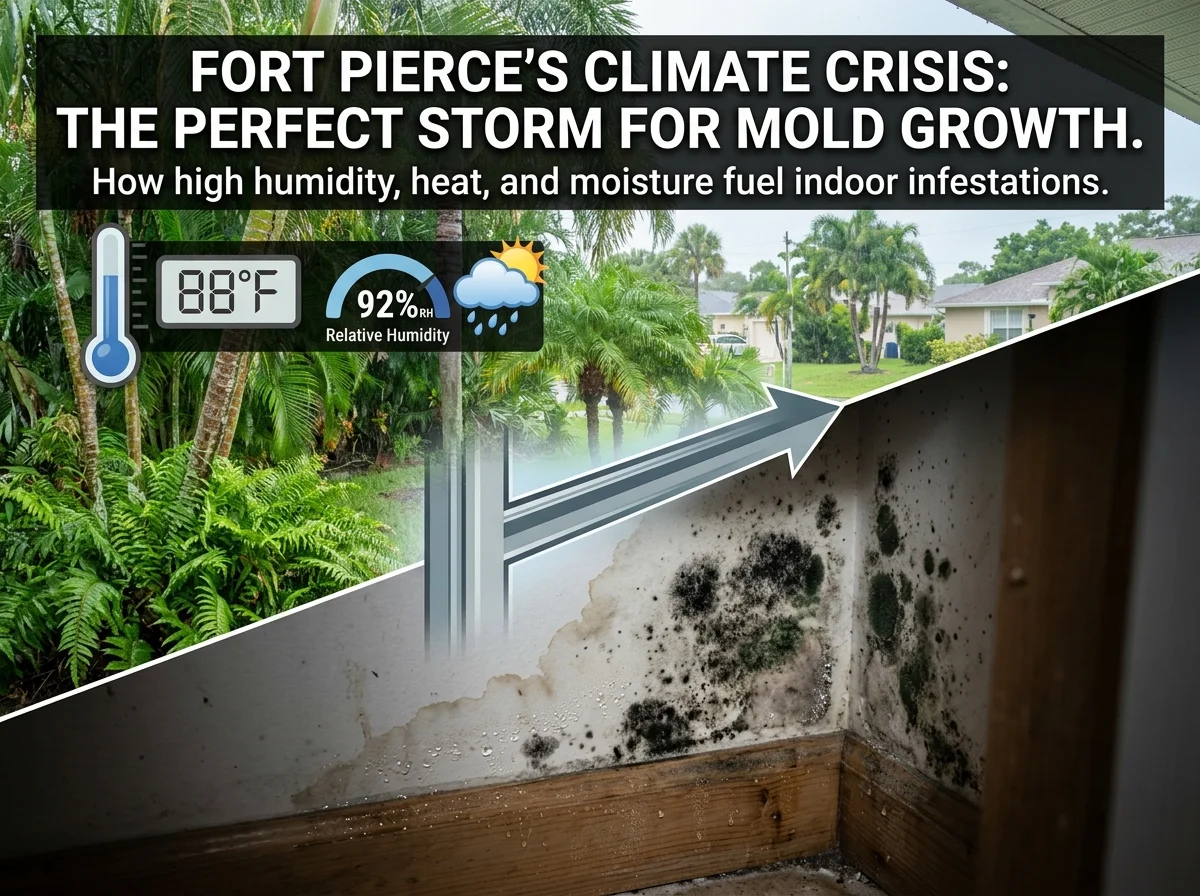
Fort Pierce is beautiful. Tropical. Warm. But it’s also wet. Really wet. That warmth and moisture? Perfect for mold. Mold loves it. Your home doesn’t.
Fort Pierce climate mold growth is serious. The city’s humidity is constant. Heat is constant. Rain is frequent. These conditions breed mold. Fast. Everywhere. Inside walls. Under floors. In crawlspaces. Mold thrives here.
Understanding your climate helps you fight mold. Our complete mold inspection and detection guide covers how to identify and address mold problems once they develop. This guide explains everything about climate.“. Why tropical weather mold loves Fort Pierce. What fort pierce humidity levels mean. Why year-round mold risk florida exists. How to prevent mold. Real solutions. By the end, you’ll understand your mold problem. You’ll know how to fight it.
Understanding Fort Pierce Climate Mold Growth
Your climate is mold’s dream.
Why Mold Loves Fort Pierce
Mold needs three things. Moisture. Warmth. Oxygen. Fort Pierce has all three. All the time.
Tropical weather mold thrives in heat. Fort Pierce is hot year-round. 70-90 degrees most days. Mold grows fast in warmth.
Moisture is everywhere. Ocean air. Rain. Humidity. All create dampness. Mold eats dampness. Grows fast.
The Perfect Storm
Heat plus moisture equals mold explosion. Your home is the target. Mold colonizes quickly. Takes over fast.
Other cities get breaks. Winter freezes mold. Fort Pierce doesn’t freeze. Mold never stops growing.
Year-Round Problem
Most cities have seasonal mold. Spring and summer mainly. Fort Pierce has year-round mold.
Winter is mild here. Still warm. Still humid. Mold doesn’t stop. It keeps growing.
Summer is brutal. Hot. Humid. Rainy. Mold goes crazy. Explodes everywhere.
Fort Pierce Humidity Levels: Understanding the Numbers
Numbers tell the story.
Normal Humidity Levels
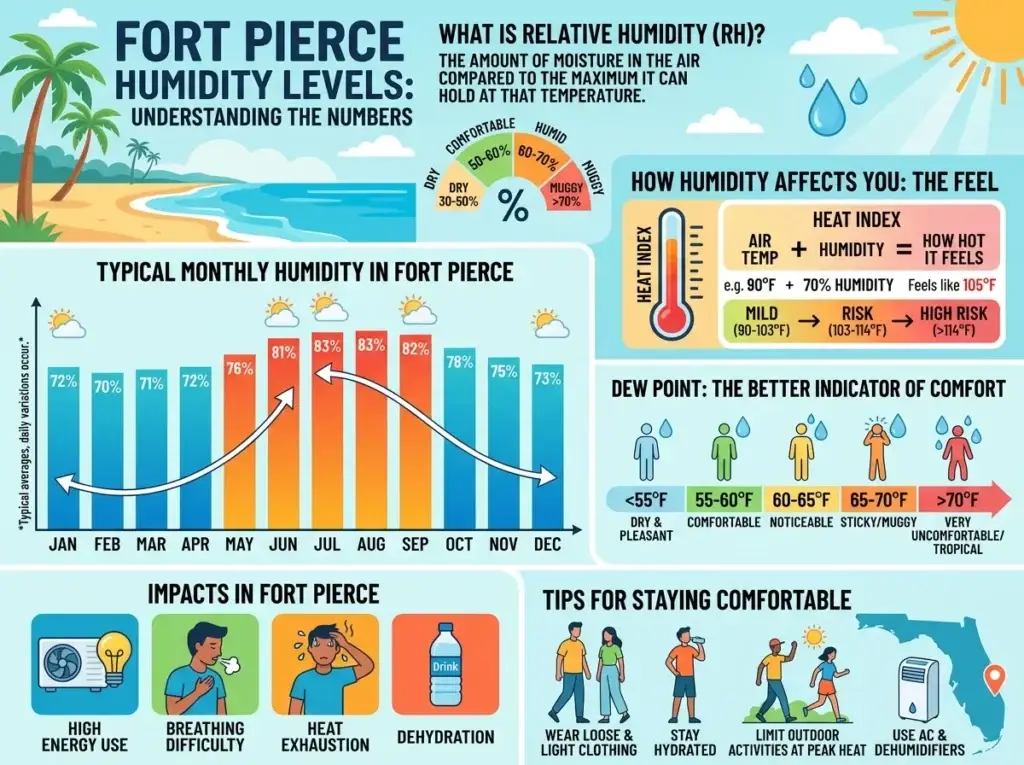
Healthy humidity: 30-50%. That’s ideal. Mold struggles here. Mold can’t grow fast.
Fort Pierce humidity: 60-80% regularly. Sometimes 90%+. That’s dangerous. Mold loves it.
Why So Humid?
Ocean air carries moisture. Atlantic Ocean is nearby. Salt spray brings water. Humidity stays high.
Rain is frequent. Afternoon thunderstorms common. More water. More humidity. Mold loves it.
Summer vs Winter
Summer: 75-85% humidity. Incredibly wet. Hot. Humid. Perfect mold conditions.
Winter: 60-70% humidity. Still wet. Still warm. Still dangerous. No break from moisture.
Comparison to Other Cities
Arizona: 20-30% humidity. Dry. Mold struggles.
Colorado: 30-40% humidity. Dry. Mold rarely grows.
Fort Pierce: 60-90% humidity. Wet. Mold explodes.
Huge difference. Fort Pierce is mold’s dream city.
Tropical Weather Mold: How It Grows Here
Understanding growth helps you prevent it.
Moisture Sources
Ocean spray brings moisture. Enters homes. Creates dampness. Mold grows.
Rain brings moisture. Leaks happen. Water gets inside. Mold grows.
AC condensation creates moisture. Drains clogged. Water backs up. Mold grows.
Ground moisture seeps up. Basements get wet. Crawlspaces get damp. Mold grows.
Temperature Advantage
Heat speeds growth. Mold likes warmth. Fort Pierce is always warm. Mold grows fast. Constantly.
Humidity Feeding Mold
High humidity is mold food. 60%+ humidity and mold explodes. Fort Pierce stays above 60%. Always. Mold never stops growing.
Where Mold Grows in Fort Pierce Homes
Mold loves these places.
Bathrooms
Bathrooms have moisture. Showers create steam. Humidity stays high. Mold grows fast. Walls. Ceilings. Grout. All vulnerable.
Kitchens
Cooking creates steam. Humidity rises. Mold grows. Under sinks especially. Pipes leak. Water sits. Mold colonizes.
Crawlspaces
Ground moisture seeps up. Crawlspace gets damp. No air flow. Perfect mold conditions. Mold spreads everywhere.
Basements
Fort Pierce has high water table. Basements flood easily. Water damage happens. Mold follows. Spreads fast.
Attics
Heat creates moisture. Roof leaks happen. Water gets in. Heat and moisture. Perfect mold home. Grows fast.
Walls
Water intrusion happens. Rain. Humidity. Pipes leak. Water gets inside walls. Mold colonizes. Hidden. Growing. Spreading.
Under Floors
Moisture rises from ground. Wood absorbs it. Mold grows underneath. Hidden. Dangerous. Spreads fast.
Air Conditioning Systems
AC creates condensation. Drains clog. Water backs up. Mold colonizes coils. Spreads through ducts. Entire home gets contaminated. Understanding where mold grows helps you target prevention. Mold risks vary by Fort Pierce neighborhood, so location matters too
Year-Round Mold Risk Florida: The Never-Ending Problem
Mold never takes a break.
Spring Mold Season
March-May is wet. Rain increases. Humidity rises. Mold grows. Fast. Everywhere.
Summer Explosion
June-September is brutal. Heat and humidity combined. Mold goes crazy. Explodes. Spreads everywhere. Fastest growth period.
Fall Concerns
October-November still warm. Still humid. No cooling off. Mold keeps growing. Doesn’t slow down.
Winter Problem
December-February still dangerous. Temperature: 65-75 degrees. Humidity: 60-70%. Still perfect for mold. Still growing. Never stops.
No Break
Unlike other places, mold has no break. Never freezes. Never dries out. Year-round risk. Constant threat.
Tropical Weather Mold Prevention Strategies
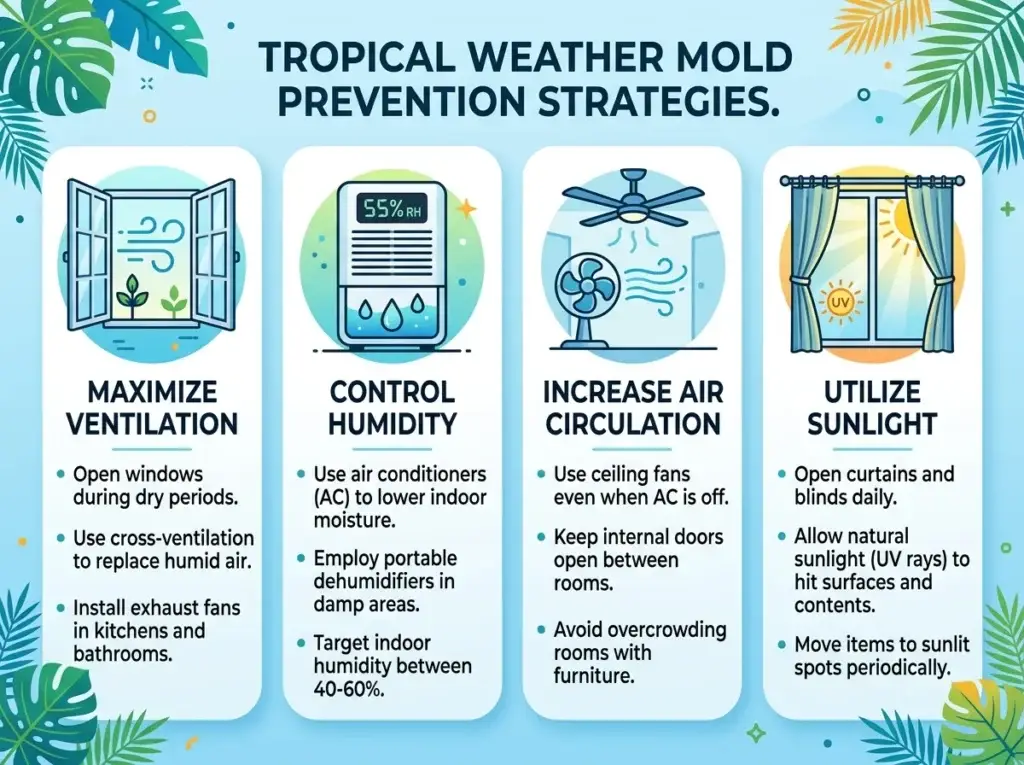
Fight back against mold.
Control Humidity
AC helps. Keep running. Removes moisture. Humidity drops. Mold struggles.
Dehumidifiers help. Especially in crawlspaces. Basements. Bathrooms. Remove moisture. Stop mold.
Moisture absorbers work. Placed in problem areas. Absorb moisture. Prevent mold. Change regularly.
Improve Ventilation
Fans in bathrooms. Run during showers. Run 30 minutes after. Removes steam. Reduces humidity.
Kitchen fans work too. Run while cooking. Removes steam. Prevents moisture buildup.
Attic fans help. Reduce heat. Reduce moisture. Prevent mold growth.
Fix Water Problems
Leaks enable mold. Fix immediately. Don’t ignore drips. Address water damage fast. Prevent mold.
Gutters must work. Clean regularly. Direct water away. Prevent pooling. Stop seepage.
Grading around home matters. Water should flow away. Not toward house. Prevents basement moisture.
Insulation Helps
Good insulation reduces condensation. Less cold spots. Less moisture. Less mold. Insulate pipes. Insulate crawlspaces. Helps prevent mold.
Regular Inspections
Check monthly for mold. Look for stains. Look for spots. Smell for musty odor. Early detection prevents spread.
Professional inspection yearly. They see hidden mold. Find problems early. Prevent disaster.
Fort Pierce Climate Mold Growth: Testing and Detection
Know what you’re dealing with.
Visual Inspection
Black spots on walls. Green spots on tiles. Fuzzy growth. Discoloration. These are mold. Visible mold is serious. Get professional help.
Smell Test
Musty smell means mold. Somewhere. Growing. Hidden maybe. But definitely present. Don’t ignore it.
Air Quality Testing
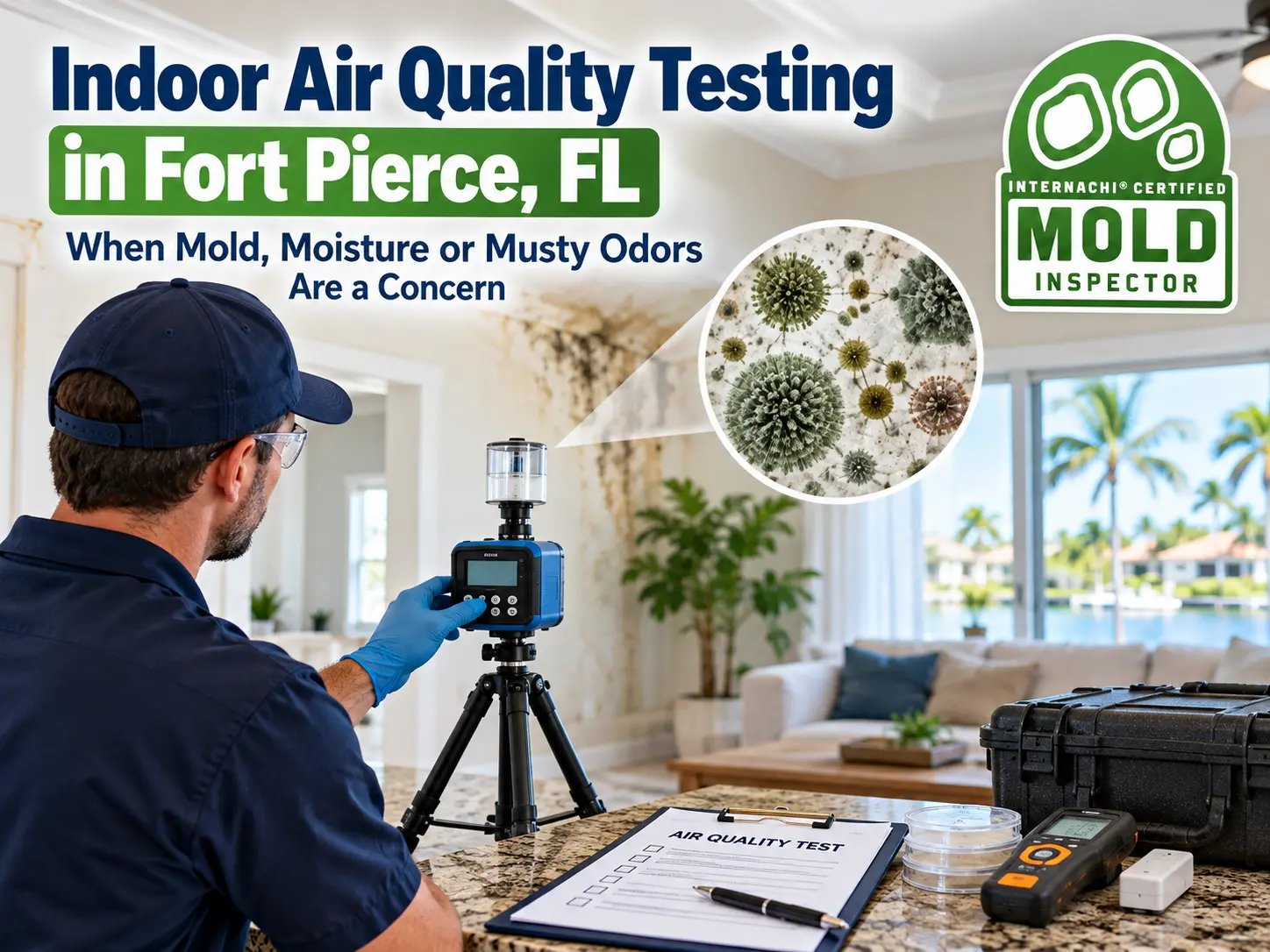
Professional residential mold inspection services test air quality, measure mold spores, and identify hidden problems. High levels indicate problem. Helps quantify severity. Guides treatment.
Surface Sampling
Professional swabs suspicious areas. Sends to lab. Lab identifies mold type. Determines severity. Guides response.
Thermal Imaging
Shows moisture areas. Before mold grows. Catch problems early. Prevent growth. Stop mold before it starts.
When to Call Professionals
Know when you need help. Professional mold remediation and prevention solutions tackle large areas, hidden mold, and persistent problems.
Large Mold Areas
Area bigger than 10 square feet. Professional removal needed. Not DIY. Dangerous. Requires equipment.
Hidden Mold
Mold inside walls. Behind drywall. In crawlspaces. Professional needed. Finding it requires tools. Removing it requires expertise.
Health Concerns
Family members getting sick. Respiratory issues. Allergies worsening. Mold might be cause. Professional assessment needed.
Persistent Problems
Mold keeps coming back. Addressed but returns. Problem isn’t solved. Underlying issue exists. Professional needed. Find root cause.
FAQ About Fort Pierce Climate Mold Growth
Why does Fort Pierce have so much mold?
Heat plus humidity equals mold explosion. Fort Pierce is always warm. Always humid. Perfect mold conditions. Year-round. Never stops.
Can I prevent mold in Fort Pierce?
Partially. Control humidity. Fix leaks. Improve ventilation. Regular inspections. These help. But mold risk never goes away. It’s always there. Constant vigilance required.
What tropical weather mold types grow here?
Black mold (toxic). Green mold (common). White mold (spreads fast). Pink mold (bacteria). All types thrive here. Year-round. Multiple species.
How often should I inspect for mold?
Monthly minimum. Look for signs. Check humidity. Smell for musty odor. Professional inspection yearly. Early detection prevents disaster.
What humidity level causes mold?
60%+ humidity and mold thrives. Fort Pierce stays above 60% constantly. That’s the problem. Always dangerous. Always risky.
Is mold removal expensive?
Small area: $500-$1,500. Medium area: $1,500-$5,000. Large area or whole home: $5,000-$20,000+. Prevention is cheaper. Fight mold early. Costs less.