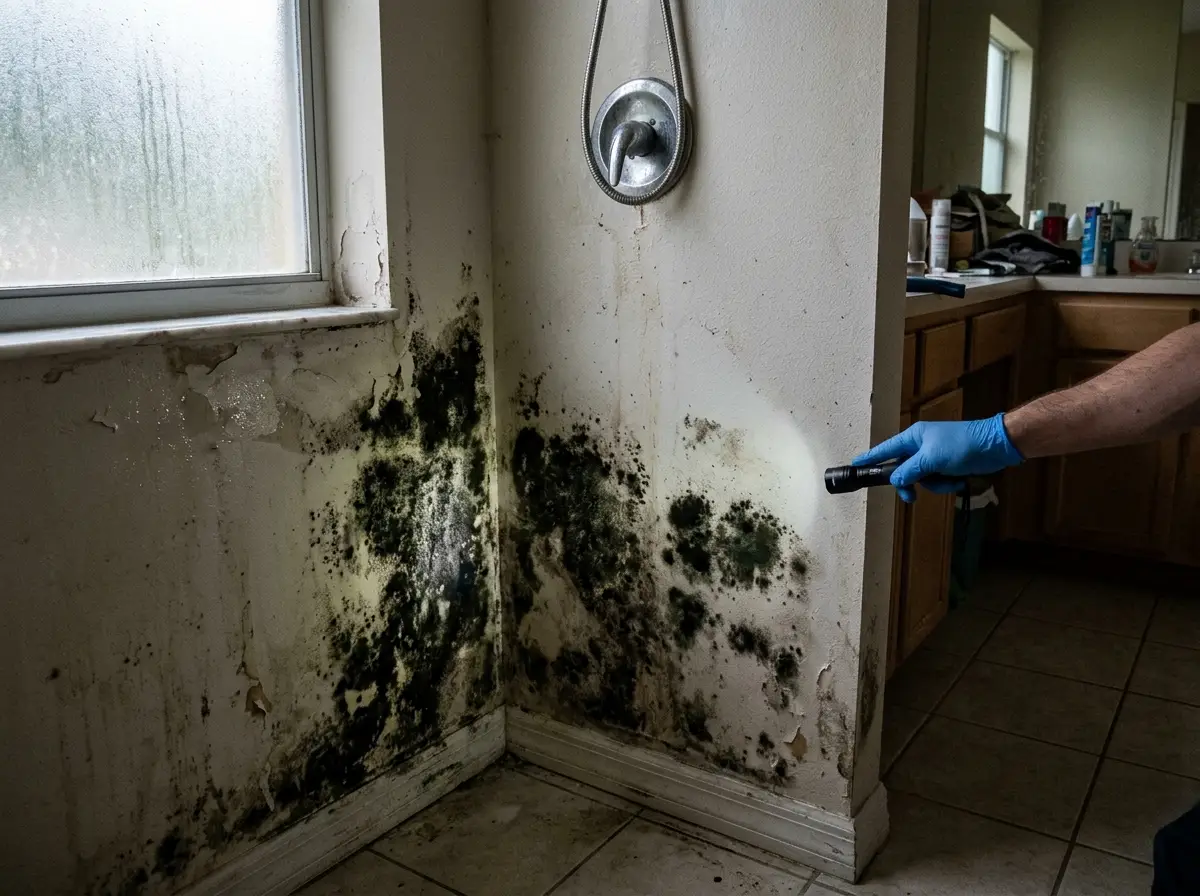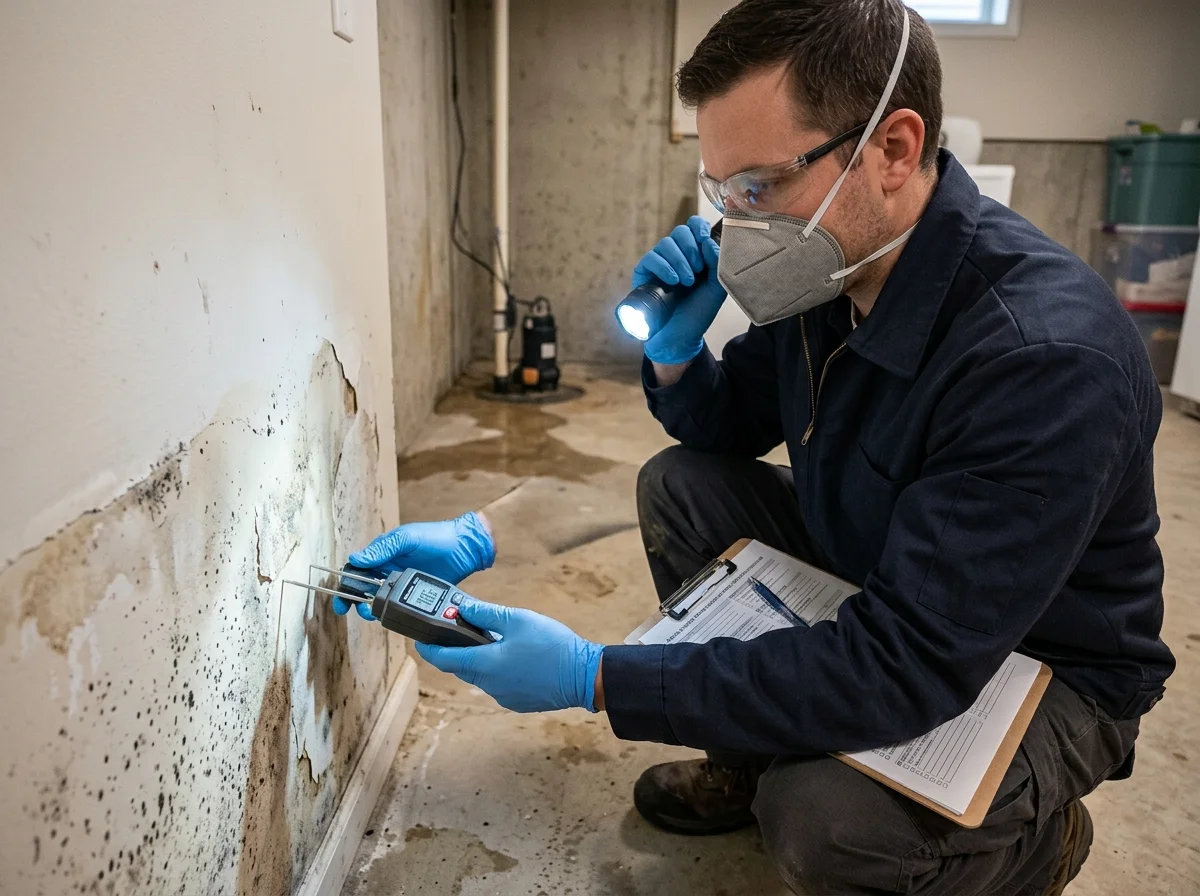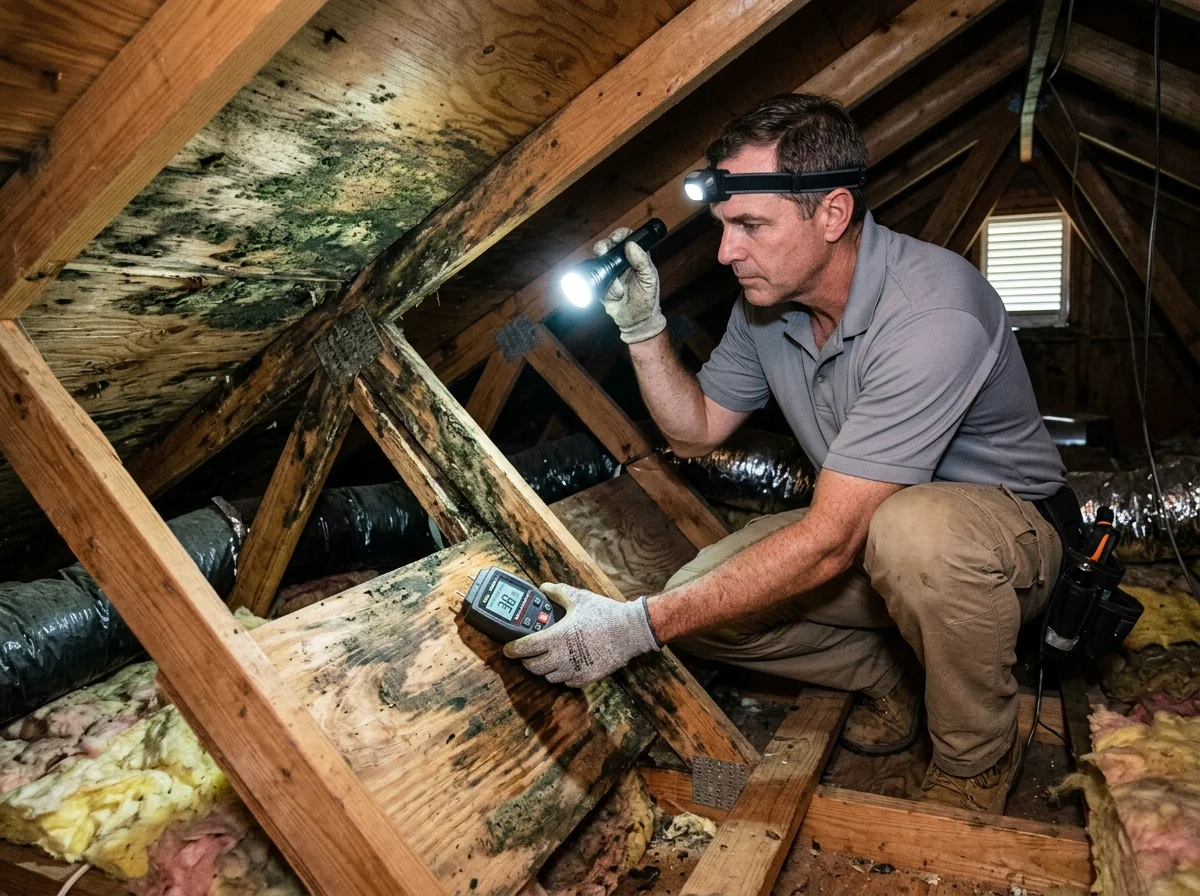
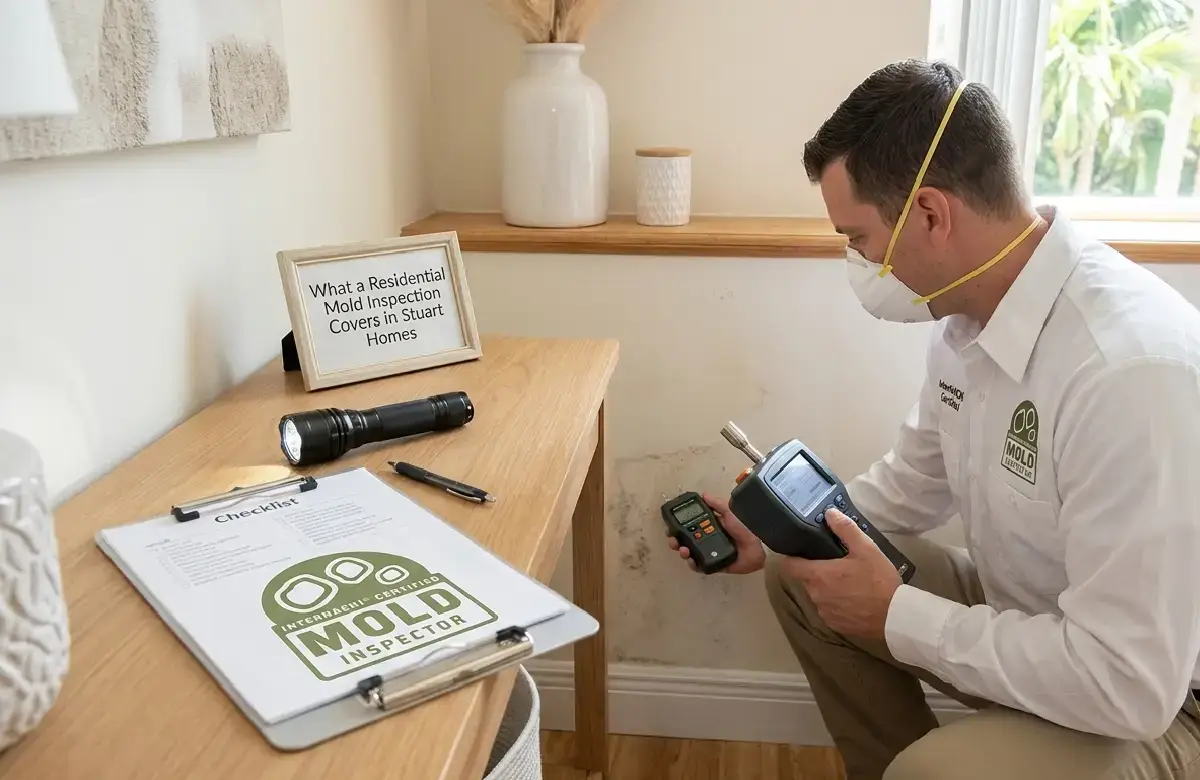
A full inspection goes way beyond a quick walkthrough. Technicians check every room. They test humidity levels. They scan walls with thermal cameras. This catches moisture behind drywall.
You get a detailed report. It shows mold type, location, and severity. No jargon. Just clear answers. Stuart homes often hide mold in air conditioning vents. Condensation builds up there fast.
The Key Areas We Always Test
- Basement mold inspection – Concrete floors trap moisture. One leaky pipe starts colonies.
- Crawl space mold check – Dark, damp, and ignored. This spot spreads spores upward.
- Indoor air quality check – Captures airborne particles you breathe daily.
- House mold testing – Surface samples from walls, wood, and fabric.
Why Stuart’s Climate Demands a Home Mold Inspection
Stuart sits near the Atlantic. Humidity stays above 70% most months. Rain hits hard during summer. Flooding happens in low-lying neighborhoods like Rio Vista and Golden Gate.
That moisture feeds mold. You can’t outclean it. Bleach only treats surfaces. Spores live behind materials. A professional residential and Commerical mold inspection finds the root source. Technicians understand local construction styles. Older Stuart homes have less ventilation. Newer builds trap humidity inside.
A mold inspector saw this problem on dozens of homes in Stuart. Crawl spaces near the St. Lucie River stay wet year-round. Owners never go down there. Mold grows for years unnoticed. Don’t let that be you.
The Step-by-Step Mold Risk Assessment for Homes
First, technicians interview you. Describe odors, health changes, or past leaks. This history guides the search.
Second, they measure moisture. Pinned meters test drywall. Pinless meters scan floors and ceilings.
Third, they collect air samples. Outdoor air sets a baseline. Indoor samples reveal spore counts.
Fourth, they inspect HVAC systems. Mold loves dark ductwork. Last, they document everything. Photos. Readings. Lab results. You receive a full mold risk assessment for homes within 48 hours.
This process follows EPA guidelines. No shortcuts. Stuart inspectors know local building codes too. That matters for insurance claims.
Common Places Mold Hides in Stuart Properties
Basement mold inspection matters even without full basements. Slab-on-grade homes trap ground moisture. Check corners near exterior walls.
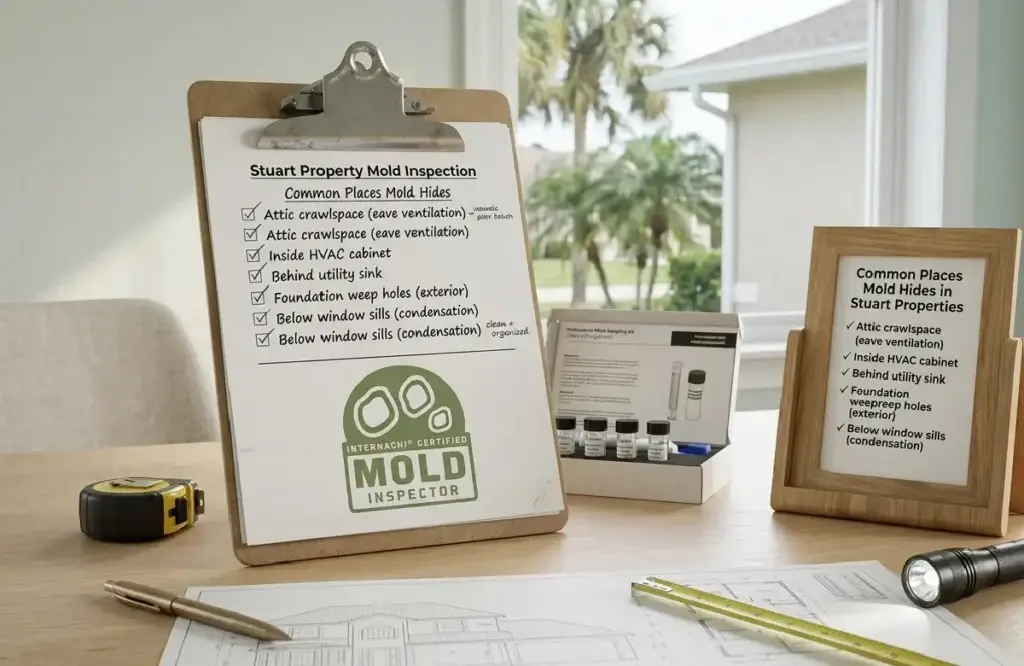
Crawl space mold check is non-negotiable. Many Stuart homes sit on raised foundations. Leaves block vents. Humidity rises to 80% quickly. One homeowner in Palm City found mold across 200 square feet. They never entered that space once.
Other hiding spots:
- Behind bathroom vanities
- Under kitchen sinks
- Inside window frames
- Around AC return vents
- Beneath laminate flooring
A property inspection for mold covers every listed spot. Don’t assume clean rooms are safe. Mold travels through air handlers.
Health Signs You Need a Residential Mold Inspection
You feel tired at home. Headaches start after dinner. Sinus pressure never goes away. These symptoms improve when you leave for work or vacation. That pattern points to indoor air quality.
Kids react first. Their lungs are smaller. Elderly family members struggle too. Asthma attacks increase. Skin rashes appear. Eye irritation becomes daily.
A simple indoor air quality check measures particle levels. High spore counts trigger these symptoms. Many doctors now ask about home mold exposure. Stuart’s allergy season already strains residents. Adding mold makes everything worse.
Don’t guess with your family’s breathing. A house mold testing service costs less than one urgent care visit. Prevention beats treatment every time.
What Happens After Your Mold Inspection
You receive a clear report. Green means safe levels. Yellow means monitor. Red means immediate action.
If mold is found, you hire a remediation company. They contain affected areas. Remove damaged materials. Clean every surface. Then retest to confirm clearance. A second residential mold inspection verifies the job worked.
Most Stuart homeowners skip this final check. That’s a mistake. Mold returns if moisture remains. Always retest after repairs. Your health depends on clean air long-term.
Insurance sometimes covers inspections after water damage. Check your policy. Save all reports for future claims.
How Often Stuart Homeowners Need a Property Inspection for Mold
Once per year is smart. Twice if you’ve had past water issues. Schedule after hurricane season too. September storms bring flooding and roof leaks.
Also test after buying a home. Many pre-purchase inspectors miss hidden mold. They focus on structure, not air quality. A dedicated property inspection for mold gives peace of mind.
Selling your home? Get an inspection first. Buyers ask for mold reports now. Having one ready speeds up closing. It shows you’re honest and proactive.
FAQ
Q1: How long does a residential mold inspection take?
A typical home takes two to three hours. Size matters. A 2,000-square-foot house tests faster than a large property. Complex moisture issues add time.
Q2: Can I do my own home mold inspection?
No. DIY kits miss airborne spores. They don’t find hidden growth. Professionals use lab analysis and thermal imaging. Save money elsewhere.
Q3: What’s the difference between mold inspection and testing?
Inspection finds moisture sources and visible growth. Testing collects samples for lab identification. Both together give complete answers for your Stuart home.
Q4: How much does house mold testing cost in Stuart?
Prices range from 300 to 700. Size and number of samples affect cost. Compare that to $5,000+ for remediation. Inspection saves you money.
Q5: Does homeowners insurance cover mold inspection?
Only if a covered peril caused moisture. Sudden pipe bursts qualify. Long-term leaks do not. Read your policy or call your agent.
Q6: Can mold return after remediation?
Yes, if moisture remains. Fix leaks first. Improve ventilation. Then schedule a follow-up residential mold inspection to confirm safety.
Q7: Should I test my crawl space even without odor?
Absolutely. Crawl spaces hide mold for years. No smell doesn’t mean no problem. Schedule a crawl space mold check every 18 months.
Conclusion
Mold doesn’t announce itself. You smell nothing until colonies spread wide. By then, your family breathes spores daily. That’s not fear—that’s Florida reality. A residential mold inspection gives you control. You learn exactly what’s in your air. No guessing. No bleach bandages. Just data and next steps. Stuart homeowners who inspect early save thousands on repairs.
Don’t wait for health symptoms or visible stains. Book an inspection this month. Call a local residential mold inspection services provider. They know Stuart’s climate, neighborhoods, and common trouble spots. Protect your home. Protect your lungs. Get that report on your kitchen table within a week. Then sleep easier knowing clean air stays inside your walls. Request a quote today—your family will thank you.