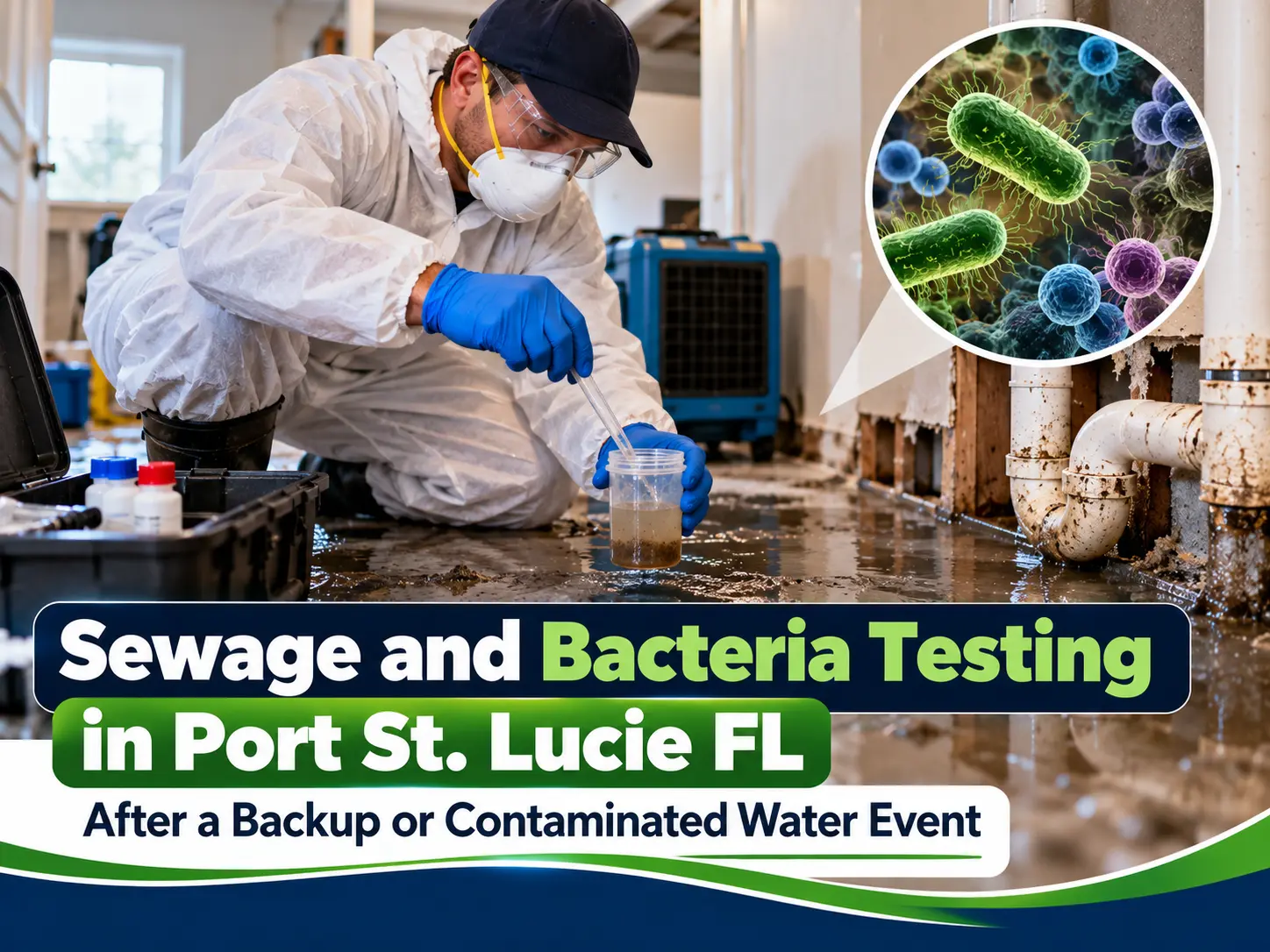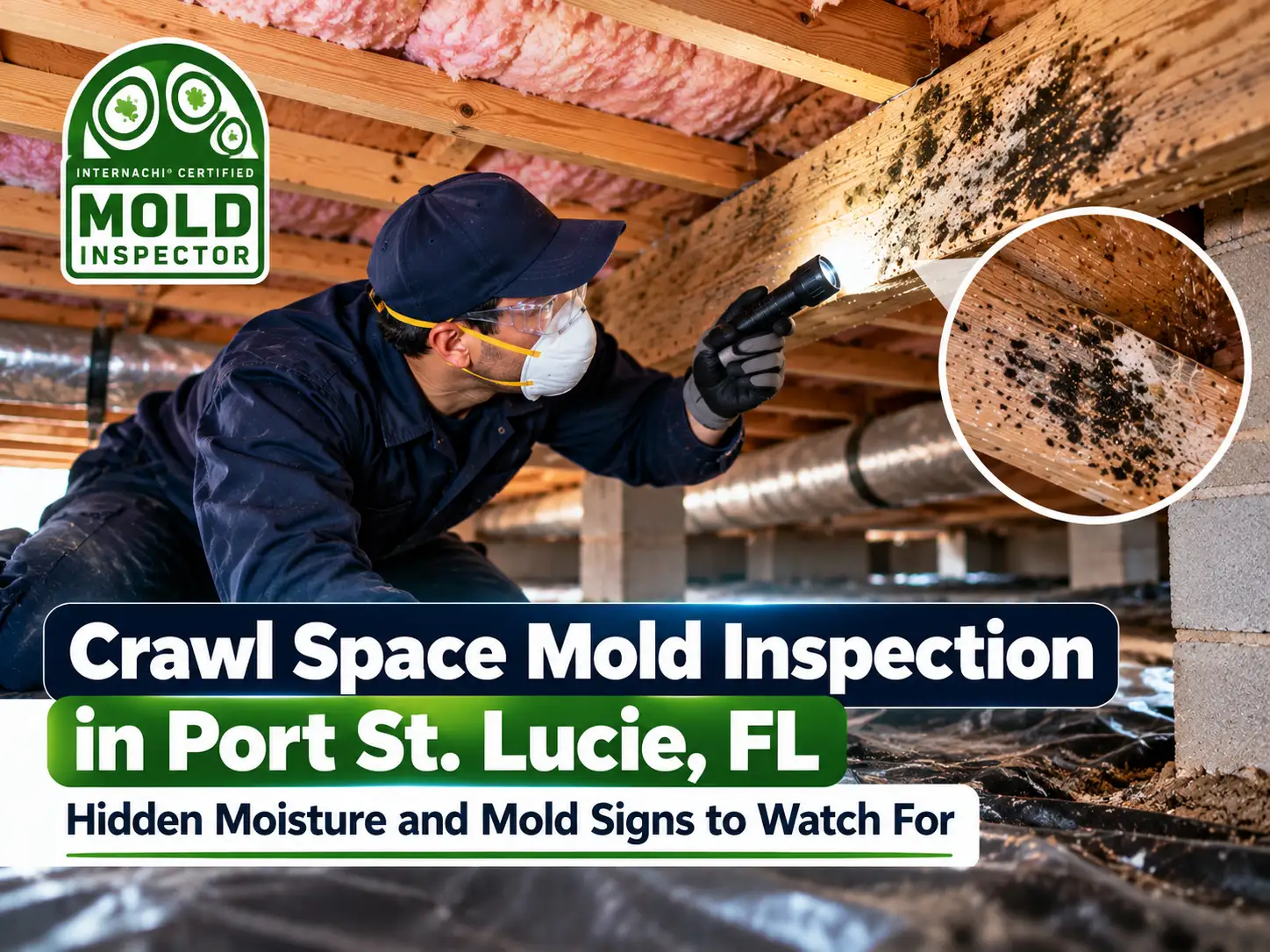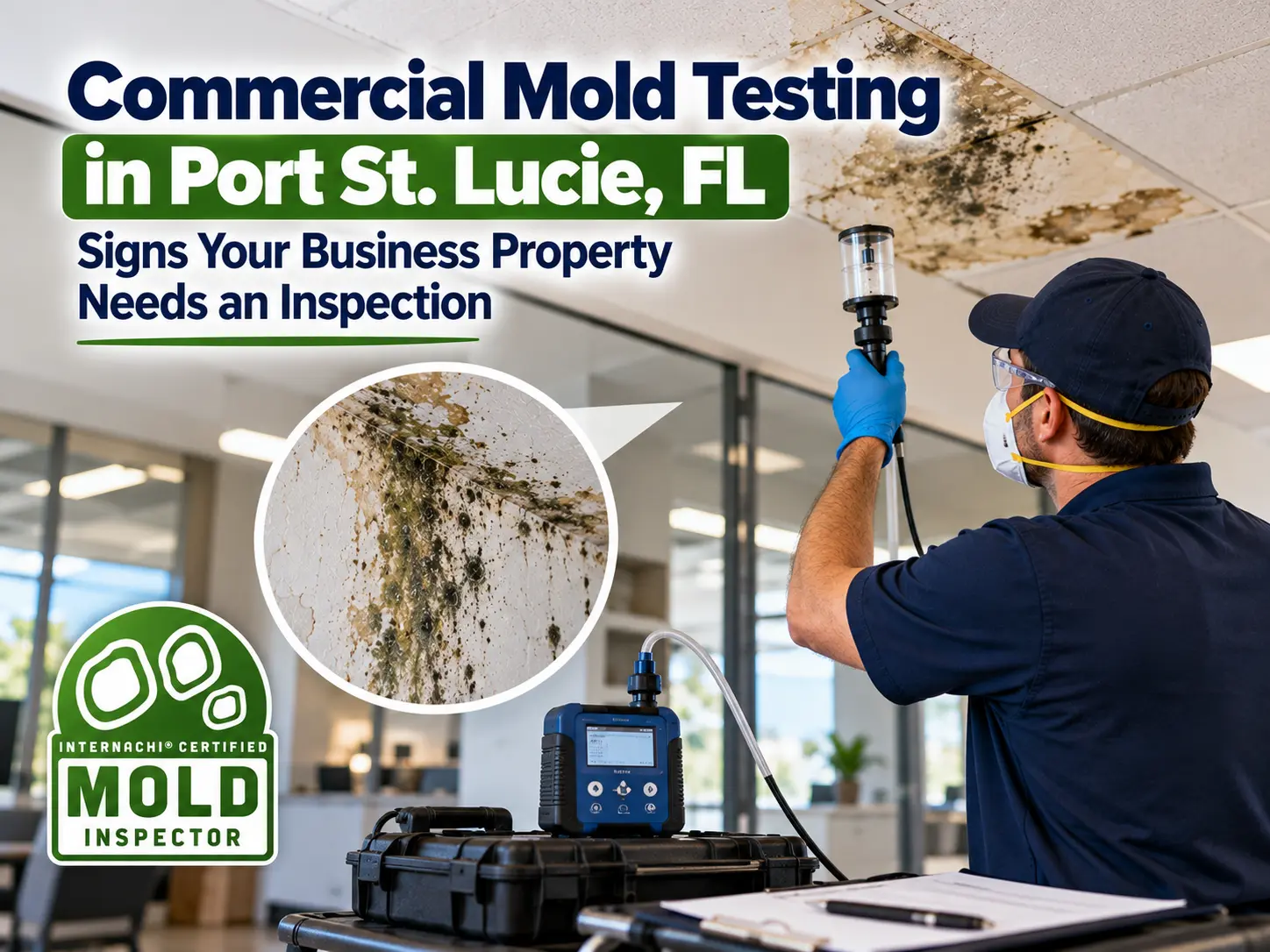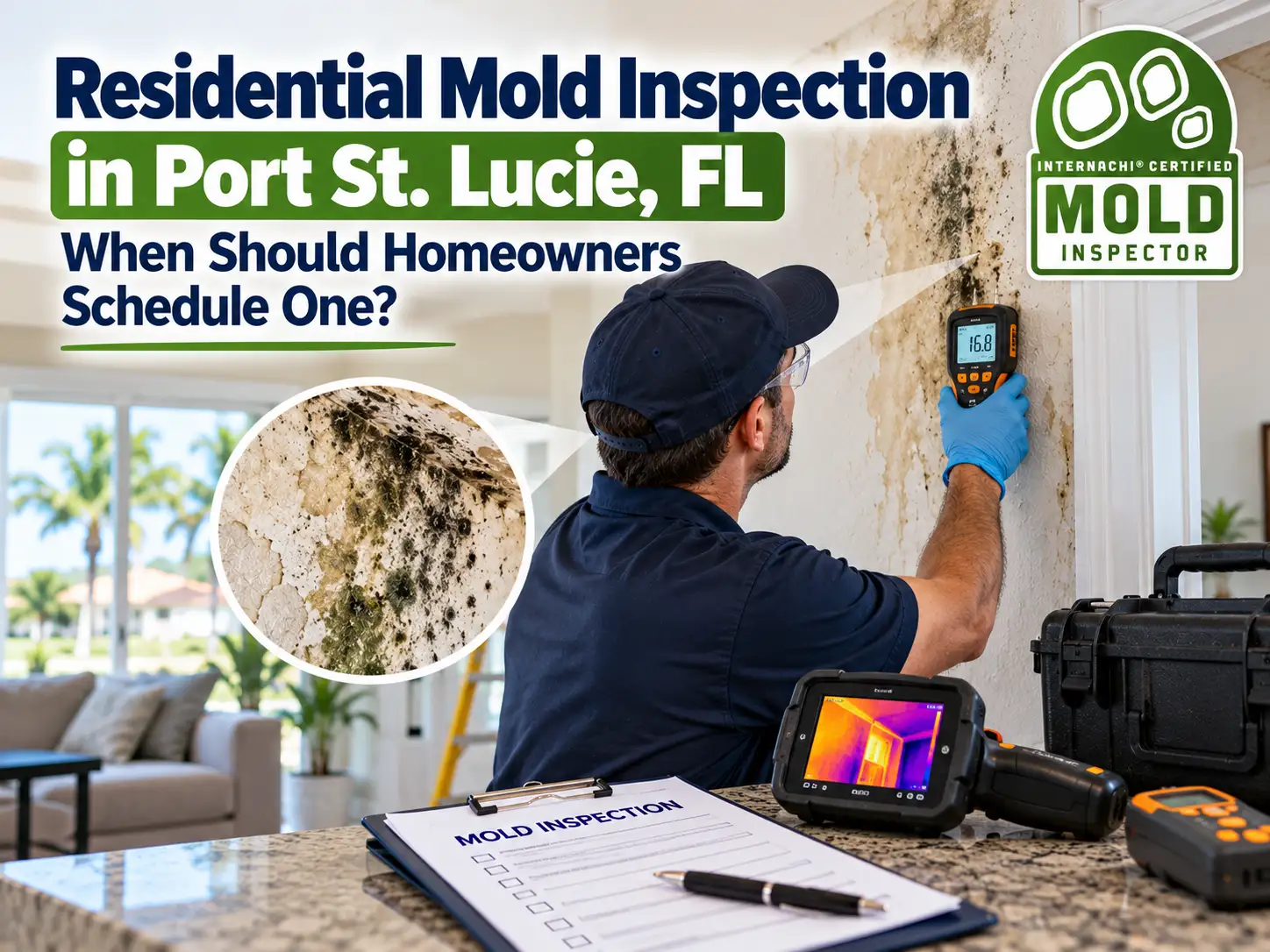
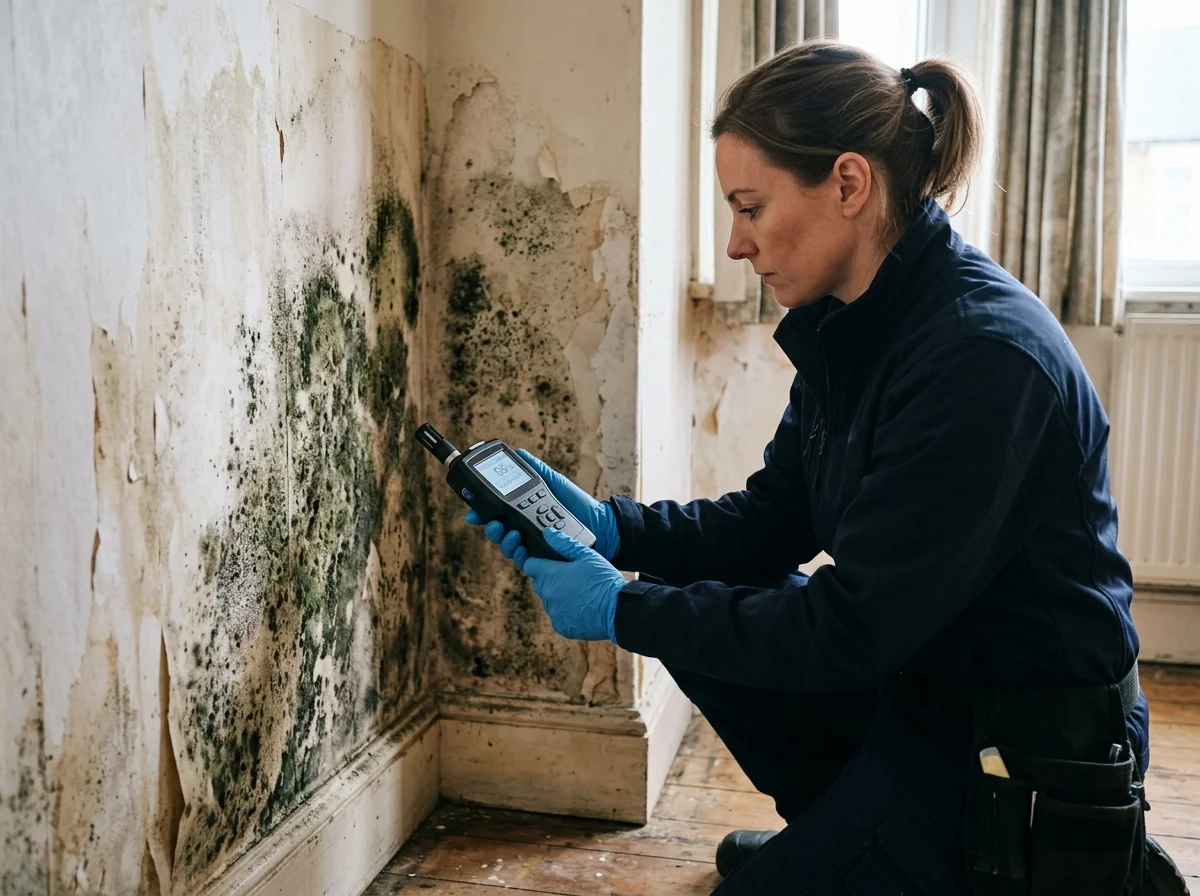
A mold complaint can become a costly rental problem when it sits too long. A tenant may notice a musty smell, staining near a vent, or water damage after a leak. For Fort Pierce landlords, quick action helps protect the building and creates a clear record of what happened. Professional mold testing for landlord Florida properties can also help when the source is hidden or the extent is unclear.
The best approach starts with moisture, not random sampling. A focused inspection can show where water is entering, which materials are affected, and whether lab testing will add useful information. The same moisture-first approach works for apartments, office suites, and other commercial rental property.
Why Landlords Should Take Mold Complaints Seriously
A quick response helps separate a small moisture issue from a problem that needs professional testing.
Mold Problems Usually Start With Moisture
Mold needs moisture to grow. Florida rentals can develop damp areas after roof leaks, plumbing failures, AC drain problems, condensation, or storm water intrusion. The Florida Department of Health says moisture control is the key to stopping indoor mold growth.
A rental property mold inspection should look beyond visible spots. An inspector may check ceilings, cabinets, walls, HVAC areas, and other moisture-prone locations. Finding and fixing the water source is just as important as finding mold.
Delays Can Raise Repair Costs
Wet drywall, flooring, insulation, and wood can become more expensive to repair when moisture stays in place. Mold may also spread into nearby materials. Florida health guidance recommends drying wet building materials quickly and keeping indoor humidity under control.
What Are a Florida Landlord’s Responsibilities for Mold?
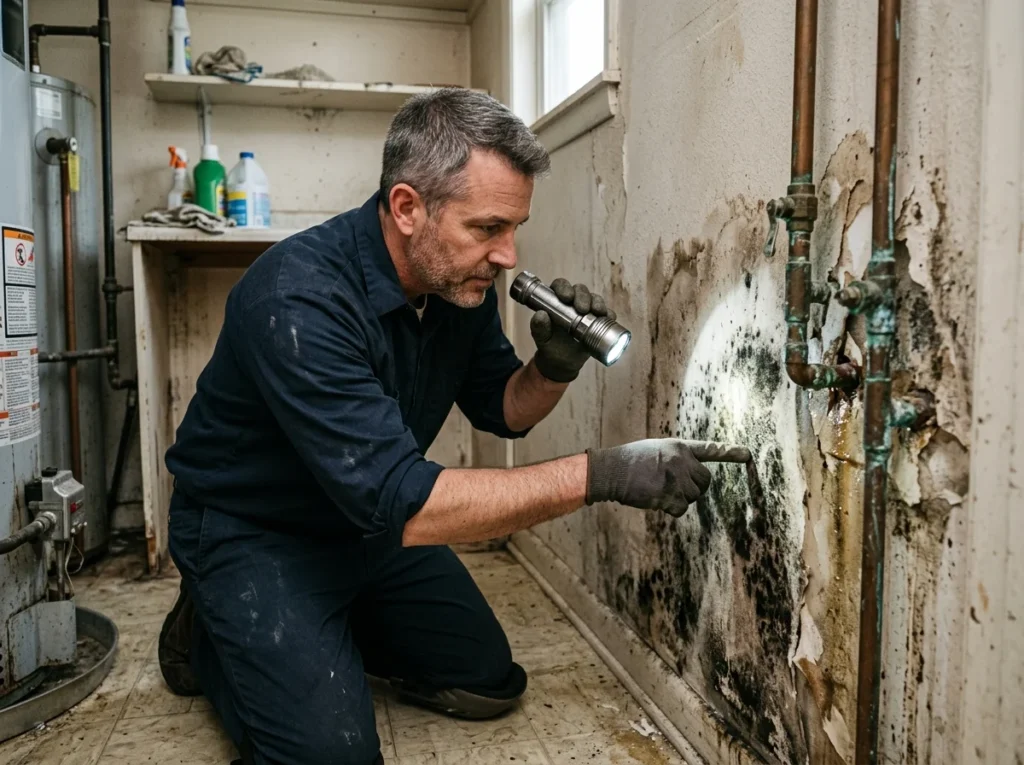
Understanding Florida landlord mold regulations starts with the type of tenancy. Florida Chapter 83 separates nonresidential and residential tenancies, while section 83.51 sets specific maintenance duties for residential landlords. Commercial landlords should also review their lease and applicable local codes.
Landlords Must Maintain the Premises
Florida Statute 83.51 requires residential landlords to comply with applicable building, housing, and health codes. Where those codes do not apply, the statute includes duties related to roofs, walls, foundations, plumbing, and other structural parts of the property.
That matters when discussing landlord responsibility for mold. A mold complaint tied to a roof leak, plumbing failure, or another maintenance issue should be investigated at the source. The facts of each property still matter.
Testing Is Not Automatic After Every Complaint
Florida health guidance says visible mold can often be found by sight or smell, and sampling is not always needed. It also states that there are no health-based mold sampling standards for a simple pass-or-fail result.
So landlord mold testing requirements depend on the situation. Testing can make sense when growth may be hidden, several rooms are involved, the source is uncertain, or the landlord needs professional documentation.
When Should a Landlord Order Mold Testing?
Testing is most useful when it helps answer a specific question about the property. A visual check and moisture inspection should usually guide the testing plan.
After a Tenant Reports Mold or a Musty Odor
Start by documenting the complaint and inspecting the affected area. Ask when the issue began, whether there was a leak, and whether the odor changes when the AC runs. Those details can help narrow the problem.
Professional mold testing for landlords may help when no clear source is visible after a tenant complaint. Air sampling or surface sampling can add information when used with moisture readings and a full inspection.
After Water Damage
Roof leaks, broken pipes, overflowing AC drain pans, and appliance leaks can wet areas that are hard to see. If materials stayed damp or odors remain after drying, a professional inspection is a smart next step.
A landlord mold inspection Florida service can check moisture-prone areas and decide whether sampling is needed before repairs or remediation begin. This keeps the work focused on the affected part of the property.
Before a New Tenant Moves In
A mold inspection before renting can be useful when a unit has a history of leaks, storm damage, past mold work, or a long vacancy. It gives the landlord a current condition record before occupancy.
What Happens During a Rental Property Mold Inspection?
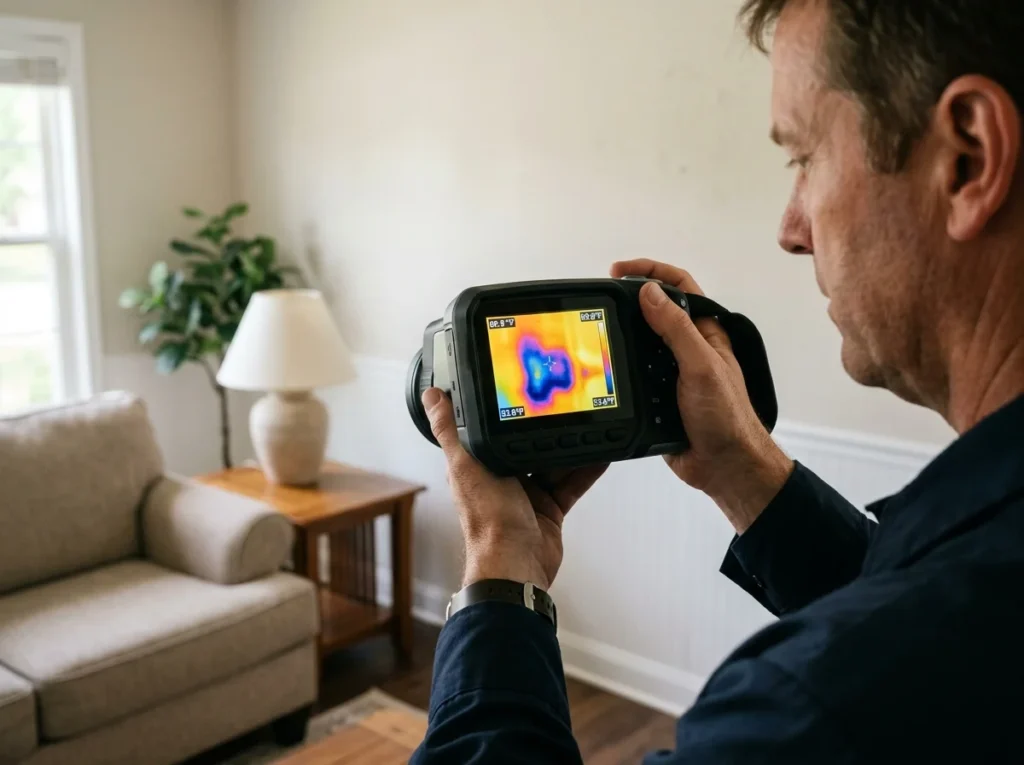
A good inspection follows the building conditions instead of using the same testing package for every rental. The inspector starts with the complaint, moisture history, and affected areas.
Visual and Moisture Inspection
The inspector checks for visible growth, staining, water damage, odors, and signs of active or past leaks. Moisture meters and thermal imaging may help locate damp areas behind or beneath finished surfaces.
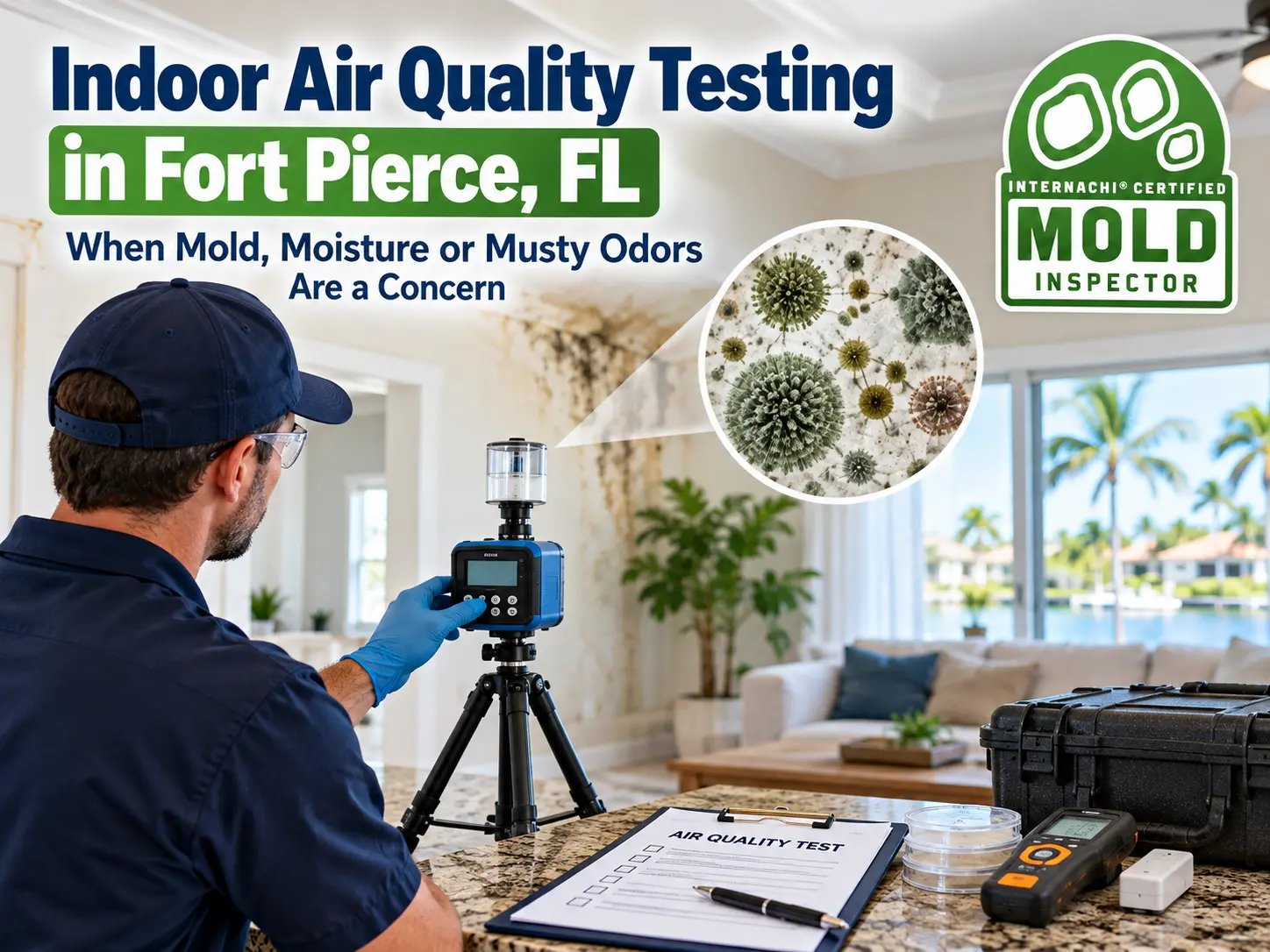
Mold Detectives uses moisture detection equipment and thermal imaging during inspections. The company focuses on finding hidden mold growth and moisture problems in residential and commercial properties across Florida.
Air and Surface Sampling
Air sampling can help compare conditions between areas when airborne mold is a concern. Surface sampling may be useful when suspicious material needs closer evaluation. Florida health officials advise that professional air sampling, when performed, should be done by experienced professionals.
A mold inspection for rental properties should not collect samples just to increase the sample count. Each sample should support a clear question about the location or extent of the problem.
The Final Inspection Report
A useful report should explain where moisture was found, what the lab showed, and what action may be needed next.
Mold Detectives provides detailed, lab-supported reports and offers air sampling, surface testing, moisture investigations, and post-remediation verification.
How Mold Testing Helps Protect a Rental Property
Clear findings reduce guesswork before repairs and create a useful record for landlords.
Useful mold documentation for landlords can include:
- The tenant’s written complaint
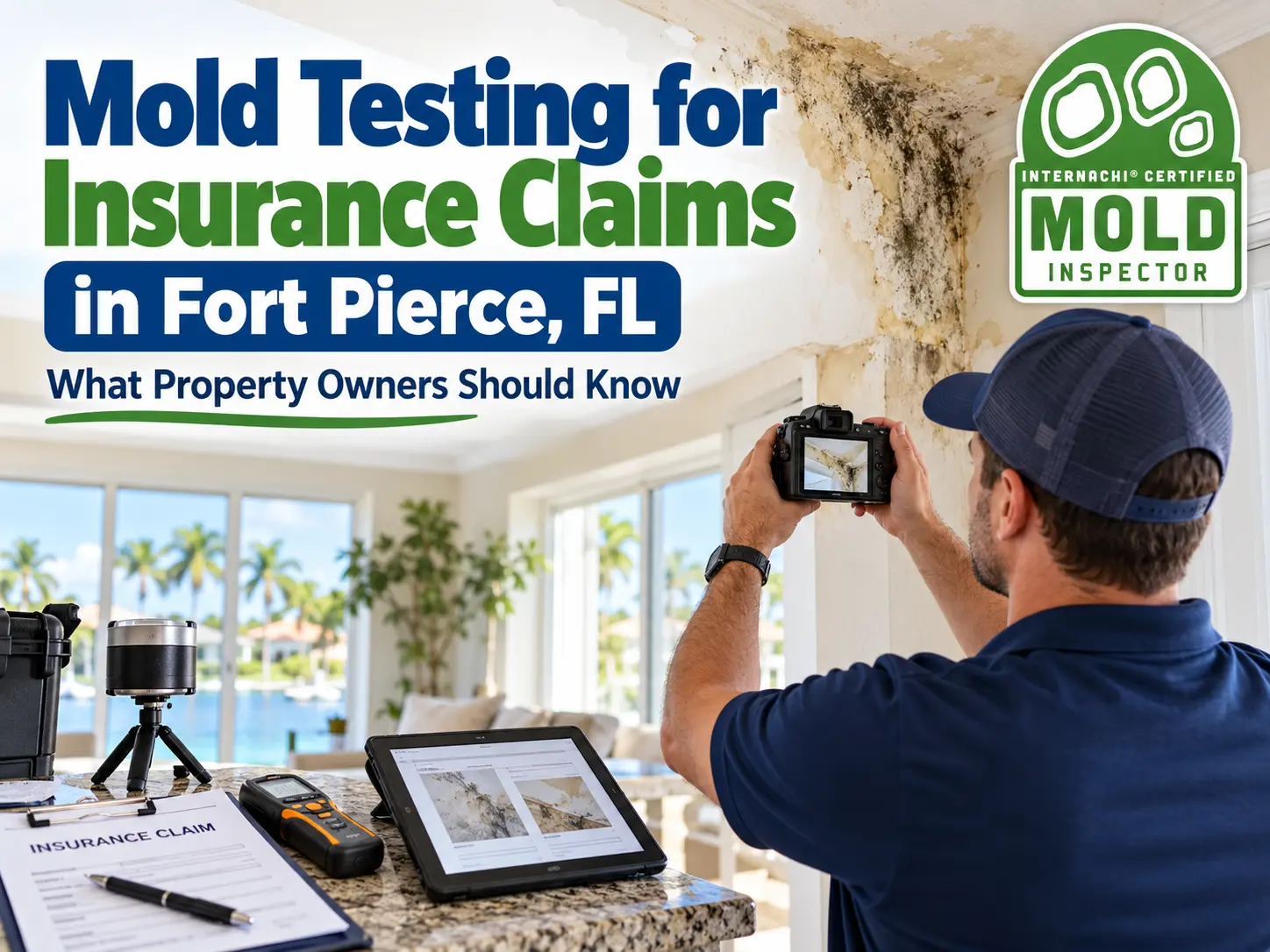
- Photos of stains or water damage
- Dates of leaks and repairs
- Moisture inspection findings
- Air or surface sampling results
- The mold assessment report
- Remediation records
- Post-remediation verification
Better Records Reduce Confusion
A dispute becomes harder when nobody agrees on the timeline. Written records show when the concern was reported, when the property was inspected, and what repairs followed.
This can help with tenant mold liability questions, but documentation does not decide legal responsibility by itself. Liability depends on the facts, the lease, and applicable law. A qualified attorney should handle legal disputes.
Testing Can Define the Work Before Cleanup
A professional mold assessment can show where moisture or contamination may extend before cleanup starts.
That makes mold remediation for landlords easier to plan. It can also give the remediation contractor a clearer scope and provide a baseline for follow-up verification.
What Does Rental Property Mold Testing Cost?
The price depends on property size, affected areas, sample count, and reporting needs. A focused one-room concern usually costs less than a multi-unit investigation with several sampling locations.
Common factors affecting rental property mold testing cost include:
- Number of units or rooms inspected
- Number of air or surface samples
- Access to attics or crawl spaces
- Multiple HVAC systems
- Laboratory fees
- Rush turnaround
- Insurance or legal documentation
- Post-remediation testing
Ask for the inspection scope in writing before booking. The quote should explain what is included and how extra samples are charged. That makes it easier to compare providers without choosing only by the lowest starting price.
How Landlords Can Prevent Mold Between Tenants
Mold prevention is often cheaper than repairing widespread moisture damage. A simple turnover routine can catch leaks and humidity problems before a new renter moves in.
Property owners should check:
- Under sinks and around supply lines
- AC drain pans and drain lines
- Ceilings below roof or plumbing areas
- Window and door seals
- Bathroom exhaust fans
- Laundry and water heater areas
- Flooring near past leaks
- Signs of condensation or musty odors
Keep Moisture Problems on a Short Timeline
The Florida Department of Health recommends drying wet materials quickly and keeping indoor humidity below 60 percent, with lower levels often preferred for mold control.
For mold prevention for rental properties, fast maintenance matters more than waiting for visible growth. A slow roof leak or clogged AC drain can cause far more damage after weeks of delay.
How to Choose a Mold Inspector for a Florida Rental
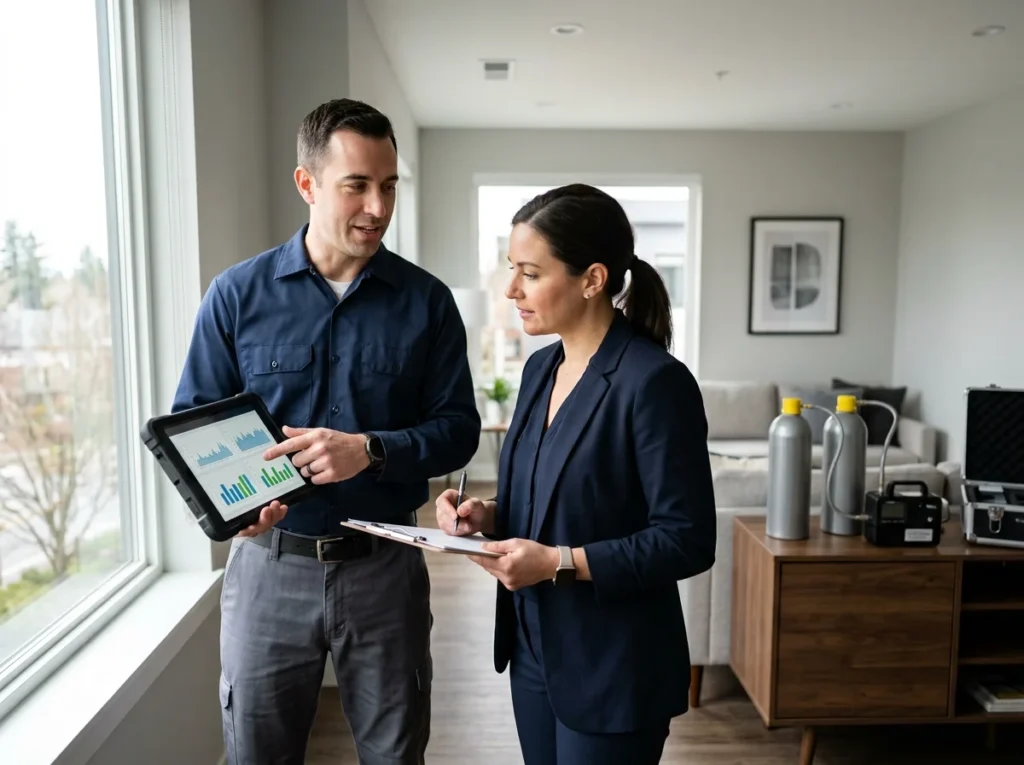
The inspector should explain building conditions clearly and provide a report that supports practical next steps.
Check Florida Licensing and Scope
Florida regulates mold assessors and mold remediators through the Department of Business and Professional Regulation. The state provides licensing requirements for people who offer those services to the public.
Before booking a professional mold inspection for landlords, ask who will perform the assessment, whether laboratory fees are included, and what the report will cover. A clear scope prevents surprises.
Choose an Inspection-Focused Provider
Mold Detectives describes itself as an inspection-focused company serving Florida property owners. Its process includes moisture detection, thermal imaging, air sampling, laboratory analysis, and clear reporting.
That approach can be useful during landlord tenant mold disputes because the purpose is to document property conditions and explain the findings. The inspection should support a sound property decision rather than create unnecessary work.
Frequently Asked Questions About Mold Testing for Landlords
These common questions can help Florida landlords decide what to do after a tenant reports mold, moisture, or indoor air concerns.
Is a Florida landlord required to test for mold after every complaint?
No. Florida does not require automatic mold sampling after every complaint. Landlords should inspect the problem, correct moisture sources, and use professional testing when conditions justify it.
Who pays for mold testing in a Florida rental?
Payment depends on the cause, lease terms, and circumstances. Landlords commonly arrange testing when building leaks, plumbing failures, or maintenance issues may have caused the concern.
Can a tenant stay in the unit during mold testing?
Usually, yes. Many inspections and sampling visits can occur while a unit is occupied. Access needs depend on the affected area and the inspection plan.
Should landlords test again after mold remediation?
Post-remediation testing can help document conditions after cleanup, especially for larger problems, tenant disputes, or insurance claims. The assessor can recommend the right verification approach.
Schedule Rental Property Mold Testing With Mold Detectives
If a tenant reports musty odors, water damage, visible growth, or indoor air concerns, Mold Detectives can help you document the property and plan the next step. The Fort Pierce company provides mold inspections, moisture evaluations, air and surface sampling, lab-supported reports, and post-remediation verification throughout Florida. Call (772) 242-4024 to schedule mold testing for landlord Florida properties and protect your rental with clear, independent findings.