
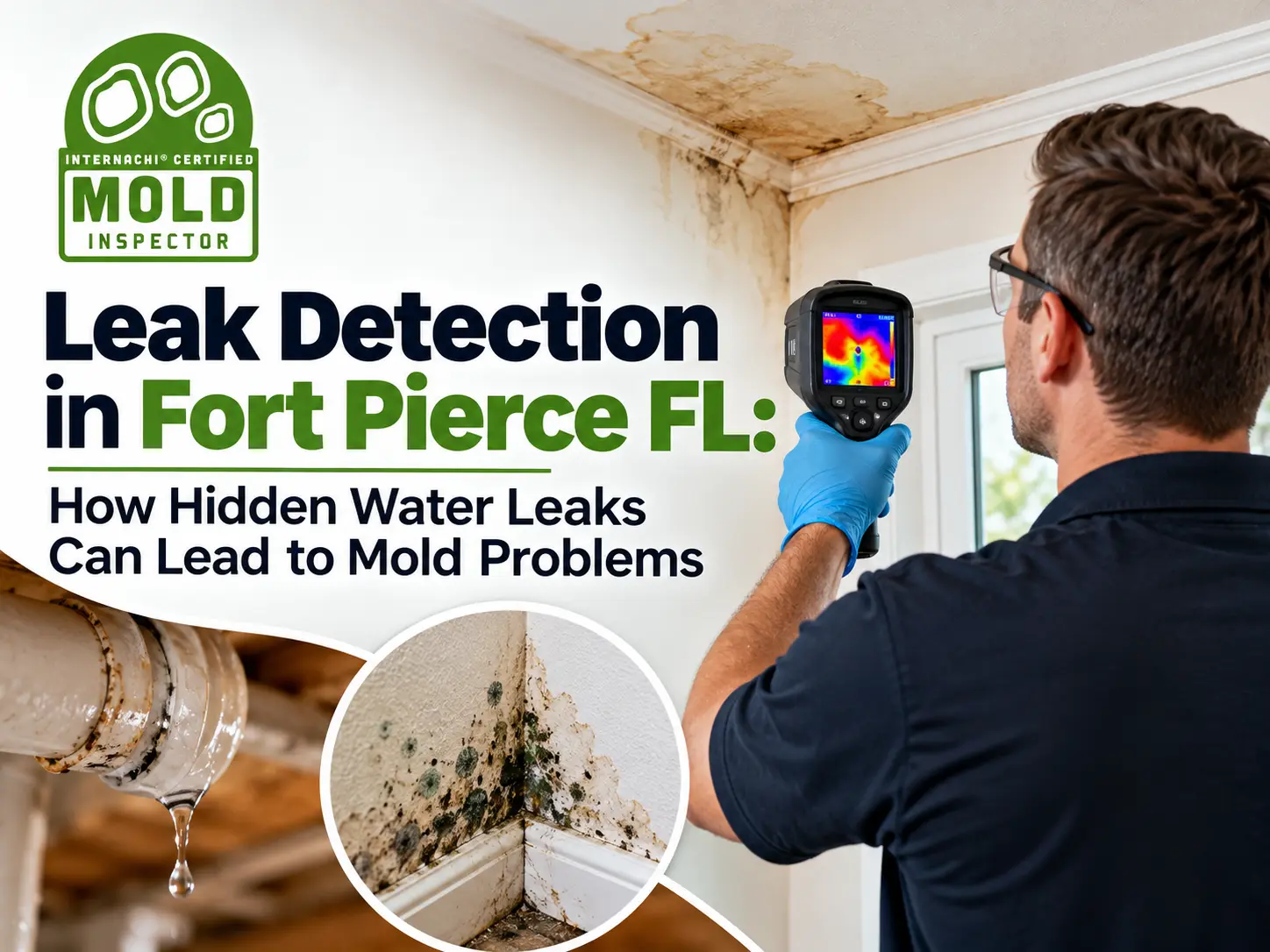
In Florida’s warm, humid climate, a hidden water leak doesn’t stay a small problem for long. Once building materials get wet, mold can start growing within a day or two, and the EPA notes that drying water-damaged areas within 24 to 48 hours is what usually prevents it. The trouble with a hidden leak is that you don’t know to start drying anything. Leak detection in Fort Pierce, FL is about finding the source of that moisture early, before it turns into stained ceilings, soft drywall, or a mold problem.
This guide explains how a leak becomes a mold problem, the warning signs, where leaks hide in Treasure Coast homes, how professional detection works without tearing things apart, what to do if you suspect a leak, and how Florida’s mold licensing rules affect who you hire.
How a Hidden Leak Becomes a Mold Problem
Mold needs one thing that’s usually in short supply indoors: moisture. A leak provides it, and the sequence usually goes like this: water escapes from a pipe, roof, or AC line, soaks into drywall, insulation, wood, or carpet, raises humidity in the surrounding space, and gives mold the damp, enclosed conditions it prefers.
Florida speeds that up in two ways. Year-round warmth and humidity mean damp materials dry slowly, and wall cavities, attics, and the spaces under slabs hold moisture where air barely moves. By the time a stain appears or a smell develops, the leak may have been wetting materials for weeks.
Mold isn’t only a cosmetic issue. The CDC lists nasal stuffiness, eye irritation, wheezing, and skin irritation as commonly reported effects, and people with asthma or mold allergies may react more strongly. Anyone with symptoms should talk to a doctor, and the home side of the problem starts with finding the water.
Signs of a Hidden Leak
Hidden leaks usually leave clues, even when nothing is dripping:
- A rising water bill, or a water meter that keeps moving when every fixture and appliance is off
- Ceiling stains and wall discoloration, especially rings or spots that grow
- Musty odors that linger in a room, closet, or near an air vent
- Peeling paint, bubbling wallpaper, or soft, swollen baseboards and wet drywall
- Warm spots on the floor, which can point to a leaking hot water line under a slab
- The sound of running water when nothing is on
- Unexplained humidity or condensation that the air conditioning doesn’t clear up
- Visible mold growth, often near a leak but sometimes some distance from it
One sign alone isn’t proof of a leak, but several together are a good reason to investigate. Our guide to the hidden water damage signs in Florida homes goes deeper on what to look for when moisture has already spread.
Where Leaks Hide in Fort Pierce Homes
Hidden leaks tend to turn up in the same few places:
- The roof. Heavy rain and storms test shingles, tile, flashing, and openings like vents and chimneys. Roof leaks often show up as ceiling stains a long way from where the water actually gets in.
- Plumbing in walls and under slabs. Many Florida homes are built on concrete slabs, which puts supply lines beneath the floor where leaks can go unnoticed for a long time.
- AC condensate lines and drip pans. Air conditioners run constantly in Florida, and a clogged or leaking condensate line can dampen walls, ceilings, and flooring for months.
- Windows, doors, and stucco. Wind-driven rain can find gaps around openings and cracks in exterior finishes.
- Bathrooms and kitchens. Supply lines, toilet connections, dishwashers, and refrigerator ice-maker lines all fail eventually, often behind cabinets or appliances.
- The attic. Roof leaks and poorly ventilated spaces can leave insulation and decking damp.
How Professional Leak Detection Works
The aim of modern hidden leak detection is to find the source without cutting into walls or breaking up floors. A thorough inspection typically moves through these steps:
- Visual assessment. The inspector looks for visible signs of leaks, water stains, and water damage throughout the property, and asks about odors, bills, and past repairs.
- Moisture readings and thermal imaging. A moisture meter measures dampness in walls, floors, and ceilings, and a thermal camera shows temperature differences caused by moisture behind surfaces. A cold spot on its own isn’t proof of a leak, so thermal findings are confirmed with moisture readings.
- Plumbing and roof assessment. Plumbing lines, fixtures, and the roof are checked for leaks or weak points that could let water in.
- Lab analysis, where needed. Water samples or affected materials can be analyzed when the situation calls for it.
- A written report and recommendations. You should come away with the leak location, an explanation of what was found, and guidance on repairs and preventing further damage.
Other providers also use methods like acoustic listening and pressure testing, so it’s worth asking what a company uses. Detection and repair are separate steps, and repairs like fixing a pipe or roof are done by appropriately licensed contractors. A leak detection visit, which often takes one to three hours depending on the property, is meant to answer where the water is coming from so the repair is targeted, not exploratory. The written report can also provide documentation if you’re dealing with an insurance claim.
What to Do If You Suspect a Hidden Leak
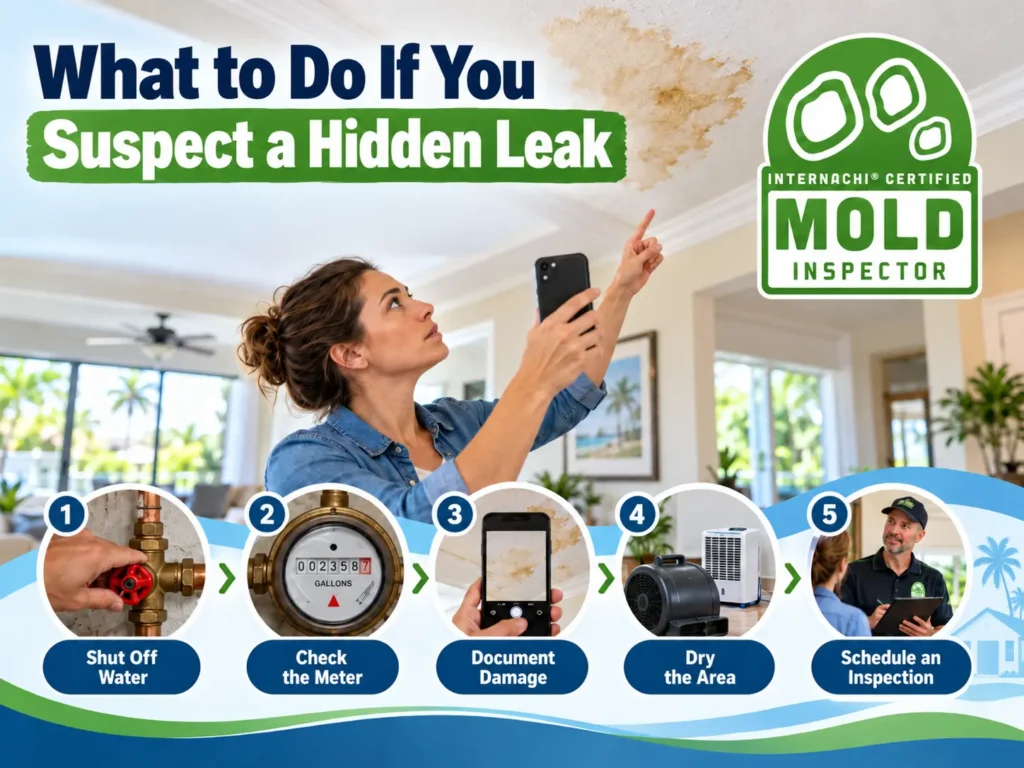
Acting quickly makes the biggest difference:
- Shut off the water at the main valve if you suspect an active plumbing leak.
- Check the water meter with all fixtures off to see whether it’s moving.
- Document what you see with photos of stains, damp areas, and meter readings.
- Start drying. The EPA advises drying wet areas within 24 to 48 hours, and running air conditioning or a dehumidifier helps. Indoor humidity of 30 to 50 percent is the target.
- Avoid opening walls blindly. Locating the source first can save a lot of unnecessary damage.
- Review your insurance policy and notify your insurer promptly if there may be a claim.
- Fix the source, then check for mold. Drying a wall without repairing the leak just resets the clock.
Mold After a Leak: Inspection and Florida’s Licensing Rules
If materials stayed wet beyond that 24 to 48 hour window, or you notice a musty smell or visible growth, a mold inspection can show whether mold has taken hold and how far it’s spread. A mold inspection looks for the moisture source, takes readings, and decides whether sampling would add anything. The EPA notes that when mold is visible, sampling is usually unnecessary.
Florida regulates this field more than most states. Under Chapter 468, Part XVI of the Florida Statutes, mold assessors and mold remediators must be licensed by the Department of Business and Professional Regulation (DBPR), and they hold separate licenses. A licensed assessor can’t remediate a structure they assessed within the previous 12 months, and a remediator can’t assess one they remediated, a rule designed to prevent conflicts of interest. When you hire anyone for mold work, it’s reasonable to ask for their license number and verify it with DBPR.
Choosing a Leak Detection Provider in Fort Pierce
A few questions help you compare providers:
- What methods will you use, and will the inspection be non-invasive?
- What will the report include, and how soon will I receive it?
- Who handles the repair, and are those contractors licensed?
- If mold is found, what are your licensing and role under Florida law?
- Are you insured, and can you provide references?
Mold Detectives is based in Fort Pierce and serves homes and businesses across the Treasure Coast and beyond, and these are fair questions to put to any company you’re considering.
Frequently Asked Questions
Can a leak cause mold without any visible water?
Yes. Moisture inside walls, ceilings, or under floors can support mold growth with no puddle in sight. Odor and staining are often the first signs.
Will leak detection damage my walls or floors?
Methods like moisture meters and thermal imaging are non-invasive. Opening a wall is typically reserved for the repair, once the leak is located.
Do I need leak detection if I don’t see water?
Possibly. Hidden leaks can exist behind walls, under flooring, or in ceilings without visible signs, so a rising bill, a musty smell, or persistent humidity is reason enough to look.
Is leak detection the same as plumbing repair?
No. Detection finds the source, and repair fixes it. They’re often separate steps, and repairs should be done by licensed contractors.
Think You Have a Hidden Leak?
If you’ve noticed stains, odors, or a water meter that won’t sit still, finding the source early can prevent a much bigger repair. Contact Mold Detectives or call (772) 242-4024 to describe what you’re seeing and arrange an inspection.