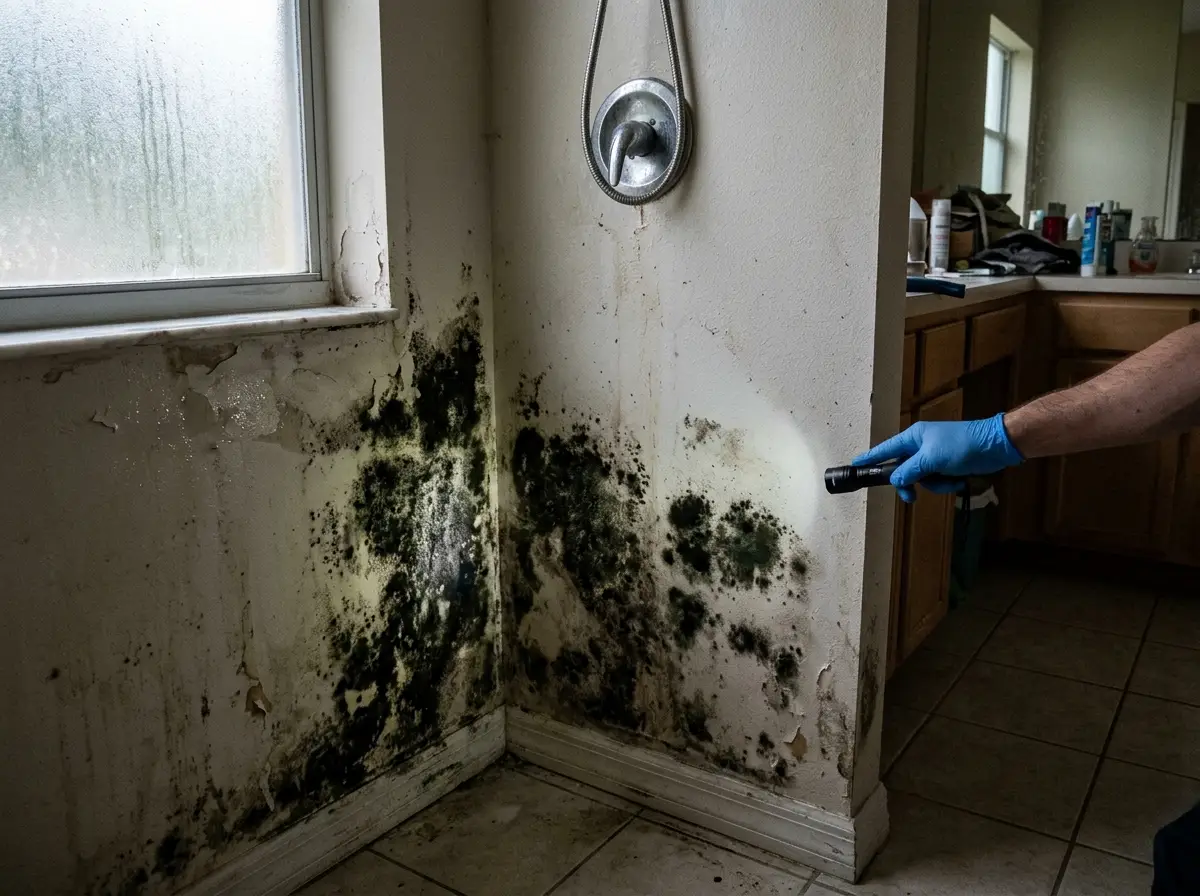
Finding black mold in your home is the kind of discovery that stops you in your tracks. Most homeowners in Fort Pierce who find it either panic immediately or convince themselves it is probably nothing serious. Neither reaction is particularly useful. What actually helps is understanding what you are dealing with, what the real risks are, and what needs to happen next.
Fort Pierce sits in a part of Florida where the conditions for black mold development are present year-round. The heat, the humidity, the storm activity this part of the Treasure Coast sees regularly, and the mix of older and newer housing stock all contribute to an environment where mold problems are not rare occurrences. They are consistent findings in homes across the city. Mold Detective Florida helps homeowners identify mold and moisture problems before they become more extensive.
What Black Mold Actually Is
The term black mold gets used loosely, and that causes a lot of confusion. Technically, black mold refers to Stachybotrys chartarum, a specific species of mold known for its dark greenish-black color and its association with water-damaged building materials. It is one of the slower-growing mold species, which means by the time it appears it has usually had a sustained moisture source for a significant period.
Not every dark-colored mold is Stachybotrys. Other species produce dark or black-looking growth and are sometimes mistakenly identified as black mold. The only way to confirm what species is present is through professional testing and laboratory analysis. That distinction matters because different species carry different risk profiles, and remediation decisions should be based on confirmed findings rather than visual assumptions. If you suspect dark mold growth in your home, a professional mold inspection can help determine the extent of the problem. .
What Stachybotrys and several other mold species share is a requirement for consistently wet conditions. This is not a mold that grows from occasional condensation. It needs materials that have been saturated for extended periods, wet drywall, soaked wood framing, chronically damp insulation. In Fort Pierce’s climate, where moisture from rain, humidity, and storm events finds its way into homes and stays there, those conditions develop more often than most homeowners expect.
Why Fort Pierce Homes Are at Higher Risk
Fort Pierce has a housing stock that ranges from older CBS construction built decades ago to newer developments that went up during Florida’s recent building booms. Both ends of that spectrum carry mold vulnerability, and the local climate ties them together in ways that make black mold in Fort Pierce FL a realistic finding across the city.
The city sits directly on the coast, and the air here carries more moisture than inland Florida locations. St. Lucie County sees consistent tropical storm and hurricane activity during a season that runs six months of the year. Homes that took on water during past storm events and were not professionally dried and remediated afterward carry long-term moisture in their building materials. For more context on how local conditions contribute to mold growth, see this Fort Pierce climate and mold growth guide.
Older Fort Pierce homes, many of which were built before modern moisture-resistant materials became standard, have drywall, insulation, and wood framing that absorbs and holds water more readily than current materials. Plumbing systems in these homes are also more prone to slow leaks that go unnoticed for extended periods. A supply line dripping slowly behind a wall in a 1980s Fort Pierce home can run for months before any surface sign appears, and in that time it creates the sustained moisture conditions that support serious mold growth.
Newer construction is not immune either. HVAC systems that are incorrectly sized or poorly commissioned, condensate drainage issues that develop early and go unaddressed, and construction moisture that was sealed into the building before it fully dried are all sources of the sustained dampness that black mold needs to develop in homes that are only a few years old.
Signs of Black Mold in a Fort Pierce Home
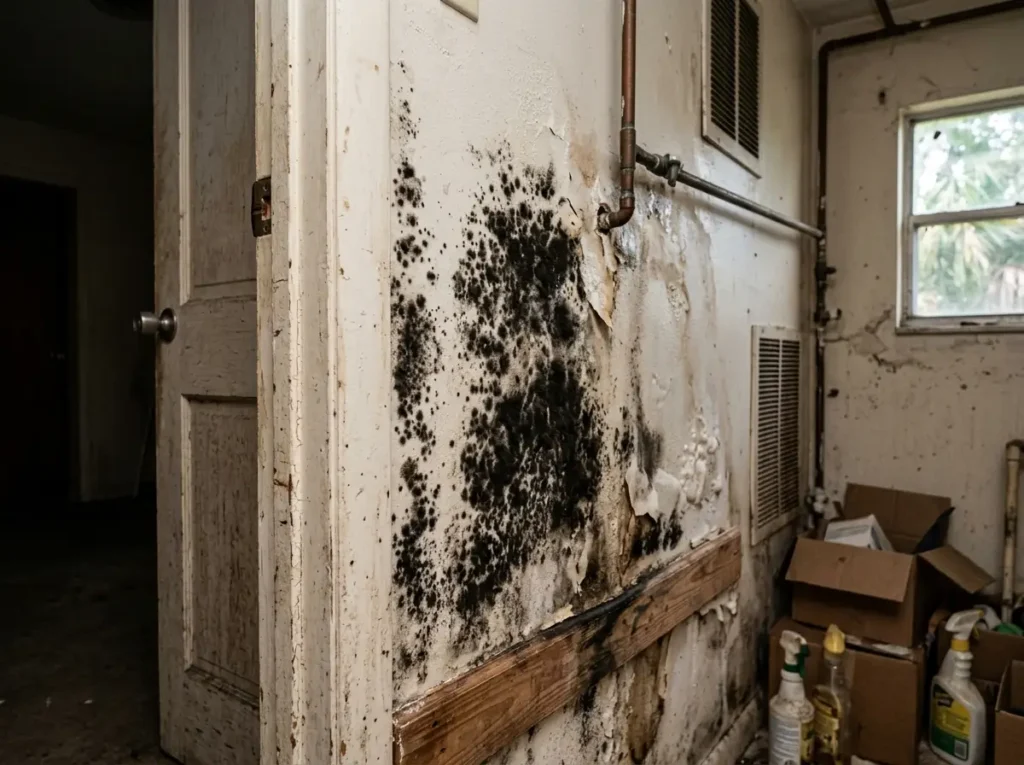
Black mold is not always easy to find. Some of the most serious infestations are entirely hidden inside wall cavities, under flooring, or in attic spaces where no one looks regularly. But there are signals worth knowing.
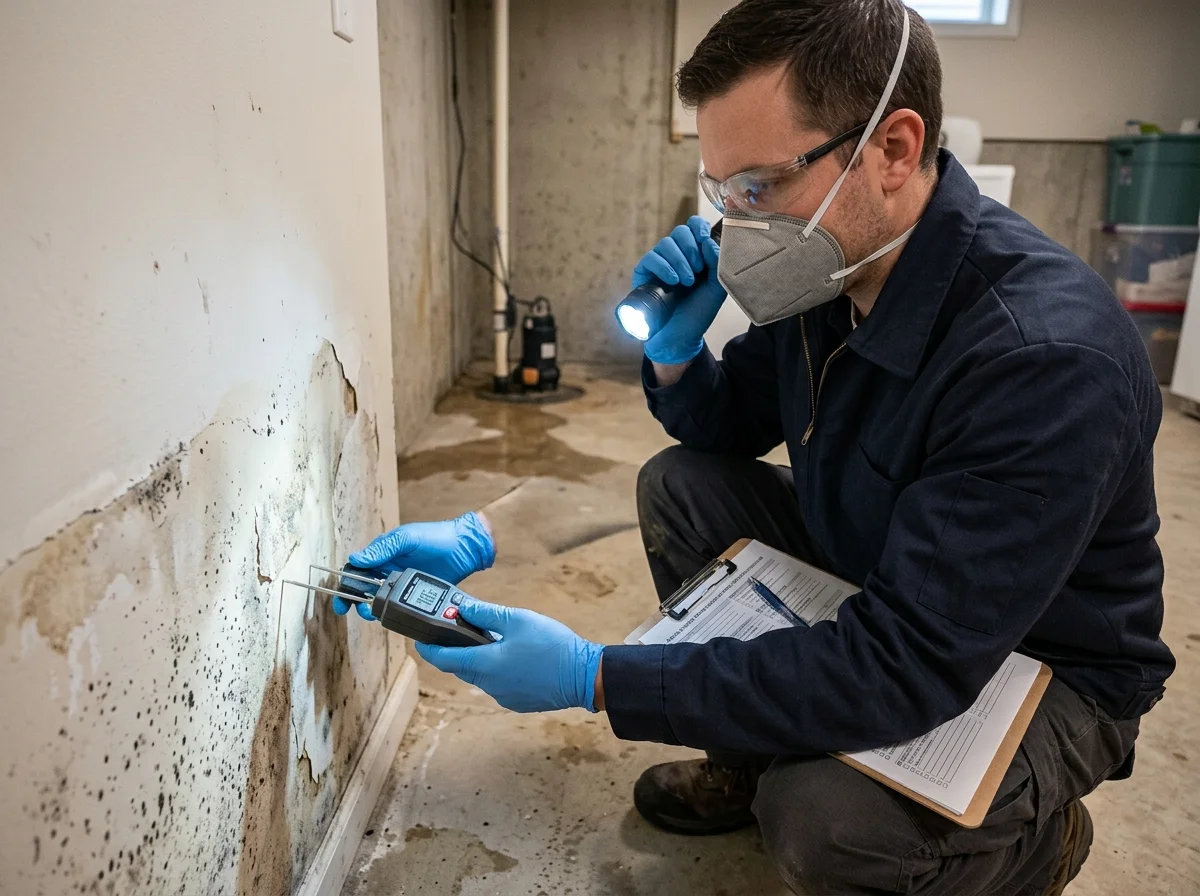
Visible dark growth on walls, ceilings, or around window frames is the most obvious sign. Black or dark greenish growth that appears in areas with any history of moisture, around bathroom fixtures, along the base of walls in rooms that have had any flooding, on ceiling surfaces below a roof or plumbing leak, is worth treating as a serious finding rather than a surface cleaning job. What is visible on the surface is rarely the full extent of what is present in the material behind it.
A persistent musty smell is one of the more reliable early indicators, particularly in Fort Pierce homes where the smell appears in a specific room or area and does not clear with ventilation. That smell comes from compounds mold releases as it metabolizes organic material. It can be present and detectable before any visible growth appears on surfaces, which means it sometimes serves as the first warning that something is developing inside a wall or under a floor.
Unexplained health symptoms are worth paying attention to, especially when they follow a pattern. Symptoms that are consistently worse at home than elsewhere, or that improve noticeably when occupants spend time away from the house, point toward an indoor air quality problem. Respiratory irritation, persistent coughing, congestion, headaches, and eye irritation that follow this home-specific pattern are signals worth taking seriously in the context of a Fort Pierce home with any moisture history.
Moisture-related surface changes are another indicator. Paint bubbling or peeling in areas away from obvious water sources, drywall that feels slightly soft underfoot near the base of a wall, warping baseboards, and flooring that has changed texture or sound underfoot in a localized area all suggest that moisture has been sitting in or near that material long enough to cause physical changes. Where moisture has been present long enough to change building materials, mold has usually been present long enough to establish.
Health Risks Associated With Black Mold Exposure
This is where a lot of misinformation exists, in both directions. Some sources overstate the dangers of black mold to the point of claiming it is uniformly deadly. Others dismiss mold health concerns entirely. The reality is more nuanced and depends significantly on the individual, the extent of exposure, and the duration.
Stachybotrys and other mold species produce mycotoxins, compounds that can cause health effects in people who are exposed to them over time. The range of effects varies considerably. Some people live in homes with significant mold presence and experience minimal symptoms. Others, particularly those with respiratory conditions like asthma, allergies, or compromised immune systems, experience significant health impacts from mold exposure at levels that would not affect a healthy adult.
Children and elderly occupants are generally more vulnerable than healthy adults. Infants exposed to mold in their living environment face risks that have been associated in research with respiratory health impacts. People with asthma typically find their symptoms worsening in mold-affected environments. And occupants with compromised immune systems face risks from mold exposure that go beyond the respiratory effects that affect the general population.
The symptoms most commonly associated with mold exposure in Fort Pierce homes include persistent respiratory irritation, chronic sinusitis, recurring headaches, fatigue, and skin or eye irritation. These symptoms are not unique to mold, which makes them easy to attribute to other causes and easy to dismiss until the pattern of home-specific worsening becomes clear.
What the evidence does support consistently is that prolonged exposure in a heavily mold-affected environment is harmful, particularly for vulnerable occupants, and that the appropriate response is remediation of the mold rather than continued exposure while monitoring symptoms.
Where Black Mold Hides in Fort Pierce Homes
Understanding the most common locations helps homeowners know where to look and why professional inspection covers areas that a visual walkthrough does not.
Wall cavities behind bathrooms are one of the most consistent locations. Fort Pierce homes with any bathroom where grout or caulk has cracked or deteriorated allow water behind tile surfaces over time. The backer board and wall framing behind bathroom tile stay wet in ways that are completely invisible from the surface. Mold in these areas often develops for years before any surface sign appears, and the extent of growth inside the wall is usually far greater than what shows on the visible surface when it finally does appear.
The base of exterior walls is another frequent location, particularly in Fort Pierce homes that have experienced any flooding or storm surge. Water that enters a home during a storm event travels to the lowest point and saturates the wall base, the bottom plates of the framing, and the drywall above them. In homes where this water was surface-dried but not professionally remediated, mold grows in the wall base for extended periods. The wall looks fine from the inside. The framing behind the drywall is another story.
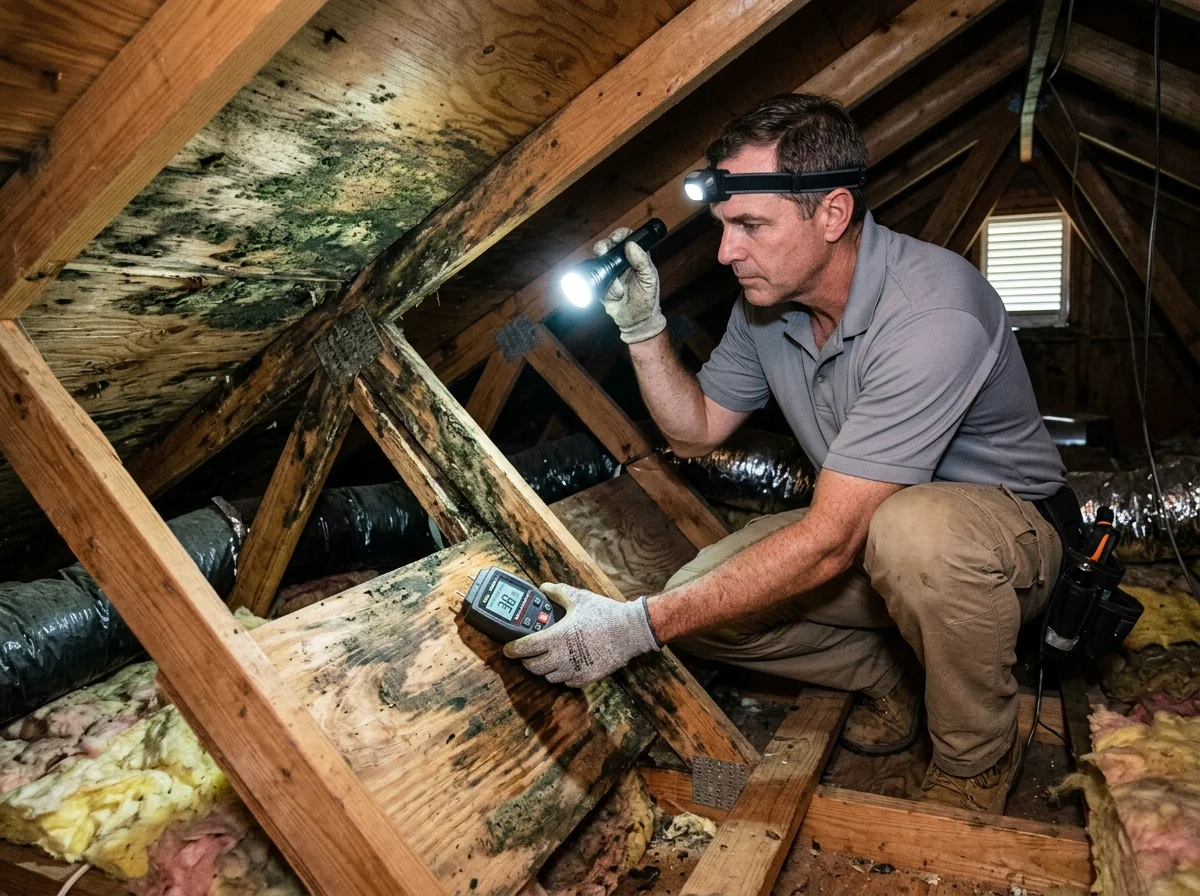
Attic spaces in Fort Pierce homes carry consistent black mold risk because of the roof leak vulnerability this area’s storm activity creates. A compromised roof during hurricane season allows water into the attic, which soaks into roof sheathing and stays wet in the enclosed, warm attic environment. How quickly mold can grow after water damage in Florida is a useful resource for understanding how quickly these moisture conditions can lead to mold growth.
Under flooring and in crawl spaces completes the picture. Ground moisture vapor in Fort Pierce’s climate rises into crawl spaces and condenses on cooler structural wood surfaces. Crawl spaces with inadequate vapor barriers and poor ventilation develop mold in floor joists and subfloor plywood over time, and the mold often reaches the structural wood before any sign appears on the floor surface above.
What Not to Do When You Find Black Mold
The instinct to clean it up immediately is understandable. It is also frequently the wrong move, and in some cases it makes the situation worse.
Bleach is the most common DIY response to visible mold, and it is not the right tool for porous materials. Bleach kills surface mold on non-porous surfaces like tile and glass. On drywall, wood, and other porous materials, the water content of bleach penetrates the surface while the active ingredient does not reach mold growing inside the material. The surface looks clean. The mold inside the material continues to grow, sometimes accelerated by the added moisture.
Disturbing mold growth without proper containment releases spores into the air in concentrations far higher than the background level that was present before. Those spores travel through the home via air currents and HVAC airflow, potentially spreading mold to areas that were previously unaffected. Professional remediation involves containment of the affected area specifically to prevent this kind of spread during the removal process.
Painting over mold, another common response, does not address the problem. It conceals it temporarily. Mold continues to grow behind paint and eventually breaks through the surface again, usually in a more extensive form than what was originally present.
Next Steps When Black Mold Is Found or Suspected
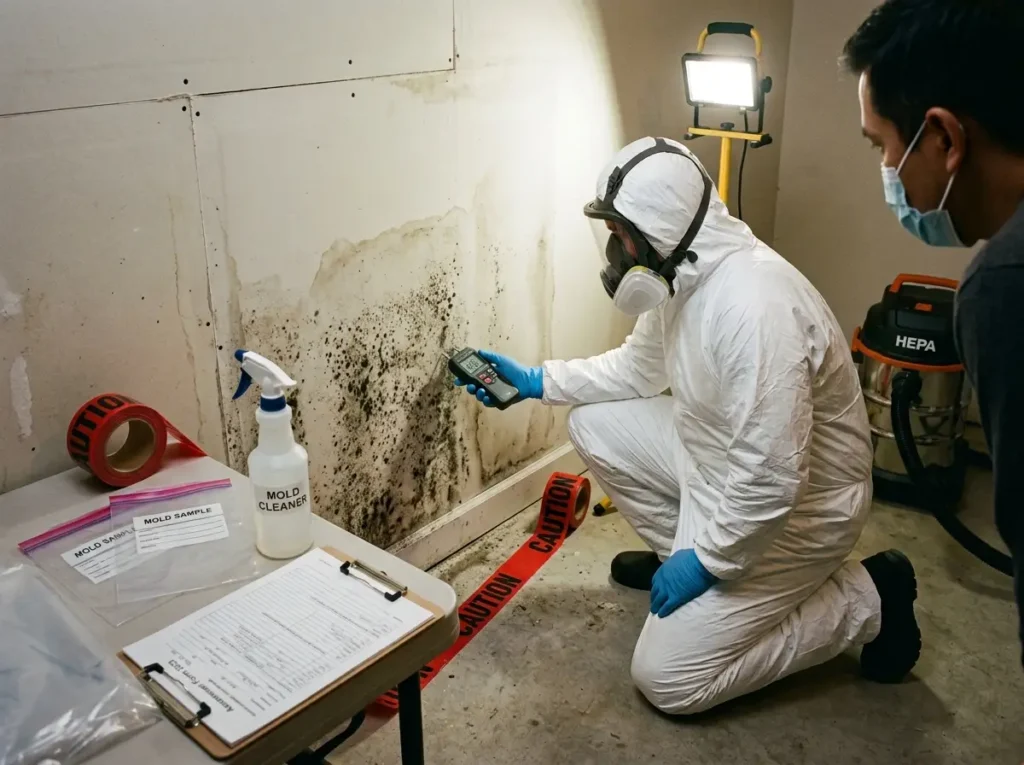
The right sequence after finding or suspecting black mold in a Fort Pierce home is straightforward, even if it is not always what people want to hear.
Stop using the affected area if possible. Limit access to the space where mold is present or suspected, particularly for children, elderly occupants, and anyone with respiratory conditions or compromised immunity. This is not always practical depending on where the mold is located, but reducing exposure time while the situation is assessed is sensible.
Do not attempt to clean or disturb the mold before professional assessment. The information a professional inspector needs to accurately assess the extent of the problem includes the current state of the mold growth. Cleaning attempts, even unsuccessful ones, change what the inspector is able to see and measure.
Get a professional mold inspection and testing done. A professional inspection with air sampling and moisture meter assessment tells you what species is present, how extensive the growth is, whether elevated spore counts are present in areas beyond the visible growth, and what the remediation scope needs to be. This information is what remediation decisions and cost estimates are based on.
Once the inspection confirms findings, professional mold remediation in Fort Pierce FL involves containment of affected areas, removal of contaminated materials under controlled conditions, treatment of structural surfaces, and post-remediation air testing to confirm the space is clear before reconstruction begins.
FAQ: Black Mold in Fort Pierce FL Homes
How do I know if I have black mold and not a different type of mold?
You cannot confirm species from visual inspection alone. Dark-colored mold growth can be Stachybotrys or any number of other species. Laboratory analysis of samples taken during a professional mold inspection is the only way to confirm what species is present. The practical response is the same regardless — get professional assessment rather than assuming.
Is black mold always visible?
No, and in Fort Pierce homes it frequently is not. Mold growing inside wall cavities, in attic sheathing, under flooring, and in crawl spaces produces no visible surface sign until growth is already extensive. Air sampling during a professional inspection detects elevated spore levels even when no visible mold is present.
How fast does black mold grow in Florida?
Stachybotrys is actually one of the slower-growing mold species compared to others. It requires sustained moisture rather than brief wetting. However, in Fort Pierce’s climate where moisture in building materials persists due to high ambient humidity, the conditions that support Stachybotrys growth are maintained consistently once established. Other faster-growing species can establish within 24 to 48 hours of water exposure.
Can I stay in my home while black mold is being remediated?
This depends on the location and extent of the mold, the remediation approach, and the health status of occupants. Professional remediators assess this on a case-by-case basis. In situations where mold is extensive or where vulnerable occupants are present, temporary relocation during remediation is often recommended. Your remediation contractor should address this specifically based on your situation.
Does homeowners insurance cover black mold remediation in Florida?
Coverage depends on the cause of the mold and the specifics of your policy. Mold resulting from a sudden covered event like a burst pipe may be covered. Mold resulting from long-term moisture issues or inadequate maintenance typically is not. Review your specific policy and contact your insurer as soon as mold is confirmed. Document everything before remediation begins.
Final Thought
Black mold in Fort Pierce FL is a real and consistent finding in homes across the city. The climate, the storm history, and the range of housing ages here all contribute to conditions where sustained moisture in building materials is common, and where mold has the environment it needs to establish and grow without obvious warning signs.
The homeowners who handle it best are the ones who take the warning signs seriously rather than explaining them away, get professional assessment before attempting any cleanup, and follow through with proper remediation rather than surface fixes that leave the underlying problem in place. If you suspect black mold in your Fort Pierce home and need professional guidance, contact our team to discuss an inspection and the appropriate next steps.