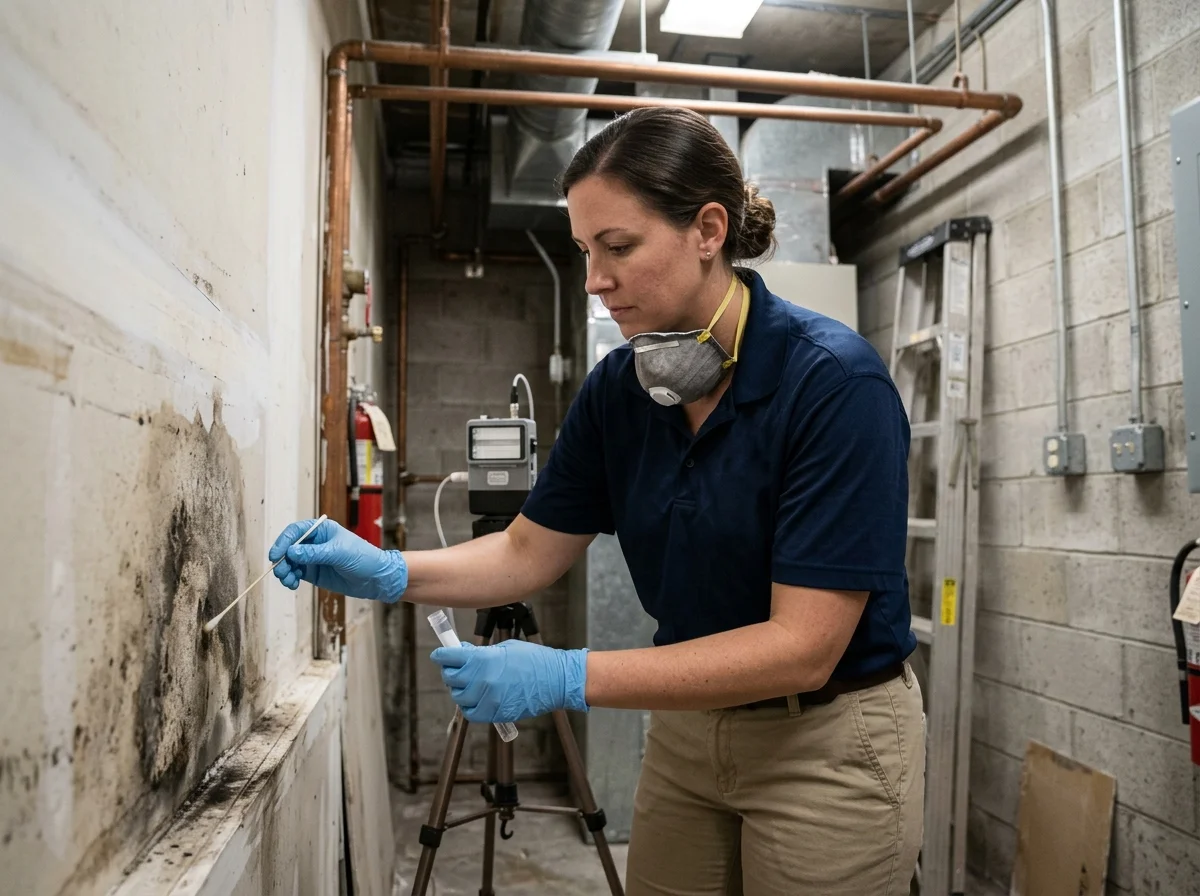
A musty smell shows up in the break room. A ceiling tile turns brown after a week of heavy rain. Then an employee asks whether the building has a mold problem. For a Fort Pierce business owner, the next question is often the same: do we have to test? Florida does not require every commercial building to follow an annual mold testing schedule, and OSHA does not set one either.
That does not make mold a minor issue. Water damage, repeat complaints, visible growth, or poor indoor air quality deserve a real response. For commercial mold testing compliance in Florida, the practical goal is to know when testing helps, what employers are expected to address, and when Florida’s rules for professional mold work come into play.
Does Florida Require Commercial Properties to Test for Mold?
Florida does not require every office, shop, warehouse, clinic, or restaurant to complete routine mold sampling. State law focuses more on the people who provide mold assessment and remediation services for a fee. Simply owning or managing a commercial property does not create an automatic yearly testing duty.
What matters is the condition of the building and how the owner responds when something is wrong.
Florida Has No Single Pass-or-Fail Mold Number
Florida does not set one indoor mold count that makes a building safe or unsafe. The Florida Department of Health also notes that there are no health-based standards for judging mold sample results. That is an important point when people search for Florida mold testing requirements and expect one clear number.
A lab report can still be useful, but it needs context. An assessor may look at damp materials, water stains, odors, visible growth, recent leaks, and complaints from people in the building. In many cases, those details tell more about the problem than one air sample taken on one day.
Visible Mold Does Not Always Need Sampling First
If mold is easy to see, collecting a sample may not be the first job. The source of moisture needs attention. A swab cannot stop a roof leak, clear a blocked drain line, or dry wet drywall.
Testing becomes more useful when the source is unclear, growth may be hidden, or the owner needs written findings for an insurer, tenant, contractor, or legal matter. Those situations often drive commercial mold testing requirements in real life, even though Florida does not impose a blanket testing rule.
What Does OSHA Say About Mold at Work?
OSHA does not set a federal exposure limit for mold spores. It also does not require every employer to test workplace air on a fixed schedule. OSHA looks more closely at workplace conditions and whether an employer responds to a known health or safety concern.
That means the response to a complaint matters more than checking a box on a calendar.
Employers Still Need to Take Hazards Seriously
OSHA’s General Duty Clause requires employers to provide a workplace free from recognized serious hazards. A single mold complaint does not prove that a violation exists. Still, repeat reports of leaks, dampness, odors, or poor air should not sit unanswered for weeks.
Good OSHA mold compliance for businesses starts with a prompt inspection. Find out where the moisture came from. Check the affected area. Repair an active leak and decide whether a professional mold inspection would add useful information. A quick, documented response is far better than waiting for the problem to spread.
Indoor Air Quality Is Part of the Picture
Most indoor mold problems start with moisture. A leaking roof, wet ceiling tile, pipe failure, or clogged AC drain can leave building materials damp long enough for growth to develop. Poor ventilation can make a bad situation harder to manage.
For workplace mold liability, delay often creates the bigger problem. Water can stay hidden above ceiling grids or behind finished walls. By the time a stain appears, the affected area may already be larger than it looked at first.
What Florida Mold Laws Mean for Business Owners
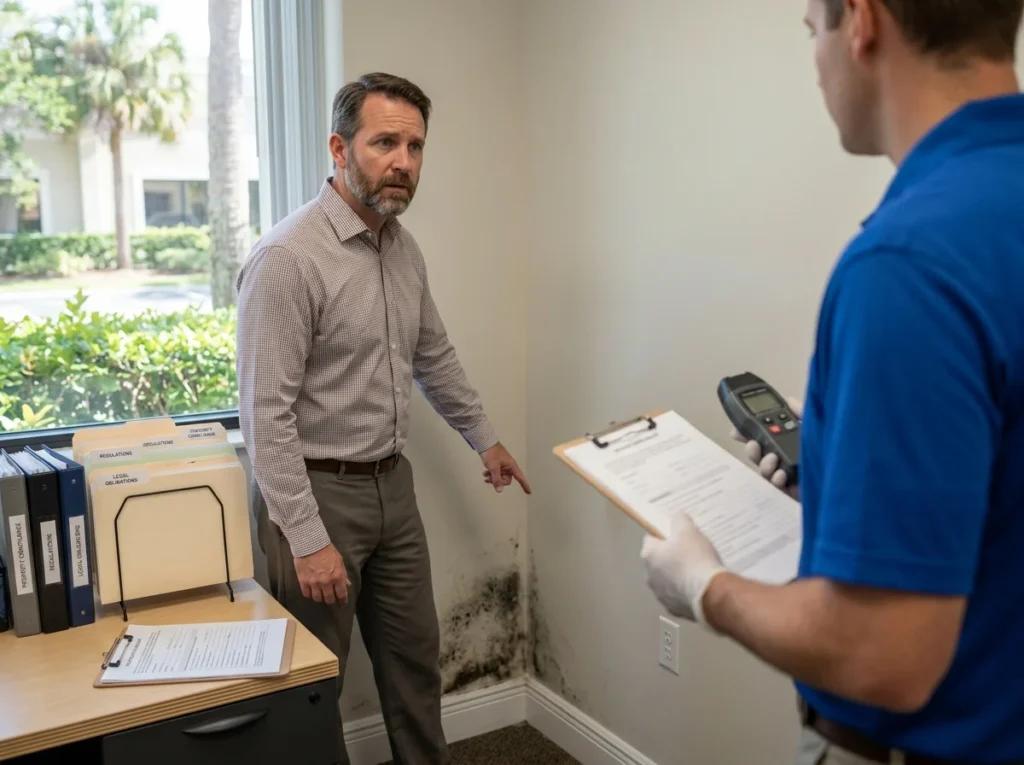
Florida regulates people who offer mold assessment and mold remediation services to the public. The Department of Business and Professional Regulation oversees licensing for mold assessors and mold remediators.
Those rules affect professional mold work, but they should not be confused with a rule requiring every Florida business to test each year.
Mold Assessment Is a Regulated Service
Florida law defines mold assessment as work that may include sampling along with a review of the building’s history and inspection findings. The goal is to understand where mold may be present, what may have caused it, and how far the problem could extend.
When a business hires someone for a formal assessment, checking the person’s Florida license is a sensible step. It supports mold compliance for businesses, especially when the findings may guide remediation, support an insurance claim, or become part of a lease dispute.
The 10-Square-Foot Rule Is Often Misread
Florida’s legal definitions for mold assessment and remediation refer to mold growth greater than 10 square feet. That figure relates to the way regulated professional services are defined under state law.
It is not a free pass to ignore a smaller patch. A stain the size of a dinner plate can still point to an AC leak, plumbing issue, or roof problem. Good commercial property mold regulations management starts by fixing the moisture source before a small problem has time to become a larger one.
When Should a Commercial Property Get Mold Testing?
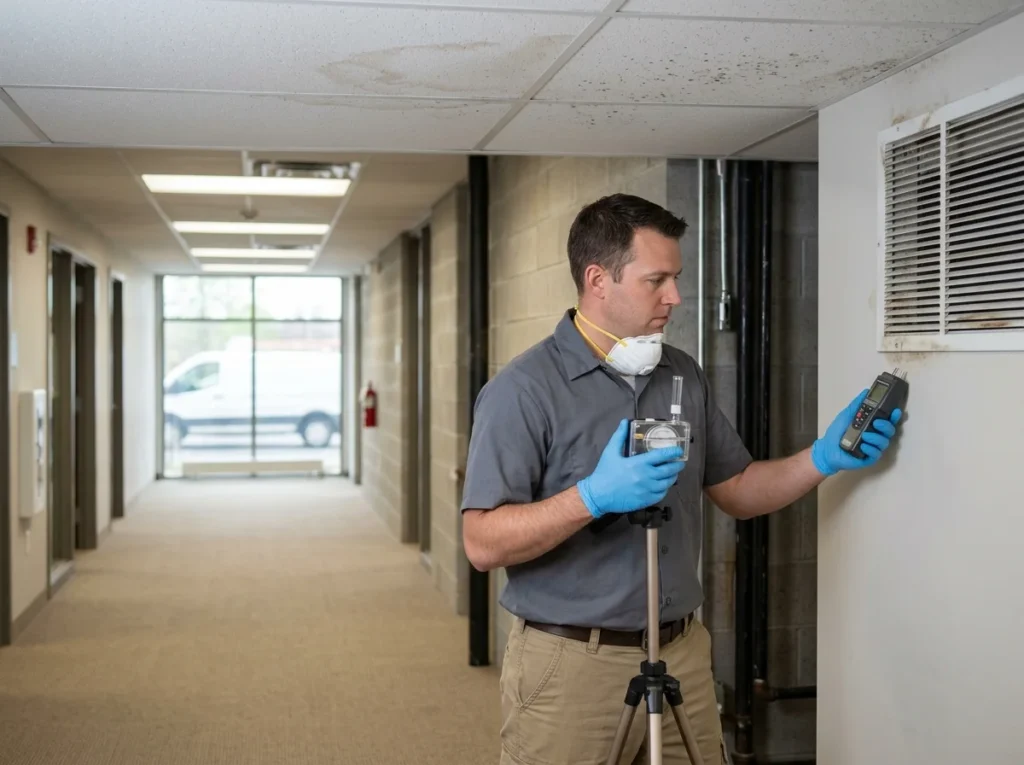
Testing makes the most sense when it answers a clear question. Before samples are taken, the owner should know what the test is meant to confirm. Otherwise, a report may deliver numbers without explaining why the building is wet or where the problem started.
Here are common situations where a professional commercial mold testing service may help:
- Employees or tenants keep reporting a musty odor in the same area.
- Water entered the building after a roof leak, storm, or pipe failure.
- Mold may be behind drywall, under flooring, or above a suspended ceiling.
- Visible growth returns after cleaning or repair work.
- The owner needs documented findings for an insurance or lease matter.
- Remediation is complete and post-remediation verification is needed.
Consider a Fort Pierce office where a roof leak leaves one ceiling tile stained after several days of rain. Testing every room would rarely be the smartest first move. Checking the roof area, nearby materials, and moisture levels gives the investigation a clear starting point.
What Should a Commercial Mold Inspection Include?
A sound inspection should do more than collect an air sample and leave. The inspector needs to understand what happened, look for moisture, and decide which areas deserve a closer check.
A useful mold assessment usually follows the building, not a one-size-fits-all checklist.
Start With the Building History
A good inspector will ask what happened before the concern began. Was there a roof leak? Did an AC line overflow? Did complaints start after new flooring was installed? Has the same wall been patched more than once?
Those details can narrow the search fast. If two employees began noticing an odor after a plumbing leak in the next room, the investigation has a logical place to begin. That is more useful than taking random samples throughout the building without a reason.
Look for Moisture and Hidden Damage
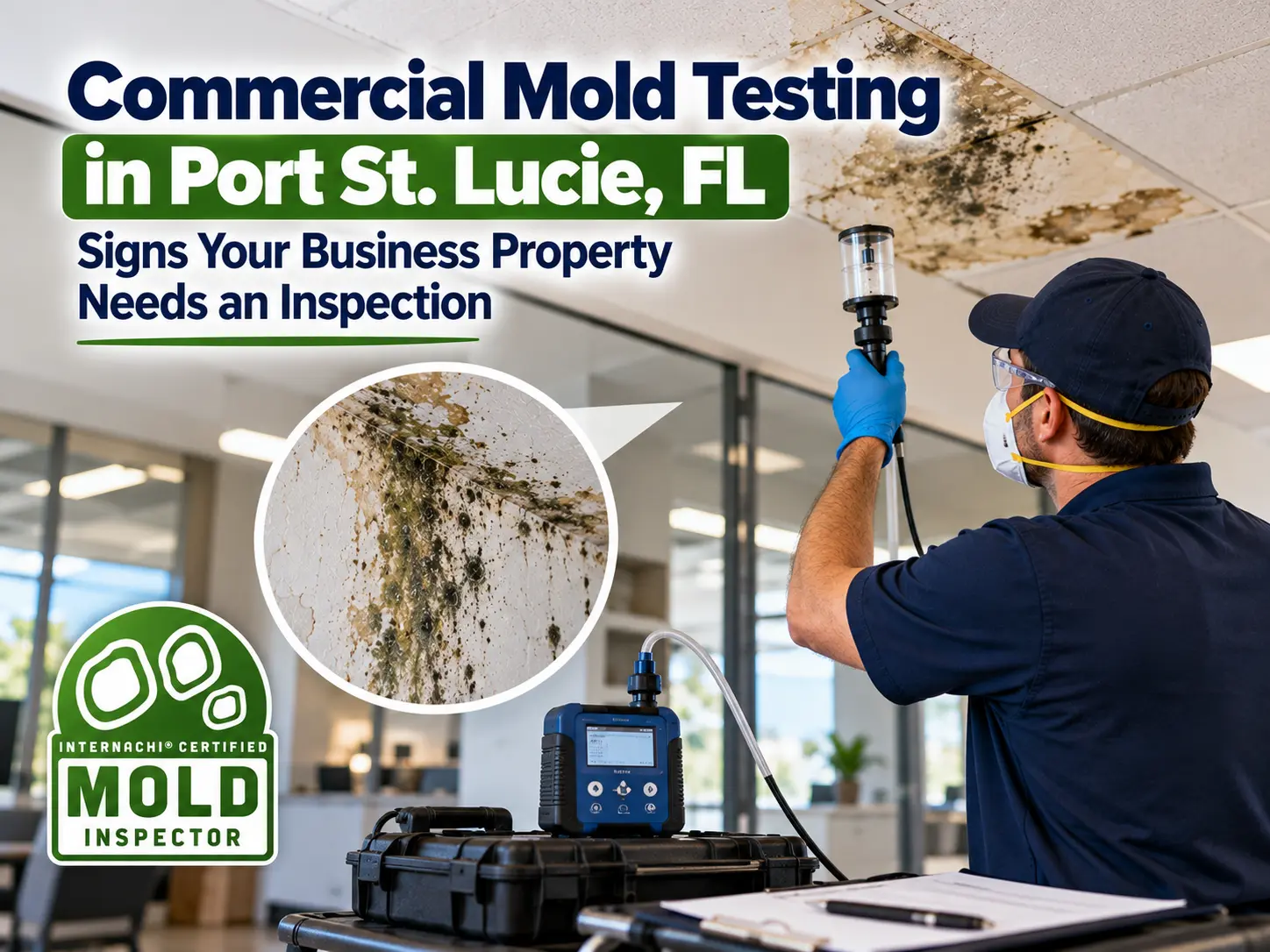
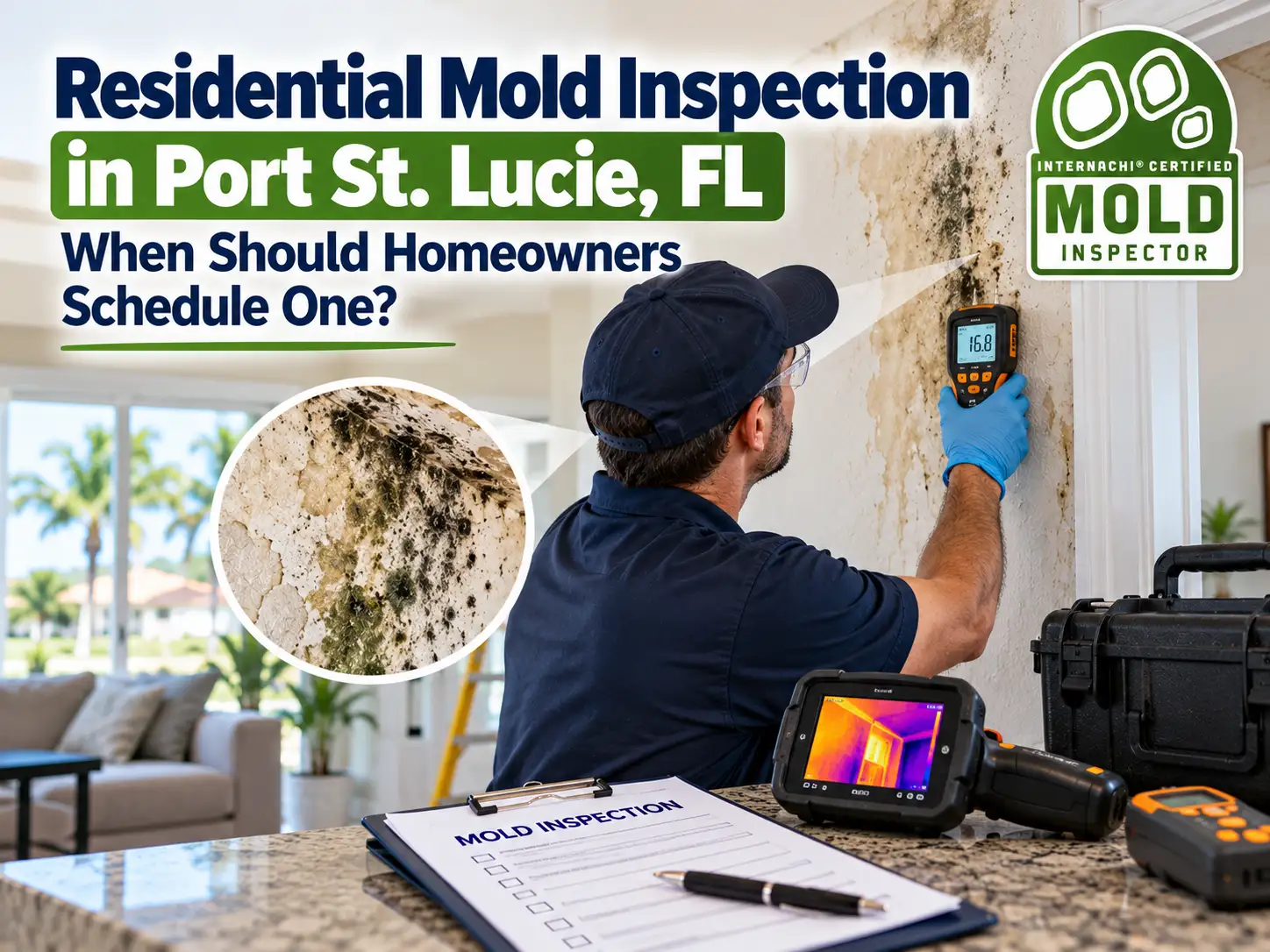
Mold needs moisture to grow indoors. The inspection should focus on damp materials, stains, active leaks, condensation, and places where water can collect. Moisture meters and thermal imaging can help identify areas that deserve closer attention.
For commercial mold inspection requirements, this is one of the most useful parts of the process. Sampling cannot explain why a wall keeps getting wet. Finding the water source is what gives the owner a chance to stop the same issue from returning.
Sample Only When It Adds Useful Information
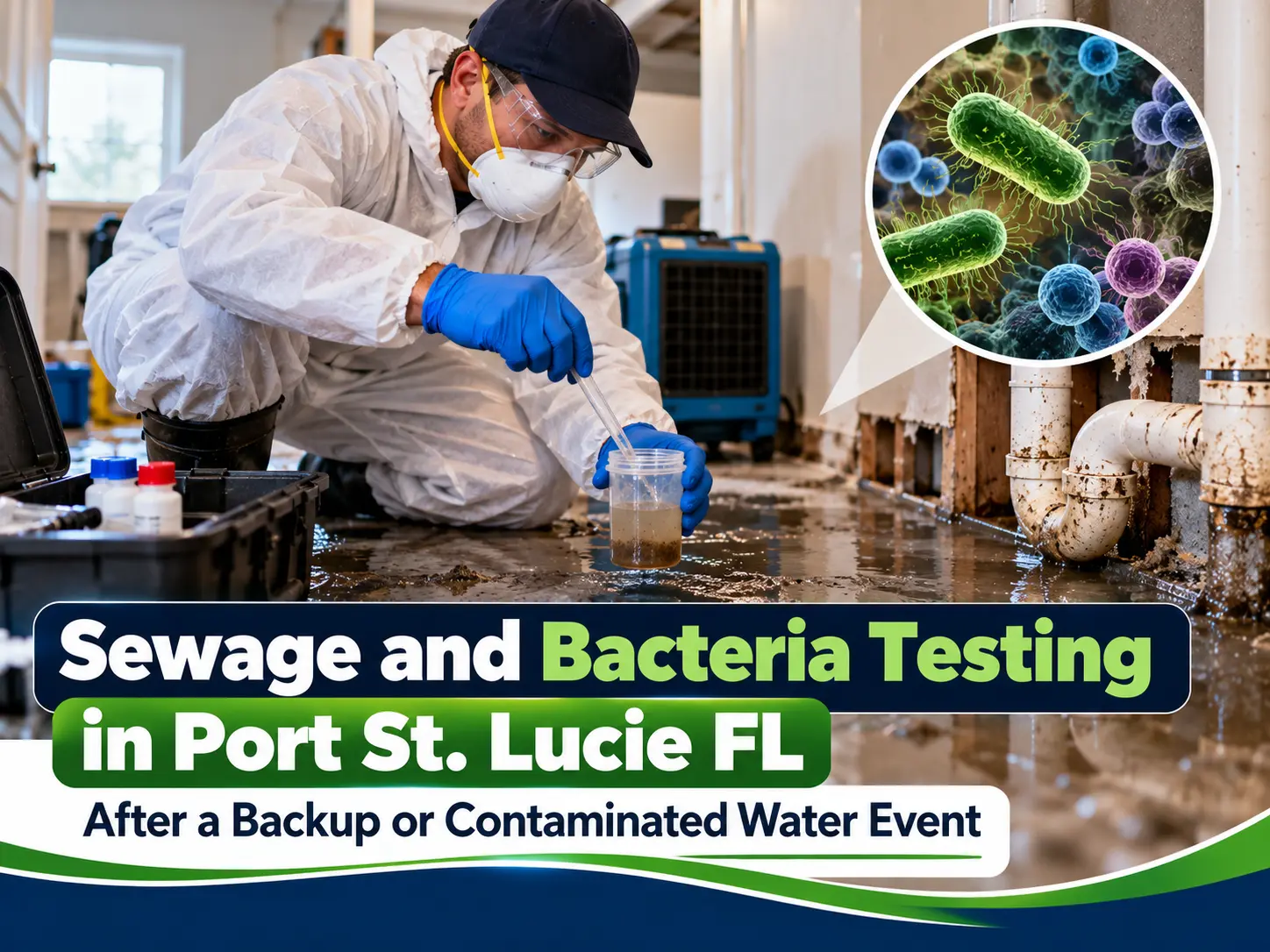
Air or surface sampling can help when mold is hidden, when conditions in two areas need to be compared, or when written records matter. Samples may also be useful after water damage or as part of post-remediation verification.
The result should never be treated as a simple pass-or-fail score. Florida does not set one safe mold count. Test results make more sense when they are read alongside moisture findings, visible conditions, the building history, and the reason the samples were collected.
Why Mold Documentation Matters for Commercial Properties
Mold can quickly become more than a maintenance conversation. A tenant may complain. An employee may ask what was found. An insurer may want proof of repairs. Clear records help everyone understand what happened and what the property owner did next.
For stronger commercial property risk management, keep records such as:
- Dates and locations of leaks, odors, or mold complaints.
- Photos of water stains, damaged materials, and visible growth.
- Plumbing, roofing, and HVAC repair records.
- Inspection notes and moisture readings.
- Lab reports when samples were collected.
- Assessment and remediation records.
- Post-remediation reports when that service was needed.
Good mold compliance documentation does not mean a property will never have another moisture issue. It does create a clear timeline. If questions come up six months later, the owner is not relying on memory or scattered text messages to explain what was done.
How Can Fort Pierce Businesses Reduce Mold Risk?
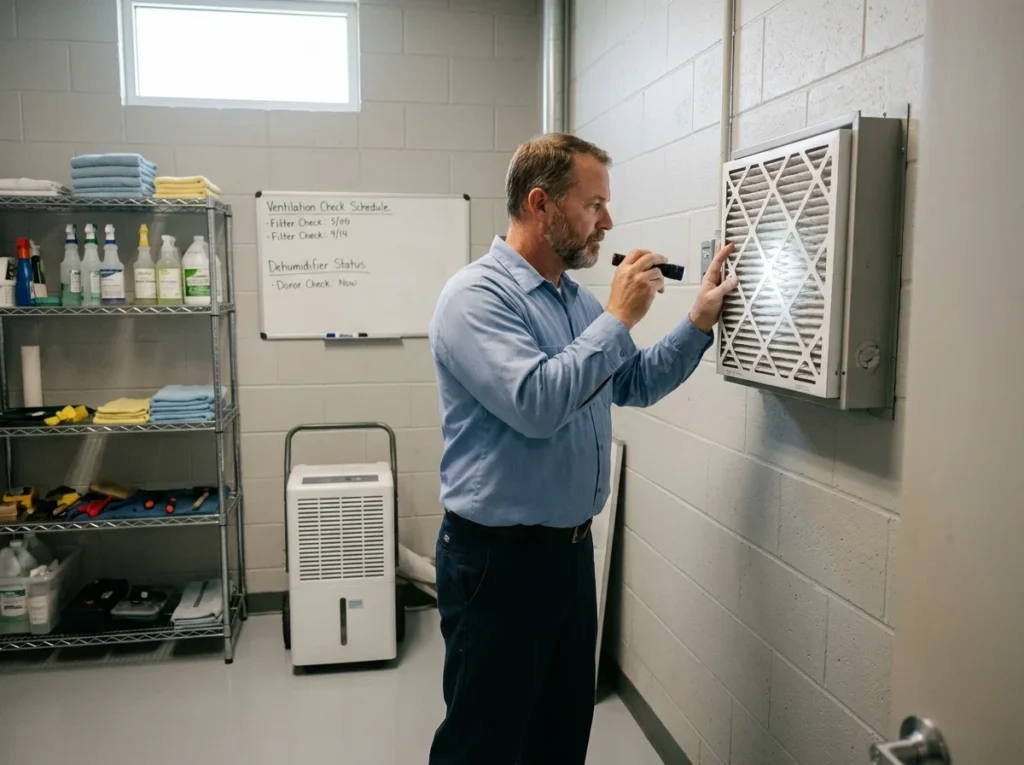
Fort Pierce buildings deal with heat, humidity, hard-working air conditioning systems, and periods of heavy rain. Those conditions make moisture control part of normal property care, especially in offices, retail spaces, medical buildings, and other busy commercial properties.
Simple habits can prevent many problems from turning into large repair projects.
Act Quickly After Leaks or Water Intrusion
When water gets inside, stop the source and check nearby materials. Drywall, carpet, insulation, ceiling tiles, cabinets, and wall cavities can hold moisture even after the visible surface looks dry.
Do not paint over a damp stain and assume the job is finished. If moisture remains behind the surface, growth can continue. Mold prevention in commercial buildings depends on drying affected materials and fixing the cause, not just improving how the wall looks.
Watch HVAC Areas Closely
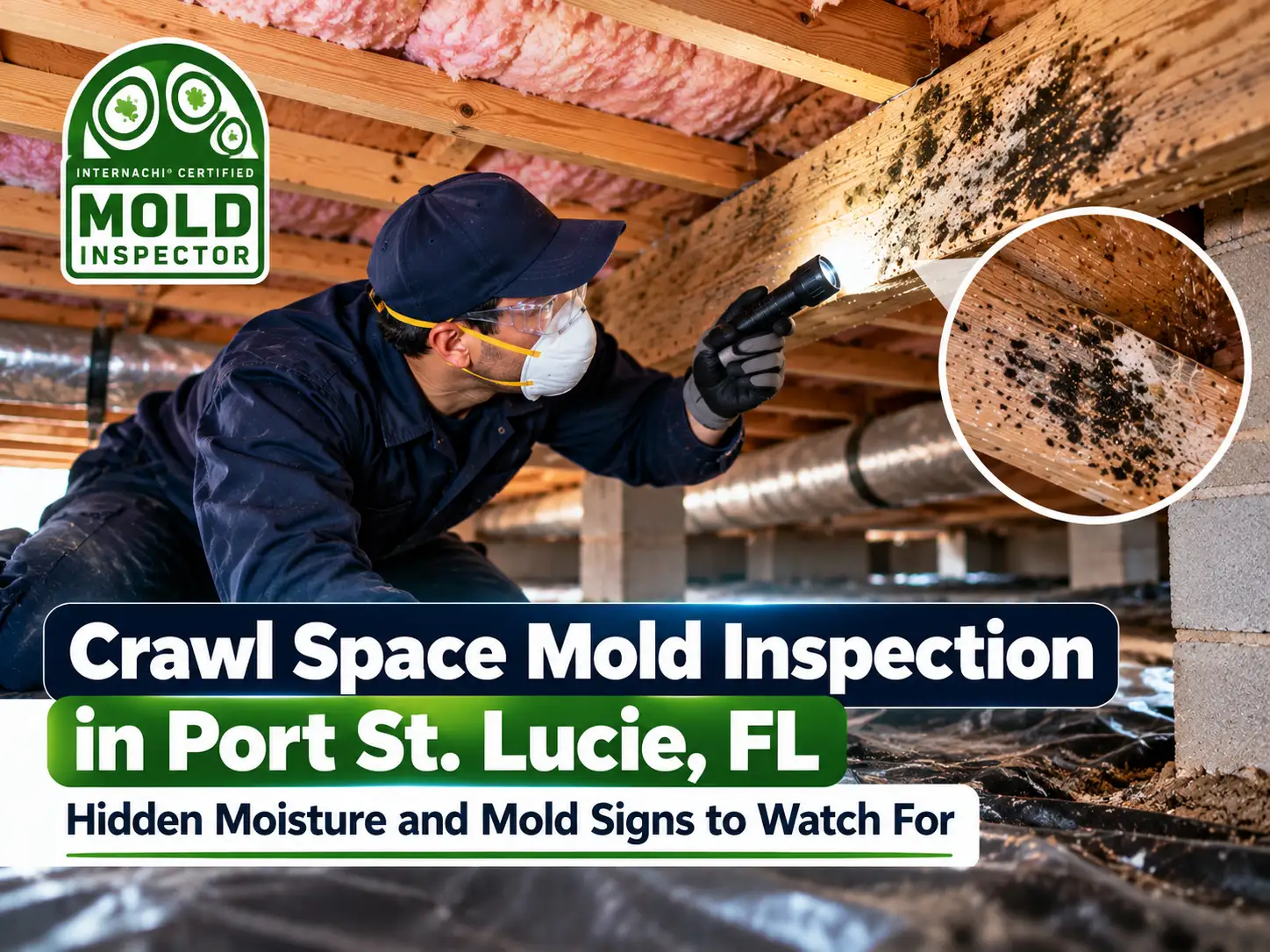
Commercial air conditioning works hard in South Florida. Drain lines, air handlers, insulation, ceiling spaces, and areas around vents deserve attention when condensation keeps returning or a musty smell appears.
A small stain around a vent may be an early warning rather than a cosmetic problem. Catching it while the cause is still limited can save the business from opening walls, moving staff, or dealing with a much larger cleanup later.
Take Complaints Seriously, Even When Nothing Is Visible
Not every mold concern comes with a black patch on the wall. Sometimes the first clue is an odor that appears only after the AC runs, or a complaint tied to one office after a past leak.
That is where a careful mold inspection can help. The goal is not to assume mold is present. It is to check the building, follow the moisture clues, and decide whether testing or another repair step makes sense. Mold Detectives helps Florida property owners investigate these concerns with professional inspection and testing services.
Frequently Asked Questions About Commercial Mold Compliance
Business owners usually want a direct answer before they spend money on testing or call an assessor. These are the questions that come up most often.
Is commercial mold testing required by OSHA in Florida?
No. OSHA does not require routine mold testing or set a specific mold exposure limit. Employers should still investigate reported hazards and address indoor air concerns promptly.
Does Florida require mold testing before remediation?
Not in every case. Florida regulates professional mold assessors and remediators, but state law does not require laboratory testing before every cleanup or remediation project.
When should a business order mold testing?
Testing is useful when mold may be hidden, complaints keep returning, water damage occurred, documentation is needed, or post-remediation checks can clarify current building conditions.
Can employees report workplace mold concerns to OSHA?
Yes. Workers may report workplace safety concerns. Employers should take moisture or mold complaints seriously, inspect the area, correct known causes, and document the response.
Schedule Commercial Mold Testing With Mold Detectives in Fort Pierce
If your Fort Pierce property has a musty odor, recent water damage, visible growth, or repeat employee or tenant complaints, Mold Detectives can help you find out what is happening before you guess at the fix. Our team can inspect the property, check moisture conditions, collect samples when they add value, and provide clear findings for the next step. Contact Mold Detectives to schedule a commercial mold inspection for your building.