A musty smell in a stockroom or a water stain above an office desk can point to a larger moisture problem. Mold can develop where leaks, condensation, or damp building materials go unnoticed. For Port St. Lucie business owners, early testing can help define the problem before it affects more space, damages materials, or interrupts daily work.
Mold Detectives is based in Fort Pierce and serves Port St. Lucie and other Treasure Coast communities. Businesses searching for commercial mold testing Fort Pierce FL services can work with a nearby team that provides inspections, mold testing, moisture detection, and indoor air quality evaluations for commercial properties.
Why Commercial Mold Problems Need Fast Attention
Retail stores and offices have many places where moisture can hide. Finding those areas early can make the next steps much easier.
Moisture Can Stay Hidden Behind Finished Surfaces
A roof leak may leave a small ceiling stain while moisture spreads above the tiles. Plumbing leaks can affect cabinets or wall cavities. AC problems may also create damp conditions around vents, drain lines, or equipment.
The EPA says moisture control is the main way to control indoor mold growth. A commercial mold inspection Fort Pierce businesses request should therefore look for the water source instead of focusing only on visible spots.
Mold Can Affect Normal Business Operations
A mold concern can lead to employee complaints, customer questions, damaged products, or closed rooms. The effect can become larger when several areas share the same roof, plumbing system, or HVAC equipment.
Professional business mold testing can help separate a local problem from a wider building issue. Clear findings give owners and property managers better information before they approve repairs or mold remediation work.
Common Mold Trouble Spots in Retail Spaces
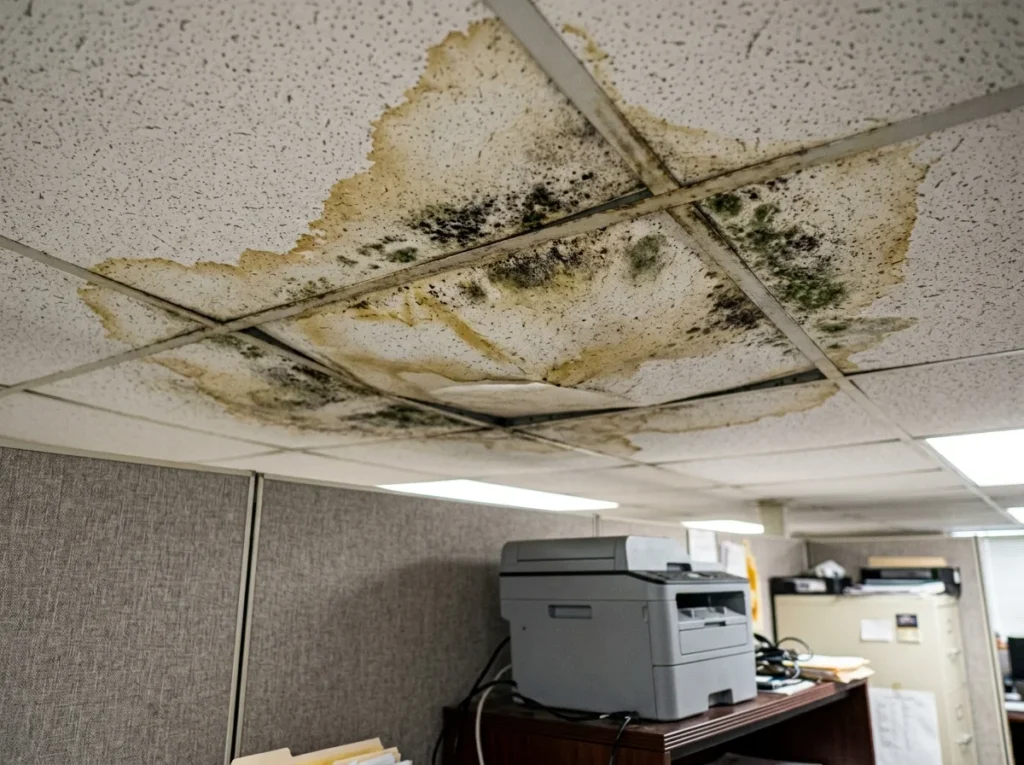
Retail properties have their own moisture risks because public areas, storage rooms, plumbing fixtures, and mechanical equipment may all operate under one roof.
Stockrooms and Storage Areas
Storage areas often receive less daily attention than the sales floor. Boxes or shelving may also block wall surfaces, which can make staining or moisture harder to notice.
A retail space mold inspection Fort Pierce businesses schedule may include walls behind stored goods, ceiling areas, floor edges, and nearby plumbing. Finding the source quickly can help protect inventory and prevent repeated moisture damage.
Storefronts, Roof Areas, and Entryways
Wind-driven rain, damaged seals, roof leaks, or drainage problems can allow water into commercial spaces. Water near doors and windows may also affect drywall, flooring, or base materials.
Retail managers should watch for:
- Ceiling stains that return after rain
- Soft or swollen wall materials
- Musty odors near stockrooms
- Water marks around storefront windows
- Damp flooring near entrances
- Condensation around air vents
- Discoloration behind shelving
These signs do not prove how much mold is present. They show where a professional mold inspection for retail stores may need to focus first.
Restrooms and Plumbing Areas
Restrooms, break areas, sinks, and water lines create another common source of moisture. A slow pipe leak can remain hidden inside a cabinet or wall for days.
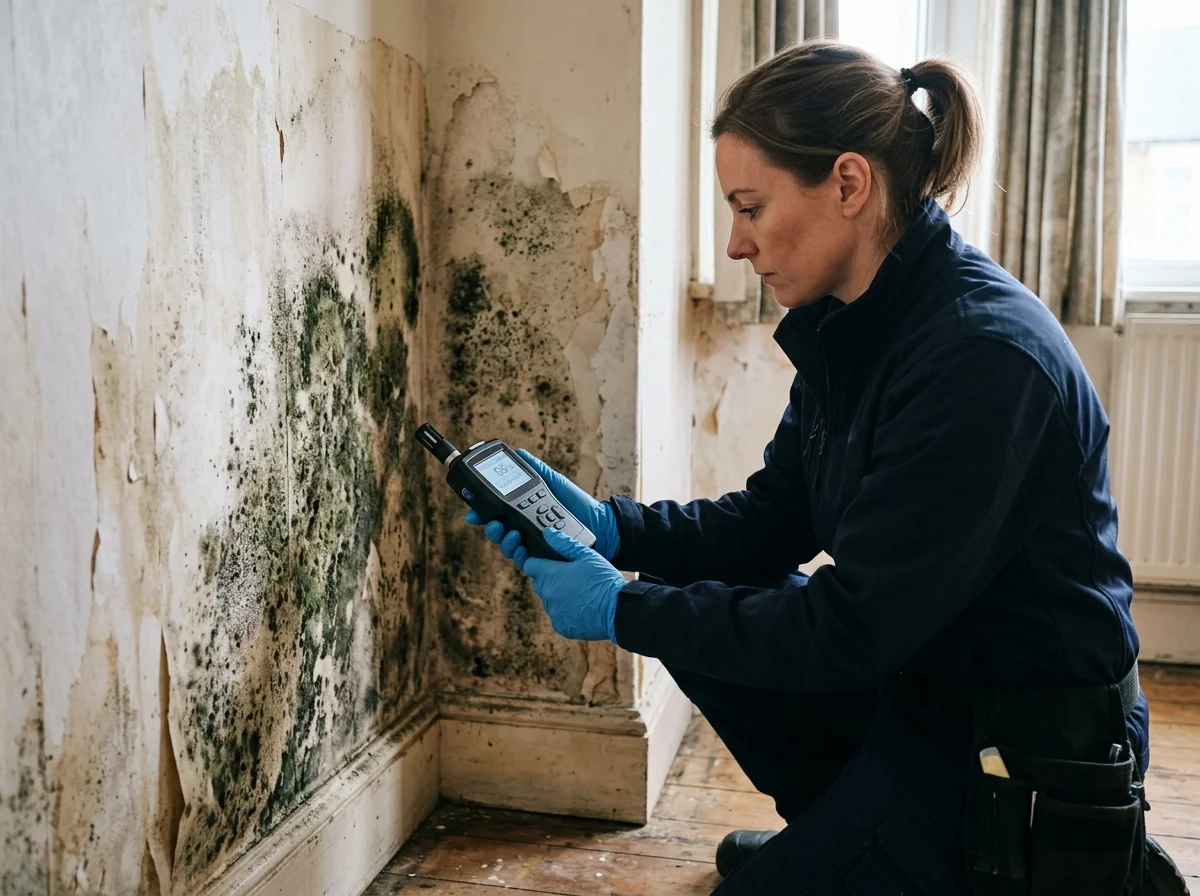
A moisture meter can help an inspector compare suspect materials with nearby dry areas. When readings and visible conditions suggest a larger problem, targeted sampling may provide added information.
Where Mold Problems Develop in Office Spaces
Office properties may look clean and dry while moisture remains above ceilings, behind walls, or near HVAC equipment. That makes building history important during an inspection.
Ceiling Tiles and Shared Wall Cavities
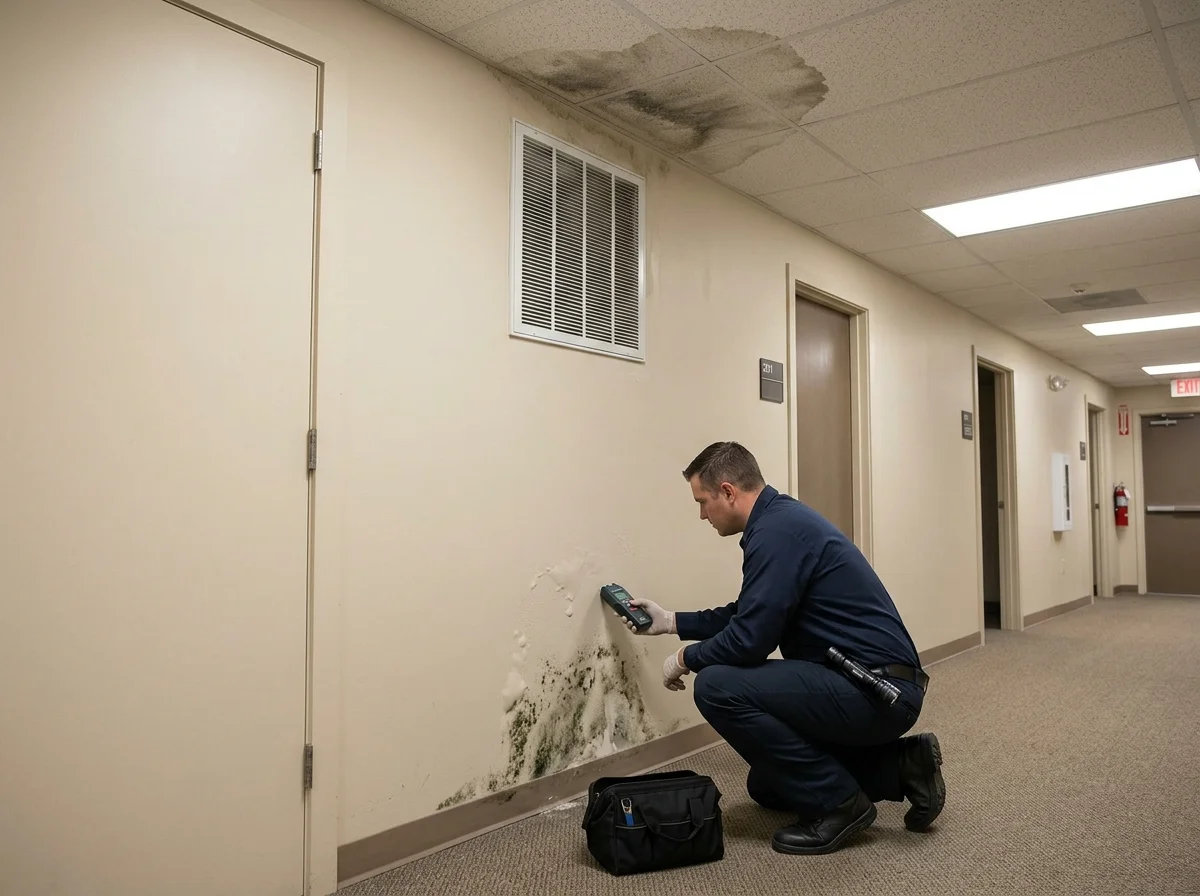
A stained ceiling tile is often the first sign employees notice. Replacing the tile without finding the leak may hide the problem for a short time, but the stain can return.
An office mold inspection Fort Pierce businesses request should trace the likely moisture path. The inspector may check nearby ceiling areas, walls, plumbing lines, and roof-related locations before deciding whether mold sampling is useful.
HVAC Systems and Air-Conditioned Areas
Florida offices rely heavily on air conditioning. Drain problems, condensation, or damp areas near HVAC equipment can create conditions that deserve closer inspection.
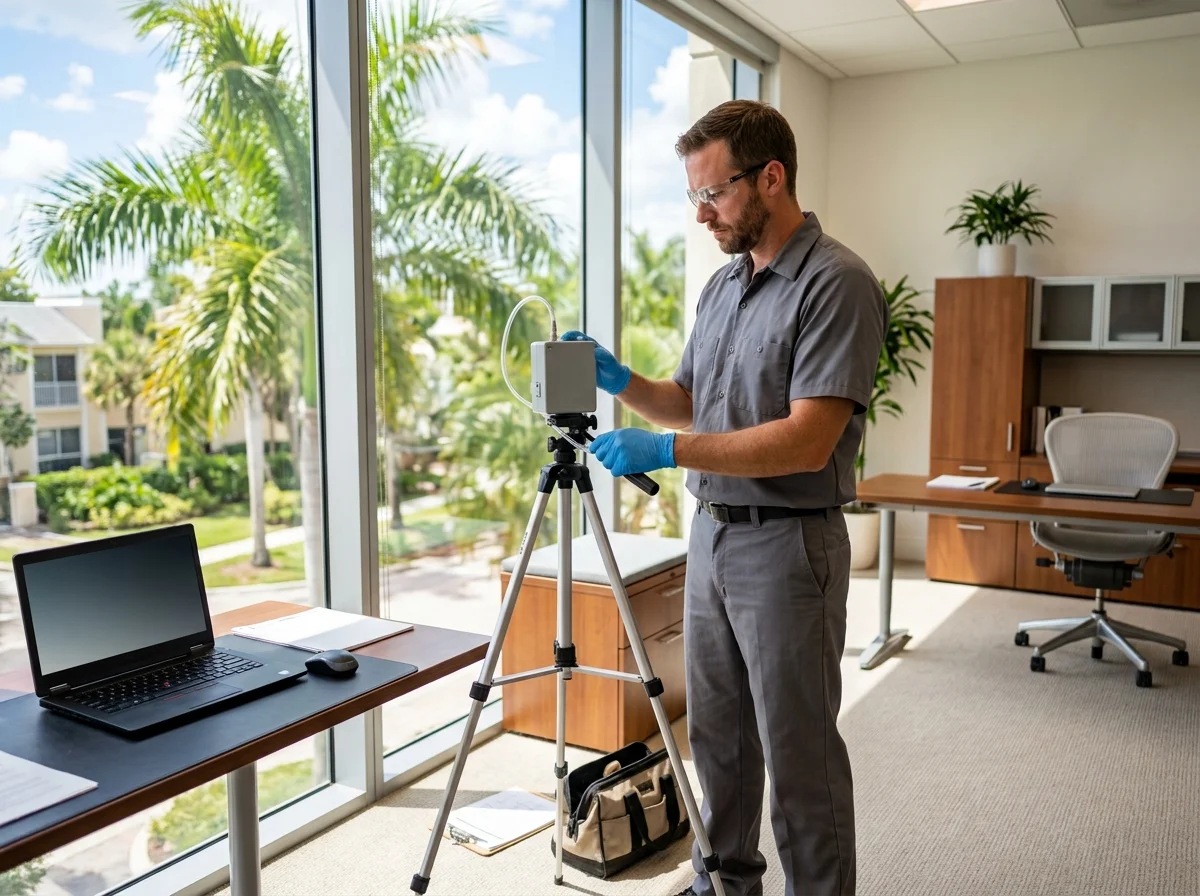
Employees may first report a musty smell when the system runs. Office mold testing Fort Pierce businesses arrange can include air sampling when it serves a clear purpose, but the HVAC and moisture conditions should also be inspected.
Offices With Repeated Complaints
One employee complaint does not tell you where a building problem starts. Several reports from the same area, however, can help identify where the inspection should begin.
Property managers should record the room, date, odor, visible damage, and any recent leaks. This information gives the inspector a useful starting point for workplace mold testing and can reduce unnecessary testing elsewhere.
What Happens During a Commercial Mold Inspection?
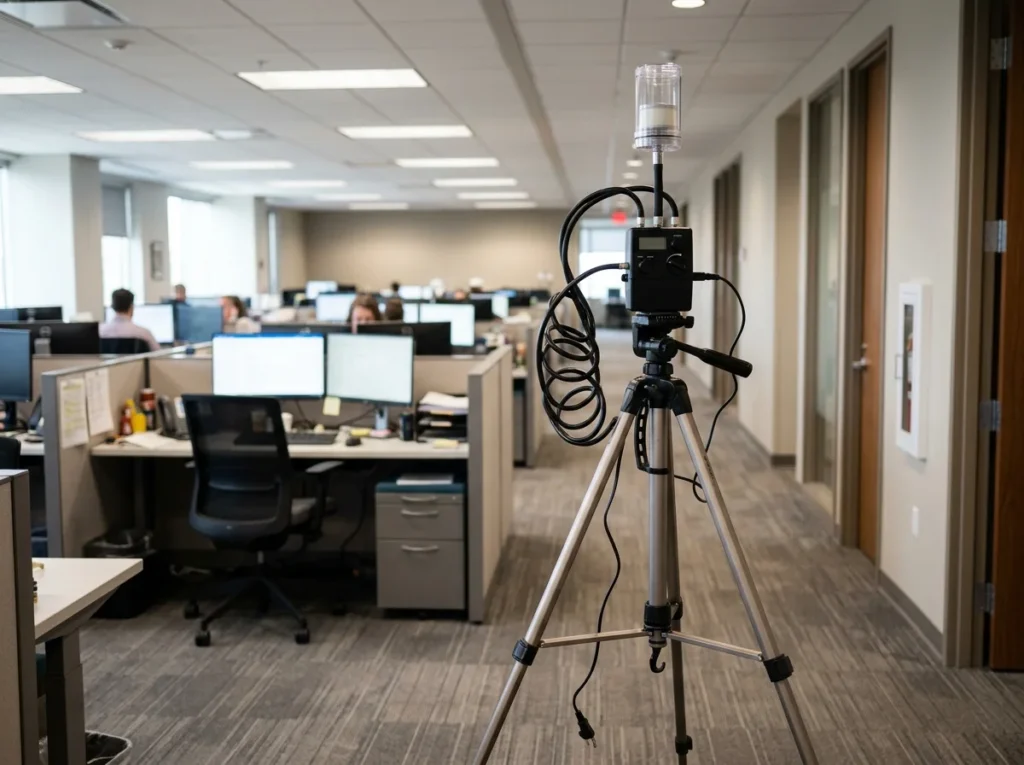
A professional inspection should follow the building conditions rather than use the same testing plan for every office or retail store.
Visual Inspection and Building History
The process normally begins with a visual inspection and questions about the property. Recent roof problems, plumbing repairs, storm damage, HVAC service, or previous mold work can help narrow the search.
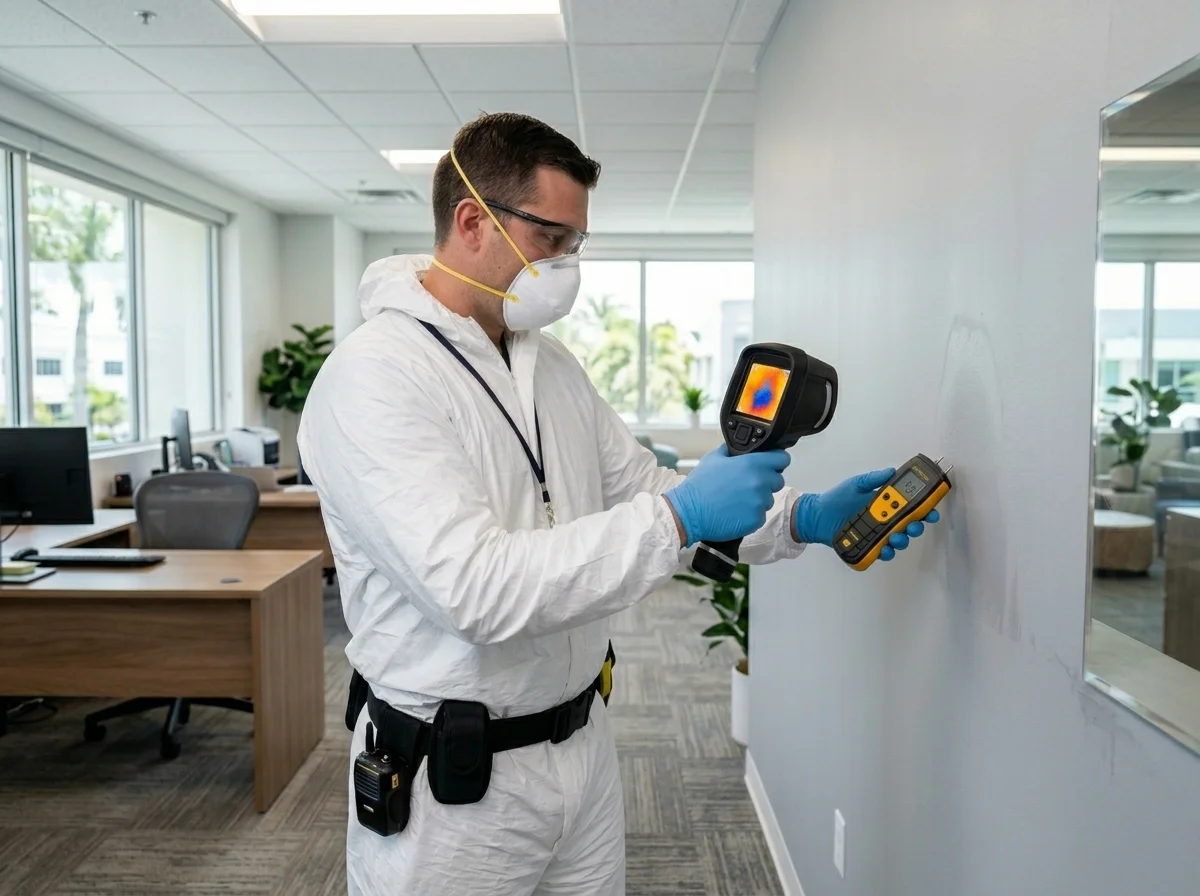
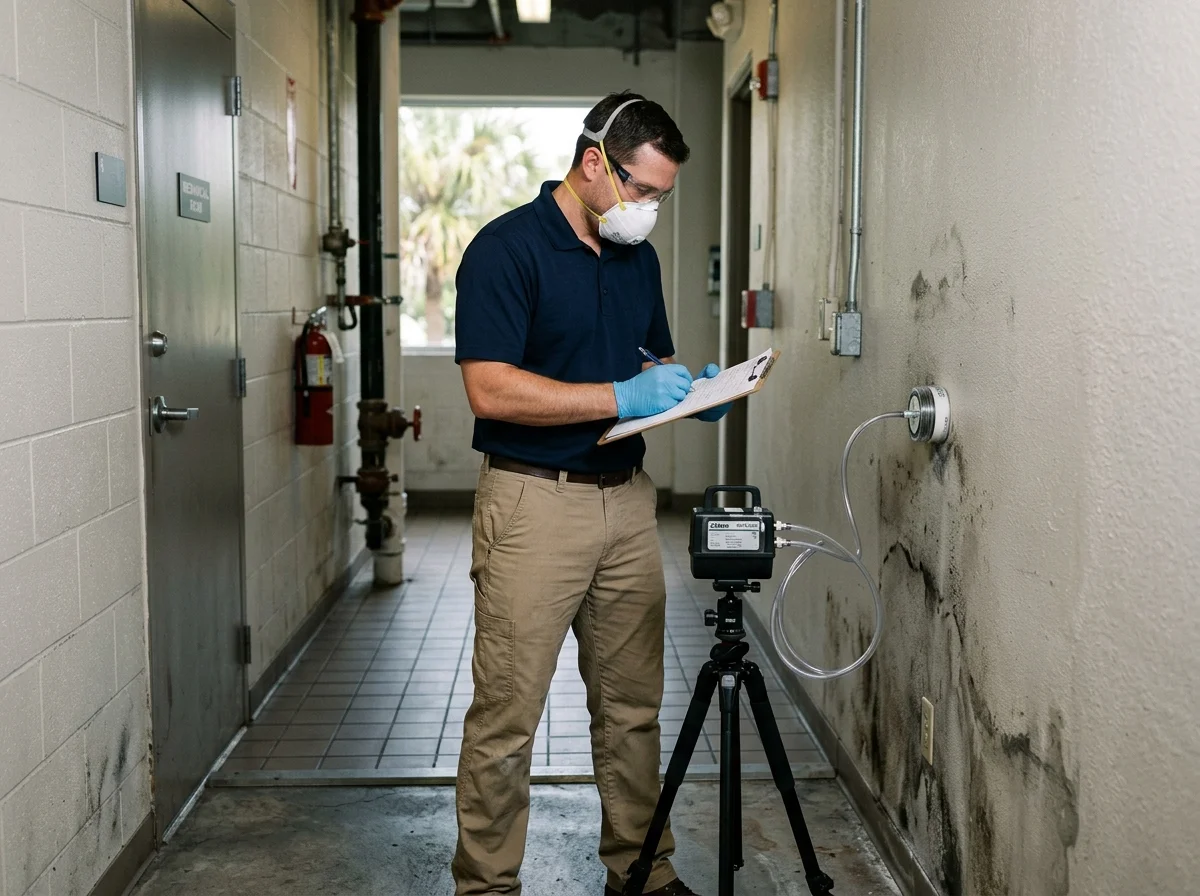
Mold Detectives states that its inspectors evaluate visible and hidden growth while using moisture detection equipment and thermal imaging where appropriate. Its services cover both residential and commercial properties.
Moisture Detection
Testing mold without looking for moisture can leave the main problem unanswered. An inspector may use a moisture meter or other tools to check areas where water intrusion is suspected.
Useful areas may include:
- Walls below roof leaks
- Ceilings around plumbing
- Areas below HVAC equipment
- Cabinets around sinks
- Flooring near exterior doors
- Walls around windows
- Storage areas with musty odors
This part of a commercial mold assessment helps determine which locations deserve closer attention and whether sampling can provide useful information.
Air Sampling
Air sampling collects airborne particles from selected locations. Samples may be taken in an area of concern and compared with another location or an outdoor sample when appropriate.
The EPA notes that there are no federal limits for mold or mold spores. That means mold spore counts should not be treated as a simple federal pass-or-fail score. Results need professional interpretation alongside building conditions.
Surface Sampling
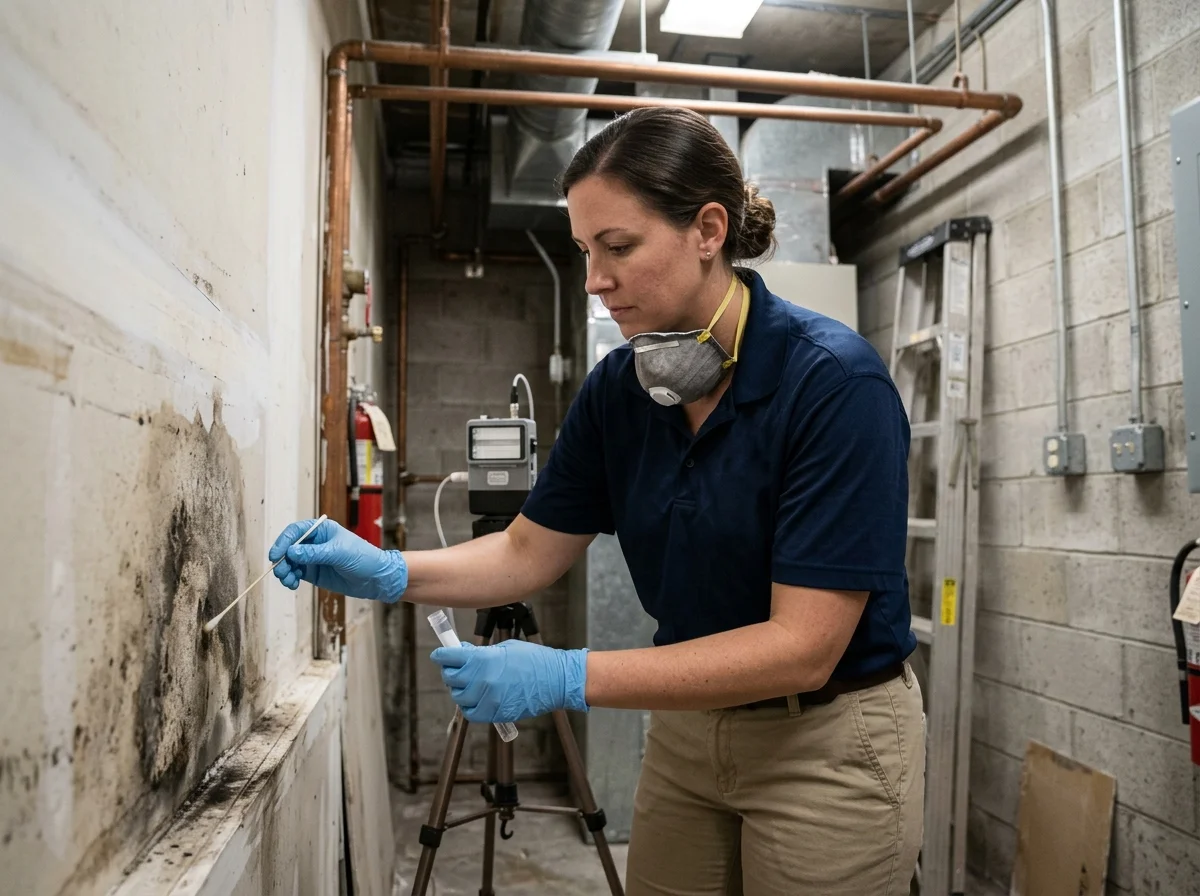
Surface sampling may help identify material found on a wall, ceiling, vent, or another suspect surface. Common methods include tape or swab collection, depending on the situation.
The EPA also notes that surface sampling may be useful when checking whether an area has been adequately cleaned. A professional should decide when sampling adds value and how the results fit the full inspection.
When Is Commercial Mold Testing Worth Doing?
Not every stain needs a large testing package. Testing is most useful when it answers a clear question about the building.
Businesses may consider commercial property mold testing when:
- Musty odors continue without a visible source
- A roof or plumbing leak affected hidden areas
- Several employees report concerns in one section
- Visible growth appears in more than one location
- A property manager needs written documentation
- An insurance claim involves water damage
- The extent of contamination is unclear
- Mold remediation has recently been completed
The EPA says sampling is often unnecessary when visible mold is already present. Testing can still help when the source or extent is unclear, professional documentation is needed, or the inspection calls for targeted samples.
Why Retail and Office Testing Plans Are Different
The type of business changes where inspectors look and how they decide which areas need testing.
Retail Properties
A retail property may have a large public sales floor, a small stockroom, restrooms, and one or more HVAC zones. Water may also enter near storefronts or roof penetrations.
For retail property mold testing, the inspector can focus first on areas with known leaks, odors, or visible damage. This approach keeps sampling tied to real building conditions rather than testing every part of the store.
Office Buildings
Office properties often contain more enclosed rooms. They may also have shared ceilings, conference rooms, break areas, and several HVAC zones.
An office building mold inspection may need to compare complaints across different sections of the property. A problem limited to one office requires a different plan from odors reported throughout an entire floor.
What Business Owners Receive After Testing
The value of testing depends on more than collecting samples. Business owners need results that help them decide what to do next.
Laboratory Results
Samples collected during the inspection are sent for laboratory analysis. The report can identify what was found in the submitted samples and provide data that the inspector can review with on-site findings.
Mold Detectives offers professional laboratory testing as part of its inspection services and provides reports designed to explain the findings clearly.
A Mold Testing Report
A useful mold testing report should connect the laboratory information with the property. Owners need to know where concerns were found and what moisture conditions may be contributing to them.
The report can also help when discussing the property with a landlord, facility manager, insurer, or remediation contractor. Clear records reduce confusion when several people are involved in the next steps.
How to Prepare Your Business for a Mold Inspection
A little preparation helps the inspector reach important areas and understand what happened before the appointment.
Before your business mold inspection Fort Pierce appointment, consider these steps:
- Write down where odors or stains were noticed
- Gather information about recent leaks
- Provide access to locked utility rooms
- Move items blocking suspect walls when practical
- Locate recent HVAC or plumbing repair records
- Note which employees or tenants reported concerns
- Share details about previous mold work
Do not clean or paint over suspicious areas right before the inspection. Changing the area may remove useful visual clues. If active water is entering the building, however, take reasonable steps to stop the leak and limit further property damage.
Choosing Commercial Mold Testing Services Near Port St. Lucie
A nearby inspector can understand the types of moisture problems that affect Treasure Coast businesses, but local service is only one factor to consider.
Look for a Complete Inspection Process
Ask whether the service includes moisture detection, visual inspection, sampling when needed, laboratory analysis, and a written report. Also ask what extra samples cost before testing starts.
Mold Detectives provides professional mold inspections, mold testing, and indoor air quality services in Port St. Lucie. The company also serves Fort Pierce and other communities across the Treasure Coast.
Avoid Testing Without a Clear Purpose
More samples do not always produce a better inspection. Each sample should help answer a question about a suspect area, moisture event, or cleanup project.
When comparing commercial mold testing services, ask how the inspector chooses sampling locations for your property.. A clear answer can tell you much more than a package that promises a fixed number of tests for every property.
Frequently Asked Questions About Commercial Mold Testing
These common questions can help Port St. Lucie property owners decide when an inspection or testing service makes sense.
How long does a commercial mold inspection take?
Most inspections take a few hours, but larger properties may require longer. Building size, access, moisture concerns, HVAC zones, and planned samples affect the visit.
Does visible mold always need laboratory testing?
No. Visible mold does not always require sampling. Testing is more useful when the source, extent, identity, or post-remediation condition needs professional evaluation and documentation.
Can mold testing check the indoor air quality in an office?
Air sampling can provide useful information about airborne mold particles, but inspectors should interpret results with moisture findings, building conditions, HVAC factors, and visual observations.
Should a retail store close during mold testing?
Not in every case. Whether operations should change depends on the affected area, building conditions, planned inspection work, and any safety concerns identified on site.
Schedule Commercial Mold Testing With Mold Detectives
If your Port St. Lucie retail store or office has musty odors, water damage, visible growth, or unexplained moisture, Mold Detectives can help identify what is happening. The Fort Pierce-based team serves Port St. Lucie with mold inspections, moisture detection, air and surface sampling, laboratory-supported results, and indoor air quality services. Call (772) 242-4024 to schedule a professional inspection and get clear answers about your commercial property.