Mold concerns can turn into a costly business problem fast. A roof leak, plumbing failure, HVAC issue, or storm can leave moisture behind long after surfaces look dry. For Fort Pierce business owners, commercial mold testing can help find hidden moisture, document indoor conditions, and show what steps may be needed before damage spreads.
Cost is often the first question. The answer depends on much more than square footage. A small office with one problem area needs a different testing plan than a warehouse with several HVAC zones. This 2026 guide explains typical Florida commercial mold testing cost ranges, what affects pricing, what testing may include, and how businesses can compare quotes with confidence.
What Does Commercial Mold Testing Cost in Florida in 2026?
There is no single price that fits every business, so it helps to start with realistic planning ranges.
Typical 2026 Commercial Mold Testing Price Ranges
For budgeting purposes, many commercial properties can expect an inspection and testing project to fall somewhere between several hundred dollars and more than $1,500. Larger buildings, multi-zone projects, or investigations needing many samples can run higher. Current 2026 market data shows professional inspection costs vary widely based on property size, access, testing needs, and laboratory work.
A practical starting point for the commercial mold testing price is:
- Focused inspection of one problem area: about $350–$650
- Small office or retail space: about $500–$900
- Mid-size commercial property with several testing areas: about $800–$1,500
- Large or multi-zone commercial property: about $1,500–$3,000 or more
- Special projects, extensive sampling, or multiple buildings: custom pricing is common
These figures are planning estimates, not a Mold Detectives rate sheet. Local pricing can vary depending on the inspection scope, sample count, travel, building layout, laboratory needs, and documentation required. Commercial quotes should describe exactly what the inspector will evaluate instead of giving property owners a number with no clear scope.
Why Commercial Testing Often Costs More Than Residential Testing
A commercial building may have several offices, tenant spaces, mechanical rooms, storage areas, and HVAC systems. Each area can have different moisture conditions. That means a professional inspector may need more time and additional sampling locations. Commercial projects may also require reports for landlords, insurers, property managers, attorneys, or real estate transactions.
Published commercial pricing examples also show that additional samples often raise the final charge. Some inspection companies include a limited number of samples in the base fee and then charge for each added sample. That makes the number of testing locations an important part of the business mold testing cost.
What Is Included in a Commercial Mold Inspection?
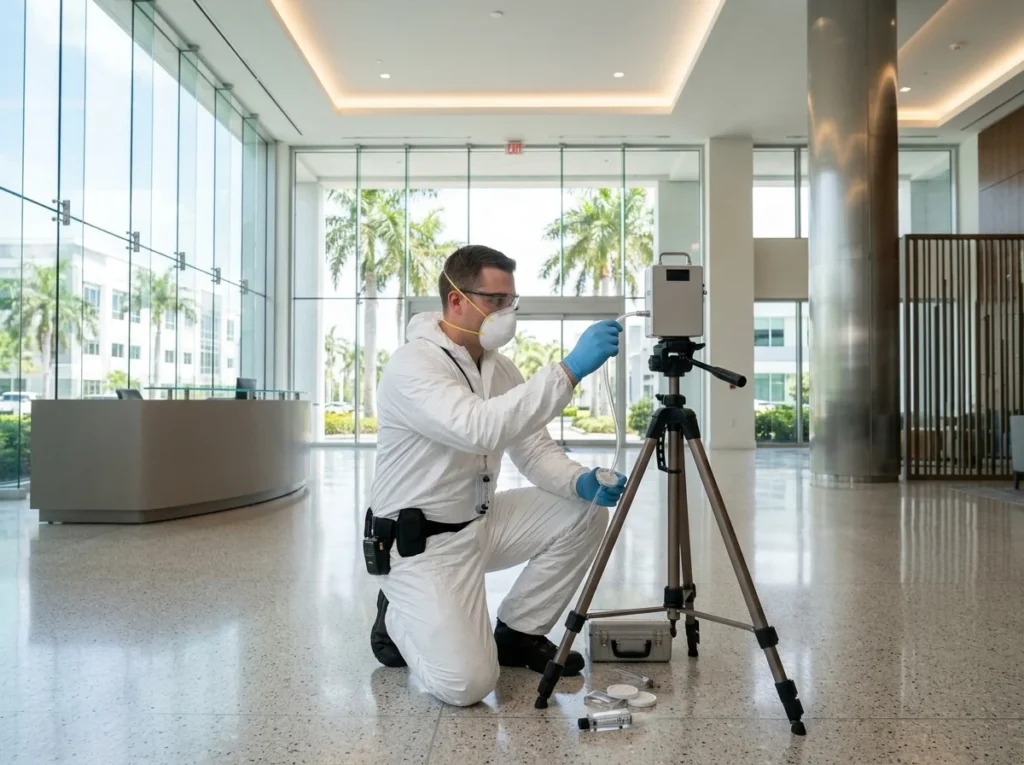
Price makes more sense when you know what a professional assessment may involve.
Visual Inspection and Moisture Investigation
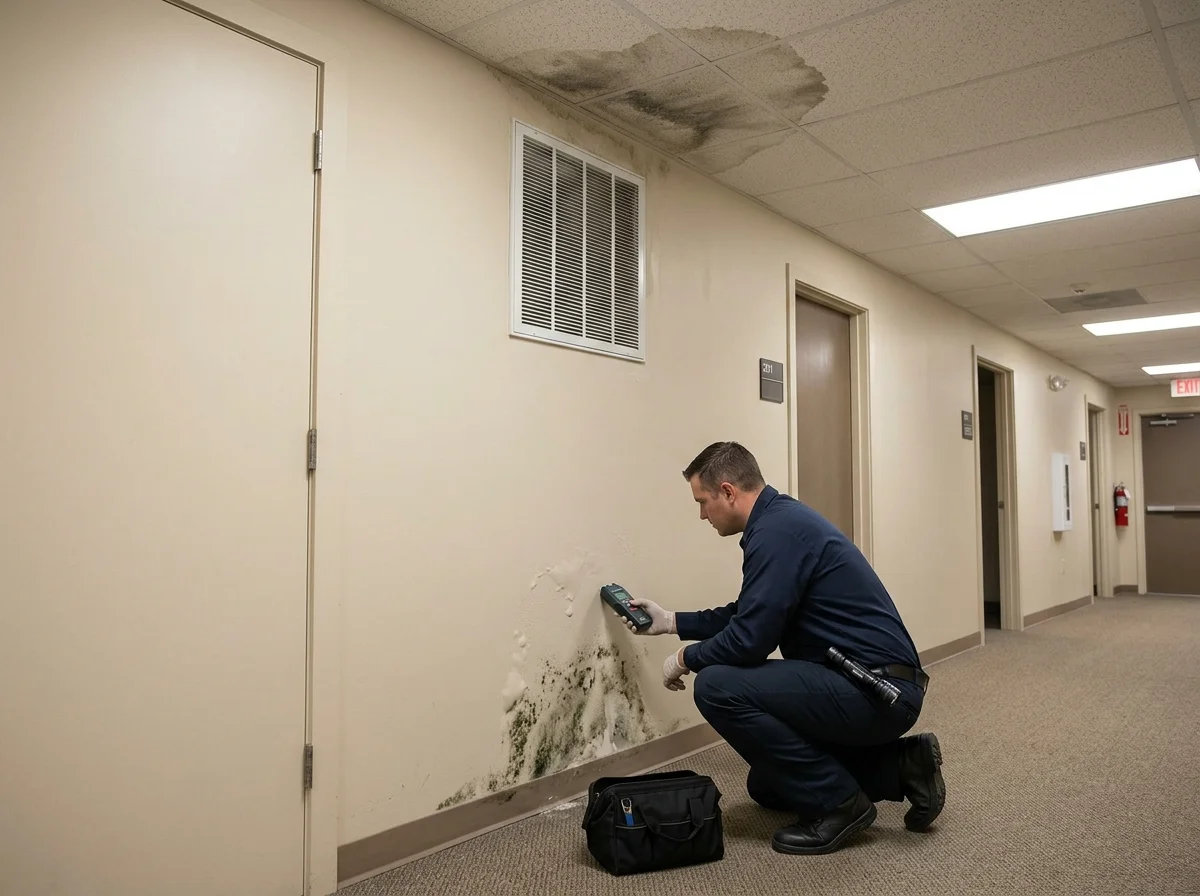
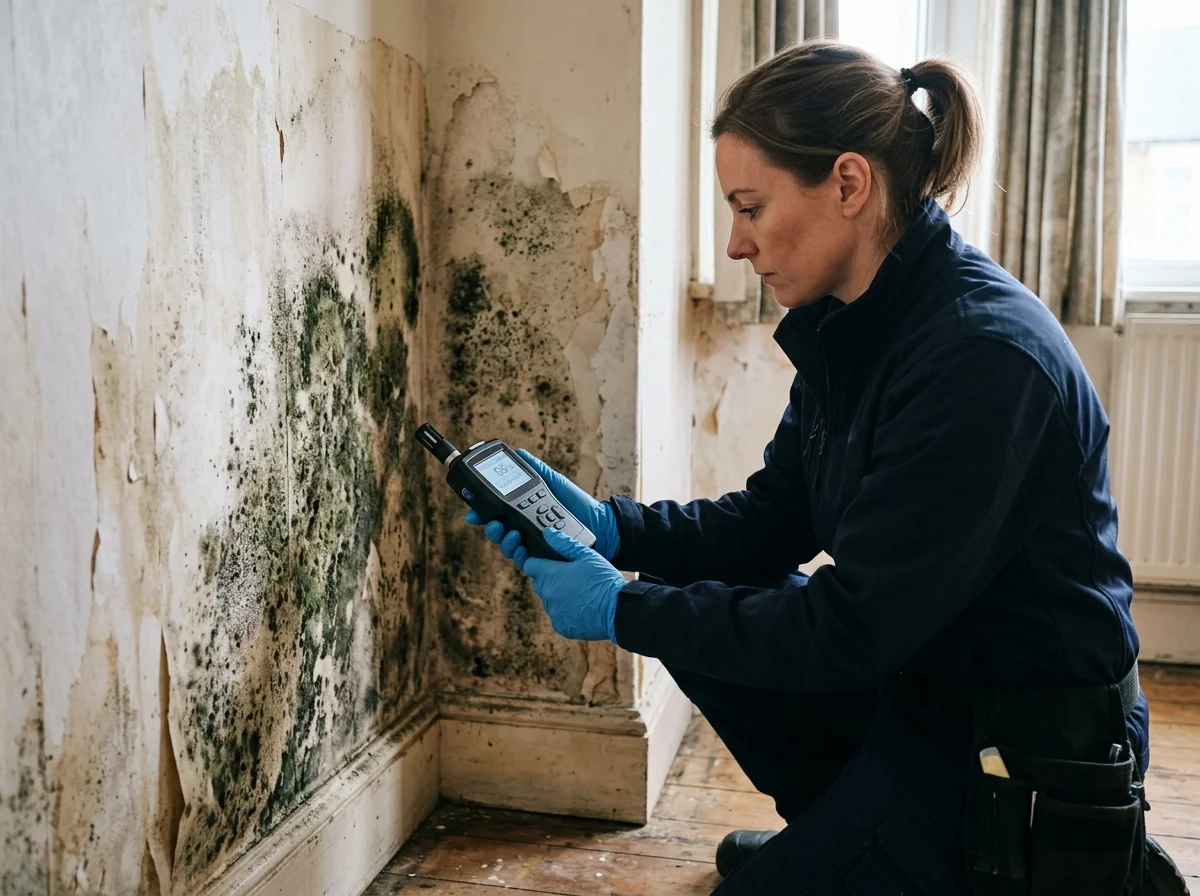
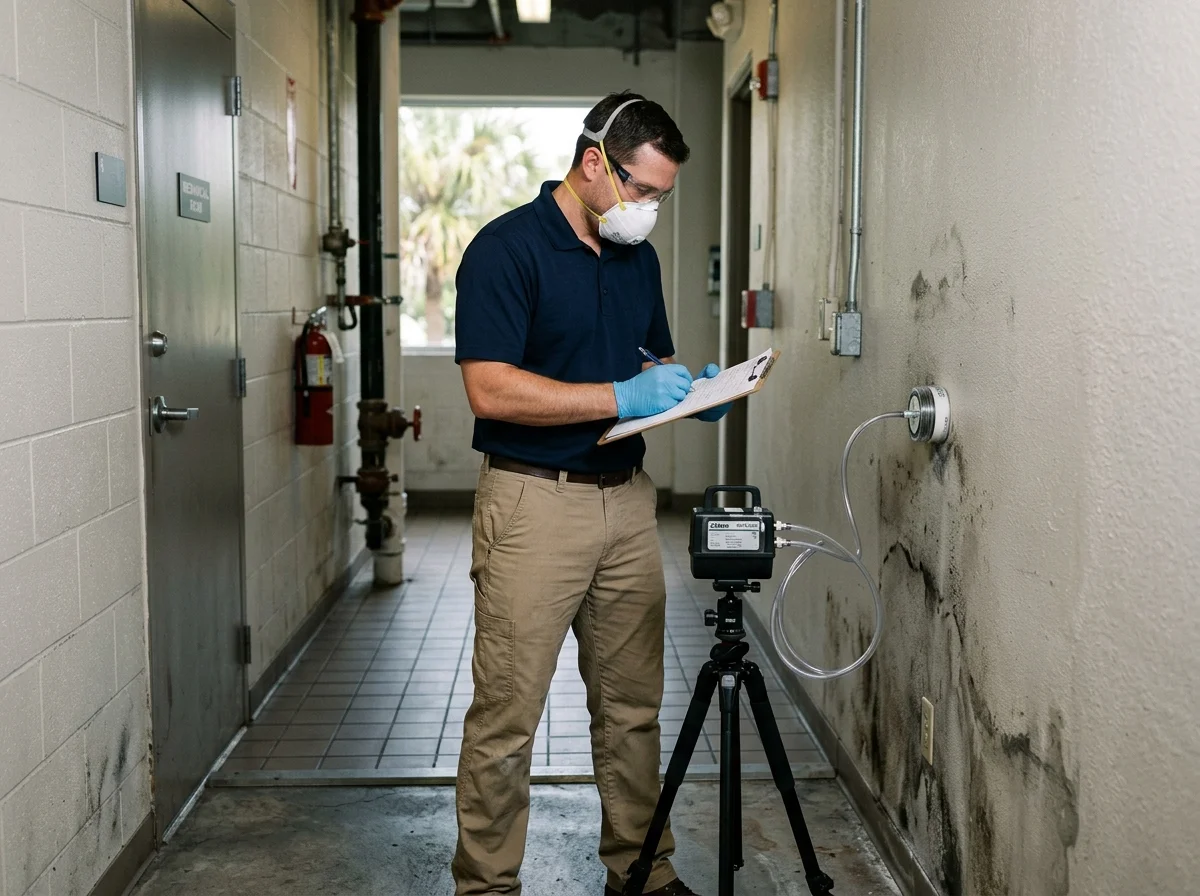
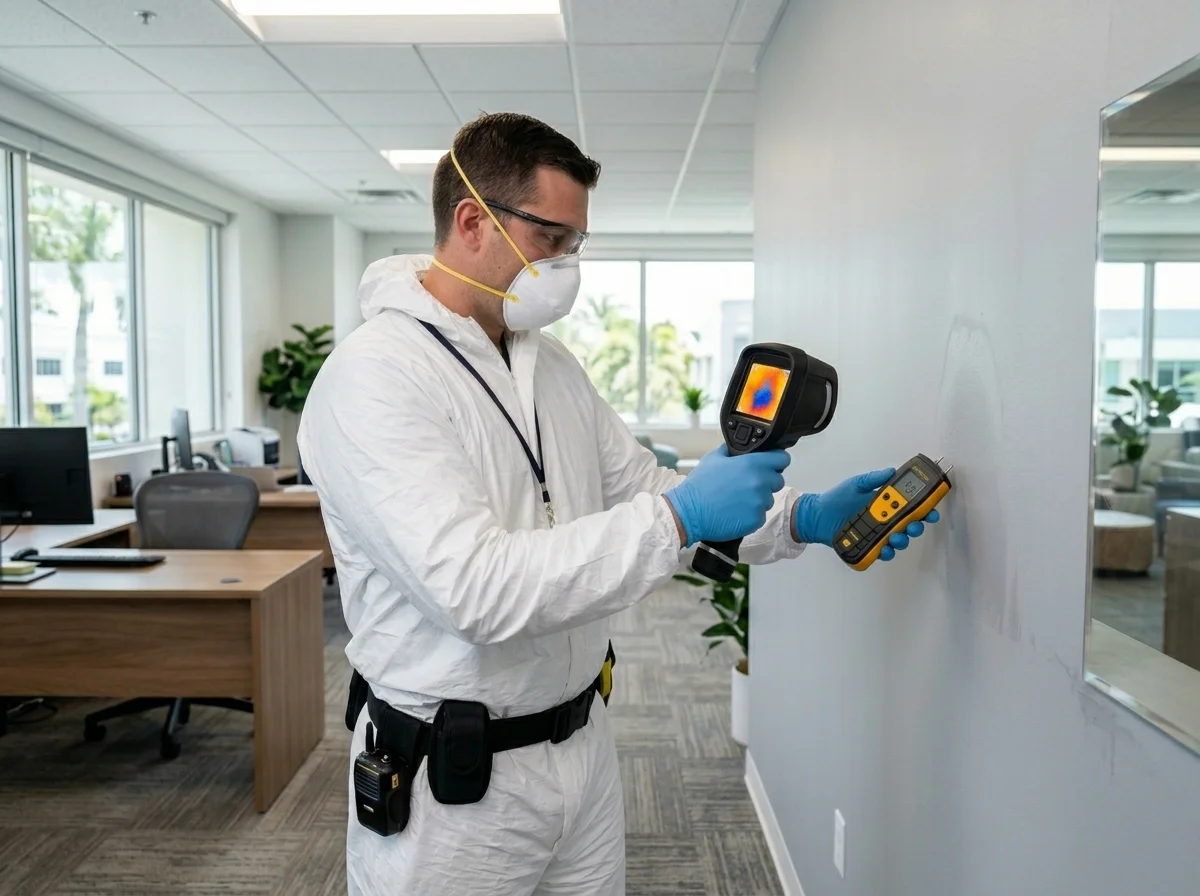
A strong commercial mold inspection begins with the building, not the laboratory. The inspector looks for visible growth, staining, water damage, condensation, and signs of past leaks. A moisture meter or other detection equipment may help identify damp building materials that are not obvious from sight alone.
This step matters because mold growth is usually connected to moisture. Mold Detectives states that its inspection process focuses on locating visible and hidden mold while identifying potential moisture sources. The company also uses moisture detection equipment and other professional testing methods for Florida properties.
Air Sampling for Mold
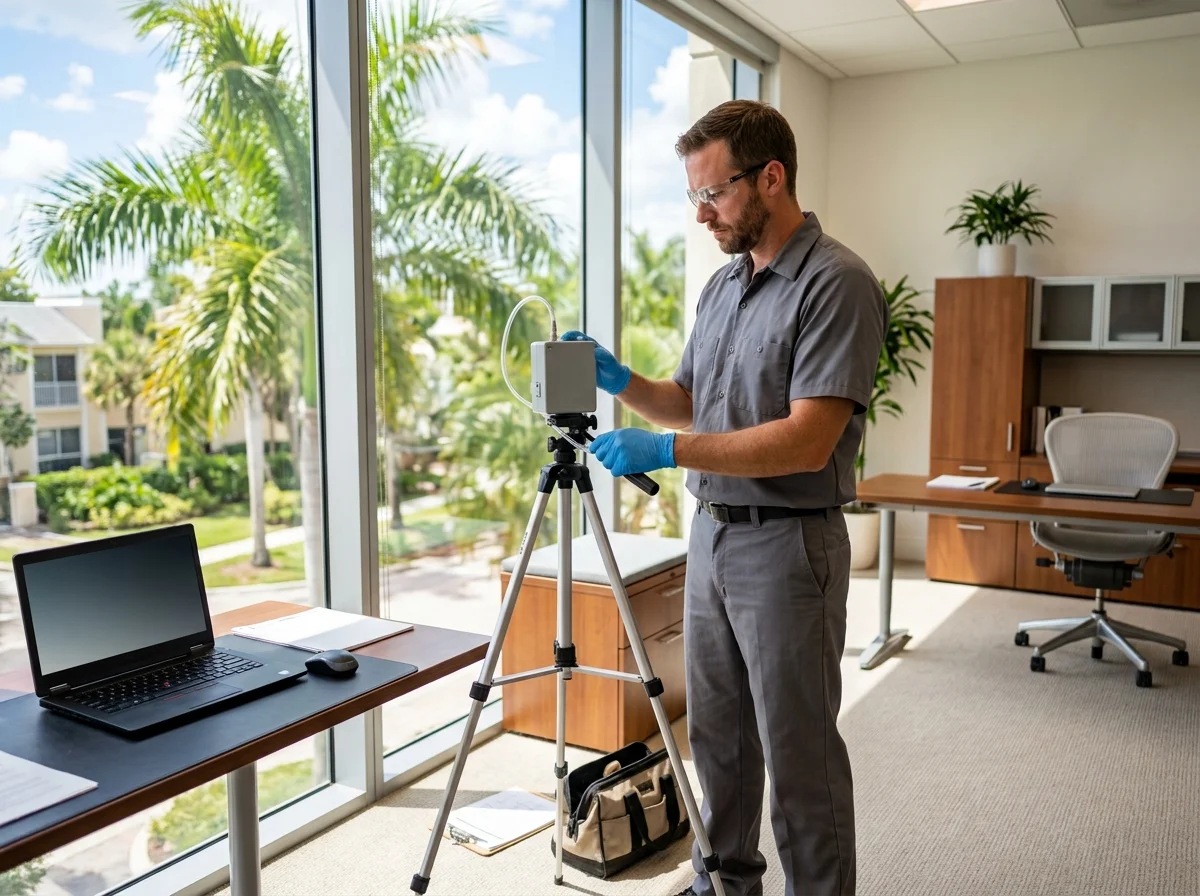
Air samples can help compare airborne mold spore levels between indoor areas and an outdoor reference sample. The number of samples depends on the building layout and the questions the inspection needs to answer. A large office with separate HVAC zones may need more sampling locations than a single open retail space.
Air sampling should not be treated as a simple pass-or-fail test. The EPA notes that no federal limits have been established for airborne mold concentrations. Results need to be reviewed with building conditions, moisture findings, visible growth, and the inspector’s observations.
Surface Sampling and Lab Analysis
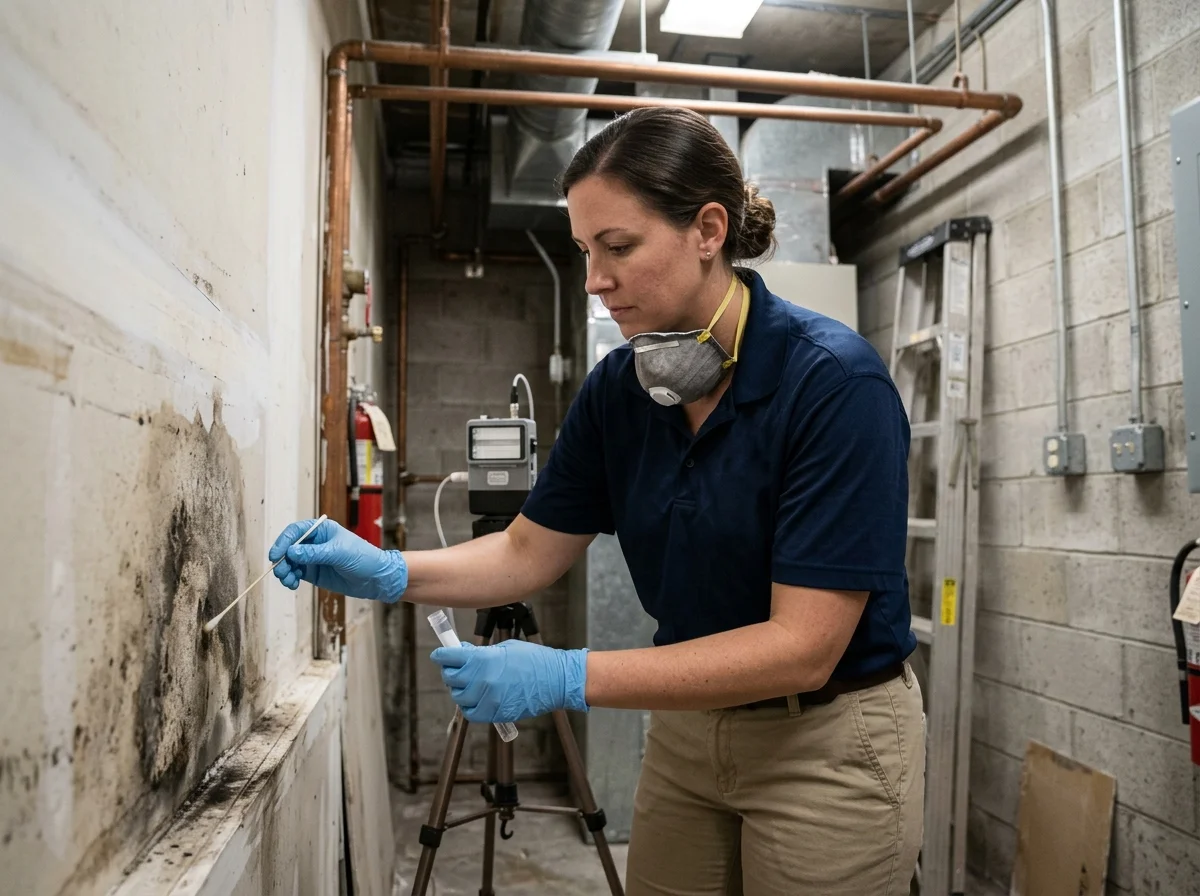
When suspicious growth is visible, surface sampling may help identify what is present at a specific location. Depending on the situation, an inspector may use a swab, tape lift, or another accepted method. Samples are then sent for lab analysis, where trained personnel examine the material and report their findings.
Mold Detectives describes air sampling and surface testing as part of its commercial services. The company also provides laboratory-supported reports with findings and recommendations. Because each extra sample adds collection and laboratory work, extensive mold sampling can increase the total project price.
Written Mold Inspection Report
The final report can be one of the most valuable parts of a professional mold inspection. A useful report connects inspection findings with moisture conditions and laboratory results. It should help the client understand where concerns were found and what next steps make sense.
For businesses, that documentation may also be useful when communicating with building owners, maintenance teams, insurance representatives, or remediation contractors. Mold Detectives says its reports include findings, recommendations, and guidance related to remediation, insurance claims, and post-remediation verification.
What Affects the Business Mold Inspection Price?
Two buildings with the same square footage can receive very different quotes because inspection scope matters as much as size.
Several factors commonly affect the final business mold inspection price:
- Total building size and number of rooms
- Number of tenant suites or separate areas
- Number of air or surface samples required
- Access to ceilings, mechanical rooms, or other hidden spaces
- Number and layout of HVAC systems
- Visible water damage or several suspected moisture sources
- Laboratory turnaround requirements
- Need for detailed documentation or follow-up testing
- Travel or after-hours access requirements
Property Size and Number of Testing Zones
Square footage matters, but the number of separate environments often matters more. A 10,000-square-foot warehouse with one open floor can be simpler to assess than a smaller medical or professional building with many enclosed rooms and separate air-conditioning systems.
Each additional zone may require more inspection time. It can also lead to additional air sampling if the inspector needs meaningful comparisons between different areas. This is why a commercial property mold inspection cost should be based on scope rather than square footage alone.
Number and Type of Samples
Sample count is one of the clearest factors behind mold testing fees. An investigation using one outdoor control and a few indoor samples costs less than a project requiring samples from several suites, floors, or HVAC zones. Surface samples may also be added where suspect growth needs closer evaluation.
Businesses should ask whether the quote includes laboratory charges. They should also ask what additional samples cost before testing begins. Current pricing examples from inspection providers show that per-sample charges are common once the included sample allowance is exceeded.
HVAC Systems and Difficult Access
Commercial HVAC systems can move air through large sections of a building. When moisture or suspected contamination involves ductwork, air handlers, ceiling cavities, or mechanical areas, an inspection may take longer. The inspector may also need to evaluate several locations instead of testing one room.
Hard-to-reach areas can affect the commercial mold inspection cost for the same reason. Roof spaces, high ceilings, locked mechanical rooms, and occupied tenant areas all add time. Good access on inspection day can keep the process more efficient.
Rush Service and Special Documentation
Standard laboratory work often takes a few business days, although turnaround depends on the laboratory and analysis requested. When a business needs faster results for a reopening, transaction, insurance matter, or tenant concern, rush processing may add to the final charge.
Some projects also require more detailed reporting. A simple investigation for a known leak may need less documentation than a large commercial mold assessment connected to an insurance claim or planned remediation project. Ask what type of report is included before comparing two prices.
Office Mold Testing Cost in Florida: What Should Businesses Budget?

Office testing costs depend heavily on how many rooms and HVAC zones need to be evaluated.
Small Offices and Professional Suites
A small office with one suspected problem area may fall near the lower end of commercial pricing. A focused office mold inspection price might begin around several hundred dollars when the inspection area is limited and only a few samples are needed.
Costs rise when the concern involves several offices, a shared ceiling cavity, or more than one air-conditioning zone. For that reason, the office mold testing cost Florida businesses receive should clearly state which rooms are being inspected and how many samples are included.
Larger Offices and Multi-Tenant Buildings
A larger office can require a broader strategy. Testing every room is not always necessary, but the inspector needs enough information to understand the building. Moisture history, HVAC layout, employee concerns, visible damage, and past leaks can all help guide sample locations.
For a multi-tenant commercial property, costs may exceed $1,000 when the project covers several suites or separate air zones. The goal should be targeted testing based on building conditions, not collecting the largest possible number of samples.
Commercial Property Mold Inspection Cost by Building Type
Different businesses create different inspection challenges, so building use can change the testing plan.
Common examples include:
- Office buildings: Costs often depend on the number of suites, rooms, and HVAC zones.
- Retail properties: Inspections may focus on roof leaks, storefront moisture, stock rooms, and ceiling spaces.
- Warehouses: Large floor areas can increase inspection time, even when the layout is open.
- Restaurants: Plumbing, refrigeration, kitchen moisture, and HVAC conditions may require closer attention.
- Schools and childcare properties: More rooms and occupied spaces can make scheduling and sampling more complex.
- Medical offices: Separate treatment rooms and air-handling areas may require a broader testing scope.
- Hotels and multifamily commercial properties: Repeated room layouts can still involve several moisture sources or separate zones.
A good quote for commercial property mold testing considers how the building works each day. The cheapest price is not always the lowest-cost choice if the inspection misses important areas and the business later needs a second visit.
Mold Inspection, Mold Testing, and Remediation Are Different Services
Understanding the terms can prevent confusion when you compare prices.
A mold inspection evaluates the building and searches for conditions linked to mold growth. Testing involves collecting samples when they can answer a useful question. Remediation is the physical work used to remove or clean affected material. These services should not be treated as one interchangeable line item when calculating the cost of mold inspection.
The EPA also says sampling is not always necessary when visible mold is already present. Testing can still be useful when the extent is unclear, when hidden contamination is suspected, or when documentation is needed. Surface sampling may also help verify whether an area was properly cleaned after remediation.
When Is Professional Commercial Mold Testing Worth the Cost?
Testing provides the most value when it helps answer a clear question about the property.
Businesses often consider workplace mold testing when:
- Employees or tenants report repeated musty odors
- Water entered the property after a storm or roof leak
- Plumbing or HVAC equipment caused water damage
- Staining keeps returning after cleaning
- Suspected growth appears in several locations
- A property sale or lease requires added documentation
- An insurance claim involves water or mold damage
- Remediation has finished and independent verification is needed
Testing can also provide peace of mind when building conditions are unclear. Still, collecting samples without first understanding the property can waste money. A professional mold inspector should use the building history and visual findings to choose testing locations that support a clear purpose.
How to Compare Commercial Mold Testing Quotes

A low quote can become expensive when key services appear later as add-on charges.
Before choosing a provider, ask these questions about mold inspection pricing:
- Is the on-site inspection included?
- How many air samples are included?
- Is an outdoor reference sample included when needed?
- Are surface samples priced separately?
- Does the fee include laboratory analysis?
- What happens if the inspector recommends more samples?
- Will I receive a written mold inspection report?
- Are moisture readings part of the inspection?
- Is follow-up consultation included?
- Are rush laboratory fees separate?
Also check who performs the assessment. Florida regulates mold-related services and maintains licensing requirements for mold assessors. The state defines mold assessment as a process involving inspection, evaluation, and physical sampling in covered mold situations. Florida’s Department of Business and Professional Regulation oversees mold assessor licensing.
Why Florida Businesses Need a Building-Specific Approach
Florida buildings deal with moisture conditions that can change quickly after storms, roof leaks, plumbing problems, or air-conditioning failures.
Fort Pierce properties also operate in a warm, humid coastal environment. That makes moisture control an important part of investigating mold issues. Testing alone cannot explain every problem. Inspectors need to look at where moisture entered, which materials became wet, and whether the building dried as expected.
Mold Detectives is based at 3304 Metzger Road in Fort Pierce and provides residential and commercial inspection services throughout Florida. Its services include mold inspections, indoor air quality evaluations, air and surface testing, and post-remediation verification.
Frequently Asked Questions About Commercial Mold Testing Costs
These quick answers cover several questions Florida business owners often have before scheduling an inspection.
How Much Does Commercial Mold Testing Cost in Florida?
Many Florida businesses should budget about $500 to $1,500 for a standard inspection and testing scope, while larger multi-zone properties can cost considerably more.
Does the Office Mold Inspection Price Include Laboratory Testing?
Sometimes. Many quotes include a set number of samples, while others bill laboratory analysis separately. Ask exactly how many air or surface samples are included.
How Long Do Commercial Mold Testing Results Take?
Standard laboratory results often arrive within one to three business days, though rush service may be available for an added fee when faster timing matters.
Is Mold Testing Required When Visible Mold Is Present?
Not always. The EPA says sampling is often unnecessary when mold is clearly visible, but testing can help document conditions or verify cleanup results afterward.
Schedule Commercial Mold Testing With Mold Detectives in Fort Pierce
If your Fort Pierce business has musty odors, water damage, visible growth, or indoor air quality concerns, Mold Detectives can help you get clear answers. The company provides commercial mold testing, moisture investigation, air and surface sampling, laboratory-supported reporting, and post-remediation verification for Florida businesses. Contact Mold Detectives at (772) 242-4024 to discuss your property and request a testing scope based on the building, not a one-size-fits-all package.