Commercial mold testing in Fort Pierce, FL should help identify a moisture or mold problem, not simply produce a lab result. A proper assessment can include a building history, visual inspection, moisture investigation, and targeted sampling when it can answer a useful question. Air testing is not automatically needed for every commercial property.
For business owners and facility managers, the main goal is to find out where moisture is coming from, how far the problem may extend, and what should happen next. Offices, warehouses, restaurants, medical spaces, retail buildings, and apartment properties can all develop moisture problems in different ways.
What Is Commercial Mold Testing?
Commercial mold testing is part of a wider investigation into possible mold and moisture conditions inside a business property.
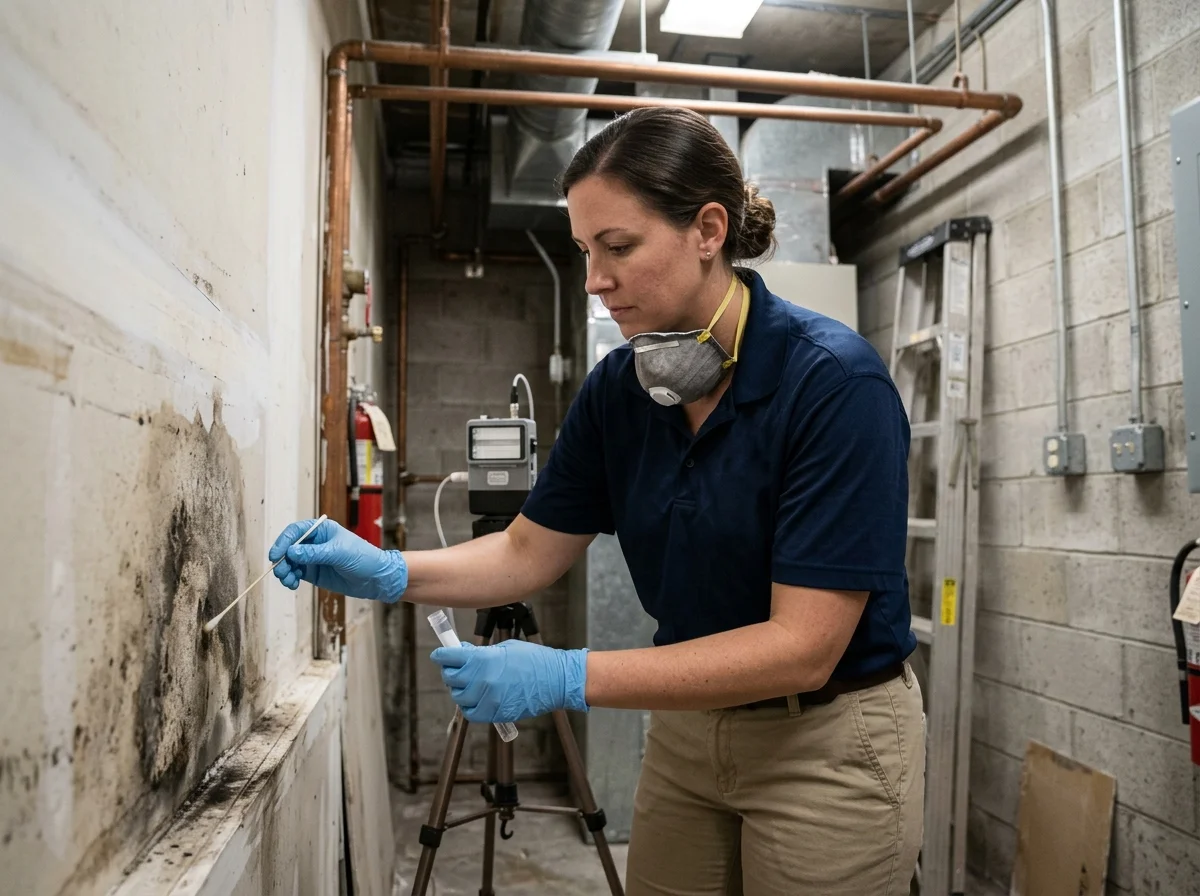
Testing may involve air sampling, surface sampling, or samples taken from building materials. However, samples should support the inspection rather than replace it.
The U.S. Environmental Protection Agency says that sampling is generally unnecessary when visible mold growth is already present. It also states that there are no federal limits for mold or mold spores that can be used to declare a building compliant simply from a sample result.
NIOSH takes a similar approach for workplaces. It does not recommend routine air sampling during building air-quality evaluations and notes that visual inspections and signs such as musty odors can be more useful for finding dampness and mold problems.
Good commercial mold testing services therefore start with the building, not the laboratory.
When Should a Commercial Property Be Inspected for Mold?
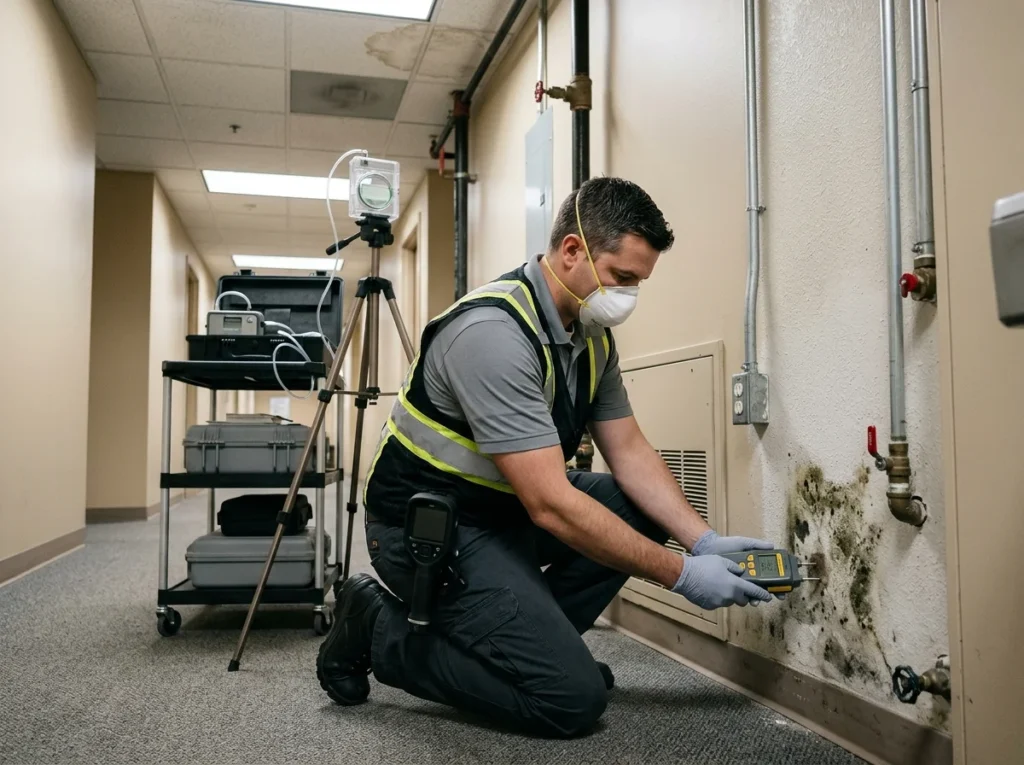
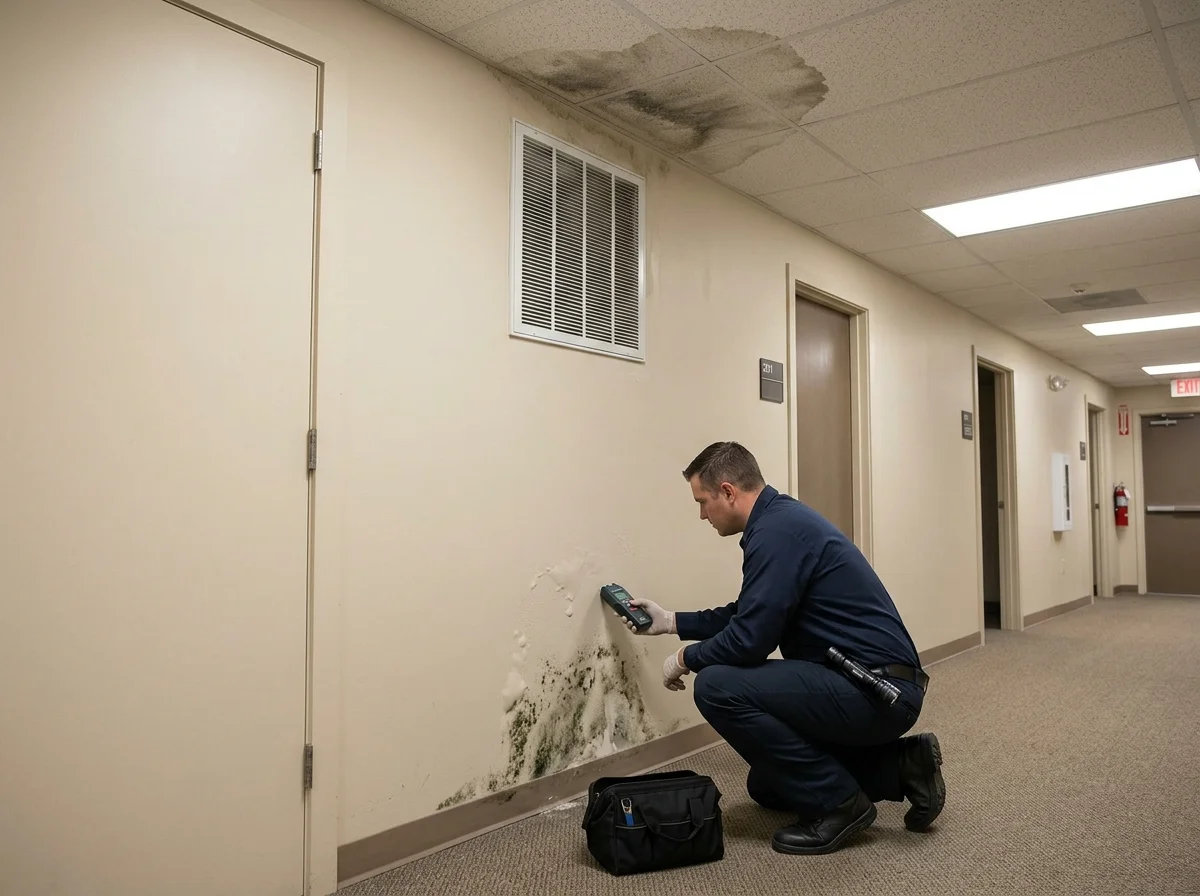
A commercial property mold inspection makes sense when there are signs of moisture, visible growth, recurring odors, or unexplained building damage.
Common warning signs include:
- Visible mold or unusual staining
- Persistent musty odors
- Roof leaks
- Plumbing leaks
- Water-damaged drywall
- Stained ceiling tiles
- Damp carpets
- Condensation near HVAC equipment
- Repeated moisture around windows or exterior walls
- Water entering after storms
- Previous flood or water damage
- Areas that remain humid or damp
- Mold returning after earlier cleanup
Employees or tenants may also report that a particular room smells damp or repeatedly develops moisture.
The presence of an odor does not tell you which mold is present, but it can help guide the investigation toward hidden damp areas. NIOSH specifically recognizes visual observations and musty odors as useful tools when assessing workplace dampness and mold.
Why Does Moisture Matter More Than the Mold Name?
Indoor mold needs moisture. If the moisture source remains, simply identifying mold does not solve the building problem.
NIOSH states that excess moisture is generally the main cause of indoor mold growth. Mold can grow when spores settle on damp building materials that provide a suitable food source.
For a commercial property, that moisture may come from a leaking roof, damaged pipe, HVAC condensation, poor drainage, water entering around the building envelope, or materials that stayed wet after a water-loss event.
This is particularly relevant along Florida’s Treasure Coast, where building managers may also need to respond to storm-related water intrusion. St. Lucie County’s emergency guidance specifically tells property owners to watch for mold in water-damaged areas following disasters.
That is why a useful commercial moisture assessment should ask where the water came from and whether the source has been corrected.
What Happens During a Commercial Mold Inspection?
A professional assessment normally begins by understanding what has happened in the building.
The assessor may ask when odors or staining began, whether the property has had roof or plumbing leaks, whether HVAC problems have occurred, and whether any water damage was previously repaired.
The building inspection can then focus on areas such as:
- Walls and drywall
- Ceiling tiles
- Floors and carpets
- Utility areas
- Mechanical rooms
- HVAC components
- Areas around plumbing
- Exterior-facing walls
- Storage rooms
- Crawl spaces when present
- Areas beneath previous leaks
- Spaces around doors and windows
- Insulation or other materials exposed to moisture
The purpose is to connect visible conditions with the building history and possible moisture sources.
Florida law defines mold assessment, for covered mold growth greater than 10 square feet, as a process involving physical sampling and detailed evaluation of building history and inspection data to form an initial view about the origin, identity, location, and extent of mold amplification.
What Is a Moisture Inspection?
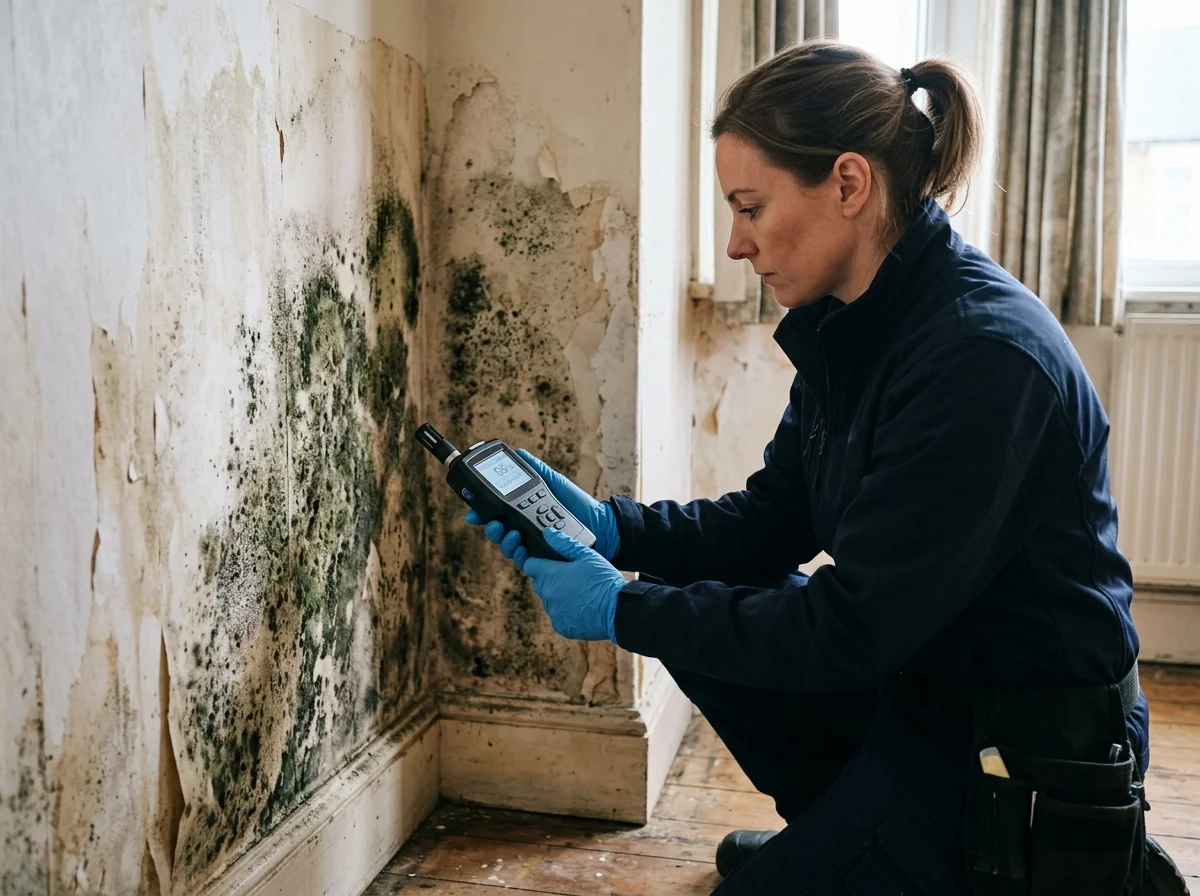
A moisture inspection looks for the conditions that allow mold growth to begin or return.
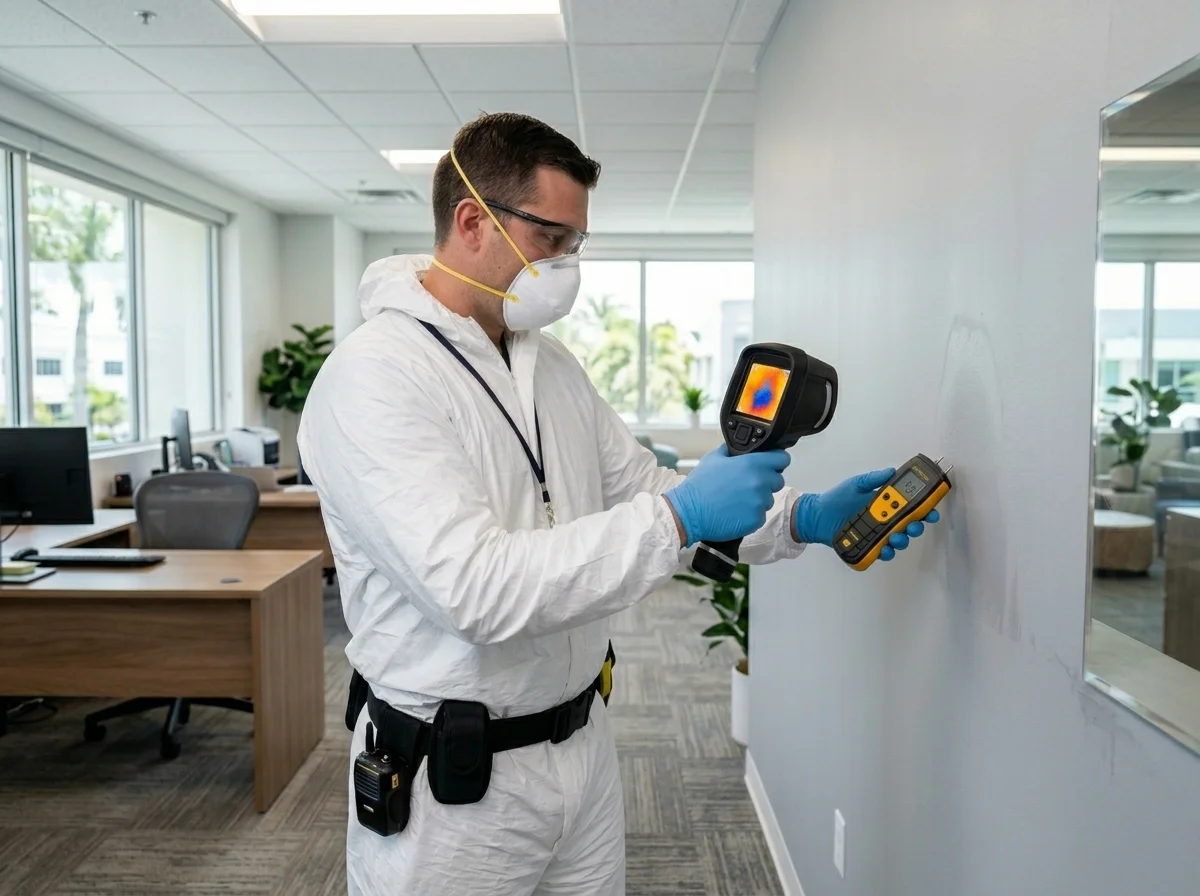
The assessor may use visual observations along with moisture-detection tools. A moisture meter can help identify materials that appear wetter than expected.
Thermal imaging may also help an inspector locate patterns that deserve closer investigation, although a thermal camera does not identify mold by itself. Temperature differences can have several causes, so suspected areas still need to be evaluated in context.
For commercial buildings, moisture investigation can be particularly useful above ceiling systems, near HVAC equipment, around plumbing walls, and in areas affected by roof or exterior leaks.
Finding the cause matters because mold cleanup without moisture control can leave the building open to the same problem again.
Is Air Sampling Always Needed?
No. Air sampling should not automatically be included simply because someone requests a mold inspection.
EPA guidance says sampling is usually not necessary when visible mold is already present. EPA also notes that there are no federal airborne mold standards or threshold values that allow a sample to be treated as a simple safe-or-unsafe test.
NIOSH goes further for workplaces and says it does not recommend routine air sampling for mold during building air-quality evaluations. Short-term samples capture conditions only during a limited period and cannot be directly interpreted as measures of health risk.
Air sampling can still have a role when it is tied to a clear investigation question.
The key is knowing why the sample is being taken and how the result will affect the next decision.
When Can Mold Sampling Be Useful?
Sampling can add value when visual inspection alone does not provide enough information.
For example, it may help an assessor investigate whether suspected material is mold, compare selected indoor and outdoor conditions, investigate hidden contamination, or document certain conditions after remediation.
EPA notes that surface sampling can be useful for checking whether an area has been adequately cleaned or remediated. It also recommends that sampling be performed by professionals with experience designing sampling protocols and interpreting results.
The sampling plan should therefore fit the building.
A large warehouse, restaurant, office building, and medical office should not automatically receive the same number or type of samples.
What Types of Mold Samples May Be Taken?
Different sampling methods answer different questions.
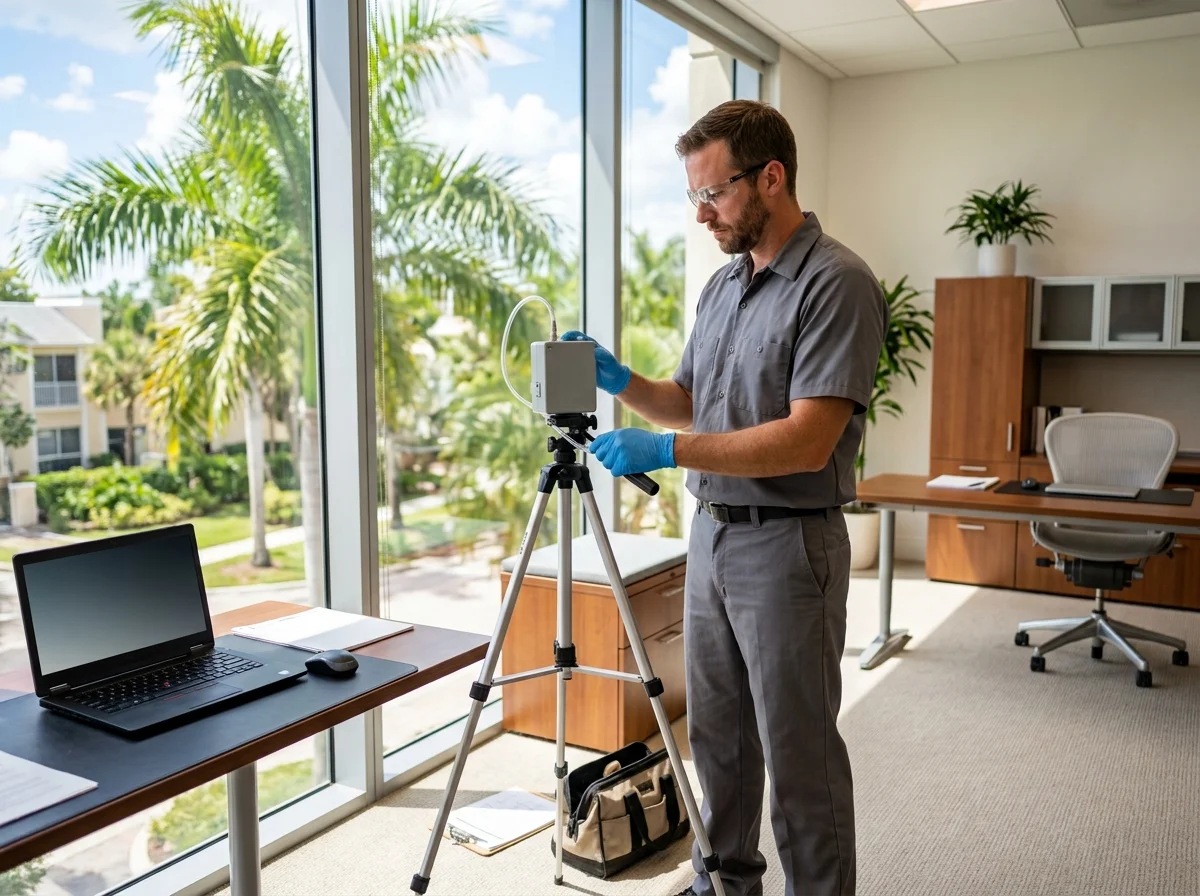
Air Sampling
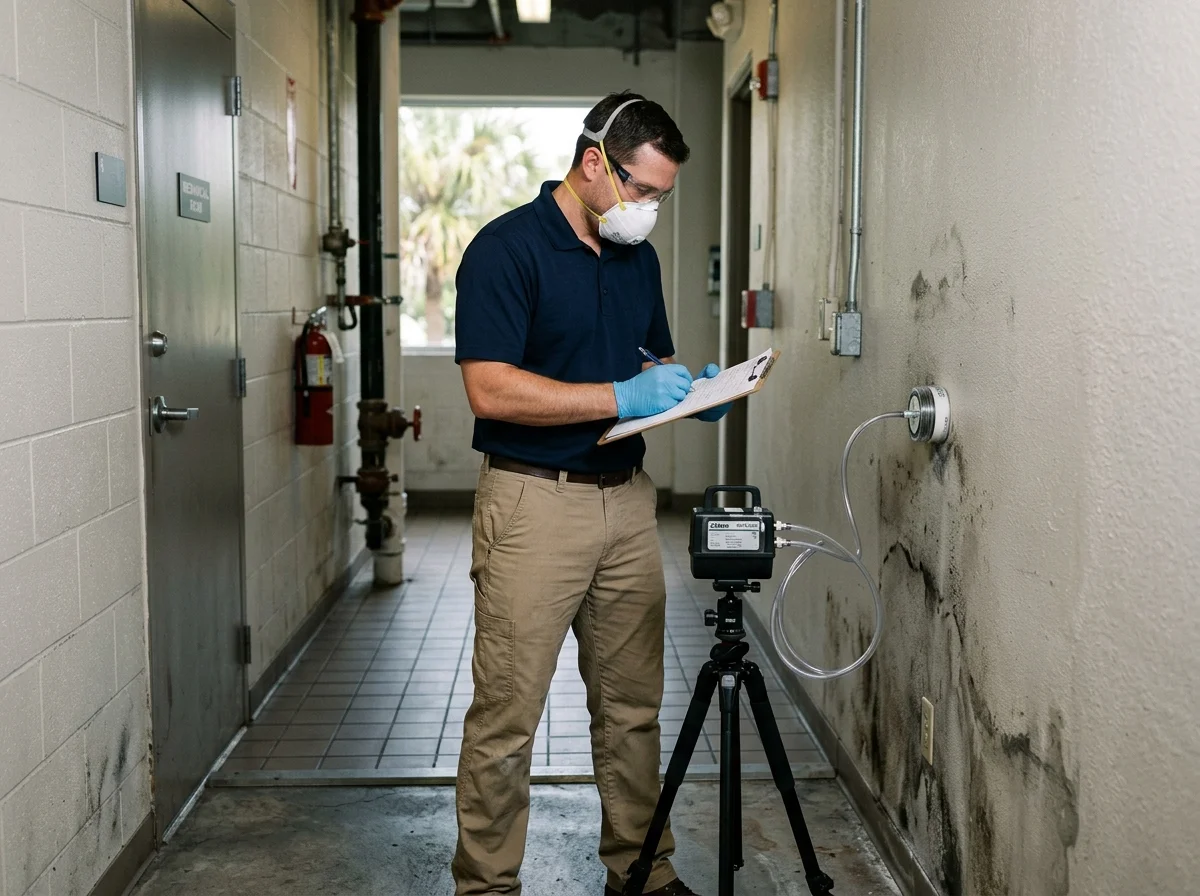
Air sampling collects airborne particles during a set period. Laboratory analysis can then identify and count fungal structures captured in the sample.
Indoor samples may sometimes be compared with an outdoor reference sample.
However, an air sample represents conditions during the sampling period. It does not prove that every part of the building has the same conditions.
Surface Sampling
Surface samples are taken directly from a selected area.
They may be useful when an assessor needs laboratory information about material growing on a wall, ceiling, HVAC component, furniture surface, or other location.
EPA also recognizes a role for surface sampling when checking whether an area has been adequately cleaned after remediation.
Bulk Sampling
Bulk sampling involves sending a piece of affected material to a laboratory.
Depending on the investigation, this could include a portion of drywall, ceiling material, insulation, or another building material.
It is not required for every assessment. The assessor should have a reason for collecting the material.
What Do Mold Laboratory Results Actually Tell You?
Laboratory results can identify fungal types or groups found in the submitted samples and provide other sample-specific findings.
Names such as Aspergillus, Penicillium, Cladosporium, or Stachybotrys may appear in mold-related discussions and laboratory reports.
However, the mold name should not be treated as a complete measure of building risk.
NIOSH warns against interpreting short-term mold spore counts as direct measures of health risk because there are no health-based indoor air standards for mold. It also notes that molds capable of producing mycotoxins, including Stachybotrys chartarum, should be approached as a moisture and mold problem rather than treated as a completely separate category based only on the name.
The laboratory result therefore needs to be interpreted together with the inspection, moisture findings, and building conditions.
What Should Be Included in a Commercial Mold Report?
A useful report should tell the property owner what was found and why it matters.
Depending on the scope, a mold assessment for businesses may include:
- Areas inspected
- Building history relevant to moisture
- Visible conditions
- Moisture findings
- Suspected moisture sources
- Sampling locations
- Sampling methods
- Laboratory results
- Photos or documented observations
- Areas that could not be inspected
- Assessment conclusions
- Recommendations for correcting moisture
- Remediation recommendations when needed
- Suggested follow-up steps
A lab sheet alone is not the same as a complete building investigation.
For a facility manager, the report should make it easier to decide what needs attention rather than create another set of numbers without context.
Does Florida Require Mold Assessors to Be Licensed?
Florida regulates mold assessment and remediation through the Department of Business and Professional Regulation.
DBPR states that it is responsible for licensing and regulating mold assessors and mold remediators. A mold assessor is the individual who performs or directly supervises a mold assessment.
Florida law also contains specific exemptions, including certain situations involving people assessing property owned, leased, operated, or managed by themselves or their employer. Those exemptions have conditions and should not be interpreted as permission for an unlicensed company to offer public mold-assessment services.
When hiring a mold testing company in Fort Pierce, FL, commercial property owners should therefore verify the credentials of the individual responsible for the assessment rather than relying only on the company name.
Should the Same Company Test and Remediate the Mold?
Florida places limits on assessors and remediators performing both roles on the same structure.
Under Florida Statute 468.8419, a mold assessor generally cannot perform or offer mold remediation on a structure where that assessor or the assessor’s company performed the mold assessment during the previous 12 months. The statute provides specific exceptions, including one involving certain Division I contractors.
The law also restricts referral payments between mold assessors and remediators.
For business owners, the practical lesson is simple: ask who is assessing the problem, who would perform remediation, and whether the arrangement meets current Florida requirements.
Do not assume testing and cleanup should automatically be sold as one package.
What Is Post-Remediation Testing?
Post-remediation evaluation happens after mold cleanup work is completed.
Its purpose is to check whether the remediation work addressed the identified problem and whether the area is ready for the next stage of restoration or normal use.
The process may involve visual review, checking that affected materials were properly addressed, confirming moisture conditions, and targeted sampling when the assessment plan calls for it.
EPA notes that surface sampling may sometimes be useful when determining whether an area has been adequately cleaned or remediated.
For larger commercial projects, having a clear completion standard before remediation starts can prevent confusion later.
What Types of Fort Pierce Businesses May Need Mold Assessment?
Moisture behaves differently depending on how a building is built and used.
Office Buildings
Office mold testing may begin after recurring ceiling stains, HVAC moisture, musty odors, or water around exterior walls.
Drop ceilings can sometimes hide problems above occupied spaces, making inspection important when stains keep returning.
Retail Stores
Retail spaces can experience roof leaks, plumbing issues, HVAC condensation, or water intrusion near storefronts and exterior walls.
Stock stored against damp walls can also hide moisture damage from normal view.
Warehouses
Large roofs, loading areas, insulation systems, and wide temperature differences can create different moisture concerns from a small office.
A commercial building mold testing plan should reflect the size and use of the warehouse instead of following a small-building checklist.
Restaurants
Restaurants have kitchens, sinks, refrigeration equipment, plumbing, and areas that regularly deal with moisture.
Inspection needs to separate expected operational moisture from leaks or damp building materials that should not remain wet.
Medical Offices
Medical properties may need careful planning because testing or investigation can affect occupied spaces and daily operations.
The assessment should consider access, scheduling, building systems, and the location of the suspected moisture problem.
How Can Fort Pierce Businesses Reduce Future Mold Problems?
The strongest prevention strategy is moisture control.
NIOSH recommends correcting water entry, drying wet materials promptly, and fixing conditions that allow repeated moisture problems.
Commercial property managers can reduce risk by watching for:
- Roof and flashing leaks
- Plumbing failures
- HVAC drainage problems
- Condensation
- Wet ceiling tiles
- Damp carpet or drywall
- Water around windows and doors
- Poor drainage around the building
- Areas damaged after storms
- Repeated indoor humidity problems
Maintenance records can help too. If the same ceiling tile has been replaced several times, the issue may not be the tile. The source above it deserves investigation.
How Do You Choose a Commercial Mold Testing Professional?
Choose the assessor based on investigation quality, independence, and credentials rather than the number of samples included in a package.
Ask:
- Who will perform or supervise the assessment?
- Is that person properly licensed when Florida law requires it?
- Will the inspection look for moisture sources?
- How will the sampling plan be decided?
- Why is each proposed sample needed?
- Which laboratory will analyze the samples?
- Will I receive a written report?
- Will the report explain the laboratory results?
- Will the assessor identify areas that could not be inspected?
- How is post-remediation evaluation handled?
- Does the assessor or related company also perform remediation?
Florida DBPR provides a public license-search system that property owners can use to check regulated professionals.
A trustworthy commercial mold inspection in Fort Pierce should give you information you can act on, not simply the largest possible testing package.
Start With the Building, Not the Test Kit
Good commercial mold testing in Fort Pierce, FL begins by understanding the property.
Visible mold, musty odors, water damage, roof leaks, HVAC moisture, and repeated dampness all deserve attention. But testing alone does not explain why mold developed or whether the moisture source has been fixed.
A proper commercial assessment combines building history, visual inspection, moisture investigation, and sampling when sampling can answer a useful question.
For Fort Pierce business owners, facility managers, and commercial property managers, that approach provides something more useful than a list of mold names: a clearer picture of what is happening in the building and what should happen next.
Frequently Asked Questions
Is mold air testing required for every commercial building?
No. EPA says sampling is generally unnecessary when visible mold is already present, and NIOSH does not recommend routine mold air sampling for workplace building evaluations. Testing should have a specific purpose.
What is the difference between mold inspection and mold testing?
A mold inspection looks at the building, moisture conditions, visible damage, odors, and possible sources. Testing involves collecting samples for laboratory analysis. Sampling can support an inspection but should not replace the building investigation.
Does Florida require a mold assessor license?
Florida regulates professional mold assessors through DBPR, although state law includes specific exemptions for certain circumstances. Businesses hiring someone who offers mold assessment services to the public should verify the responsible professional’s current credentials.
Can mold grow above office ceiling tiles?
Yes. Moisture from roof leaks, plumbing, HVAC systems, or condensation can affect hidden areas above suspended ceilings. Staining, musty odors, or recurring wet ceiling tiles are reasons to investigate the moisture source.
Can mold testing tell if a workplace is safe?
A mold sample cannot provide a simple federal pass/fail safety result. EPA states that federal airborne mold standards have not been established, while NIOSH says short-term mold concentrations cannot be directly interpreted as health-risk levels.
Is post-remediation testing always necessary?
The appropriate post-remediation process depends on the project and assessment plan. Visual inspection and moisture conditions remain important, while targeted sampling can sometimes help evaluate whether affected areas were adequately cleaned.
What should I do if mold keeps returning in my commercial property?
Investigate the moisture source rather than repeatedly cleaning the visible growth. Recurring mold can point to an unresolved roof leak, plumbing issue, HVAC moisture, condensation, or another source of dampness. NIOSH emphasizes correcting water entry and moisture conditions as part of effective remediation.