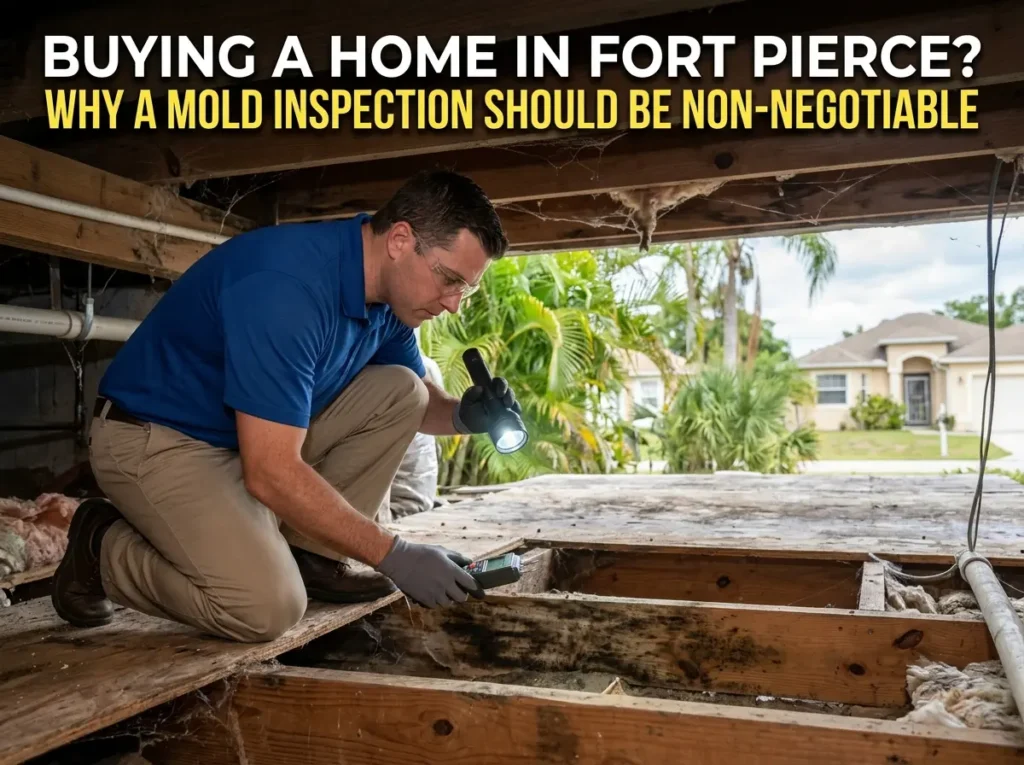
You found a home in Fort Pierce and you’re ready to make an offer. You’re excited about buying this house but you need to be careful. Mold inspection before buying a house Fort Pierce is absolutely critical. This is not something you can skip or ignore because mold is serious. Fort Pierce’s tropical climate creates perfect conditions for mold growth always. Mold can hide behind walls where you can’t see it at all. Mold costs thousands of dollars to remove and remediate properly. This guide explains why pre-purchase mold inspection is non-negotiable for you. For complete understanding of what Fort Pierce mold inspections include, review our comprehensive residential mold inspection guide covering climate factors specific to this area. Real protection. Smart decisions. By the end you’ll understand why mold inspection is essential always.
Why Mold Inspection Before Buying a House Fort Pierce Matters Most
Fort Pierce’s Climate Makes Mold Growth Almost Guaranteed In Homes
Fort Pierce has tropical weather that encourages mold growth constantly always. The climate is hot and humid almost every single day. Humidity stays between sixty and eighty percent throughout the entire year. Rain falls frequently and creates moisture inside homes from water intrusion. This combination of heat, moisture, and humidity creates perfect mold conditions. Mold grows faster in Fort Pierce than in most other cities. Your potential home probably has moisture problems from this climate. Mold might be growing inside walls where you can’t see. Fort Pierce homes need mold inspection before you buy them. Skipping mold inspection in Fort Pierce is extremely risky for you.
Mold Costs Thousands Of Dollars To Remove And Remediate
Small mold areas cost between one thousand and three thousand dollars. Larger mold areas cost between three thousand and ten thousand dollars. Extensive mold problems cost between ten thousand and fifty thousand dollars. Some homes have mold so bad they cost more to fix. Mold remediation includes removing contaminated materials and replacing with new. Remediation requires professional contractors with specialized equipment and expertise. After remediation waterproofing improvements prevent mold from coming back again. The total cost of dealing with mold is very expensive. Discovering mold after buying means you pay for all repairs. Inspection before buying protects you from this expensive problem. Pre-purchase mold inspection prevents you from buying a money pit.
Hidden Mold Causes Health Problems For Your Family Members
Mold in your home causes serious health problems for everyone. Respiratory problems develop when people breathe in mold spores. Breathing problems get worse when mold is in your home. Allergies become worse when mold is present all the time. Asthma attacks happen more frequently when mold is present. Children are especially vulnerable to mold’s harmful health effects. Elderly family members suffer from mold exposure constantly. Some mold types produce toxins that are poison to humans. Long term mold exposure causes serious health issues over time. Discovering mold after buying means your family lives with danger. Inspection before buying protects your family’s health completely.
Mold Damages Home Structure And Decreases Property Value Significantly
Mold destroys wood and makes it soft and weak. Drywall deteriorates and becomes unsafe when mold colonizes it. Insulation loses effectiveness and must be replaced completely. Paint and finishes deteriorate when mold grows behind them. Foundation problems develop when moisture and mold damage structure. Roof damage occurs when mold grows in attic areas. Home value decreases when mold is discovered by inspectors. Insurance might not cover mold damage in your policy. Selling the home becomes difficult when mold is known. Mold inspection before buying prevents buying damaged property.
Understanding Pre-Purchase Mold Inspection: What You Need To Know
Mold Inspection Should Be Part Of Your Home Purchase Process
Professional mold inspection should happen before you make final offer. Inspection should happen after initial offer but before closing. Inspection protects you from buying a home with mold. Many homes in Fort Pierce have mold problems present. Inspection finds problems you can negotiate about with seller. Inspection gives you information to make smart buying decisions. Inspection costs between six hundred and twelve hundred dollars. This small cost protects your investment of hundreds of thousands. Every Fort Pierce home purchase should include mold inspection. Never skip mold inspection regardless of home condition. Mold inspection is essential part of buying a home.
Get Inspection Before You Make Final Offer On Home
Schedule mold inspection early in the purchase process always. Inspection should happen within seven to ten days. Inspection gives you information before finalizing your offer. You can negotiate based on inspection findings with seller. You can ask seller to fix problems before closing. You can ask seller to reduce price to cover repair. You can walk away from purchase if problems are severe. Early inspection protects your interests and saves you money. Late inspection might be too late to back out. Schedule inspection immediately after initial offer is accepted. Professional inspector should have Fort Pierce experience and expertise.
Include Mold Contingency In Your Purchase Agreement
Home inspection mold contingency protects you in your contract. Contingency means you can back out if mold found. Contingency allows you to renegotiate if mold discovered. Contingency protects your investment and your family’s health. Many purchase agreements include standard inspection contingencies. Ask your realtor to add mold contingency to contract. Contingency period typically lasts seven to ten days. You have time to get inspection and review results. You can negotiate repairs or price reduction with seller. Contingency protects you from being stuck with moldy home. Never buy without mold contingency in your purchase agreement.
What Happens During Pre-Purchase Mold Inspection Process
Inspector Does Complete Visual Inspection Of Entire Home
Inspector starts with thorough visual inspection of entire property. Inspector checks every room looking for visible mold growth. Inspector looks for water stains and discoloration on surfaces. Inspector searches for musty smells that indicate mold presence. Inspector checks bathrooms and kitchens where mold commonly grows. Inspector inspects basement and crawlspace for moisture and mold. Inspector checks attic for roof leaks and mold. Inspector takes photographs of any suspicious areas found. Inspector makes detailed notes about everything observed during inspection. Visual inspection takes several hours depending on home size. Inspector documents all findings for the inspection report.
Inspector Tests Moisture Levels Throughout The Home Structure
Moisture meters measure moisture in walls and structures. High moisture levels indicate water intrusion problems exist. Moisture in walls creates perfect conditions for mold. Inspector checks moisture around bathrooms and kitchens. Inspector checks moisture in basement and crawlspace areas. Inspector checks moisture around windows and doors. High readings mean water is getting inside somehow. Moisture readings help inspector find problems early. High moisture means remediation will be expensive. Moisture testing is critical part of inspection process.
Inspector Collects Air And Surface Samples For Testing
Air samples are collected from main living areas. Samples go to laboratory for mold spore analysis. Surface samples are collected from suspected mold areas. Laboratory identifies exact mold species present in home. Lab analysis shows spore counts in air. High spore counts indicate serious mold problems. Low counts indicate minimal mold contamination present. Samples take one to two weeks for results. You receive detailed laboratory report with findings. Sample results guide remediation decisions and planning.
Inspector Uses Thermal Imaging To Find Hidden Moisture
Thermal imaging cameras detect temperature differences in walls. Cold spots indicate where moisture is hiding. Camera shows heat patterns revealing moisture presence. Thermal imaging finds moisture before visible mold appears. Inspector checks suspicious areas with thermal imaging. Thermal imaging helps identify hidden water intrusion. Temperature patterns show where water is entering. Thermal imaging is valuable detection tool. Inspector documents all thermal imaging findings.
Home Inspection Mold Contingency: Protecting Your Purchase
What Is Mold Contingency In Real Estate Purchase Agreement
Mold contingency is protection in your purchase contract. Contingency allows you to back out if mold found. Contingency lets you renegotiate price or repairs. Contingency protects you from being stuck with problems. Most purchase agreements include standard inspection contingencies. Some agreements require you to specifically add mold contingency. Contingency period gives you time for inspection and decision. Typical contingency period lasts seven to fourteen days. You can use contingency period to make informed decision. Contingency is important protection for your home purchase.
How Contingency Protects You From Buying Moldy Home
If inspection finds mold you have options to consider. You can ask seller to pay for remediation. You can ask seller to reduce purchase price. You can walk away without losing your earnest money. Without contingency you’d be stuck with mold problem. Without contingency you’d have to pay for repairs. Without contingency you couldn’t back out easily. Contingency gives you leverage to negotiate with seller. Contingency protects your investment and your family. Always include mold contingency in your purchase agreement.
Negotiating Repairs Or Price Reduction Based On Findings
If mold is found you can negotiate with seller. Ask seller to hire professional remediation company. Ask seller to pay for complete mold removal. Ask seller to reduce purchase price by mold cost. Ask seller to provide proof of completed remediation. Get quotes from remediation companies for negotiation. Use quotes to determine fair price reduction. Professional inspector can advise on remediation costs. Negotiation happens during contingency period. Seller might refuse to negotiate certain issues. You can walk away if negotiation fails. Contingency gives you this important option.
Red Flags That Indicate Mold Problems May Exist
Dark Spots And Discoloration On Walls And Ceilings
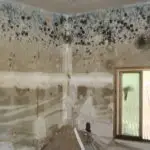
Black spots on walls indicate possible mold growth. Green spots on tiles indicate mold presence. Dark stains on ceiling indicate roof or water problems. Discoloration spreading across walls indicates serious moisture. Spotting on upper corners indicates roof leak problems. Large dark areas indicate extensive mold growth. New discoloration indicates active moisture problem occurring. Ask inspector about any suspicious discoloration found. Discoloration is red flag requiring investigation. Take photographs of all suspicious discoloration. Report findings to your real estate agent.
Musty Smells Coming From Any Part Of The Home
Musty odors indicate mold is growing somewhere. Strong musty smell indicates serious mold problem. Smell in basement indicates moisture accumulation there. Smell in crawlspace indicates mold growth below. Smell in attic indicates roof leak problems. Lingering musty smell indicates hidden mold growth. Bad odors are serious warning sign always. Ask inspector to investigate source of smell. Don’t ignore musty smells in potential home. Musty smell is red flag to investigate.
Water Stains And Evidence Of Past Water Damage
Water stains on walls indicate past water intrusion. Yellow or brown stains indicate old water damage. Fresh water marks indicate current moisture problems. Stains around windows indicate window leaks present. Stains on ceiling indicate roof leak issues. Stains in corners indicate water flowing down. Multiple stains indicate ongoing moisture problem. Ask seller about history of water damage. Get detailed explanation about water stains. Consider hiring inspector if stains concern you.
Soft Or Deteriorating Wood And Drywall Materials
Soft wood indicates water damage and mold growth. Crumbling drywall indicates moisture damage and mold. Warped wood indicates moisture exposure over time. Rotting smell indicates serious wood deterioration. Peeling paint indicates underlying moisture problems. Cracked drywall indicates structural moisture damage. Deteriorating materials indicate remediation is needed. Have inspector examine deteriorating materials closely. Deterioration is expensive to repair and fix. TTake seriously any deteriorating building materials. Before making any purchase decision, understand inspection pricing in our guide on residential mold inspection costs in Fort Pierce so you can budget appropriately for pre-purchase assessment.
Questions To Ask Seller About Home’s Mold History
Ask About Any Water Damage Or Flooding Events
Has the home ever experienced water damage before? Has the home ever flooded from heavy rain? Has the home had basement or crawlspace flooding? Were there any roof leaks during previous ownership? Have there been any pipe burst or water issues? When did any water damage occur and what happened? Was the water damage properly remediated and fixed? Do you have documentation of water damage repair? How was the home dried out after water event? Were any materials replaced due to water damage?
Ask About Any Mold Discovery Or Remediation Work
Has mold ever been discovered in the home? If mold was found what areas were affected? Was professional mold remediation done to fix? Who performed the mold remediation work? Do you have certificates of completion for work? Was moisture problem fixed or just mold removed? Have you had follow up inspections after remediation? Has mold returned since remediation work? Are there any guarantees on remediation work? Can you provide proof of all remediation done?
Ask About Ventilation And Moisture Control Systems
Does the home have working ventilation fans? Are bathroom fans properly vented outside? Is kitchen fan properly vented outside? Does the crawlspace have proper ventilation? Does the attic have proper ventilation vents? Are there any dehumidifiers in the home? Is air conditioning system properly maintained? Are gutters clean and properly draining? Is grading around home sloped properly? Have any moisture control measures been taken?
Protecting Your Investment Through Mold Inspection
Mold Inspection Is Small Cost Compared To Remediation
Inspection costs between six hundred and twelve hundred dollars. Remediation costs between ten thousand and fifty thousand dollars. Inspection cost is small percentage of home price. Early detection saves you thousands of dollars. Inspection protects your investment completely. Cost of inspection is worthwhile investment. Never skip inspection to save small amount. Protect your investment with our specialized mold inspections for Fort Pierce homes including pre-purchase assessments with fast turnaround to meet your closing deadlines.
Inspection Protects Your Family’s Health And Safety
Mold causes serious health problems for everyone. Inspection prevents your family from living with mold. Health problems are expensive to treat. Protecting family health is most important. Inspection finds mold before you move in. Knowing about mold lets you make good decision. Your family’s health is worth the cost. Inspection protects everyone in your household.
Inspection Gives You Negotiating Power With Seller
Inspection results give you leverage to negotiate. You can ask for repairs or price reduction. You can walk away if problems are serious. Inspection strengthens your negotiating position greatly. Seller might be willing to negotiate. You have information to make good decision. Inspection protects your interests significantly. Use inspection results to negotiate fairly.
FAQ About Mold Inspection Before Buying A House
Why should I get mold inspection in Fort Pierce?
Fort Pierce’s climate makes mold growth very common. Mold hides inside walls where you can’t see. Mold costs thousands of dollars to remediate. Inspection protects your investment and family. Inspection is absolutely necessary in Fort Pierce. Never buy without mold inspection in this area. Climate makes inspection essential for safety.
When should I get mold inspection during purchase?
Schedule inspection after initial offer is accepted. Inspection should happen within seven to ten days. Inspection must happen before final closing date. Early inspection gives you time to decide. Late inspection might not let you back out. Get inspection as soon as possible always. Timing is important for your protection.
What if mold is found during inspection?
You can ask seller to pay for remediation. You can ask seller to reduce purchase price. You can walk away from purchase entirely. Contingency lets you make this decision. You have options based on severity. Professional inspector advises on next steps. You control what happens based on findings.
How much does mold remediation typically cost?
Small areas cost between one thousand and three thousand dollars. Larger areas cost between three thousand and ten thousand dollars. Extensive problems cost between ten thousand and fifty thousand dollars. Cost depends on mold extent and location. Get multiple quotes from remediation companies. Budget accordingly if problems are found. Remediation is expensive so prevention matters. Inspection helps you know exact costs.
Can I negotiate price reduction for mold problems?
Yes you can negotiate based on remediation costs. Get quotes from remediation companies for negotiation. Use quotes to justify price reduction request. Seller might refuse certain repair requests. You can walk away if negotiation fails. Contingency gives you this negotiating power. Negotiation happens during contingency period. Be prepared with professional quotes.
Should I buy home if mold is discovered?
Depends on severity and remediation costs. Small problems might be worth negotiating. Large problems might make home not worth it. Your inspector advises on severity level. Get professional remediation quotes first. Consider total cost of remediation. Consider your budget and financial situation.Your real estate agent can advise. Protect your home purchase with professional inspection. Contact us for pre-purchase mold inspection with fast turnaround times to meet your closing deadlines and protect your investment completely.