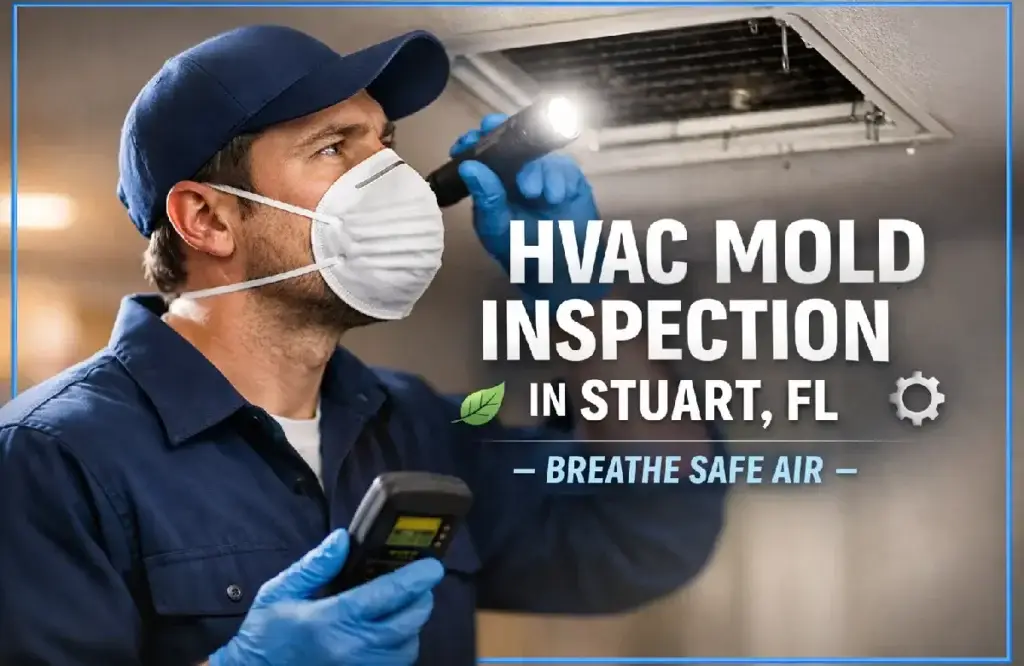
You turn on the AC. Cool air flows out. Feels great, right? But what if that air carries mold? Here’s the deal: Most Stuart homeowners never think about their vents. They change filters. They clean the outdoor unit. But the inside of your ductwork? That’s a dark, damp playground for mold. Professionals have crawled through attics in Palm City and found fuzzy colonies coating air handlers. The owners had no clue. They just kept sneezing. A proper HVAC mold inspection checks your whole system—from the return vents to the blower motor. Florida’s heat and humidity make this a year-round risk. Whether you live near the St. Lucie River or in Jensen Beach, your AC runs constantly. That moisture feeds mold. Don’t breathe it. Learn why a mold inspection hvac systems needs to happen now.
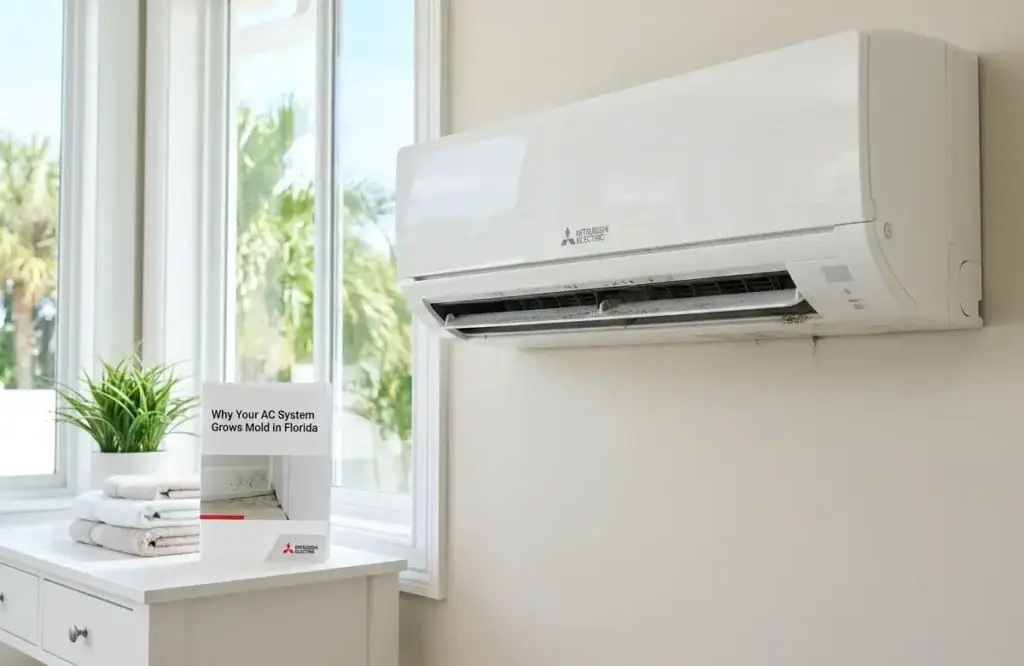
Why Your AC System Grows Mold in Florida
Florida AC work hard. They pull humid air from inside your home. They cool it. That creates condensation. Drain pans catch water. But if that pan clogs or cracks, water sits. Mold loves standing water. Professionals have seen this in Stuart condos near the ocean. Salt air corrodes and drains faster. Add warm attic temps, and you have a mold farm. A residential air quality inspection starts at the air handler. Pros pull off panels. They check coils, pans, and duct insulation. Black slime means trouble. HVAC system cleaning removes it. But first, you need a hvac mold inspection to find it.
Signs You Have Mold in Your Vents
Musty smell when the AC kicks on? That’s clue number one.
Second clue: allergy symptoms only at home.
Third: Visible dust or fuzz around vents. That “dust” might be mold spores. Professionals have walked into Stuart living rooms where every vent had black rings. Homeowners thought it was dirt. Nope. An air duct mold inspection uses a scope camera inside the ducts. You see what’s really there.
Fourth clue: Unexplained headaches or fatigue. Mold toxins affect your brain.
Fifth: You cleaned your ducts recently, but the smell returned.
That means deeper growth. Don’t guess. Schedule a mold in hvac system inspection before your whole home becomes a spreader.
How a Professional HVAC Mold Inspection Works
First, the tech turns off your system. Safety first. Then they remove vent covers and look inside with a borescope. That’s a tiny camera on a flexible tube. Next, they check the air handler cabinet. Mold hides behind insulation. They take tape lifts or swab samples from suspicious spots. For airborne spores, they run a pump that pulls air through a collector. Lab results identify species and concentration. A full HVAC mold inspection also includes moisture readings around the unit. High humidity inside the cabinet? That’s a red flag. Finally, you get a report. It tells you where mold lives and how bad it is. Then you call mold remediation services if needed. No surprises.
The Health Risks of Ignoring Mold in Your HVAC
You breathe whatever your AC blows. That’s 10,000+ gallons of air per day. If mold lives in your ducts, you breathe spores constantly. Symptoms include coughing, wheezing, sinus infections, and brain fog. Kids and elderly folks suffer most. Professionals have talked to Stuart parents whose asthmatic child improved within days after an indoor air safety fix. Mold toxins also trigger long-term inflammation. Some studies link them to chronic fatigue. Don’t gamble. A furnace mold check isn’t just about equipment. It’s about lungs. A heating and cooling system inspection costs way less than recurring doctor bills. Breathe clean air. Start with testing.
Mistakes Homeowners Make with HVAC Mold
First Mistake: Bleach in vents. Bleach fumes harm you, and it doesn’t kill roots on porous duct liner.
Second Mistake: Ignoring drain pans. Professionals have seen Stuart attics with inches of standing water under air handlers.
Third Mistake: Changing filters but never opening the main unit.
Fourth Mistake: Hiring duct cleaners who don’t test first. They spread mold everywhere.
Fifth Mistake: Waiting for a smell. By then, mold has colonized. A proper mold inspection hvac systems happens before visible signs.
Sixth: DIY test kits. They miss hidden growth. Avoid these errors. Call certified pros for hvac mold inspection instead.
How Often Should You Schedule an HVAC Mold Inspection?
Every two years minimum. But certain situations call for sooner. Did you have a roof leak? Get one. Did your AC stop working for a week during summer? Moisture sat in the ducts. Get one. Do you smell mustiness? Get one tomorrow. Professionals recommend Stuart homeowners also schedule after any renovation. Drywall dust traps moisture. That feeds mold. Rental properties need yearly checks. Tenants don’t report smells. For business owners in Stuart, add residential air quality inspection (or commercial version) to your maintenance calendar. Prevention beats remediation. A $400 HVAC mold inspection now saves $4,000 in duct replacement later.
What Happens After They Find Mold in Your System
Don’t panic. Most cases are fixable. Small surface mold? Technicians clean with EPA-approved biocides. They scrub coils, drain pans, and accessible ducts. For heavy growth inside ductwork, they may recommend replacement of flexible ducts. Those ribbed interiors trap spores. Hard metal ducts get rotary brushing and negative air machines. Mold testing in ventilation after cleaning confirms success. They take post-remediation samples. Results should show 90%+ reduction. Then you fix the moisture source. That might mean a new drain pan, better attic insulation, or a whole-home dehumidifier. Professionals have seen this process work in dozens of Stuart homes. The result? The air smells clean. Allergies stop. You sleep better.
Why Business Owners Need HVAC Mold Checks Too
Offices, restaurants, retail stores—they all have HVAC systems. Customers complain about musty smells. Employees call in sick. That hurts your bottom line. Professionals have consulted for Stuart small businesses on Dixie Highway. One boutique had mold in their roof HVAC unit. They lost sales for weeks because customers walked out. A heating and cooling system inspection protects your reputation. It also limits liability. Sick building syndrome is real. Don’t wait for a lawsuit. Schedule hvac mold inspection for your commercial property. Clean air means happy customers and productive staff.
FAQ
How much does an HVAC mold inspection cost in Stuart?
Most pros charge $300–$500. That includes visual check, camera scope, and air samples. Some offer free quotes. Cheaper than replacing your whole duct system.
Can I see mold in my vents without a camera?
Sometimes. Shine a flashlight into a vent. Look for black, green, or white fuzz. But most mold hides deeper. You need a pro air duct mold inspection with a scope.
Does mold in HVAC always mean I need new ducts?
No. Small surface growth cleans up well. Heavy growth inside flexible ducts? Replacement is safer. A mold inspection hvac systems report guides the decision.
How long does an HVAC mold inspection take?
Typically 1.5 to 2 hours. That includes checking the air handler, all supply vents, and return ducts. Lab results arrive in 2–3 days.
Can I prevent mold in my AC system?
Yes. Change filters monthly. Clean drain pans yearly. Install a UV light near the coils. Keep indoor humidity below 60%. Schedule regular HVAC system cleaning.
What’s the difference between duct cleaning and HVAC mold inspection?
Duct cleaning removes dust. It doesn’t test for mold. An hvac mold inspection identifies species and concentrations. Clean first if dirty. Test afterward to confirm safety.
Should I get a mold inspection when buying a house in Stuart?
Absolutely. Sellers don’t always disclose mold. A residential air quality inspection protects your purchase. Test before closing. It’s cheap insurance.
Conclusion
Look, Stuart’s weather is a blessing. Warm winters. Cool sea breezes. But that same climate stresses your AC system. Mold doesn’t need much. A little moisture. Some darkness. Your vents provide both. Professionals have seen too many homeowners wait until their family gets sick. Don’t be that person. A simple HVAC mold inspection finds problems early. You get a clear report. You fix the moisture. You clean the system. Then you breathe easy. Whether you own a home near Cove Road or a shop on Colorado Avenue, indoor air safety matters. Don’t trust your nose. Trust science. Search local Mold inspection in Stuart team today. Schedule your mold in hvac system inspection. Your lungs will thank you. Your kids will breathe better. And you’ll sleep soundly knowing your air is clean.